Mandarinfish
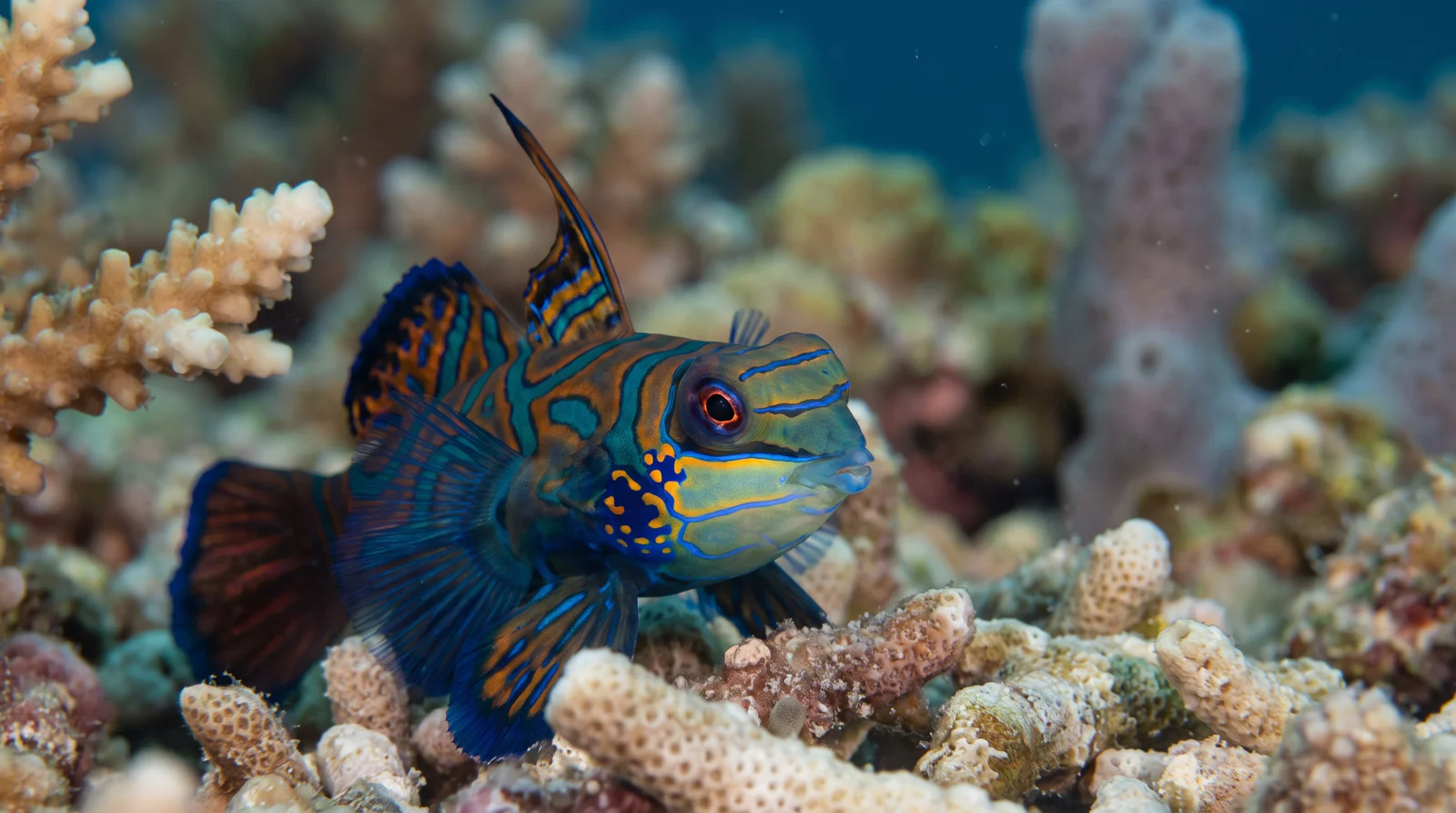 AI-generated
Image credit: AI-generated illustration · Diveity
Synchiropus splendidus
About Mandarinfish.
The mandarinfish is a small western Pacific dragonet of about 6 to 9 cm, bright blue with swirling orange stripes, the males with a tall dorsal fin.
Names and classification
WoRMS accepts the name Synchiropus splendidus (Herre, 1927) in the family Callionymidae, the dragonets, order Callionymiformes, and lists Callionymus splendidus Herre, 1927, Neosynchiropus splendidus and Pterosynchiropus splendidus as synonyms; its entry is drawn from FishBase, which gives the same order. Wikipedia's taxonomy box places the family in the order Syngnathiformes instead, and its text calls it a perciform family. Wikipedia says Albert William Herre, an American ichthyologist working in the Philippines, described the species as Callionymus splendidus in 1927, and gives mandarin dragonet, mandarin goby, green mandarin, striped mandarinfish, striped dragonet, green dragonet and sometimes psychedelic mandarinfish as other names. It warns that the similarly named mandarin fish, Siniperca chuatsi or Chinese perch, is a different and only distantly related fish, and its page for the name also lists the spotted mandarin, Synchiropus picturatus. FishBase lists 21 common names, among them Mandarinfisch in German, Nishiki-teguri in Japanese and Bebaji batik in Malay.
Identification
Wikipedia describes a goby-like body with a bright blue ground, swirling orange stripes, a blue-green face with bold blue stripes and usually red eyes; the large pelvic fins, used to walk on the bottom, are often mistaken for the pectoral fins, which sit near the middle of the body and are almost transparent. The dorsal fin is exceptionally tall in males, and the Aquarium of the Pacific likewise says males have a longer dorsal spine than females and display it to ward off other males and attract females. Wikipedia mentions a red form whose orange parts are red, and FishBase says rare individuals have a bright red ground colour. FishBase counts 4 dorsal spines, 8 dorsal soft rays and 6 to 8 anal soft rays. Wikipedia reports that the species is one of only two vertebrates known to be blue through a cellular pigment rather than structural colour, the other being the closely related Synchiropus picturatus.
Size and conservation
The sources differ on size. FishBase gives a maximum of 7.0 cm total length for males or unsexed fish, Wikipedia about 6 cm, and the Aquarium of the Pacific 6 to 9 cm, with males slightly larger than females; the Aquarium also gives a lifespan of ten to twenty years without saying whether in the wild or in aquariums. On the IUCN Red List the species is Least Concern: FishBase, citing version 2025-2 of the list, dates that assessment to 12 October 2018, and Wikipedia gives the same category, while the Aquarium of the Pacific uses its own label, safe for now. FishBase lists it as not evaluated by CITES, harmless to people, commercial in fisheries and in the aquarium trade, and reared in captivity. Wikipedia calls it popular in that trade but difficult to keep, because some fish eat nothing but live amphipods and copepods. The Aquarium of the Pacific says the long-term effect of collecting is unknown, and that because collectors take the larger males, the smaller males left behind breed less successfully.
Where it lives.
The mandarinfish lives on the bottom of shallow, sheltered lagoons and inshore reefs, among coral and rubble, at about 1 to 18 m.
Range
FishBase gives a western Pacific range from the Ryukyu Islands to Australia, and Wikipedia gives the same. The Aquarium of the Pacific is broader and less precise: the Coral Triangle, Malaysia, the Philippines, Indonesia, Australia and the Great Barrier Reef, or the Indo-Pacific area in general.
Depth and bottom
FishBase records the species as marine and reef-associated at 1 to 18 m, in shallow protected lagoons and on inshore reefs, on silty bottoms with coral and rubble, and usually in small groups spread over a small area. The Aquarium of the Pacific gives the same 1 to 18 m and says the fish keep to the sea floor, though they may perch in coral. Wikipedia also places them in sheltered lagoons and on inshore reefs, and says that although they are slow-moving and fairly common within their range, they are not easily seen because they are small and feed on the bottom. The WoRMS entry carries the marine flag only.
How it behaves.
Mandarinfish pick tiny crustaceans and worms off the bottom by day, and pairs rise together towards the surface to release their eggs and sperm.
Feeding
Wikipedia cites a study by Sadovy and colleagues (2001) of the gut contents of seven wild fish, which found harpacticoid copepods, polychaete worms, small gastropods, gammaridean amphipods, fish eggs and ostracods, and says the fish feed continuously in daylight, pecking selectively at small prey on coral substrate within a home range of many square metres. The Aquarium of the Pacific gives a similar diet and says they tend to feed during the day. FishBase estimates the trophic level at 3.3, with a standard error of 0.4, from the size and diet of close relatives rather than from this species' food.
Spawning
FishBase says pairs rise towards the surface in close contact and release eggs and sperm there, and notes that this was seen in an aquarium. The Aquarium of the Pacific describes the same ascent with external fertilisation, says that after sunset a group of up to five females meets one male, that a male can spawn several times in a night while a female spawns once, and that females prefer larger males, which fertilise more eggs. It adds that the larvae are among the smallest of any fish at hatching.
Defence
Wikipedia says the fish have no scales but a layer of slime, described as smelly and bitter, that blocks disease and probably discourages predators, so that the bright colours may be a warning. The Aquarium of the Pacific also calls the colours a warning, and says the skin carries tiny spines that release a toxic, repellent mucus when the fish is stressed. It also notes that the fish have kept their swim bladder although they live on the bottom.
Where to see it.
Evidence for visayas · 7 dive sites
General range is not evidence of occurrence at a specific dive site.
Agus Bay
Mactan
Documented site occurrence
Season not yet documented
Source reviewed on 2026-10-14 · Source: Scotty's Dive Center (Wayback snapshot 2024-02-29) · Observation date not documented
Bahura
Dauin
Documented site occurrence
Season not yet documented
Source reviewed on 2026-10-02 · Source: Dauin Diving Center — undated named-site description; not a recent sighting record · Observation date not documented
Cars Wreck (Dauin)
Dauin
Site occurrence not yet documented
Season not yet documented
No dated observations available.
Lighthouse Reef
Malapascua
Documented site occurrence
Season not yet documented
Source reviewed on 2026-09-27 · Sources: Sea Explorers, Thresher Shark Divers · Observation date not documented
Padre Burgos Pier
Southern Leyte
Documented site occurrence
Season not yet documented
Source reviewed on 2026-09-29 · Source: Divers Alert Network / Alert Diver · Observation date not documented
Talima Marine Sanctuary
Mactan
Documented site occurrence
Season not yet documented
Source reviewed on 2026-10-14 · Source: Philstar, "Adventure Olango" (2009-07-09), quoting the Talima Beach Villas and Dive Resort website · Observation date not documented
Talisay Pier
Cabilao Island
Site occurrence not yet documented
Unverified: Jan, Feb, Mar, Apr, May, Jun, Jul, Aug, Sep, Oct, Nov, Dec
No dated observations available.
Gallery.
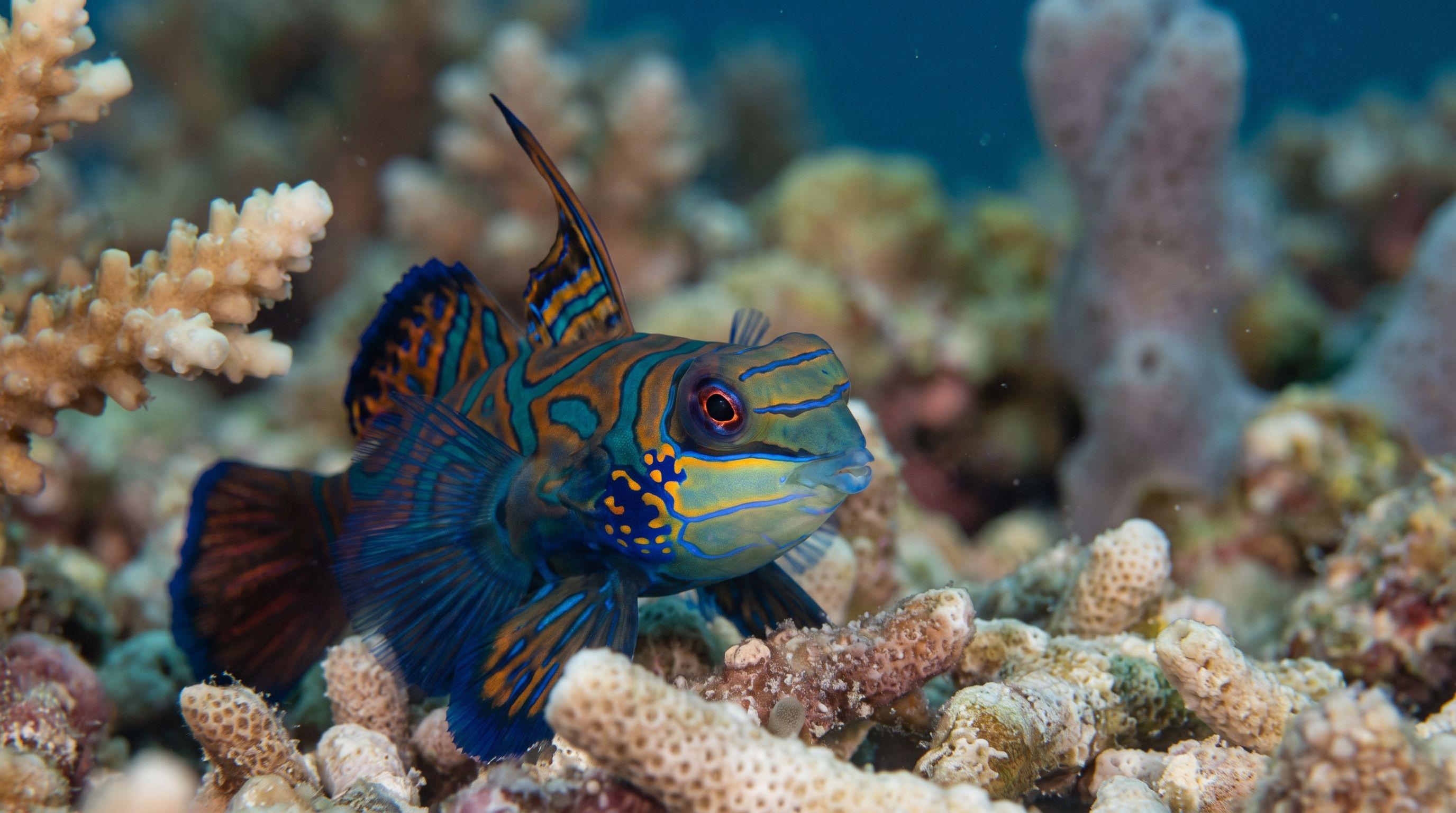 AI-generated
 illustration
Image credit: AI-generated illustration · Diveity