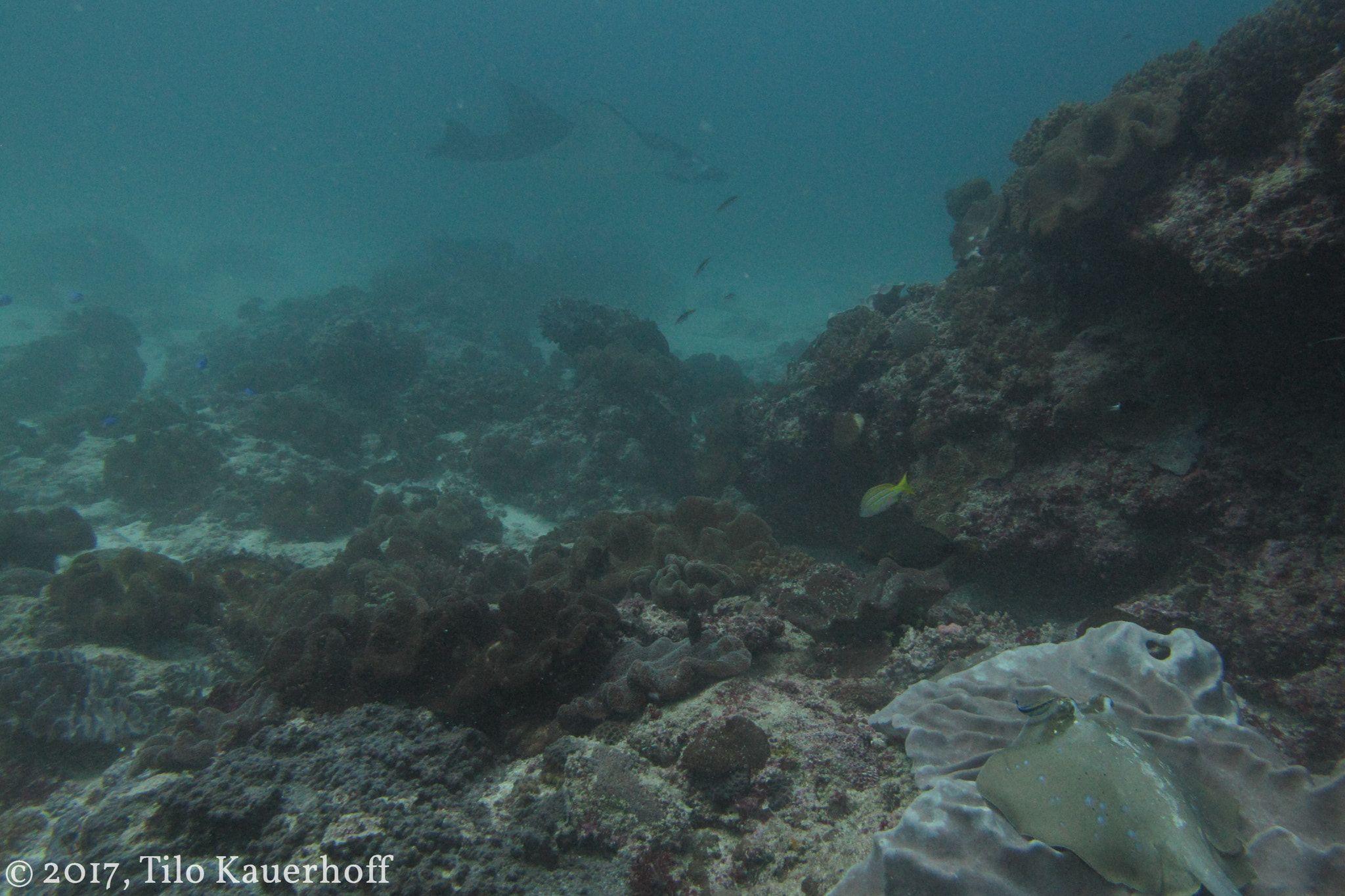
Manta Ray
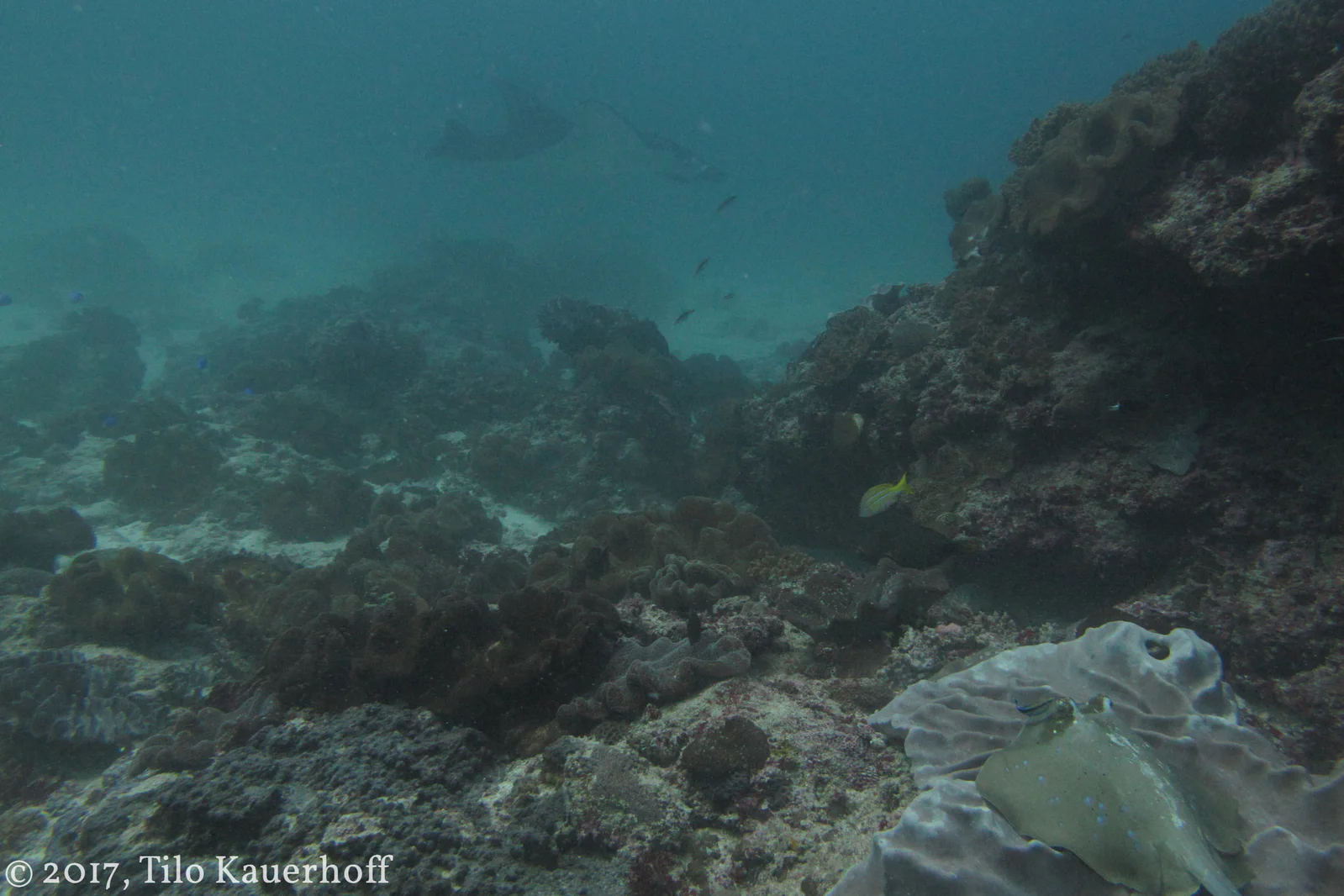
Mobula birostris
About Manta Ray.
The Mobula birostris, commonly known as the Giant Oceanic Manta Ray, is the largest ray species in the world and a truly magnificent sight for any diver. Belonging to the family Mobulidae, these cartilaginous fish are renowned for their impressive size, graceful movements, and remarkable intelligence.
Found in tropical, subtropical, and temperate waters globally, the Giant Oceanic Manta Ray is a highly migratory, pelagic species, often encountered in open ocean waters, near oceanic islands, offshore pinnacles, and seamounts. While they are primarily filter feeders, consuming vast quantities of zooplankton such as copepods, mysid shrimp, and crab larvae, recent research suggests their diet also includes mesopelagic (deep-water) sources and even small fish. They are known to aggregate at cleaning stations, feeding grounds, and for mating.
Despite their immense size, Giant Oceanic Manta Rays are gentle giants, posing no threat to humans. They possess the largest brain-to-body ratio of any fish and exhibit advanced cognitive abilities, including learning, memory, social interaction, and possibly even self-awareness, as suggested by mirror tests. Sadly, the Giant Oceanic Manta Ray is currently listed as Endangered, primarily due to commercial fishing for their gill plates and bycatch in various fisheries.
Identification
Identifying the Giant Oceanic Manta Ray is an unforgettable experience. Here are its key physical characteristics:
- Size: These are the largest rays in the world, with an average wingspan of 4–7 meters (13–23 ft), and some individuals reaching up to 7 meters (23 ft) or even 9 meters (30 ft) in wingspan. They can weigh over 2,000 kg (4,400 lbs).
- Body Shape: They have a distinctive flat, diamond-shaped body with elongated, wing-like pectoral fins that propel them gracefully through the water.
- Cephalic Fins: A defining feature is the pair of prominent, horn-shaped cephalic fins located on either side of their wide, terminal mouth. These fins are rolled up when swimming but unfurl to form a funnel, directing plankton-rich water into their mouth during feeding. The inside of the cephalic fins is typically shaded black.
- Mouth: Unlike other mobulids (devil rays), the Giant Oceanic Manta Ray has a wide, rectangular mouth positioned at the very front of its head (terminal mouth).
- Coloration:
- Dorsal (Top) Surface: Generally dark brown, grayish-blue, or black. They feature distinct white shoulder markings that form two mirror-image right-angled triangles, creating a prominent 'T' shape in black on their back.
- Ventral (Bottom) Surface: Primarily white, but with unique patterns of dark spots clustered around the lower abdominal region, below the gills. These spot patterns are unique to each individual, much like a human fingerprint, and are used by researchers for identification. The edges of their bodies, including their cephalic fins and around their mouth, tend to have dark margins.
- Tail: The tail is relatively short and lacks a stinging barb, a key differentiator from many other ray species. There is often a knob-like bulge housing a vestigial spine at the base of the tail.
- Skin: The skin has a rough appearance.
Observed Dive Sites
Divers may be fortunate enough to encounter the majestic Giant Oceanic Manta Ray at various dive sites, including:
- Blue Magic (occasional)
- Norman Reef (occasional)
- Aliwal Shoal (occasional)
- Manta Bowl (occasional)
- Bajo Alcyone (occasional)
- Hin Daeng & Hin Muang (common)
- Magic Mountain (Shadow Reef) (common)
- Richelieu Rock (occasional)
- Daedalus Reef (Abu el-Kizan) (rare)
- Nudi Rock (rare)
Where it lives.
The Giant Oceanic Manta Ray (Mobula birostris) is a circumglobal species, inhabiting tropical, subtropical, and temperate waters across the world's oceans. This highly migratory ray is typically found offshore in oceanic waters, though it also frequents productive coastal areas, oceanic island groups, and areas around offshore pinnacles and seamounts. Adaptable to various environments, they have been observed in estuarine waters, oceanic inlets, and within bays and intercoastal waterways. While often aggregating in relatively shallow waters, less than 10 meters deep, particularly during feeding events, these magnificent creatures are also capable of remarkable deep dives. Tagging studies have recorded them descending to depths of 200 to 450 meters, and even exceeding 1,000 meters, a behavior often influenced by season and prey availability associated with the thermocline. Although they can tolerate water temperatures as low as 19°C, their preferred temperature range varies regionally, often being found in waters between 25°C and 30°C in warmer regions. They thrive in areas characterized by high primary productivity, such as river outflows, where their primary food source, zooplankton, is abundant.
How it behaves.
The Giant Oceanic Manta Ray employs sophisticated feeding behaviors as a filter feeder, primarily consuming zooplankton like euphausiids, copepods, and crustacean larvae, along with occasional small fish. It utilizes its distinctive cephalic fins to efficiently funnel water into its wide mouth, where specialized gill rakers filter out microscopic food particles. These rays exhibit various feeding strategies, including individual barrel-rolling and complex cooperative methods such as forming "feeding chains" or engaging in "cyclonic feeding" to aggregate prey. An adult manta can filter an impressive 20 to 30 kilograms of plankton daily, roughly 2% of its body weight.
Despite often being solitary, giant oceanic manta rays are highly social creatures, forming aggregations at cleaning stations, abundant feeding grounds, and during mating season. Their large brain-to-body ratio suggests significant intelligence and complex social interactions, including elaborate courtship rituals where they swim in synchronicity. They are known for their curiosity and often approach divers, displaying a remarkable level of interaction. Fascinatingly, documented cases exist where manta rays, entangled in fishing gear, have calmly approached divers, seemingly seeking assistance, which underscores their problem-solving abilities and trust in humans. The movements of their cephalic lobes are also believed to play a role in gestural communication, both with other mantas and possibly with human observers. These migratory giants are powerful swimmers, capable of deep dives and reaching speeds up to 40 km/h (25 mph).
Where to see it.
Evidence for philippines · 1 dive site
General range is not evidence of occurrence at a specific dive site.
Gallery.