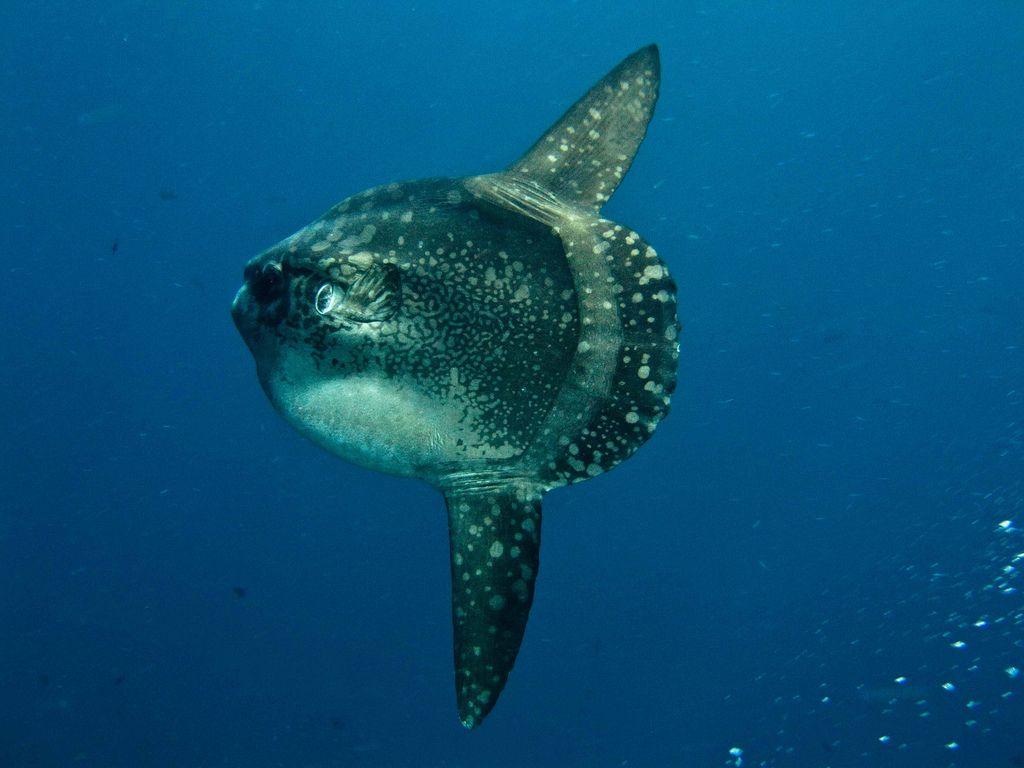
Ocean Sunfish (Mola mola)
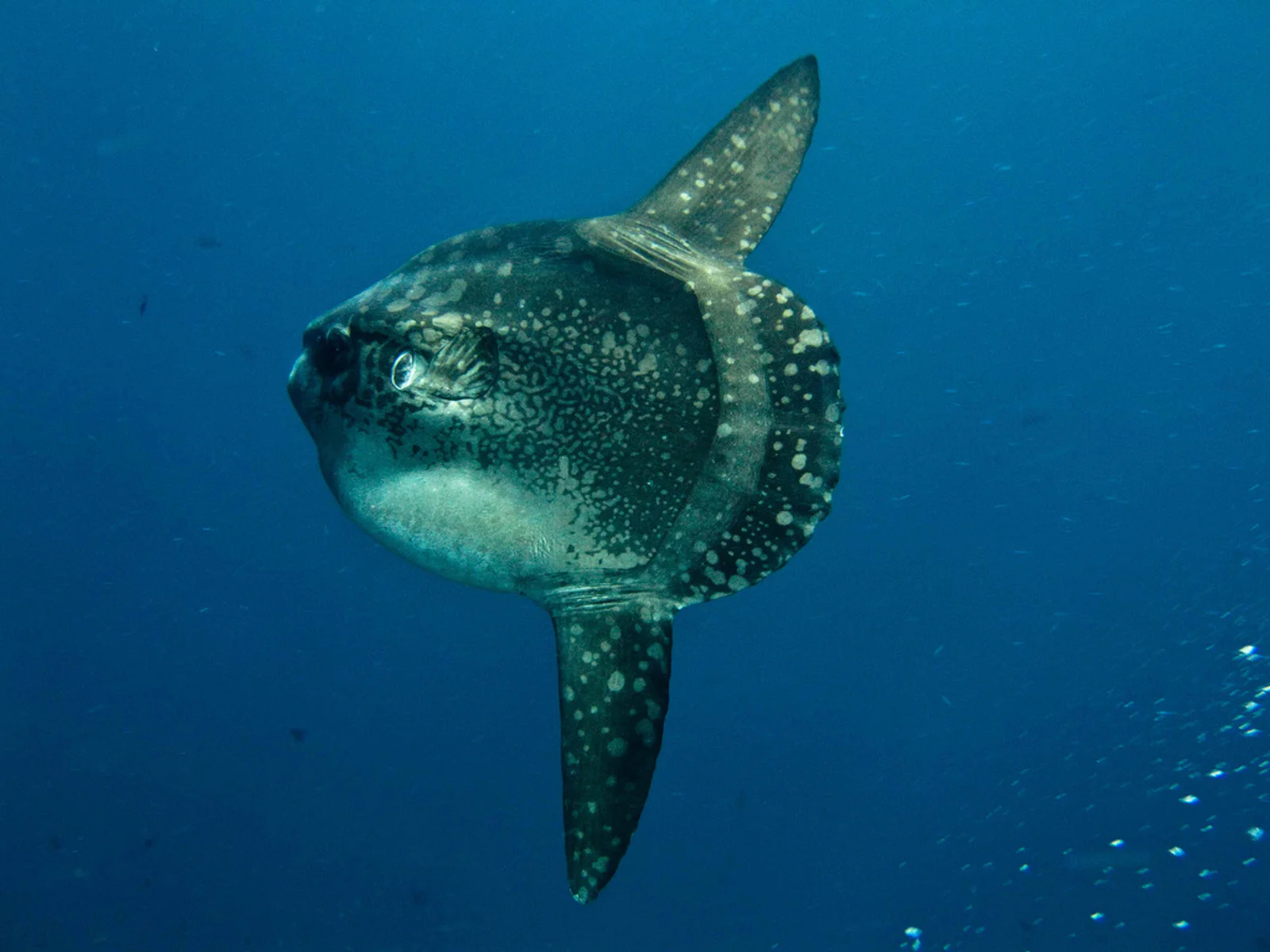
Mola mola
About Ocean Sunfish (Mola mola).
The Ocean Sunfish (Mola mola), a member of the Molidae family, is one of the ocean's most extraordinary and enigmatic inhabitants. Renowned as the heaviest known bony fish in the world, this species captivates divers with its immense size and peculiar, truncated appearance. Despite its often slow and deliberate movements, the Ocean Sunfish is a powerful swimmer, capable of traversing vast oceanic distances. Its conservation status is currently listed as Vulnerable, highlighting the importance of understanding and protecting these gentle giants.
Ocean Sunfish are found in the temperate and tropical waters of every ocean, including the Atlantic, Pacific, Indian, and Mediterranean Seas. While they primarily inhabit the open ocean, spending significant time at depths greater than 200 meters and capable of diving to 600-800 meters, they are known to ascend to shallower waters. This vertical migration is often for feeding on a diet predominantly consisting of jellyfish and other gelatinous zooplankton, though they also consume crustaceans, mollusks, small fish, and even eel larvae.
One of the most fascinating behaviors of the Ocean Sunfish is their visits to "cleaning stations" on reefs. Here, smaller reef fish such as bannerfish, emperor angelfish, wrasses, and butterflyfish meticulously remove the numerous parasites that can infest their thick skin. In locations like Nusa Penida and Crystal Bay, cold-water upwellings, typically occurring from July to October, draw these magnificent fish from the deep to these shallower cleaning stations, often found at depths of 18–40 meters, though they can sometimes be seen as shallow as 5–15 meters. Divers with Advanced Open Water certification are generally recommended for these deeper encounters. They are also known to bask on their sides at the surface, a behavior believed to help rewarm their bodies after deep, cold dives, or to attract seabirds to pick off parasites.
Identification
- Size and Shape: The Ocean Sunfish possesses a distinctive, laterally compressed, and ovular body, giving it the appearance of a giant fish head without a tail. Adults typically average 1.8 meters in length but can reach an impressive 3.3 meters and weigh over 2,000 kilograms, with the largest recorded specimen weighing 2,300 kilograms.
- Fins: A key identifying feature is the absence of a true caudal (tail) fin. Instead, it has a unique, rudder-like structure called a clavus, formed by fused fin rays. The Mola mola specifically has a wavy or frilly edge to its clavus. Its tall, prominent dorsal and anal fins are positioned opposite each other on the top and bottom of its body, which it flaps synchronously to propel itself through the water. Small, rounded pectoral fins are located near the gill openings and point upwards.
- Skin and Coloration: The skin is scaleless, thick, and leathery, often described as rubbery or rough like sandpaper, with irregular patches of tubercles. Coloration generally ranges from dark grey-brown to dark silvery grey on the back, head, and fin tips, fading to a white belly. They can also display white splotches and have the ability to change skin color for camouflage.
Where it lives.
The Ocean Sunfish, Mola mola, is a truly remarkable inhabitant of the world's oceans, known for its distinctive appearance and wide-ranging habitat. These pelagic giants are found in the tropical and temperate waters of every ocean, including the Atlantic, Pacific, Indian, and Mediterranean Seas. While primarily creatures of the open ocean, they occasionally venture closer to shore, particularly around kelp beds and deep coral reefs, often in search of cleaning stations.
- Depth Range: Despite their frequent sightings basking at the surface, Ocean Sunfish spend a significant portion of their lives actively hunting at considerable depths. They are regularly found at depths greater than 200 m and can dive to at least 480 m. Some records even indicate dives to an astonishing 1515 m. Divers are most likely to encounter them in the upper pelagic zone, typically within 30–70 m. These fish exhibit diel vertical migration, diving deep during the day and returning to warmer surface waters.
- Temperature Preference: Mola mola thrive in waters generally warmer than 10°C (50°F), with an optimal range often cited between 12–25°C. Prolonged exposure to temperatures of 12°C (54°F) or lower can lead to disorientation and even death. Their characteristic behavior of lying on their side at the surface, or "sunbathing," is believed to be a method of thermal recharging after deep dives into colder waters.
- Ecosystem Associations:
- Cleaning Stations: A crucial aspect of their habitat use involves visiting cleaning stations. In tropical regions, they seek out reef fishes, while in temperate areas, drifting kelp fields host cleaner wrasses and other fish that help remove the numerous parasites they accumulate. When basking at the surface, they may also allow seabirds to feed on parasites from their skin.
- Foraging Grounds: Ocean Sunfish are important predators of jellyfish and other gelatinous zooplankton, such as ctenophores and salps. Their diet can also include small fish, mollusks, crustaceans, and brittle stars. Their presence can indicate nutrient-rich waters, and they are often associated with upwelling fronts that provide favorable foraging habitats.
- Substrate and Structure: While largely found in the open water column, they are occasionally observed near structures like kelp mats and oil platforms.
For recreational divers, encountering an Ocean Sunfish, such as at dive sites like Crystal Bay, offers a unique glimpse into the life of these gentle giants as they navigate the vastness of the ocean, from sun-drenched surfaces to the mysterious deep.
How it behaves.
The Ocean Sunfish, Mola mola, is one of the world's heaviest bony fish, renowned for its distinctive flattened, disk-like body and truncated tail (clavus). These gentle giants, which can reach up to 3.3 meters in length and weigh over 2,000 kg, are a captivating sight for divers in temperate and tropical waters worldwide.
Underwater Encounter Behavior
Divers often encounter Ocean Sunfish near the surface, where they are known to "sunbathe" by drifting on their sides. This behavior is believed to help regulate their body temperature after deep dives into colder waters in search of food. It may also attract seabirds to pick off parasites from their thick, leathery skin. While generally shy, Ocean Sunfish can be curious and may approach divers, especially larger individuals in the open ocean. However, divers should maintain a respectful distance of at least 3 meters, particularly when the fish is at a cleaning station, and avoid swimming directly underneath them as bubbles can be disruptive. Touching them is discouraged as it can remove their protective mucus layer.
A notable behavior is their frequent visits to "cleaning stations" on reefs, such as those found at Crystal Bay. Here, smaller reef fish like wrasses, bannerfish, butterflyfish, and angelfish remove the numerous parasites (up to 54 species) that infest the sunfish's skin. During these cleaning sessions, sunfish may remain relatively stationary, sometimes hovering vertically, offering divers an extended opportunity for observation.
Feeding Habits
Despite their immense size, Ocean Sunfish primarily feed on gelatinous zooplankton, including jellyfish and salps. Their diet is more diverse than previously thought, also including small fish, squid, crustaceans, mollusks, and even seaweed and eel larvae. Due to the low nutritional value of jellyfish, Mola mola must consume large quantities to sustain their energy needs, often spending approximately 50% of their day foraging. They use their small, beak-like mouth, formed by fused teeth, to crush and shred their food. They are opportunistic feeders, diving to depths exceeding 600 meters to forage throughout the water column, from the surface to the seafloor.
Social Structure
Ocean Sunfish are generally considered solitary creatures. However, they are frequently observed in groups when visiting cleaning stations, where multiple individuals may aggregate to be cleaned by other fish. Young sunfish are known to school for protection, but this behavior is abandoned as they mature and grow larger. Little is known about their mating systems, though they are thought to have paired courtship, and adults must aggregate during mating season for external fertilization.
Notable Seasonal Patterns
Ocean Sunfish exhibit seasonal migration patterns, often moving to higher latitudes during spring and summer months to follow zooplankton migrations. In some regions, such as the northwest Atlantic, they move south in late summer and early fall as water temperatures decrease. In dive sites like Crystal Bay and the Nusa Penida Marine Park, Ocean Sunfish are observed with high frequency between July and October. This period coincides with cooler water temperatures, believed to be due to colder, deeper waters pushing up into the Indonesian Seas, which may draw the sunfish to shallower cleaning stations. They also display diel vertical migration, spending more time in shallower waters at night and making repeated deep dives below the thermocline during the day, likely in pursuit of prey.
Where to see it.
Evidence for philippines · No dive sites
General range is not evidence of occurrence at a specific dive site.
No documented dive-site associations in this destination yet.
Gallery.