Ocean Surgeonfish
 AI-generated
Image credit: AI-generated illustration · License unspecified · Source unspecified
Acanthurus tractus
About Ocean Surgeonfish.
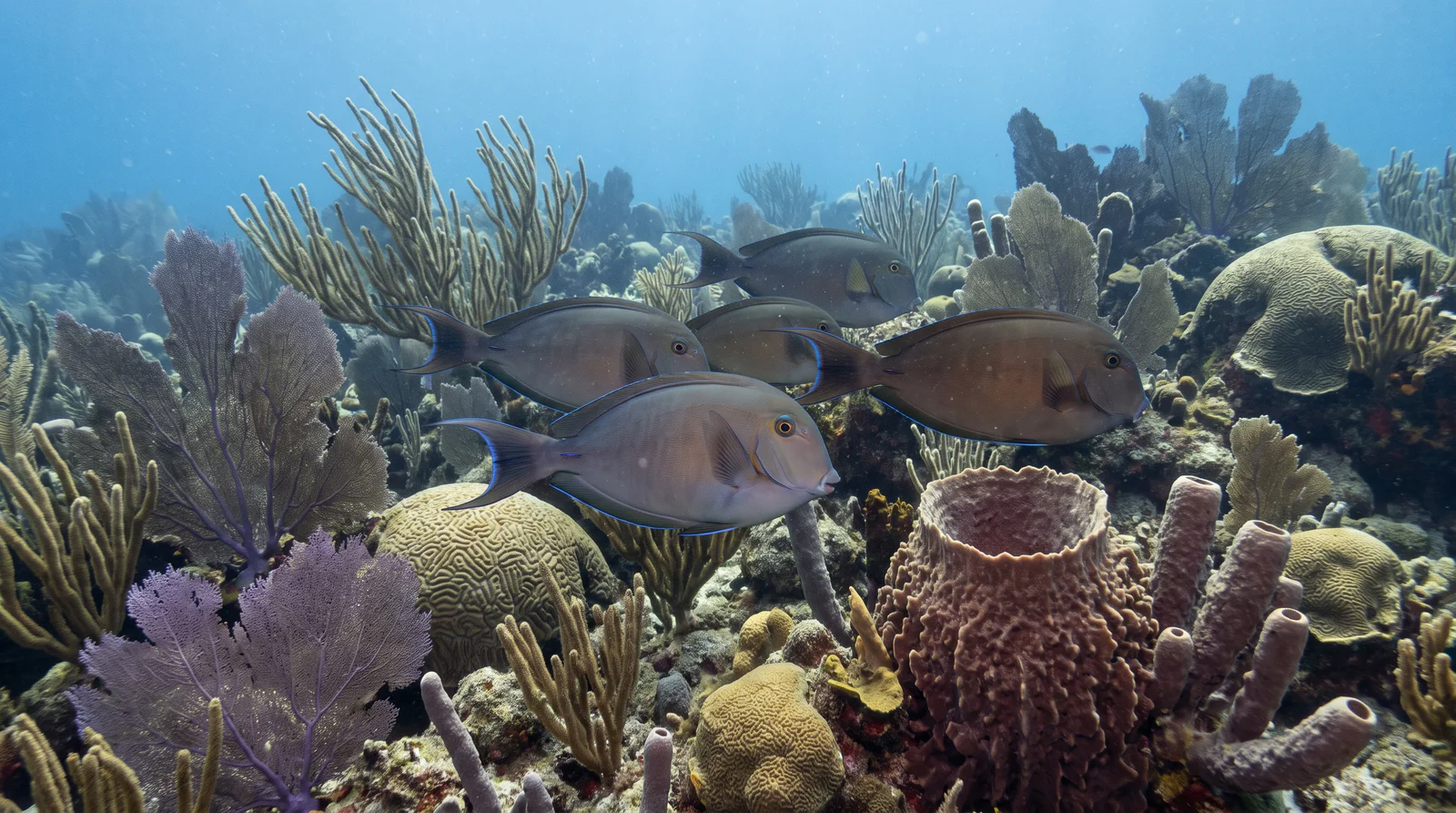
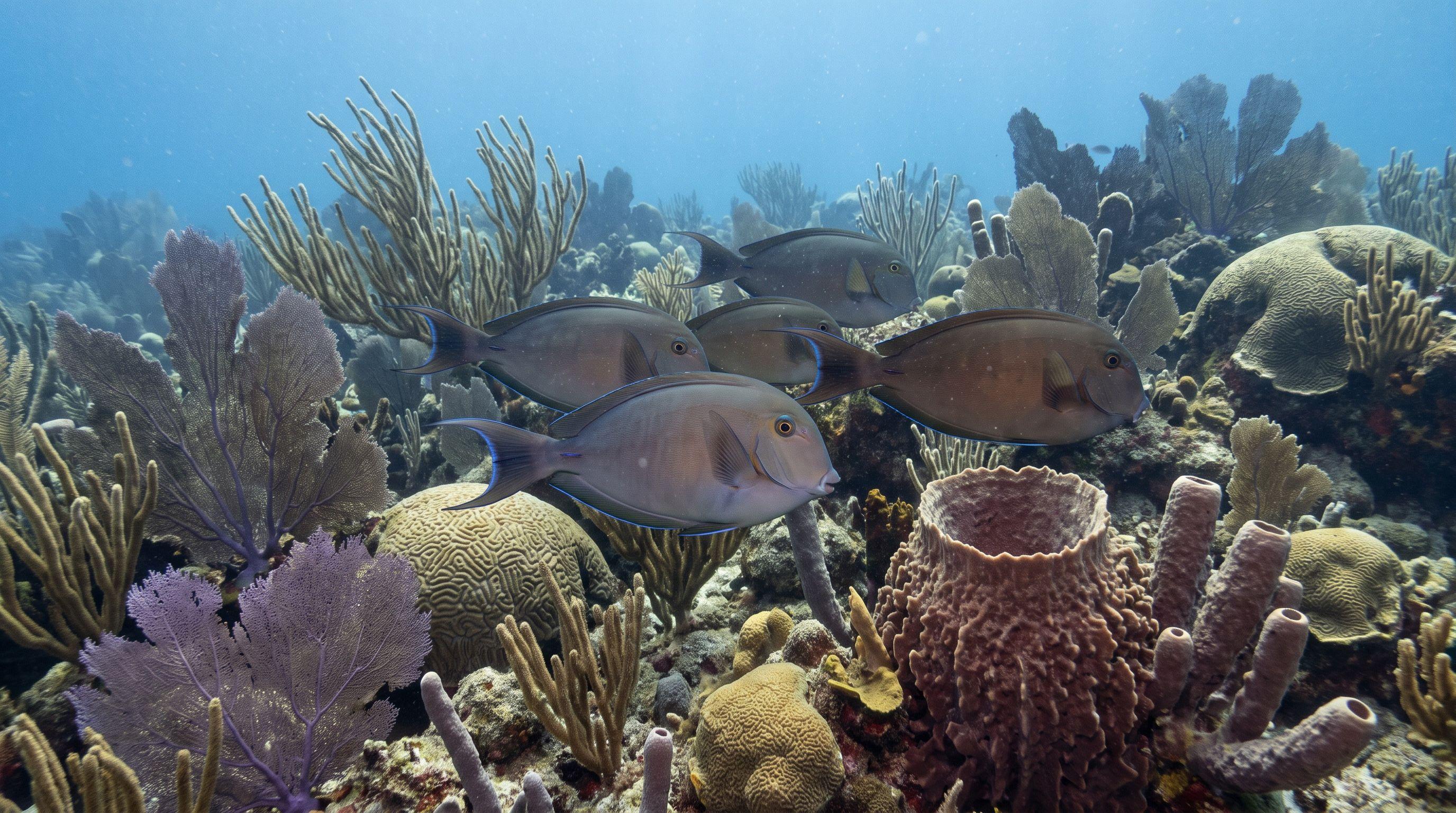
The Ocean Surgeonfish, Acanthurus tractus, is a striking marine species characterized by its deep, laterally compressed, and oval-shaped body. Typically reaching lengths of about 25 cm (10 in), this fish can grow to a maximum of 38 cm (15 in). Its head profile is notably steep, with large eyes positioned high on the sides of its head. The mouth is small and equipped with protrusible lips and spatulate teeth, perfectly adapted for its herbivorous diet. These specialized teeth allow it to efficiently graze on algal films found on reef surfaces.
A distinctive feature of all surgeonfish, including the Ocean Surgeonfish, is the presence of a razor-sharp, retractable spine located on each side of the caudal peduncle, which is the narrow area just before the tail fin. This spine can inflict painful wounds if the fish is handled without care, serving as a primary defense mechanism. Its fins are elongated, with the dorsal fin containing nine spines and 23 to 26 soft rays, and the anal fin possessing three spines and 21 to 23 soft rays. The caudal fin is concave or lunate, often displaying pointed tips and edged with blue or white, sometimes featuring a pale or white spot at its base. The pectoral fins are translucent and may exhibit a yellowish tint.
The coloration of the Ocean Surgeonfish is somewhat variable, allowing it to blend with its environment; it can appear light beige over sandy substrates and darker brown when found among rocks. Some individuals may have bluish-green flanks with subtle, almost invisible fine vertical striping. Short blue or yellow lines often radiate from the posterior margin of its eyes. An interesting characteristic is its ability to change color rapidly, a feature that aids in camouflage or communication. Its body is covered with tiny, rough, and tightly-spaced ctenoid scales. Until 2011, this species was considered synonymous with Acanthurus bahianus, but genetic and morphological studies confirmed its status as a distinct species primarily inhabiting the North Atlantic and Caribbean, while A. bahianus is found further south in the Atlantic off Brazil.
Where it lives.
The Ocean Surgeonfish, Acanthurus tractus, is native to the shallow subtidal areas of the western Atlantic Ocean, the Caribbean Sea, and specific regions of the Gulf of Mexico. Its geographical distribution spans from North Carolina in the United States, extending southward through the Bahamas, Bermuda, and Florida, down to Tuxpan, Mexico. It is also found throughout the broader Caribbean Sea and within significant marine protected areas such as the Flower Garden Banks National Marine Sanctuary in the Gulf of Mexico. While some broader historical ranges included Massachusetts and Brazil, current understanding differentiates it from a closely related species, Acanthurus bahianus, positioning A. tractus predominantly in the northern parts of this range.
This species primarily inhabits shallow coral and rocky reefs, as well as rocky shores that feature interspersed patches of sand. It can also be found in inshore grassy areas and seagrass meadows, utilizing these diverse environments for foraging and shelter. The Ocean Surgeonfish typically occupies depths ranging from approximately 2 meters (6.5 feet) down to about 56 meters (184 feet), with many sources indicating a common range between 11 and 45 meters (36 to 148 feet). It thrives in tropical waters, preferring temperatures between 21°C and 27°C (70°F and 81°F).
How it behaves.
The Ocean Surgeonfish is a diurnal species, meaning it is active during daylight hours, predominantly engaging in feeding activities. At night, it seeks refuge and protection within the crevices of the reef structure. As an obligate herbivore, its diet consists mainly of algal films that grow on coral and rock substrates. It plays a crucial ecological role in maintaining coral reef health by preventing excessive algal growth, which could otherwise smother corals.
During grazing, the Ocean Surgeonfish often ingests quantities of sand and calcareous material, which is then retained in its specialized gizzard-like stomach. This ingested material assists in the mechanical digestion of its algal diet. They are known to feed on various types of algae, including species from the genera Dictyota, Cladophora, Chaetomorpha, Ceramium, and Thalassia.
Socially, the Ocean Surgeonfish typically forms loose schools, often comprising five or more individuals. These groups sometimes expand into large feeding aggregations, occasionally intermingling with other species such as blue tangs and doctorfish. Schooling behavior is thought to offer benefits such as increased foraging time and enhanced predator detection. While generally not shy, these fish may exhibit caution in the presence of divers. Reproduction involves spawning events that occur in the water column, either in pairs or in massive aggregations that can include up to 20,000 individuals. The Ocean Surgeonfish has a lifespan of up to ten years.
Where to see it.
Evidence for philippines · No dive sites
General range is not evidence of occurrence at a specific dive site.
No documented dive-site associations in this destination yet.
Gallery.
 AI-generated
AI-generated illustration
Image credit: AI-generated illustration · License unspecified · Source unspecified