Orange Cup Coral
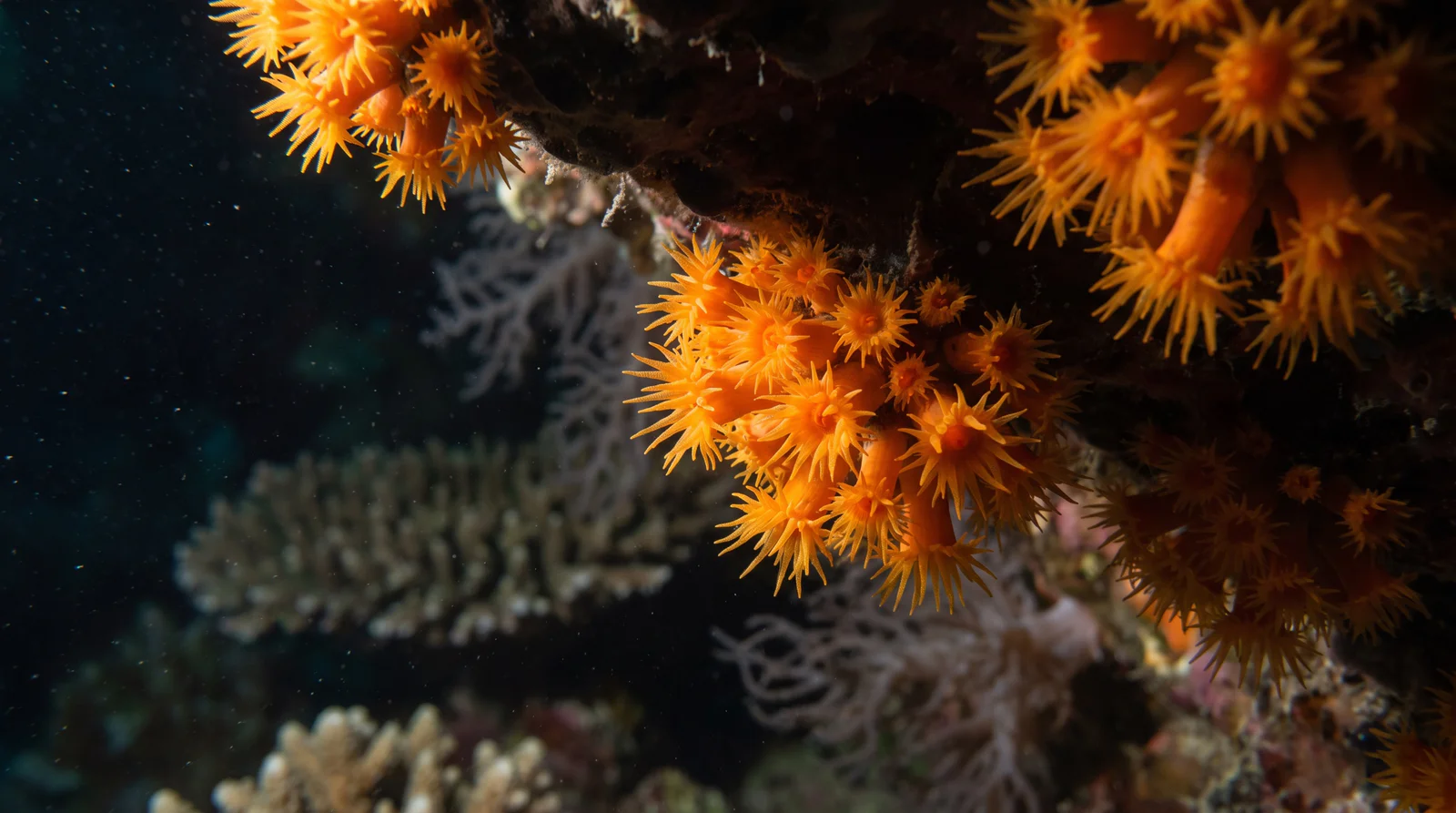 AI-generated
Image credit: AI-generated illustration · License unspecified · Source unspecified
Tubastraea coccinea
About Orange Cup Coral.
The Orange Cup Coral, scientifically known as Tubastraea coccinea, is a striking species of large-polyp stony coral often recognized for its vibrant sun-like colors that illuminate the dimly lit environments it inhabits. Unlike many tropical corals, this species is azooxanthellate, meaning it lacks symbiotic algae (zooxanthellae) in its tissues, and therefore does not rely on photosynthesis for sustenance. Instead, it is a heterotrophic feeder, capturing food from the water column.
Colonies of T. coccinea are typically composed of calcareous cups, or corallites, projecting from a spongy calcareous base, and can form spherical or mound-shaped clumps. The individual corallites, which are cylindrical, can measure up to 1.1 cm (0.43 inches) in diameter and may project up to 4 cm (1.6 inches) above the colony skeleton. The polyp body itself ranges from deep red to orange, while the numerous, translucent tentacles are a brilliant yellow to bright orange, often described as knobby and appearing flower-like when extended. These tentacles are located on the margin of the disk. The coralite skeleton is typically white with faint ribs, and within the corallite, 48 septa are arranged in a cyclical structure around a central skeletal projection called a columella. While it is a hard coral, T. coccinea is considered ahermatypic, meaning it does not contribute to the building of coral reefs. The overall colony structure can vary tremendously depending on environmental conditions, appearing more compact (ceroid or plocoid) in aggressive, shallow waters, and looser (phaceloid) in deeper, calmer environments. This adaptability in morphology further aids its widespread distribution and colonization success.
Where it lives.
The Orange Cup Coral (Tubastraea coccinea) is a highly adaptable species found in a variety of marine environments, primarily in shaded or low-light conditions. Its native range spans the vast Indo-Pacific region, encompassing areas from the Red Sea and Madagascar eastward to the tropical Americas, including the Gulf of California and Peru. Due to its non-photosynthetic nature, it thrives in habitats where light-dependent corals cannot survive. These include shaded vertical surfaces, caverns, caves, and beneath overhangs on rocky reefs.
Beyond its native range, T. coccinea has become an established invasive species in the Atlantic, Caribbean, Gulf of Mexico, and along the coast of Brazil, among other regions. In these invaded areas, it frequently colonizes both natural and artificial structures such as shipwrecks, oil and gas platforms, dock pilings, and various man-made materials including granite, cement, steel, and tile. This coral can be found from very shallow depths, as little as 0.3 meters (1 foot), down to considerable depths, reportedly as deep as 60 meters (197 feet). In specific regions like Brazil, it is most abundant in the shallow subtidal zone, typically between 0 and 3 meters (0 and 9.8 feet). The species prefers areas with strong water flow and high nutrient content, which are crucial for its heterotrophic feeding strategy.
How it behaves.
The Orange Cup Coral (Tubastraea coccinea) exhibits several distinct behaviors that contribute to its success, particularly as an invasive species in non-native regions. As a heterotrophic coral, its primary behavior involves nocturnal feeding. Polyps typically extend their vibrant tentacles at night, or in low-light conditions, to capture zooplankton from the surrounding water column. The relatively large size of its polyps allows it to capture substantial zooplankton, providing the necessary energy for growth and survival in environments unsuitable for photosynthetic corals. During the day, or when exposed to direct light, the polyps are usually withdrawn into their calcareous cups, making the colonies less conspicuous.
Reproduction in T. coccinea is highly versatile, occurring both sexually and asexually. Sexually, this coral is hermaphroditic, possessing both male and female gonads within a single polyp. Fertilization is internal, with sperm released into the water to be captured by other polyps, and eggs developing into free-swimming planula larvae within the gastrovascular cavity. These planktonic larvae can remain competent to settle for an extended period, up to 18 days, and potentially even longer (over 91 days), allowing for long-distance dispersal by ocean currents. Asexual reproduction occurs through budding, where new polyps develop from the base or oral disk, and also through the production of asexual planulae. The coral can also regenerate from fragments. This blend of reproductive strategies, combined with the ability of larvae to survive for weeks, significantly aids its rapid spread and colonization of new habitats. T. coccinea reaches reproductive maturity at a relatively small size, around 1.5 years of age, and breeds continuously throughout the year, with peak larval release often occurring during warmer months.
In terms of ecological interactions, T. coccinea is known for its aggressive competition for space with other benthic invertebrates, including native corals and sponges. It can form dense colonies that displace native species, leading to potential changes in ecosystem structure and function. Some studies suggest that the coral employs chemical defenses to deter predators and prevent other organisms from settling nearby. Divers observing these corals will typically see them with polyps extended in low light conditions, presenting their vibrant orange and yellow hues.
Where to see it.
Evidence for bonaire · No dive sites
General range is not evidence of occurrence at a specific dive site.
No documented dive-site associations in this destination yet.
Gallery.
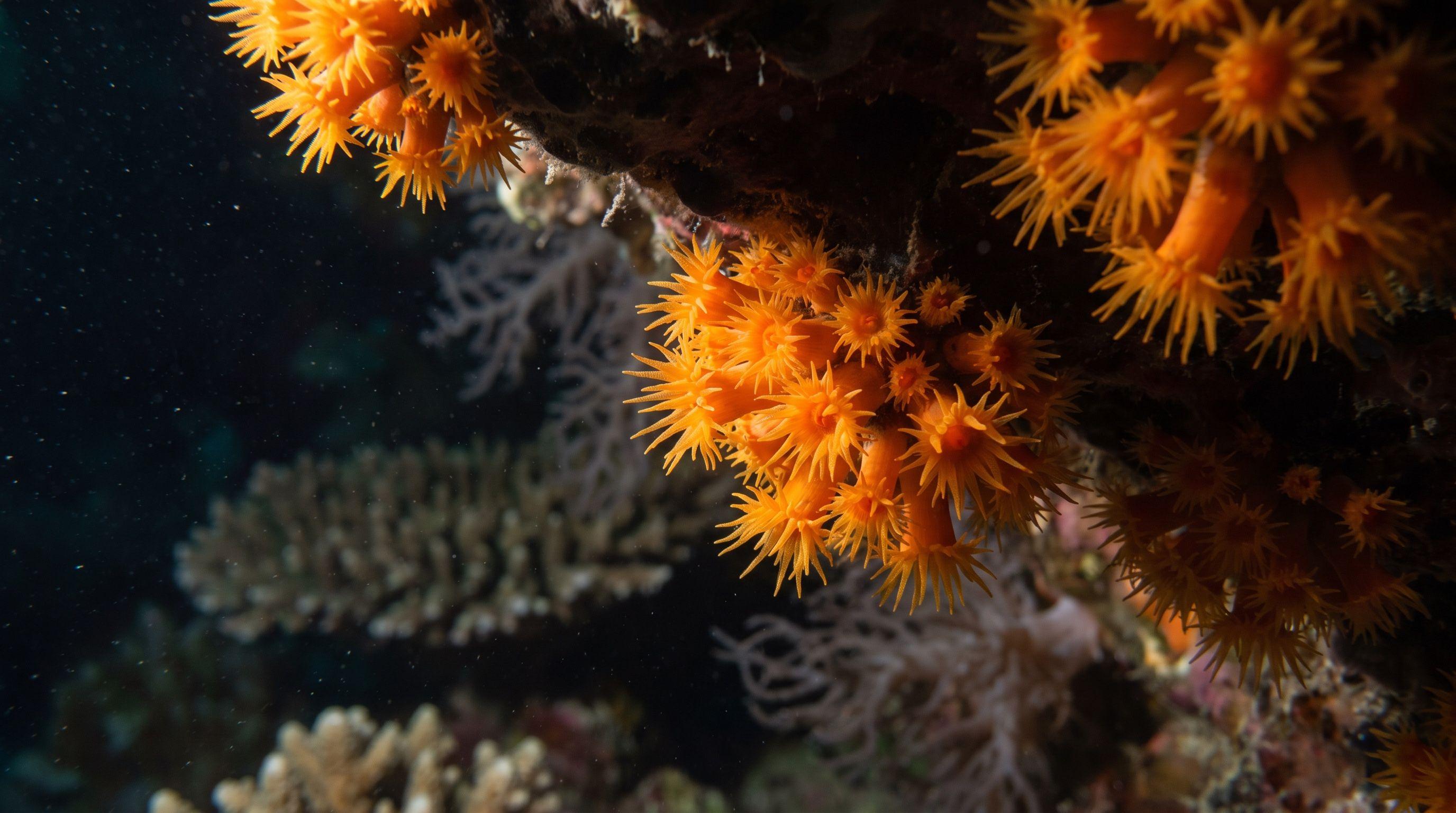 AI-generated
 illustration
Image credit: AI-generated illustration · License unspecified · Source unspecified