Skip to main contentSkip to navigation
diveity

Orangutan Crab

Orangutan Crab

Achaeus japonicus

Inachidaemacro2cm / 0.8inData Deficient

About Orangutan Crab.

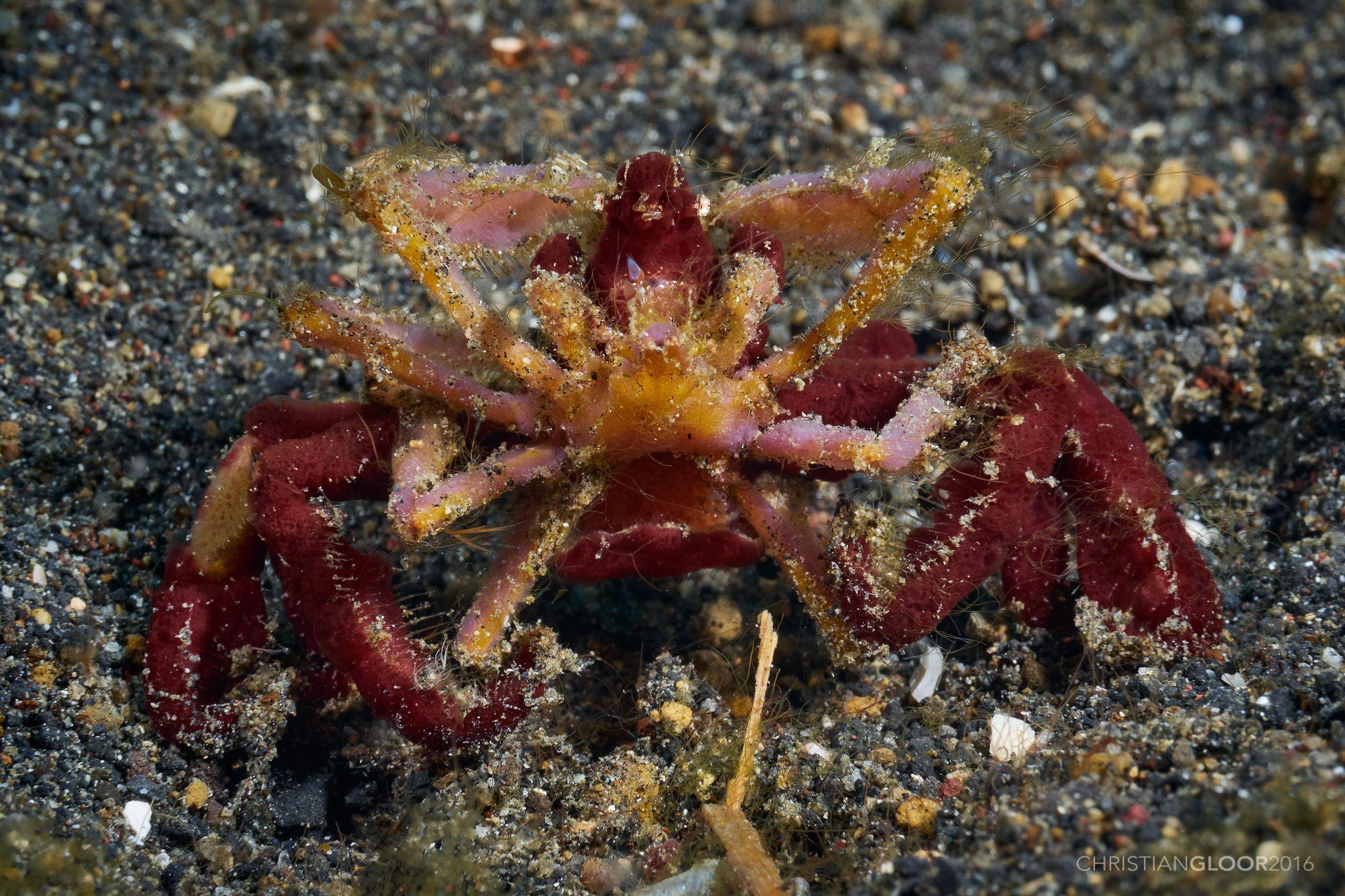
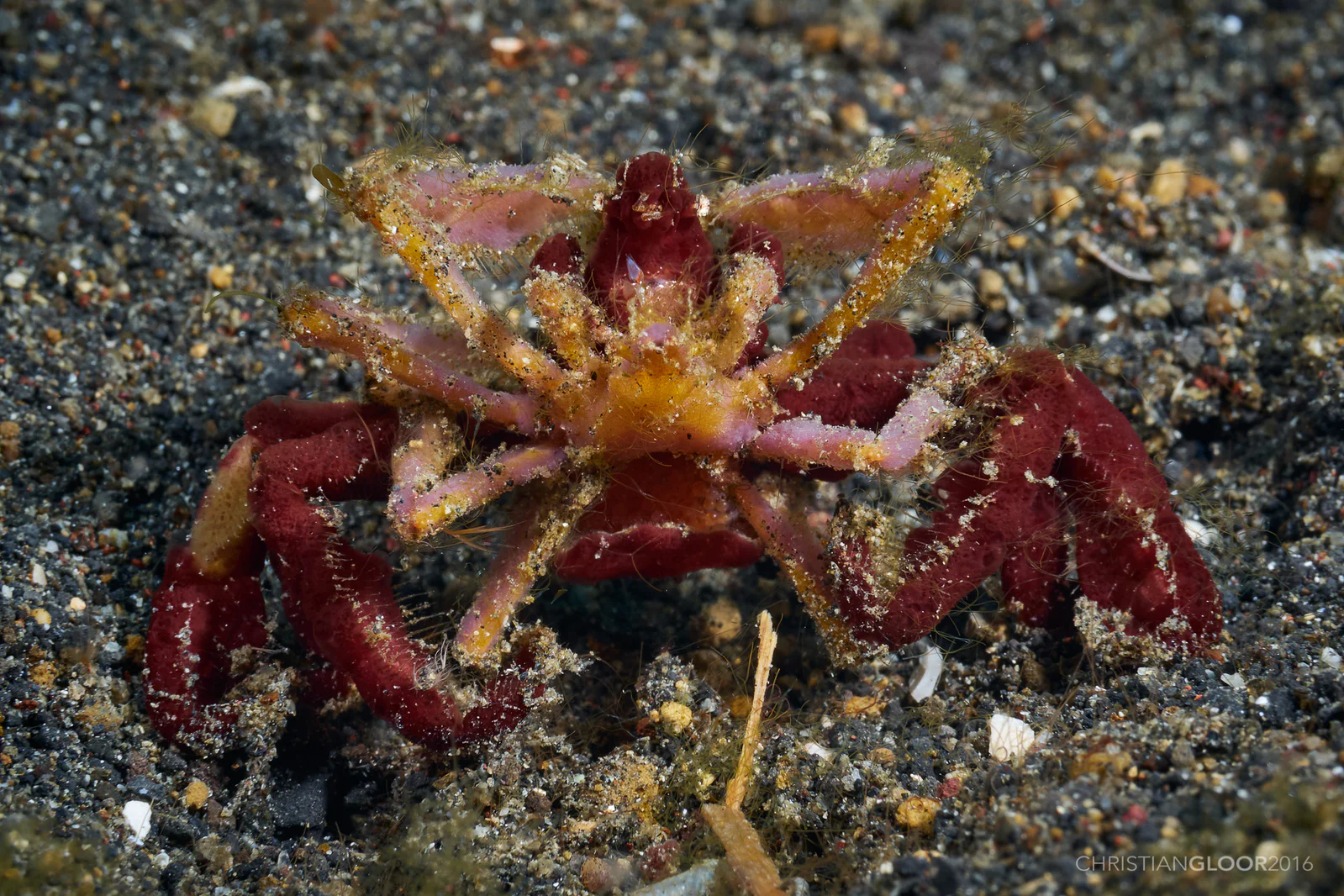
The Orangutan Crab, scientifically known as Achaeus japonicus, is a captivating macro species belonging to the Inachidae family, commonly referred to as spider crabs or decorator crabs. This tiny crustacean earns its evocative common name from the dense, reddish-brown hairs that cover its entire body, giving it the appearance of a miniature, shaggy orangutan of the sea.

Found throughout the tropical waters of the central Indo-Pacific, its range extends across regions such as Indonesia, Japan, the Philippines, the Great Barrier Reef, Maldives, and Fiji. Divers often encounter these crabs nestled within the polyps of large-polyp stony corals, most notably bubble coral (Plerogyra sinuosa), but also torch coral (Euphyllia glabrescens) and anchor coral (Euphyllia ancora). They typically inhabit coastal reefs at depths of 5–30 meters, though they are most frequently observed between 10–20 meters.

As a decorator crab, the Orangutan Crab is a master of camouflage, relying on its unique appearance and behavior to blend seamlessly with its environment. It is primarily an omnivorous detritivore, feeding on plankton, suspended particles, and organic detritus, which it collects using the fine hairs on its body and delicate pincers. While often solitary, they can sometimes be spotted in pairs. The conservation status of Achaeus japonicus is currently listed as Data Deficient, with the species being unevaluated by the IUCN Red List. This species has been observed by divers at dive sites such as Mawan (occasional) and Coral Cove (common).

Identification

  • Size: This is a truly tiny species, with a carapace typically measuring up to 2 cm (0.8 inches) in diameter.
  • Coloration and Hair: The most distinctive feature is its dense covering of fine, reddish-orange to rusty-brown hairs that give it a shaggy, moss-like appearance. These hairs often trap small bits of debris, further enhancing its camouflage.
  • Body Shape: The carapace is generally quite flat and roughly rounded. It possesses relatively long, slender legs that end in hooked claws.
  • Eyes: The crab has noticeably protruding eyes.
  • Habitat Association: Its strong association with specific corals, particularly bubble coral, is a key identification clue. Look for a small, hairy lump that seems to be part of the coral itself.
  • Behavior: The Orangutan Crab is often motionless when threatened, relying entirely on its exceptional camouflage to avoid detection. It tends to be more active at night, often hiding during the day.

Where it lives.

The Orangutan Crab (Achaeus japonicus) is a captivating macro species highly sought after by divers for its distinctive appearance and fascinating habitat associations. This small crab, typically reaching a maximum size of 2 cm (0.8 in), is a master of camouflage, blending seamlessly into its chosen environment.

Its primary habitat consists of tropical coral reefs, where it prefers sheltered areas such as lagoons, reef slopes, and protected reef flats. Divers commonly encounter the Orangutan Crab at depths of 10–20 m, though its range can extend from 3–30 m. Some observations suggest it can be found in deeper neritic zones up to 200 m, but these are less common for recreational diving.

The Orangutan Crab exhibits a strong commensal relationship with various cnidarians, utilizing them for both protection and camouflage. Its preferred hosts include:

  • Bubble coral (Plerogyra sinuosa), which it shows a particular favoritism for.
  • Other large-polyp stony corals, such as torch coral (Euphyllia glabrescens) and anchor (or hammer) coral (Euphyllia ancora).
  • Various species of anemones and other soft corals.

This species is widely distributed across the Indo-Pacific region. Its presence is noted throughout the Indian Ocean, including the waters around the Maldives, Western Indonesia, and the Andaman Sea. In the Pacific Ocean, its range is even more extensive, encompassing areas near Indonesia (such as Bali and Sulawesi), the Great Barrier Reef in Australia, the Philippines, Micronesia, southern Japan, Palau, Fiji, and the Solomon Islands. Dive sites like Mawan and Coral Cove are known locations where this species has been observed.

Typically, Orangutan Crabs are observed during the day, often tucked away within the polyps of their host corals, becoming more active at night. They are frequently seen individually or in pairs, adding a delightful element to any macro dive site.

How it behaves.

The Orangutan Crab (Achaeus japonicus) is a captivating macro species for divers, renowned for its exceptional camouflage and unique appearance. Measuring only up to 2 cm (0.8 in), this tiny crustacean is a master of disguise on Indo-Pacific coral reefs.

  • Underwater Encounter Behavior
    Divers seeking the Orangutan Crab will need keen eyes and patience, as its reddish-brown, hair-like setae allow it to blend seamlessly with its host coral, mimicking the texture and color of its surroundings. This sedentary crab is typically found clinging to various soft corals and large-polyp stony corals, most commonly bubble corals (*Plerogyra sinuosa*), torch corals (*Euphyllia glabrescens*), and anchor corals (*Euphyllia ancora*). When threatened, its primary defense mechanism is to remain motionless, relying entirely on its camouflage to avoid detection by predators. It is known to be shy, quickly hiding within the tentacles of its host coral. While it tends to hide during the day, it may be more active at night. These crabs are typically encountered at dive sites like Coral Cove, often at depths between 5–20 m, though they can be found from 2–30 m.
  • Feeding Habits
    The Orangutan Crab is an omnivorous detritivore and filter feeder. Its distinctive hairy body is not just for camouflage; it serves as a tool to trap plankton and other microscopic particles suspended in the water column. Using its small, delicate claws, the crab meticulously grooms its hairy appendages to collect these trapped food particles, along with organic detritus and potentially coral mucus, without harming its host. Opportunistically, it may also feed on small meaty foods, shrimp, or annelids that become available around its coral host. Interestingly, they can also be beneficial by consuming bristle worms.
  • Social Structure
    Orangutan Crabs generally lead solitary lives, primarily congregating only for mating purposes. However, divers may occasionally observe them in pairs or small groups of two to three individuals of varying sizes sharing the same host coral.
  • Notable Seasonal Patterns
    Specific seasonal patterns for the Orangutan Crab's reproduction or abundance are not extensively documented. When mating occurs, the female carries her eggs beneath her abdomen until the planktonic larvae are dispersed into the water column. Divers are likely to encounter this species year-round in suitable coral reef habitats within its range, such as those found at dive sites like Mawan and Coral Cove.

Where to see it.