Painted Frogfish
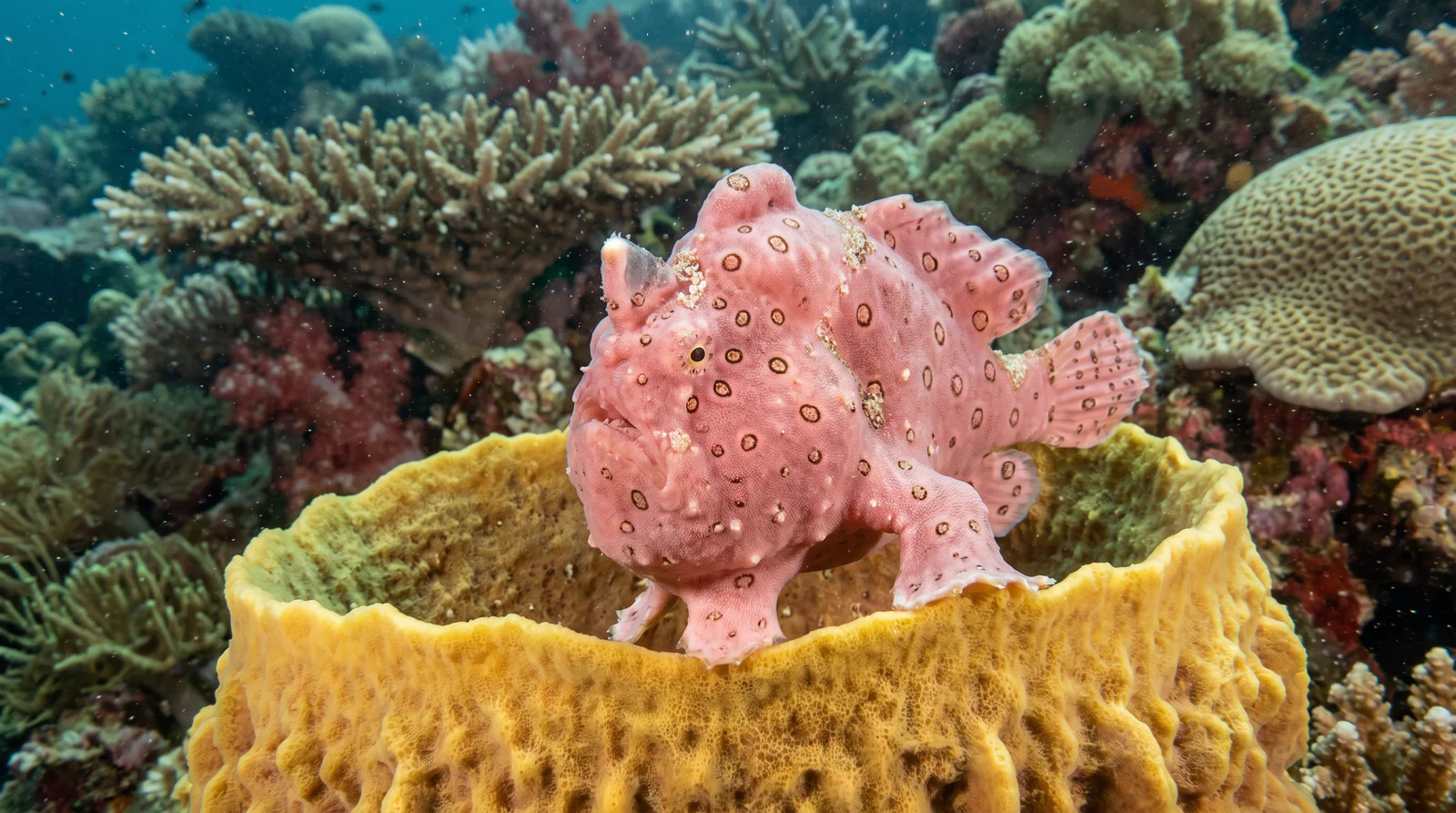 AI-generated
Image credit: AI-generated illustration · Diveity
Antennarius pictus
About Painted Frogfish.
The painted frogfish is an Indo-Pacific anglerfish up to 30 cm that changes colour to blend in; adults usually sit by sponges on sheltered reefs.
Names and classification
Under WoRMS, Antennarius pictus (Shaw, 1794) is the valid name, placed with the frogfishes (Antennariidae) among the anglerfishes (Lophiiformes); nine other names, Lophius pictus Shaw, 1794, Antennarius chironectes and Antennarius leprosus among them, are treated as synonyms. WoRMS takes this entry from FishBase, and the two agree on family and order. Wikipedia says George Shaw first described the species as Lophius pictus in 1794 with Tahiti as its type locality, that it belongs to the pictus species group of its genus, and that pictus means "painted". It gives spotted frogfish, black angler and painted anglerfish as other English names. Of the 27 names in FishBase's common-name list, the Japanese one is Ômon-izariuo; the list has no German or Spanish name, and the other sources give none either.
Identification
Wikipedia describes a round, stretchable body with soft skin covered in tiny spinules, a few small warts, scab-like blotches and many small eye spots that look like the holes of a sponge, and a mouth wide enough to swallow prey of its own size. White, black and the shades between them, cream, pink, yellow, red and brown among them, all occur, and the eye spots are usually darker than the ground colour; and Wikipedia says a frogfish can change its colour and pattern within a few weeks; juveniles may be dark with small yellow spots. FishBase likewise calls the colour variable and notes a black phase with white tips to the pectoral rays. The first dorsal spine, the illicium, is a fishing rod: FishBase says its bony part carries many dark crossbands and is nearly twice as long as the second spine, and ends in a lure that FishBase calls an elongate tuft of flattened appendages and Wikipedia likens to a small pinkish to brownish fish. Its fins carry 3 dorsal spines, 12 to 13 dorsal soft rays and 7 to 8 anal soft rays, according to FishBase. Wikipedia warns that some individuals are easily confused with Antennarius maculatus, which usually has red or orange margins on all its fins and few or no eye spots, while the painted frogfish has three eye spots on its tail fin.
Size and conservation
The largest published length is 30.0 cm total length, a figure FishBase gives for males or unsexed fish and Wikipedia repeats. The IUCN Red List classes it as Least Concern. FishBase gives the assessment date as 6 September 2021, citing the list's version 2025-2; Wikipedia's reference for the same category is an assessment by Pietsch published in 2022. CITES has not evaluated it, according to FishBase, which also calls it harmless and of no interest to fisheries; Wikipedia says it turns up now and then in the aquarium trade.
Where it lives.
The painted frogfish keeps to sheltered coral and rocky reefs, usually next to sponges, at depths of 0 to 75 m, chiefly in the upper 16 m.
Range
FishBase gives an Indo-Pacific range from the Red Sea and East Africa to the Hawaiian and Society Islands. Wikipedia gives more detail: along the East African coast from the Gulf of Aqaba south to Aliwal Shoal off South Africa, east to Hawaii and the Society Islands, north to Jeju Island in Korea and the Ryukyu Islands, and south to the Houtman Abrolhos off Western Australia and Lord Howe Island.
Depth and bottom
In FishBase the species lives on shallow sheltered reefs from the surface to 75 m, usually no deeper than 16 m; adults usually sit with sponges while juveniles live openly on sand or reef, mimicking small sponges or nudibranchs, FishBase adds. Sheltered rocky and coral reefs are its home in Wikipedia's account; the adults are usually found among sponges as deep as 75 m, 15 m is the average depth at which it occurs, and colourful sponges are where it prefers to live. WoRMS marks it as marine, and not as brackish or freshwater.
How it behaves.
The painted frogfish ambushes passing fish from the bottom, luring them with the fishing rod on its snout and swallowing prey close to its own size.
Feeding
In Wikipedia's account it is an ambush hunter with a large appetite: any small animal that passes within reach of its strike is a target, fish above all and at times a fish of its own genus, the prey sometimes nearly as large as itself. The same account says its angled pectoral fins and its pelvic fins move it over the bottom and hold it steady for an ambush. Its trophic level in FishBase, 4.4 (standard error 0.8), is a model value inferred from related species, not a measurement of what this fish eats.
Life cycle
Wikipedia describes a solitary, bottom-living fish, and FishBase records it as benthic. Wikipedia says the sexes are separate and come together only to mate, after which they do not tolerate each other, and that the male may kill or eat a female that stays too close. FishBase says the eggs are bound in a ribbon-like sheath or mass of jelly called an egg raft, and Wikipedia says they stay in the raft until they hatch and the larvae then drift in open water for their first two months.
Where to see it.
Evidence for visayas · 6 dive sites
General range is not evidence of occurrence at a specific dive site.
Arco Point
Panglao
Site occurrence not yet documented
Season not yet documented
No dated observations available.
Kalipayan
Panglao
Site occurrence not yet documented
Season not yet documented
No dated observations available.
Sahara
Dauin
Documented site occurrence
Season not yet documented
Source reviewed on 2026-10-02 · Source: Dauin Diving Center — undated named-site description; not a recent sighting record · Observation date not documented
San Miguel
Dauin
Documented site occurrence
Season not yet documented
Source reviewed on 2026-09-28 · Sources: Atlantis Dive Resorts and Liveaboard, La Tortue Diving Center · Observation date not documented
Talima Marine Sanctuary
Mactan
Documented site occurrence
Season not yet documented
Source reviewed on 2026-10-14 · Source: Bohol-Philippines.com, Olango Island dive sites (Polaris Dive Center text; Wayback snapshot 2024-11-08) · Observation date not documented
Talisay Pier
Cabilao Island
Site occurrence not yet documented
Unverified: Jan, Feb, Mar, Apr, May, Jun, Jul, Aug, Sep, Oct, Nov, Dec
No dated observations available.
Gallery.
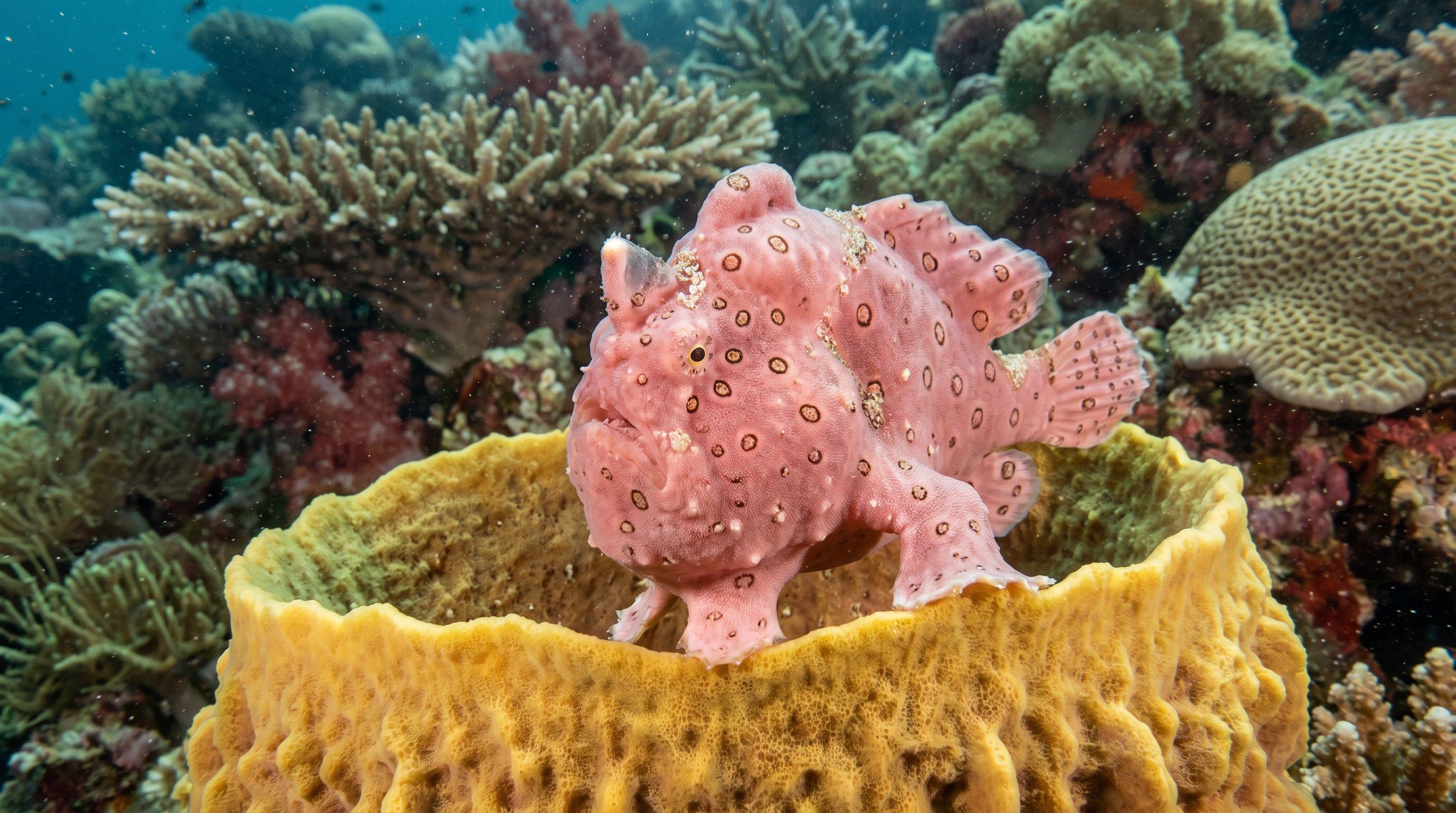 AI-generated
 illustration
Image credit: AI-generated illustration · Diveity