Sea Cucumber (assorted)
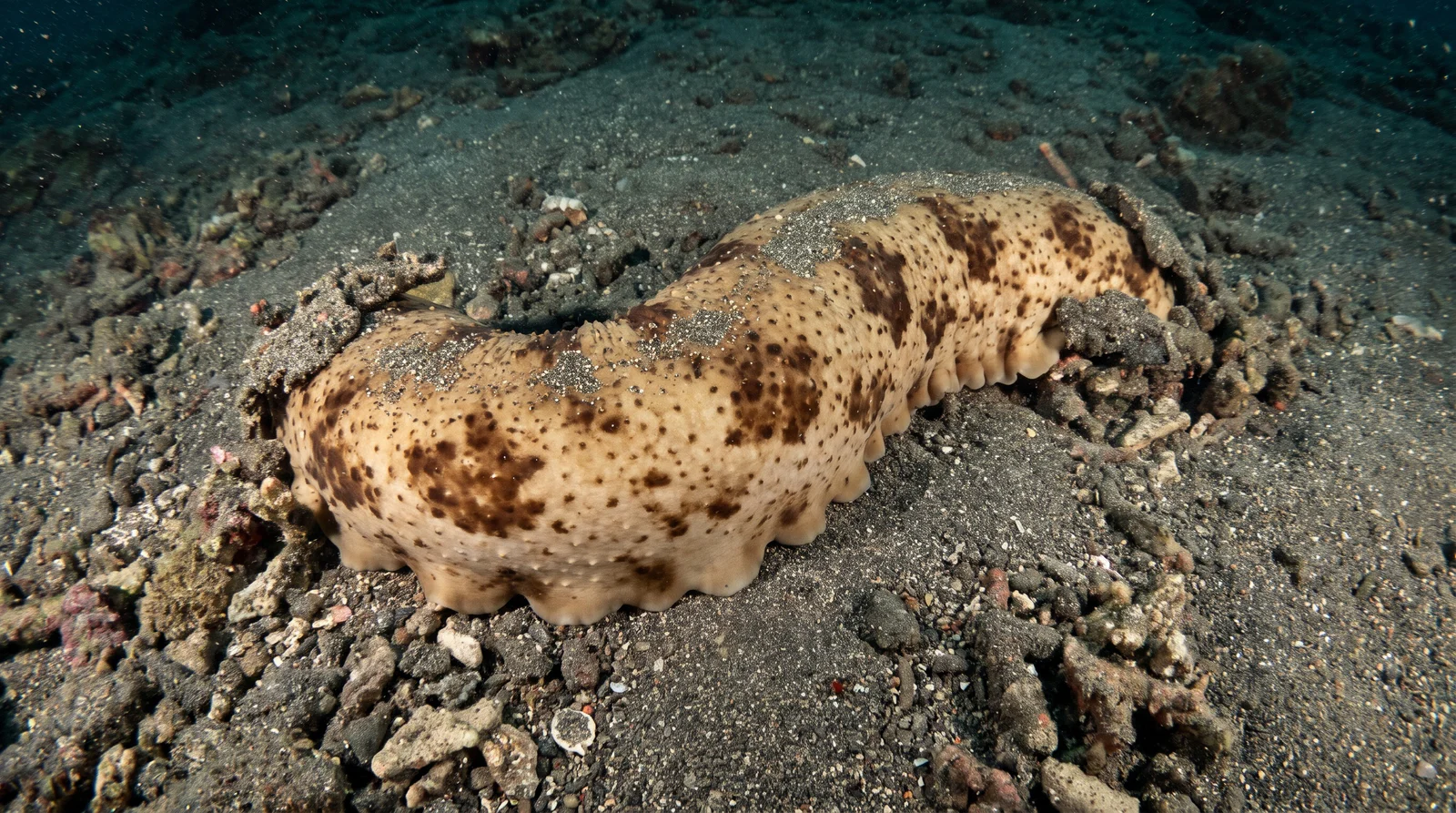 AI-generated
Image credit: AI-generated illustration · Generated for Diveity; no third-party rights · Higgsfield nano_banana_pro image generation
Holothuroidea spp.
About Sea Cucumber (assorted).
Sea cucumbers are echinoderms of the class Holothuroidea, which the World Register of Marine Species (WoRMS) lists as an accepted class. This group entry covers sightings where the species was not recorded.
Wikipedia says they have a leathery skin and an elongated body, and are named for their resemblance to the fruit of the cucumber plant. It says they are typically 10 to 30 cm long, that the smallest known species are just 3 mm long, and that the largest can reach 3 m. It describes them as detritivores that help recycle nutrients by breaking down detritus and other organic matter.
A conservation status is not given here, because this entry covers a whole class.
Where it lives.
Wikipedia describes sea cucumbers as benthic marine animals found on the sea floor worldwide, with the greatest number of species in the Asia-Pacific region.
Where Divers Find Them
In Tulamben, Bali, bali.com lists large sea cucumbers at Batu Kelebit, without saying which species.
How it behaves.
Wikipedia says sea cucumbers are generally scavengers, feeding on debris in the benthic zone, and that the diet of most consists of plankton and decaying organic matter. It says some coral-reef species defend themselves by expelling sticky tubules to entangle predators, which they may do when startled, and that the release can be accompanied by a toxic chemical called holothurin. It also says pearl fish live in the cloaca of sea cucumbers for protection and food.
Underwater Encounter Behavior
The sources cited here do not describe how sea cucumbers react to divers.
Where to see it.
Evidence from all destinations · 1 dive site
General range is not evidence of occurrence at a specific dive site.
Gallery.
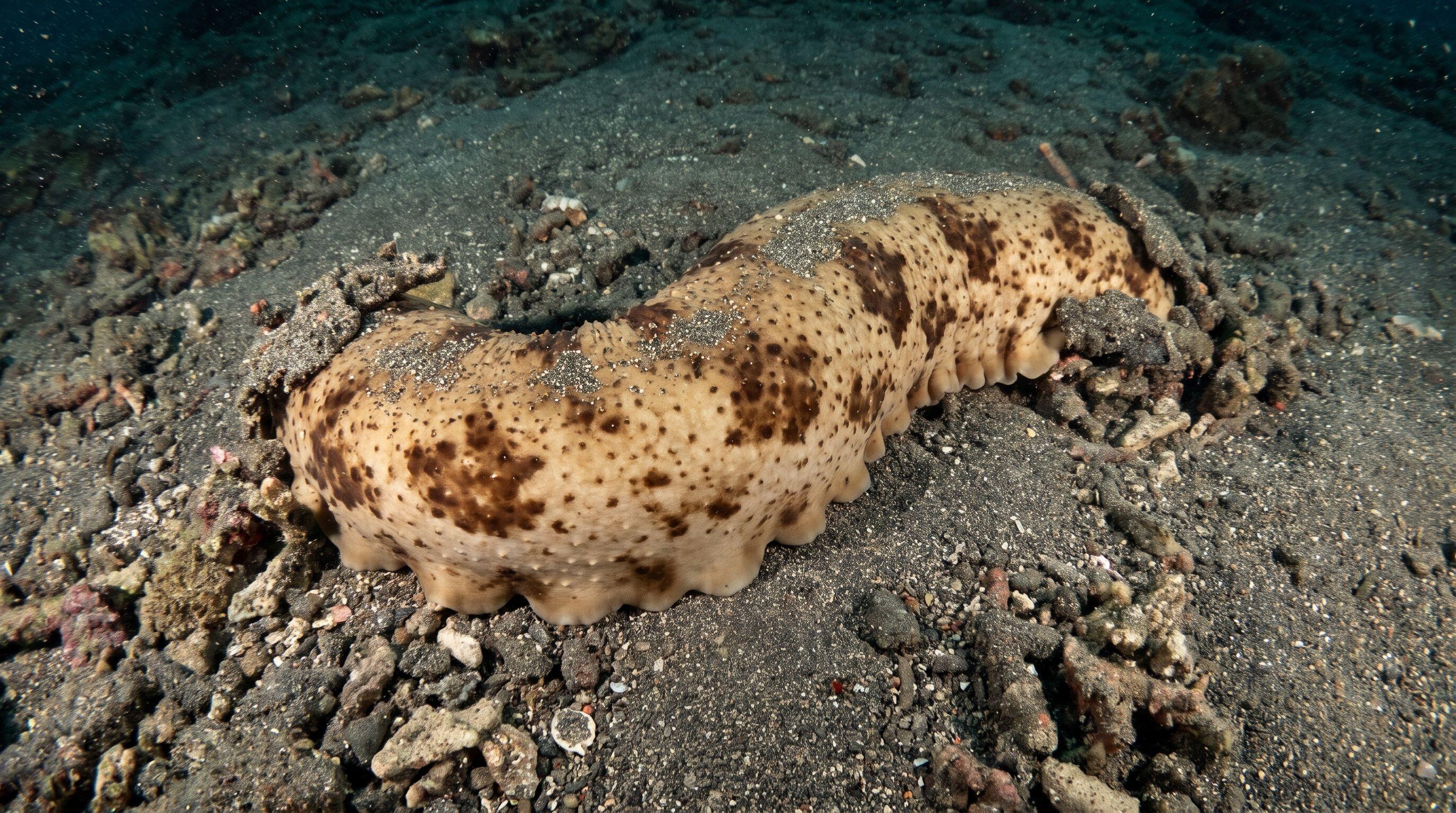 AI-generated
Image credit: AI-generated illustration · Generated for Diveity; no third-party rights · Higgsfield nano_banana_pro image generation