Sea Turtle (assorted)
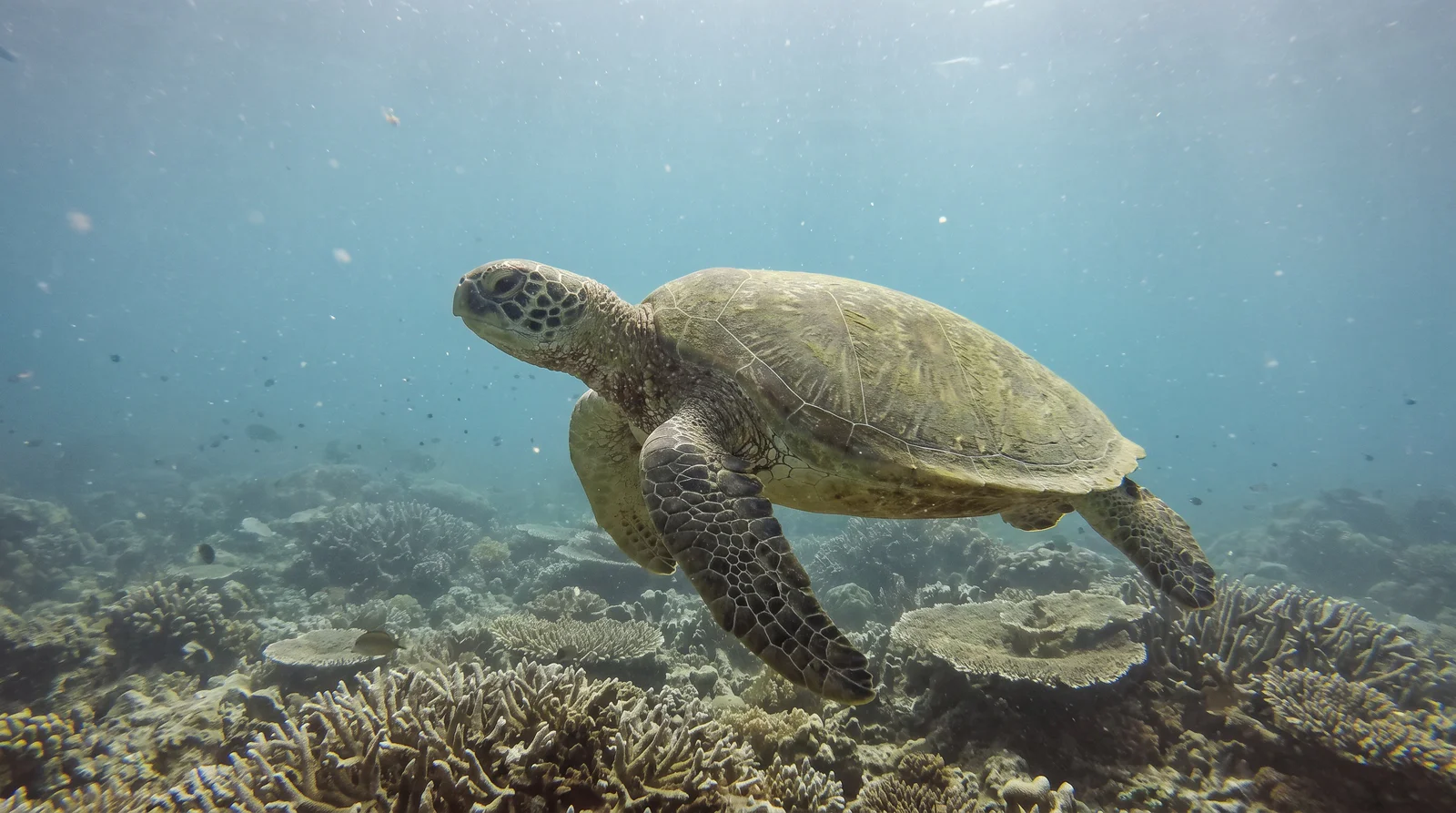 AI-generated
Image credit: AI-generated illustration · License unspecified · Source unspecified
Cheloniidae spp.
About Sea Turtle (assorted).
"Sea Turtle (assorted)" is a group entry for the hard-shelled sea turtles of the family Cheloniidae, used when a sighting or source records a turtle without naming the species. Seven living sea turtle species are generally recognised in two families: six hard-shelled species in Cheloniidae and a single species, the leatherback, in Dermochelyidae. The hard-shelled group includes the green, hawksbill, loggerhead, olive ridley, Kemp's ridley and flatback turtles. Where the animal can be identified, use the single-species entries for Green Sea Turtle, Hawksbill Turtle or Loggerhead Sea Turtle instead.
Sea turtles are reptiles. They breathe air and must surface to do so, and adult females come ashore to lay their eggs on beaches. Like other sea turtles, they cannot pull their head or flippers into the shell. Specialised salt glands let them get rid of the excess salt they take in from seawater.
Identification
- Shell: A hard, bony shell covered with horny plates (scutes). The arrangement of these scutes, together with the scales on the head, is the main way to separate species.
- Size: Varies by species. Among the hard-shelled turtles, adults range from about 0.6 m in Kemp's ridley to about 1.2 m shell length in the green turtle.
- Green turtle cues: A comparatively small head, a beak with serrated edges and two large scales between the eyes; the shell has five scutes down the middle and four along each side.
- Hawksbill cues: A tapered head with a narrow, beak-like mouth, two pairs of scales between the eyes, overlapping shell scutes and serrated shell edges.
- Loggerhead cues: A large head with powerful jaws and, in adults, a slightly heart-shaped, reddish-brown shell.
Conservation
Conservation status varies by species, so no single category is given for this group. As examples, NOAA Fisheries lists the hawksbill as Endangered throughout its range under the US Endangered Species Act and in CITES Appendix I, and the loggerhead is also listed in CITES Appendix I throughout its range. Reported threats include fisheries bycatch, loss of nesting beaches and coastal habitat, harvest of turtles and eggs, marine debris and vessel strikes.
Where it lives.
Hard-shelled sea turtles occur in tropical, subtropical and, for some species, temperate waters of the Atlantic, Pacific and Indian Oceans; green and loggerhead turtles also occur in the Mediterranean Sea. Green turtles are found worldwide, mainly in subtropical and temperate regions, while hawksbills live in tropical and subtropical waters of all the major oceans. Divers usually meet hard-shelled turtles in coastal waters, where adults and older juveniles feed, rest and travel.
Habitat use differs between species and life stages:
- Coral reefs: Hawksbills mostly live on nearshore feeding grounds, especially healthy coral reefs, where sponges are a preferred food in many areas.
- Seagrass and algae areas: Adult and nearshore juvenile green turtles feed in shallow coastal foraging grounds where seagrass and algae are the main food.
- Coastal seabeds: Loggerheads in coastal waters feed mostly on bottom-dwelling invertebrates such as molluscs and crustaceans.
- Mangrove estuaries: In the Eastern Pacific, large hawksbill populations use mangrove estuaries.
- Open ocean: Young turtles spend an early phase offshore; hawksbills, for example, spend about one to five years in open-ocean habitat, and young green turtles feed in floating drift communities such as Sargassum before moving to coastal waters.
All sea turtles migrate between feeding grounds and nesting beaches, and adult females return to land to lay their eggs. A turtle seen on a reef may therefore be a resident of a feeding area or an animal passing through. Because species and age classes overlap in many coastal areas, habitat alone is not a reliable guide to identification; check the head scales, beak and shell pattern where you can.
How it behaves.
Most encounters with hard-shelled sea turtles happen while they are feeding, resting on the bottom or swimming between areas. They are air-breathing reptiles and must return to the surface to breathe, so a turtle that begins to rise should be left a clear path upward.
Feeding
Diet depends on the species. Adult green turtles mainly eat algae and seagrasses, although they may also take invertebrates. Hawksbills prefer sponges in many areas and also eat algae, corals, molluscs, tunicates, crustaceans, sea urchins, small fish and jellyfish. Loggerheads are carnivores whose powerful jaws are built to crush bottom-dwelling prey such as molluscs and crustaceans. Young turtles in the open ocean feed differently: pelagic juvenile green turtles, for example, eat plant and animal life in floating drift communities. Watching what a turtle is eating can therefore help with identification.
Underwater Encounter Behavior
A turtle that is not disturbed may carry on feeding or resting while divers watch from a distance. Sudden movements, crowding or pursuit can make it stop feeding or swim away. Feeding or touching turtles changes their natural behaviour and can make them more vulnerable to harm.
Diver Tips
- Keep your distance: Observe from a respectful distance and let the turtle decide how close it comes.
- Never touch or feed: Do not handle, hold on to or offer food to turtles.
- Keep the way up open: Do not position yourself above a turtle or block its route to the surface.
- Record identifying features: A photograph of the side of the head and the top of the shell is often enough to confirm the species later.
- On boats: Watch for turtles at the surface, slow down and steer around them; NOAA Fisheries advises putting the engine in neutral when within 50 yards (about 45 m).
- On beaches: Do not disturb nesting turtles, nests or hatchlings.
Where to see it.
Evidence for davao gulf · 3 dive sites
General range is not evidence of occurrence at a specific dive site.
Kidopong
Davao Gulf
Documented site occurrence
Season not yet documented
Source reviewed on 2026-10-14 · Source: PADI dive-site page (contributor: South Shore Divers) · Observation date not documented
Mansud Wall
Davao Gulf
Documented site occurrence
Season not yet documented
Source reviewed on 2026-10-14 · Source: PADI dive-site page (contributor: South Shore Divers) · Observation date not documented
Tagbaobo
Davao Gulf
Documented site occurrence
Season not yet documented
Source reviewed on 2026-10-14 · Source: PADI dive-site page (contributor: South Shore Divers) · Observation date not documented
Gallery.
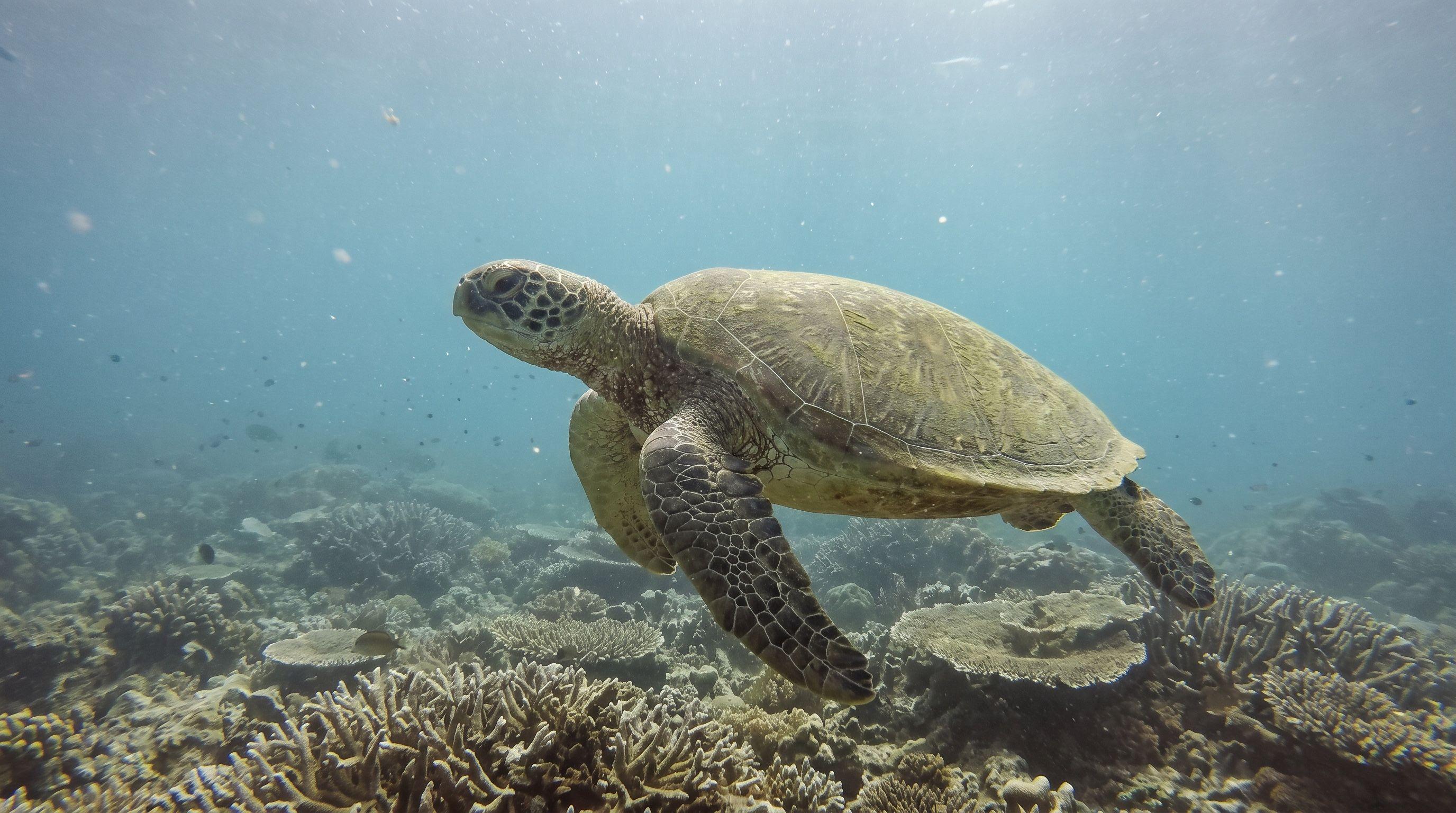 AI-generated
AI-generated illustration
Image credit: AI-generated illustration · License unspecified · Source unspecified