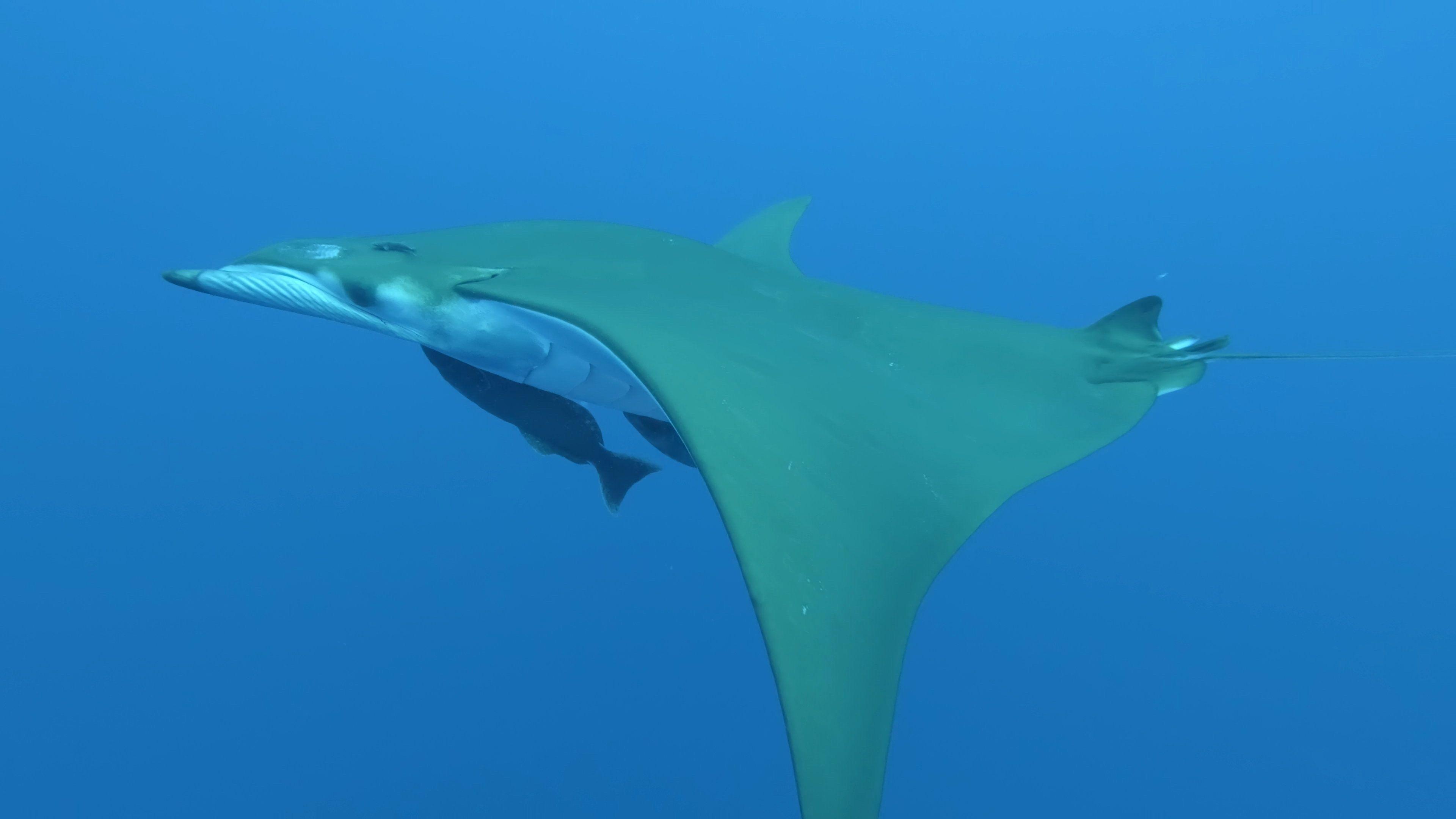
Sicklefin Devil Ray
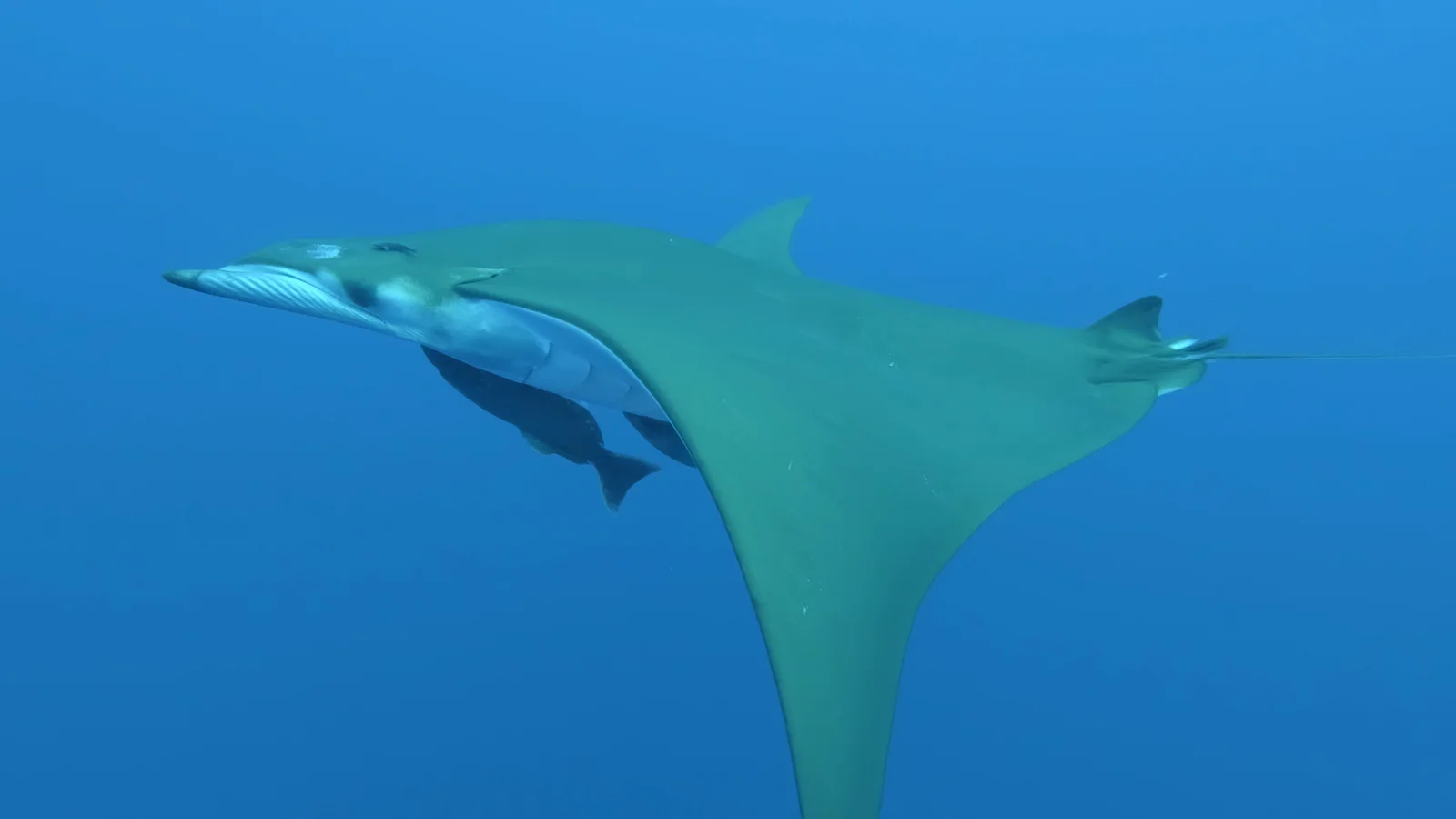
Mobula tarapacana
About Sicklefin Devil Ray.
The Sicklefin Devil Ray (Mobula tarapacana) is a majestic elasmobranch belonging to the family Mobulidae, which also includes manta rays. Known by several common names, including Chilean Devil Ray, Box Ray, Greater Guinean Mobula, and Spiny Mobula, this species is a truly impressive sight in the open ocean.
These highly migratory rays are found circumglobally in tropical and warm temperate waters, often frequenting oceanic environments but also observed in coastal areas, particularly around offshore pinnacles and seamounts. They are filter feeders, primarily consuming planktonic crustaceans and small fish. Divers may occasionally encounter them aggregating at productive dive sites such as Ticao Pass (Manta Bowl) and other Indo-Pacific seamounts, where they gather for plankton blooms and cleaning. They have also been observed in mass congregations in areas like the Azores Islands and off the US Atlantic coast.
Remarkably, Sicklefin Devil Rays are among the deepest-diving ocean animals, capable of descending to nearly 2,000 meters (6,562 feet) where water temperatures can plummet to under 4°C. They exhibit a fascinating behavior of basking in warmer surface waters for at least an hour before and after these deep dives, suggesting a period of thermal preparation and recovery.
Unfortunately, the Sicklefin Devil Ray is currently classified as Endangered on the IUCN Red List of Threatened Species. Their slow reproductive rate, with females giving birth to only a single pup annually after ovoviviparous development, makes them particularly vulnerable to threats such as bycatch in fisheries and targeted fishing for their valuable gill plates.
Identification
- Size: These are large rays, reaching an impressive maximum disc width (wingspan) of up to 3.7 meters (12 feet). Females tend to be slightly larger than males.
- Dorsal Coloration: The upper (dorsal) surface is typically a uniform olive-green to brownish or greyish-brown.
- Ventral Coloration: The underside is distinctly bicolored: white anteriorly (towards the front) and abruptly changing to a pale grey posteriorly (towards the back), with an irregular but clear zigzag line of demarcation between the two colors.
- Head and Cephalic Fins: They possess a projecting, relatively narrow head with short, horn-like cephalic fins. When not actively feeding, these cephalic fins are often curled forward and downward, giving the ray its "devil" moniker. During feeding, they unfurl to help funnel prey into the ventral mouth, which is located on the underside of the head.
- Pectoral Fins: The pectoral fins are large, triangular, and strongly curved backwards, giving them a falcate (sickle-shaped) appearance.
- Dorsal Fin: The small dorsal fin is plain, lacking any distinctive white tip.
- Tail: The tail is relatively short, measuring less than half the disc width, and is covered in scales. Crucially, it lacks a stinging spine.
- Skin and Gill Plates: The upper disc is densely covered with minute, thick, needle-like denticles. Their gill plates are distinctively bicoloured, with white inner lobes and black outer lobes, sometimes referred to as 'flower gills'. A pronounced ridge is also present along the dorsal midline.
Where it lives.
The Sicklefin Devil Ray (Mobula tarapacana) is a truly oceanic species, primarily inhabiting the vast open waters of tropical and warm temperate seas across the globe. This highly migratory ray is found circumtropically, with a widespread distribution that includes the Western Atlantic (from Venezuela to the US Atlantic coast and the Gulf of Mexico), Eastern Atlantic (Côte d'Ivoire, South Africa, Cape Verde, Azores, and Canary Islands), Indian Ocean (northwestern Red Sea, India), Western Pacific (Japan, Taiwan, tropical Australia, Indonesia, and the Philippines), and Eastern Pacific (from the Gulf of California to Chile).
While predominantly pelagic, Mobula tarapacana also ventures into coastal waters, particularly as a seasonal visitor to areas experiencing regular upwelling, around oceanic islands, offshore pinnacles, and seamounts. These environments provide rich feeding grounds for this filter-feeder, which primarily consumes planktonic crustaceans, such as krill, and small fish.
Known for its remarkable diving capabilities, the Sicklefin Devil Ray is one of the deepest-diving mobulids. While it spends a significant portion of its time in shallower waters, typically between the surface and 40 m, it undertakes extraordinary deep dives. These dives can reach depths of up to 1,900–2,000 m (6,232–6,562 ft) in search of prey, where water temperatures can plummet to below 4°C. Such deep foraging excursions can last between 60 to 90 minutes, though some dives to around 1,000 m, possibly for traveling, can extend up to 11 hours. Divers at dive sites like Manta Bowl may occasionally encounter these magnificent rays, often seen individually or sometimes forming impressive aggregations, particularly in areas like the Azores and Canary Islands.
How it behaves.
The Sicklefin Devil Ray (Mobula tarapacana) is a majestic and enigmatic species, offering divers a unique and often memorable encounter. With a maximum wingspan of 3.7 meters, these rays are known for their impressive size and graceful movements through the water. They are listed as Endangered, making sightings a special privilege for certified divers.
Underwater Encounter Behavior
Sicklefin Devil Rays are often described as curious and can display a high degree of social interaction with humans, making them a pleasure to observe underwater. Individuals have been known to circle and repeatedly approach divers, seemingly intrigued by their presence. Their elegant swimming patterns are a highlight for any diver fortunate enough to witness them. Due to their large size and sometimes dark ventral markings, divers occasionally mistake them for manta rays. To ensure respectful and safe interactions, divers are encouraged to follow established guidelines, such as the Devil Ray Code of Conduct.
Feeding Habits
As filter feeders, Sicklefin Devil Rays primarily consume planktonic crustaceans, such as krill and euphausiids. Their diet can also include small fish, crabs, molluscs, and even algae. A remarkable aspect of their feeding behavior is their ability to undertake deep dives, reaching depths of up to 2,000 meters (6,562 feet), to forage in nutrient-rich deep scattering layers where prey is denser. These deep dives often follow a stepwise pattern, where the ray descends to significant depths and then slowly ascends, pausing at various levels where prey concentrations are higher. Before and after these excursions into cold, deep waters, the rays typically spend at least an hour near warmer surface waters, suggesting a period of thermal preparation and recovery.
Social Structure
While Sicklefin Devil Rays are known to school loosely, they can also be encountered as solitary individuals or in smaller groups. However, they are particularly notable for forming large aggregations at specific dive sites, sometimes numbering over 50 individuals. These gatherings can serve various purposes, including feeding or reproduction. Courtship behaviors, such as males chasing and overlapping females, have been observed within these aggregations. It is also common to see them accompanied by remoras, and they may occasionally swim in proximity to oceanic manta rays.
Notable Seasonal Patterns Relevant to Divers
Sicklefin Devil Rays are highly migratory, undertaking long-distance journeys across tropical and warm temperate oceans. For divers, certain seasonal patterns offer increased chances of encounters. They are known to frequent the Sea of Cortez during the summer and autumn months. One of the most reliable locations for observing large aggregations is the Ambrosio Seamount off Santa Maria in the Azores, where they gather each summer from June to early October. During these periods, pregnant females often dominate the aggregations. Similarly, aggregations have been documented in the Canary Islands between May and September. These pelagic rays are known to visit oceanic seamounts and tidal passes, making such dive sites prime locations for potential sightings during their migratory movements.
Where to see it.
Evidence for philippines · 1 dive site
General range is not evidence of occurrence at a specific dive site.
Gallery.