Smooth Trunkfish
 AI-generated
Image credit: AI-generated illustration · License unspecified · Source unspecified
Lactophrys triqueter
About Smooth Trunkfish.
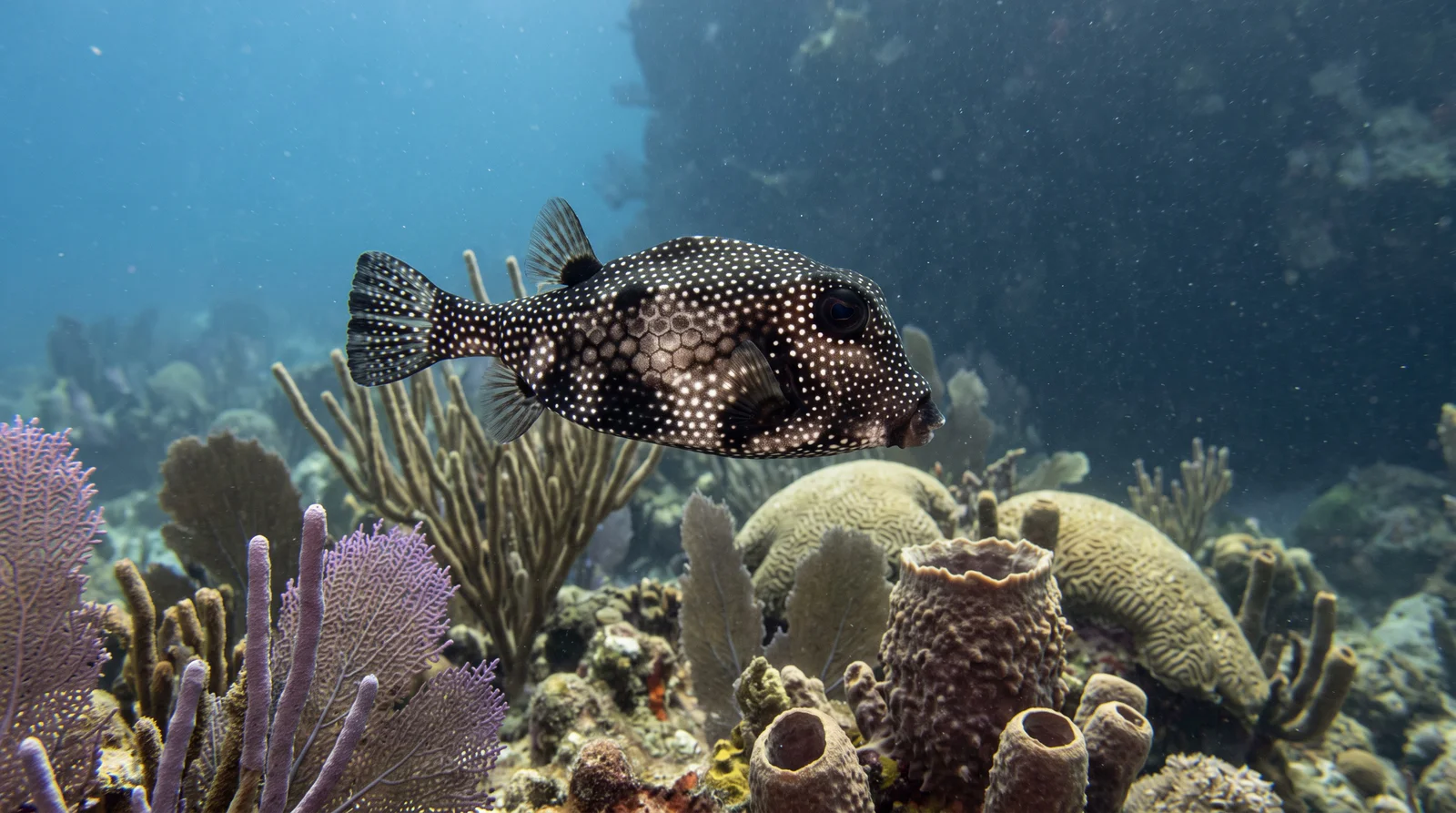
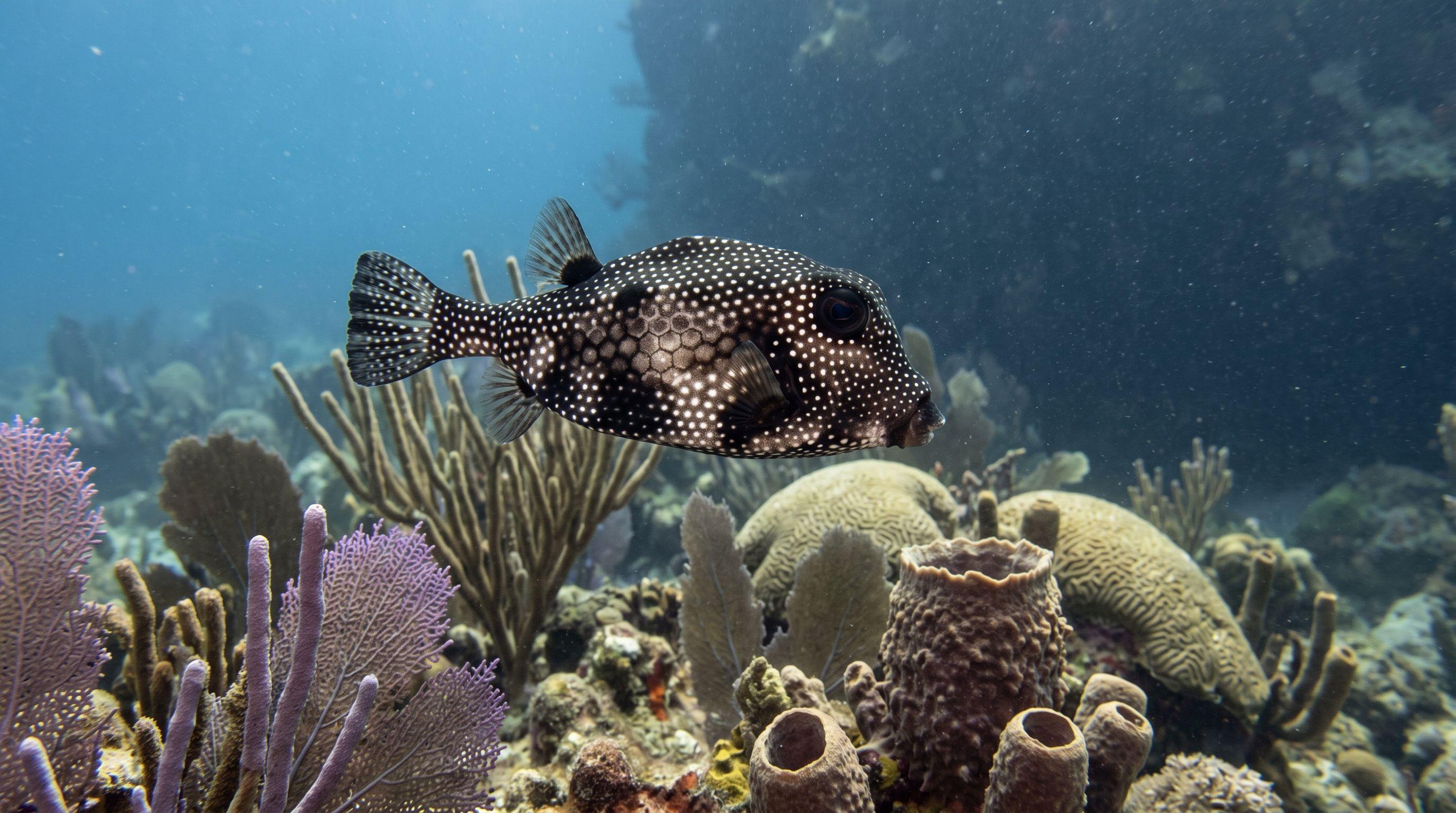
The Smooth Trunkfish, scientifically known as Lactophrys triqueter, is a fascinating marine species characterized by its distinctive angular and rigid body, encased in a bony carapace. When viewed head-on, its body presents a clearly triangular cross-section, which is also reflected in its specific name "triqueter," meaning "three angled". This unique armor-like exterior contributes to its somewhat stiff and deliberate swimming style. Typically, the Smooth Trunkfish exhibits a dark overall background coloration, which can range from brown to blackish, adorned with a dense network of small, pale white spots. These spots often coalesce into intricate hexagonal patterns, creating a striking honeycomb-like appearance on the midsection of its body. The tip of its snout and the area around its pectoral fins tend to be darker with fewer spots, and its eyes are distinctively black. Its fins are generally yellowish, often with dark bases and tips, while its tail is broad and fan-shaped, resembling a brush.
The species possesses a pointed snout culminating in protuberant, often described as "cute" or "puckered," lips that encircle a small mouth. This facial structure is crucial for its unique feeding method. While an average Smooth Trunkfish measures around 20 cm (8 inches), individuals can reach a maximum recorded length of 47 cm (19 inches). Interestingly, juvenile Smooth Trunkfish display a different coloration, typically having dark bodies covered in larger yellow spots, which gradually transition into the adult patterning. A rare golden morph, characterized by a yellow body with brown-edged white spots, has also been observed in some locations, particularly in the Gulf of Mexico, believed to be the result of a recessive gene mutation. A significant defense mechanism of the Smooth Trunkfish is its ability to secrete a toxic substance, ostracitoxin (also referred to as tetrodotoxin), from its skin mucus when threatened or stressed. This toxin can be lethal to other fish in a confined environment, such as an aquarium, highlighting the potent nature of this chemical defense. Despite this, it is considered harmless to divers.
Where it lives.
The Smooth Trunkfish (Lactophrys triqueter) is a widespread inhabitant of the Western Atlantic Ocean, with its geographical range extending from as far north as Canada and the Gulf of Maine, southward along the coast of the United States, throughout the Caribbean Sea and the Gulf of Mexico, and down to Brazil. This species is commonly found in tropical and subtropical waters, preferring warmer temperatures typically ranging between 72 and 79 degrees Fahrenheit. Its preferred habitats are diverse, encompassing both coral reefs and sandy seabeds. Divers and snorkelers often encounter them in both shallow reef environments and deeper areas, typically down to a depth of approximately 50 meters (164 feet). They show a particular affinity for rocky and reef environments, especially those areas characterized by the growth of sponges, which are a component of their diet. While capable of occupying various substrates, they are considered specialists rather than generalists in terms of reef habitat types. Their presence is a common sight in these environments, making them a well-known species for those exploring the underwater ecosystems of the region.
How it behaves.
The behavior of the Smooth Trunkfish (Lactophrys triqueter) is distinctive, primarily influenced by its rigid, box-like body structure. While generally considered a solitary species, it is not uncommon to observe them moving around in small groups for brief periods. Their unique physical form dictates a peculiar swimming style, often described as slow, deliberate, and almost helicopter-like. They propel themselves mainly using their small dorsal and anal fins in a rotary motion, while the tail, which is shaped like a brush, acts as a rudder for steering. Despite their seemingly clumsy or sluggish appearance, these fish can surprisingly accelerate quickly when necessary, utilizing their tails for bursts of speed.
A notable aspect of their feeding behavior involves their specialized mouthparts. The Smooth Trunkfish uses its protuberant lips to expel focused jets of water onto the sandy seabed. This action cleverly disturbs the sediment, uncovering shallowly buried benthic invertebrates that constitute their primary diet. Their diet is varied, consisting of mollusks, polychaete worms, acorn worms, peanut worms, small crustaceans, sponges, tunicates, and even some algae.
For defense, the Smooth Trunkfish relies on its bony armor and the production of a potent skin toxin, ostracitoxin. When stressed or threatened, this toxin can be released into the surrounding water, serving as a deterrent against predators. Despite this chemical defense, Smooth Trunkfish are generally quite amiable and are known to be easily approached by divers. They often continue their foraging activities, blowing jets of water into the sand, even when divers are nearby, as long as the approach is calm and unthreatening.
Where to see it.
Evidence for philippines · No dive sites
General range is not evidence of occurrence at a specific dive site.
No documented dive-site associations in this destination yet.
Gallery.
 AI-generated
AI-generated illustration
Image credit: AI-generated illustration · License unspecified · Source unspecified