Snapper (assorted)
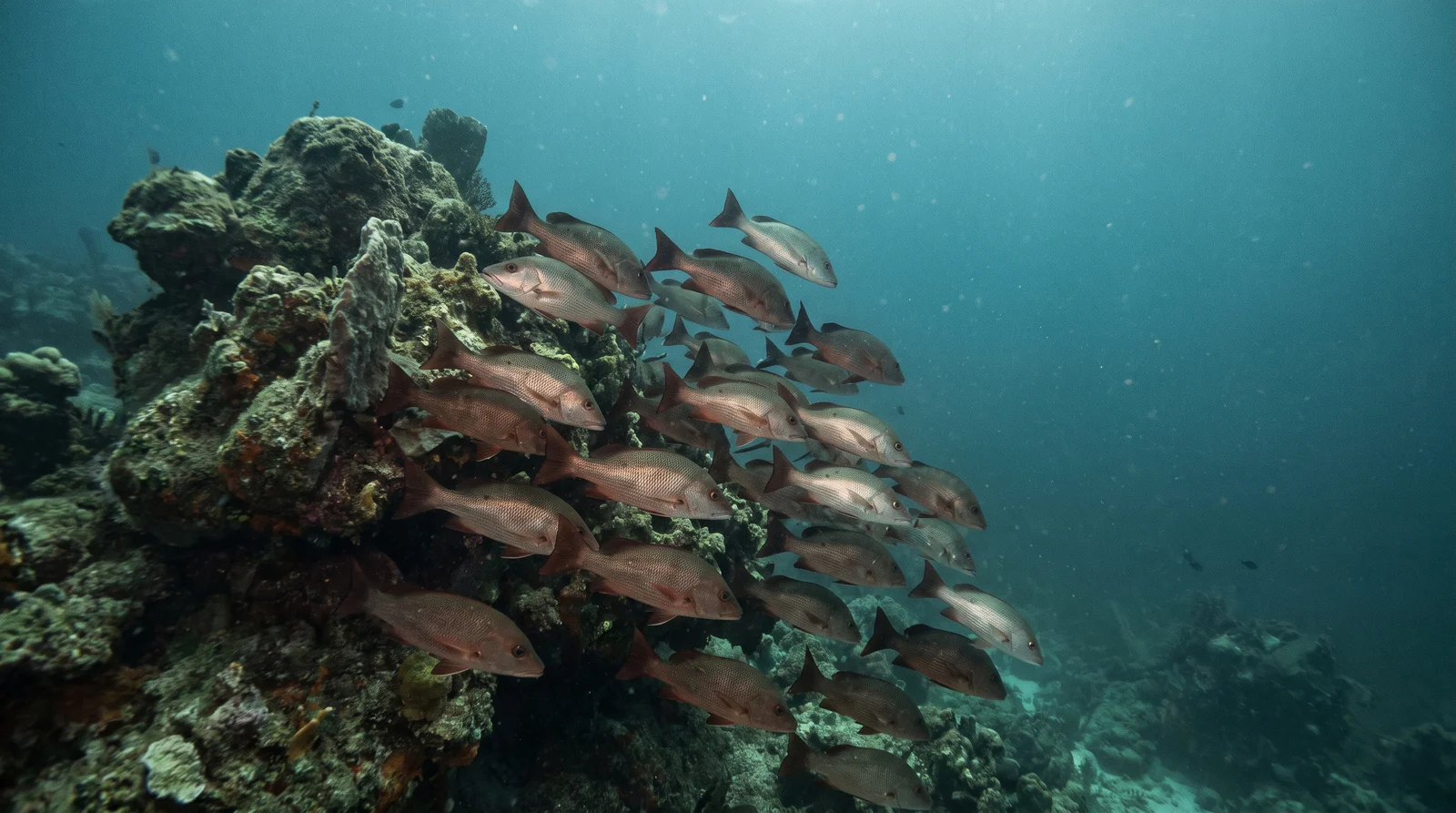 AI-generated
Image credit: AI-generated illustration · License unspecified · Source unspecified
Lutjanidae spp.
About Snapper (assorted).
"Snapper (assorted)" covers sightings of snappers, family Lutjanidae, where the species was not identified. FishBase lists 139 species in 21 genera, found in tropical and subtropical waters of the Atlantic, Indian and Pacific Oceans. Many snappers are common on reefs and several species often mix, so a general entry is useful. When the species is known, use a dedicated entry such as Bluestripe, Two-spot, Humpback, Black, Midnight or Checkered Snapper.
Most snappers are predators of crustaceans and fishes, although several species feed on plankton. They are valued as food fish, and some are sometimes a cause of ciguatera poisoning.
Identification
- Dorsal fin: Continuous or slightly notched, with 10-12 spines and 10-17 soft rays.
- Mouth: Moderate to large, at the front of the head, with enlarged canine teeth in the jaws.
- Anal fin: Three spines and 7-11 soft rays.
- Size: Varies by species, up to about 1 m. The common bluestripe snapper reaches about 40 cm, and the two-spot red snapper about 90 cm and 12.5 kg.
- Markings: Stripes, spots and overall colour are often the quickest field marks. Young two-spot red snappers and some adults, for example, show two silvery-white spots on the back.
Juveniles Look Different
Juvenile snappers may look and live quite differently from adults. Juvenile two-spot red snappers mimic Chromis damselfishes, and the young of several species live in seagrass beds rather than on the reef. A small, unfamiliar fish in a seagrass area may therefore be a young snapper.
Why a General Entry
Groups of snappers can contain more than one species, and similar colour patterns occur in several species. Recording "snapper" when the species is uncertain keeps the log accurate. Notes on stripes, spots and fin colour, or a clear photo, can help identify the species later.
Conservation status varies by species. For example, the common bluestripe snapper (Lutjanus kasmira), the two-spot red snapper (Lutjanus bohar) and the humpback red snapper (Lutjanus gibbus) are listed as Least Concern (assessed 2015).
Where it lives.
Snappers are mainly marine fishes that live near the bottom, from shallow water down to depths of about 450 m. They are rarely found in estuaries, although some species enter fresh water to feed. Most divers meet them on and around coral reefs.
Typical Habitats
- Coral reefs: Adults of many species live on coral reefs, from sheltered lagoons to outer reef slopes. The two-spot red snapper is often seen near steep outer reef slopes.
- Reef structure and wrecks: The common bluestripe snapper is frequently found in large aggregations around coral formations, caves and wrecks during the day.
- Nursery areas: Juveniles of several species use seagrass beds, often around patch reefs, and mixed sand-and-coral areas of shallow, sheltered reefs.
- Deeper water: Some species also range well below recreational depths; the common bluestripe snapper is recorded from 3 to 265 m, usually 30-150 m.
Depth, Temperature and Distribution
Listed depth ranges show the spread within the family: about 0-180 m (usually 10-70 m) for the two-spot red snapper and 1-150 m for the humpback red snapper. The common bluestripe snapper is listed for tropical water of 20-28 °C. Distribution also varies: the two-spot red snapper is an Indo-Pacific species that is more common around oceanic islands than along continental coasts, while the common bluestripe snapper ranges from the Red Sea and East Africa to the Marquesas and Line Islands, north to southern Japan and south to Australia.
Because the young of several species grow up in seagrass before moving to the reef, both habitats matter for the snapper populations divers see.
How it behaves.
Snappers are active predators. Most species hunt crustaceans and fishes, and several feed on plankton. Diets are often broad: the common bluestripe snapper takes fishes, shrimps, crabs, stomatopods, cephalopods and planktonic crustaceans and also eats algae, while the humpback red snapper also eats lobsters, echinoderms and brittle stars.
Groups and Schools
Social behaviour depends on the species and on age. Adult humpback red snappers often form large groups that stay mostly stationary during the day, and sub-adults form very large schools that hover or drift slowly along reef slopes. The common bluestripe snapper gathers in large aggregations around coral formations, caves and wrecks by day. The two-spot red snapper, by contrast, is usually found alone, though sometimes in groups.
Juveniles and Mimicry
Young snappers often live in different habitats from adults. Juvenile two-spot red snappers mimic Chromis damselfishes, so small snappers can be easy to overlook among reef fish. The young of several species live in seagrass beds, often around patch reefs, before moving onto the reef.
Underwater Encounter Behavior
Snappers are generally easy to observe. Large daytime groups that hold position near reef structure give divers time to watch and photograph them, and a school drifting along a slope can be one of the more memorable sights on a reef dive. Larger solitary species, such as the two-spot red snapper, are more often seen near steep outer slopes. Snappers have enlarged canine teeth, so they should not be hand-fed or handled.
Diver Tips
- Look for groups: Check reef slopes, coral formations, caves and wrecks for daytime aggregations.
- Move slowly: Calm, steady movement makes it easier to watch and photograph a group without breaking it up.
- Note markings: Stripes, spots and fin colour are useful for identifying the species later.
- Food safety: Large snappers can be ciguatoxic; large two-spot red snappers from oceanic areas of the western Pacific are often affected.
Where to see it.
Evidence for philippines · 15 dive sites
General range is not evidence of occurrence at a specific dive site.
Balinghai Wall
Boracay
Documented site occurrence
Season not yet documented
Source reviewed on 2026-10-14 · Source: Wicked Squid Divers Boracay (Wayback snapshot 2026-03-12 of /boracay-dive-sites/) · Observation date not documented
Blue Hole
Romblon
Documented site occurrence
Season not yet documented
Source reviewed on 2026-10-14 · Source: Romblon Island / Romblon Freediving (article 2025-06-18) · Observation date not documented
Camia II Wreck
Boracay
Documented site occurrence
Season not yet documented
Source reviewed on 2026-10-14 · Source: New Wave Divers Boracay (dive-site page) · Observation date not documented
Channel Drift
Boracay
Documented site occurrence
Season not yet documented
Source reviewed on 2026-10-14 · Source: New Wave Divers Boracay (dive-site page) · Observation date not documented
Crocodile Island
Boracay
Documented site occurrence
Season not yet documented
Source reviewed on 2026-10-14 · Source: DiveGurus Boracay · Observation date not documented
Diniwid
Boracay
Documented site occurrence
Season not yet documented
Source reviewed on 2026-10-14 · Source: New Wave Divers Boracay (dive-site page) · Observation date not documented
Eva's Point
Sipalay
Documented site occurrence
Season not yet documented
Source reviewed on 2026-10-14 · Source: cbartazo.com "Seeking Sipalay" trip report (2017-10-28, single diver, Artistic Diving guest) · Observation date not documented
Hilutungan Island Sanctuary
Mactan
Documented site occurrence
Season not yet documented
Source reviewed on 2026-10-14 · Source: Green Sea Divers, Hilutungan Marine Sanctuary page (2011) · Observation date not documented
Laguna
Boracay
Documented site occurrence
Season not yet documented
Source reviewed on 2026-10-14 · Source: New Wave Divers Boracay (dive-site page) · Observation date not documented
Nalusuan Island Sanctuary
Mactan
Documented site occurrence
Season not yet documented
Source reviewed on 2026-10-14 · Source: Scotty's Dive Center (live page retrieved 2026-10-07) · Observation date not documented
Pindawon Wall
Davao Gulf
Documented site occurrence
Season not yet documented
Source reviewed on 2026-10-14 · Source: Asia Dive Site, Samal Island page (undated; identical copy at islandsphilippines.com) · Observation date not documented
Santa Rosa
Mactan
Documented site occurrence
Season not yet documented
Source reviewed on 2026-10-14 · Source: Asia Dive Site, Olango Island page · Observation date not documented
Shangri-La Marine Sanctuary
Mactan
Documented site occurrence
Season not yet documented
Source reviewed on 2026-10-14 · Source: Scotty's Dive Center (Wayback snapshot 2025-06-09) · Observation date not documented
Talima Marine Sanctuary
Mactan
Documented site occurrence
Season not yet documented
Source reviewed on 2026-10-14 · Source: Bohol-Philippines.com, Olango Island dive sites (Polaris Dive Center text; Wayback snapshot 2024-11-08) · Observation date not documented
Tingo Point
Mactan
Documented site occurrence
Season not yet documented
Source reviewed on 2026-10-14 · Source: Scotty's Dive Center (Wayback snapshot 2024-04-24) · Observation date not documented
Gallery.
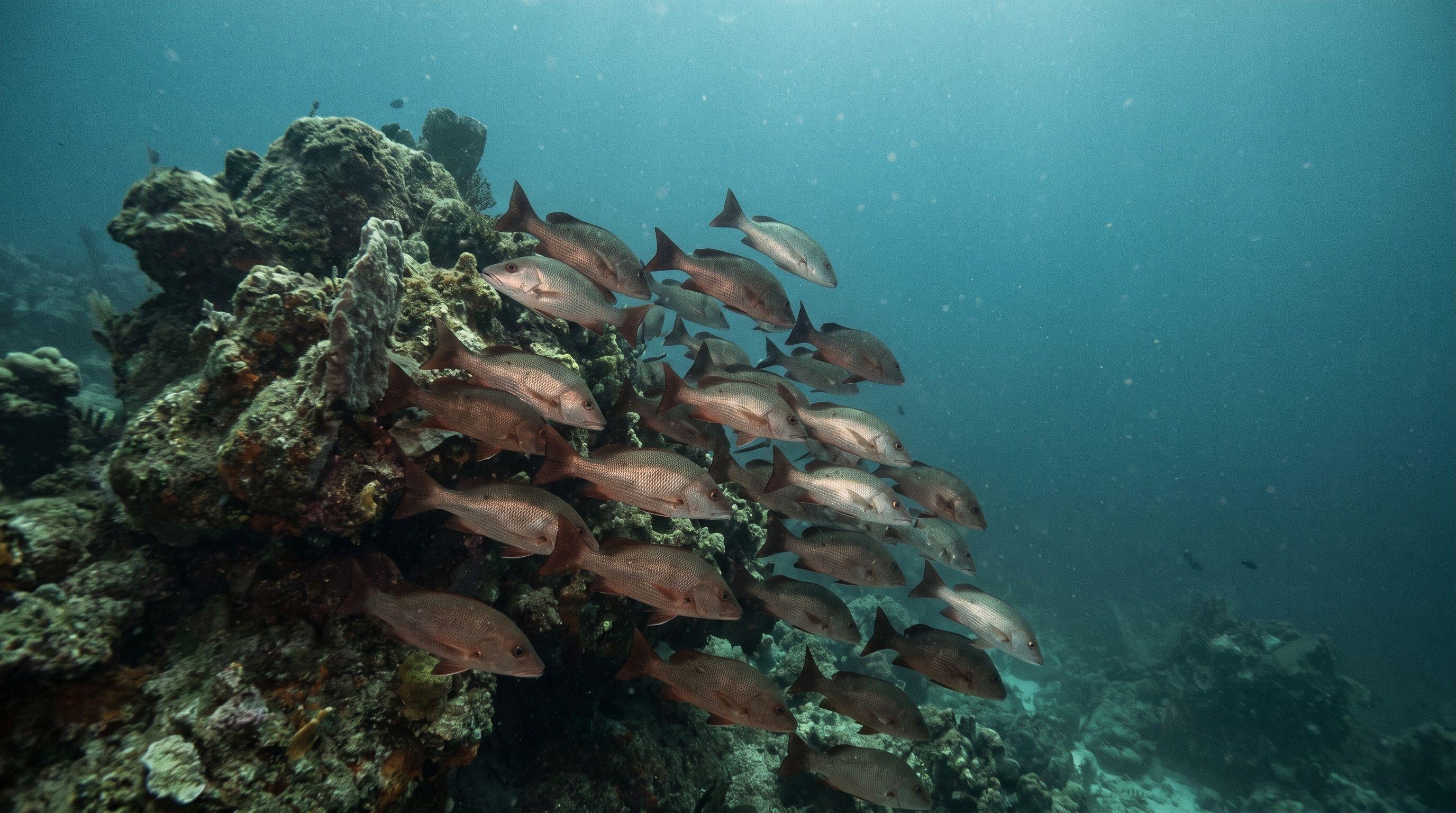 AI-generated
AI-generated illustration
Image credit: AI-generated illustration · License unspecified · Source unspecified