Spanish Dancer
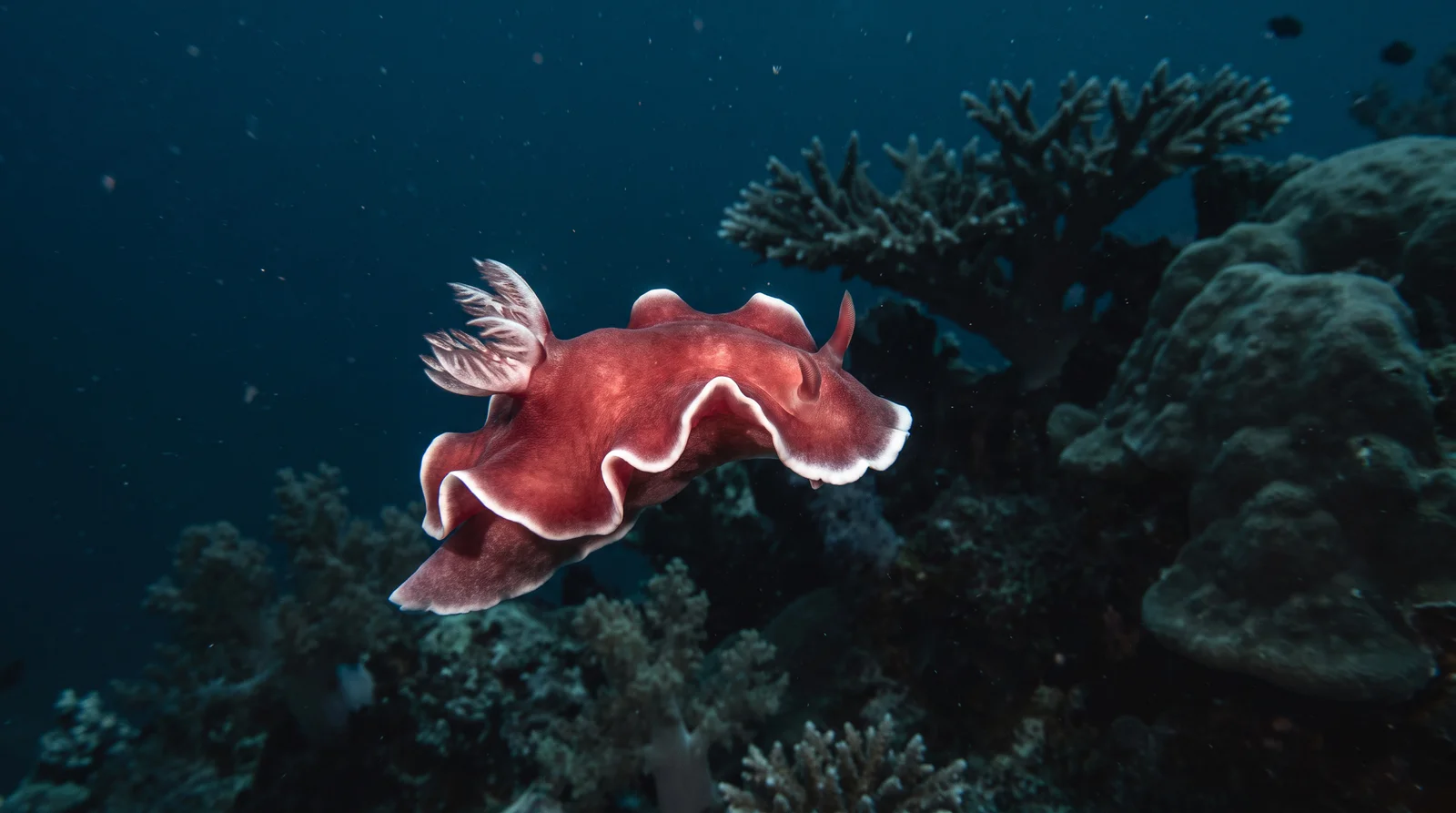 AI-generated
Image credit: AI-generated illustration · License unspecified · Source unspecified
Hexabranchus sanguineus
About Spanish Dancer.
The Spanish Dancer, Hexabranchus sanguineus, is arguably the most iconic and certainly one of the largest nudibranchs found in the Indo-Pacific. Its scientific name, meaning "blood-coloured six-gills," aptly describes its striking appearance. This captivating marine gastropod is a highlight for divers, particularly during night dives when it is most active.
As a member of the family Hexabranchidae, the Spanish Dancer is renowned for its vibrant coloration and unique swimming ability. It is widely distributed across the tropical and subtropical waters of the Indo-Pacific, from East Africa and the Red Sea to French Polynesia, Japan, and Australia. Divers frequently encounter this species on healthy coral and rocky reefs, as well as on rubble and sandy areas, typically at depths of 1 to 50 meters, though it is predominantly found in shallower waters no deeper than 20 meters. While its conservation status is listed as Least Concern, its reliance on healthy reef ecosystems makes it an important indicator of marine environmental well-being.
Identification
- Size: The Spanish Dancer is one of the largest known nudibranchs, capable of reaching an impressive maximum size of 60 cm (24 inches). While some reports suggest it can grow up to 90 cm, commonly observed individuals range between 20-30 cm.
- Coloration: Its body is typically a soft, flattened form, generally orange-red and speckled with numerous small white dots. Coloration can vary, with individuals appearing uniformly bright red, orange, or yellow, sometimes with scattered red spots or hints of pink. This vivid coloration serves as a warning to potential predators, indicating its toxic nature derived from its sponge diet. Juvenile Spanish Dancers often display a whitish to yellowish body with purple spots, and orange rhinophores and gills.
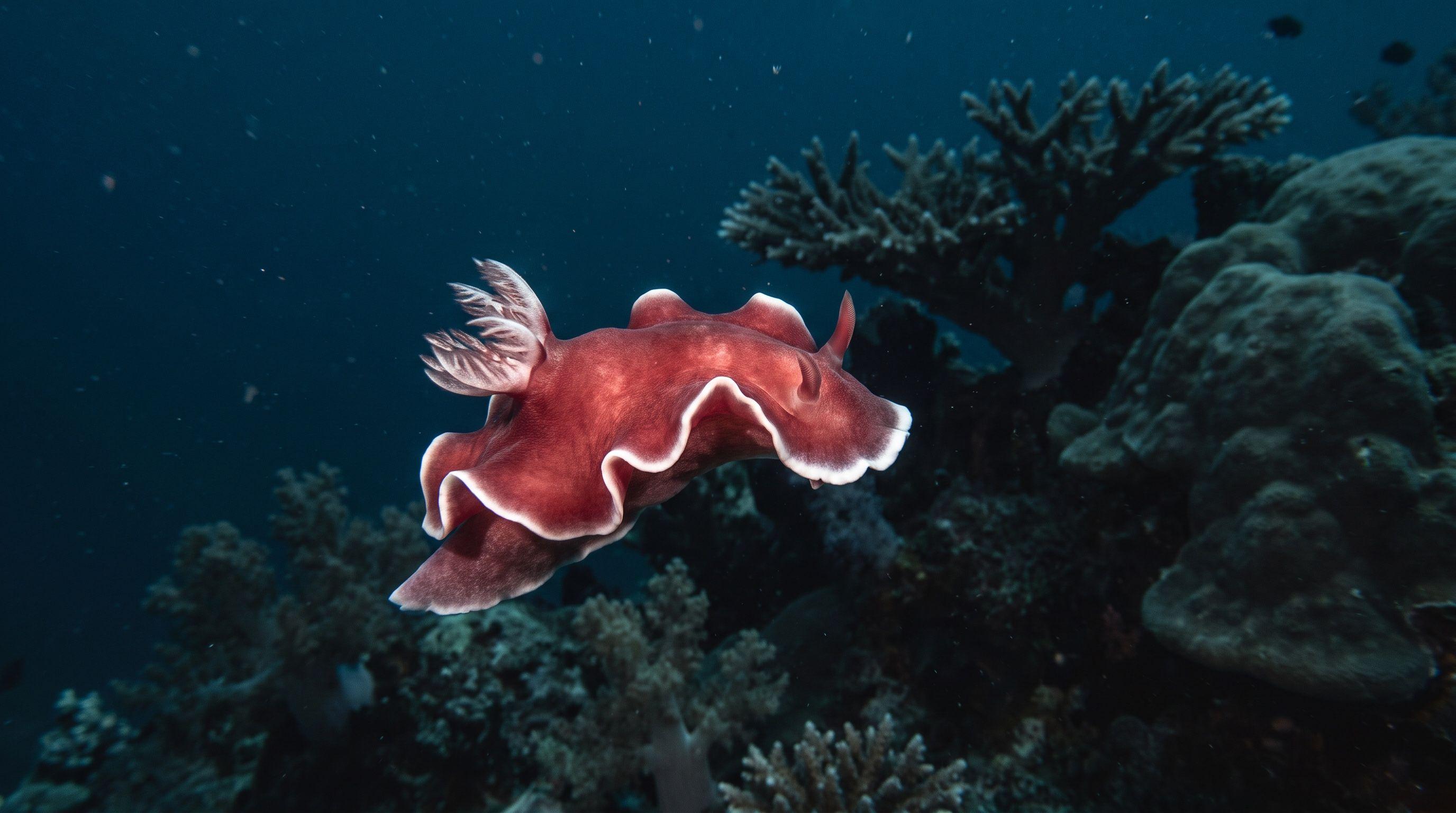
- Mantle: When crawling along the substrate, the wide, flared mantle margins are usually curled inwards. However, when disturbed or threatened, the nudibranch unfurls its mantle and undulates its entire body, propelling itself through the water in a graceful, rhythmic motion that resembles a flamenco dancer's swirling skirt—hence its common name. This swimming behavior is a defensive tactic to escape predators.
- Rhinophores and Gills: On its anterior dorsal portion, the Spanish Dancer possesses a pair of retractable, antenna-like sensory organs called rhinophores, which are used to detect chemicals and movement in the water. These are often orange to red-orange with white stripes. Towards its posterior, it has six contractile gills, which are inserted independently into the body wall, a distinguishing feature among dorid nudibranchs. These gills are typically paler than the body, often with white rachises.
- Oral Tentacles: A pair of flexible oral tentacles, equipped with large digital lobes, are located near its mouth and are used to grasp the sponges that constitute its primary diet.
- Associated Species: Divers may occasionally spot the commensal Emperor Shrimp (Periclimenes imperator) riding on the back of a Spanish Dancer, a fascinating example of symbiosis.
Where it lives.
How it behaves.
The Spanish Dancer (Hexabranchus sanguineus) is a captivating and easily recognizable nudibranch, renowned for its vibrant coloration and unique swimming behavior. This large sea slug, which can reach up to 60 cm (24 in) in length, is a highlight for divers exploring tropical Indo-Pacific waters.
Underwater Encounter Behavior
Encounters with the Spanish Dancer are most common during night dives, as these creatures are primarily nocturnal. During daylight hours, they typically remain hidden in crevices or under rocks within coral and rocky reef ecosystems, as well as on rubble and sandy areas. While usually observed crawling along the seabed using their muscular foot, the Spanish Dancer earns its common name from its spectacular defensive display. When disturbed or threatened, it unfurls its wide, flared mantle (parapodia) and propels itself through the water with rhythmic, undulating contractions. This graceful, "flamenco-like" swimming motion is a breathtaking sight for divers. Its bright red, orange, or pink coloration serves as a warning (aposematism) to potential predators, indicating its toxicity. The Spanish Dancer is harmless to humans and does not possess a sting or venom in the traditional sense. Divers may also spot a commensal Emperor Shrimp (Periclimenes imperator) often living on the Spanish Dancer's body.
Feeding Habits
The Spanish Dancer is a carnivorous nudibranch, specializing in a diet of sponges. They are known to primarily consume sponges from the family Halichondriidae. Through this diet, they sequester potent chemical compounds (macrolides) from the sponges, which they then use as a chemical defense mechanism against predators. They utilize their rhinophores, which are antenna-like sensory organs, to detect chemical cues in the water and locate their sponge prey.
Social Structure
Spanish Dancers are typically observed individually or in pairs. Like all nudibranchs, they are simultaneous hermaphrodites, meaning each individual possesses both male and female reproductive organs. Despite this, they require a mate for reproduction, engaging in a side-by-side alignment to exchange sperm sacs.
Notable Seasonal Patterns Relevant to Divers
Reproduction in Spanish Dancers occurs year-round across their tropical range. However, there can be a slight decline in activity during colder months, and in some regions, a peak breeding season may be observed, such as from April to November with a climax in June and July in the Red Sea. A significant sign of their reproductive activity is the deposition of their distinctive, large, coiled egg ribbons. These rose-shaped ribbons, ranging in color from bright red to pink or orange, are typically laid on hard substrates like rocks or coral rubble. Notably, the defensive toxins acquired from their sponge diet are also passed into these egg masses, providing protection for the developing embryos.
Where to see it.
Evidence for philippines · 1 dive site
General range is not evidence of occurrence at a specific dive site.
Gallery.
 AI-generated
AI-generated illustration
Image credit: AI-generated illustration · License unspecified · Source unspecified