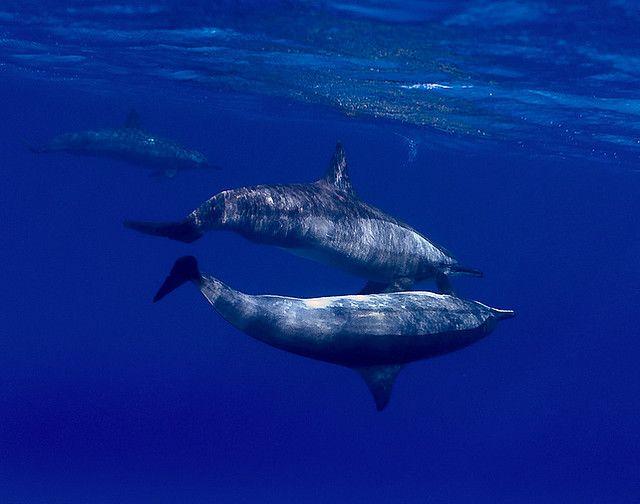
Spinner Dolphin
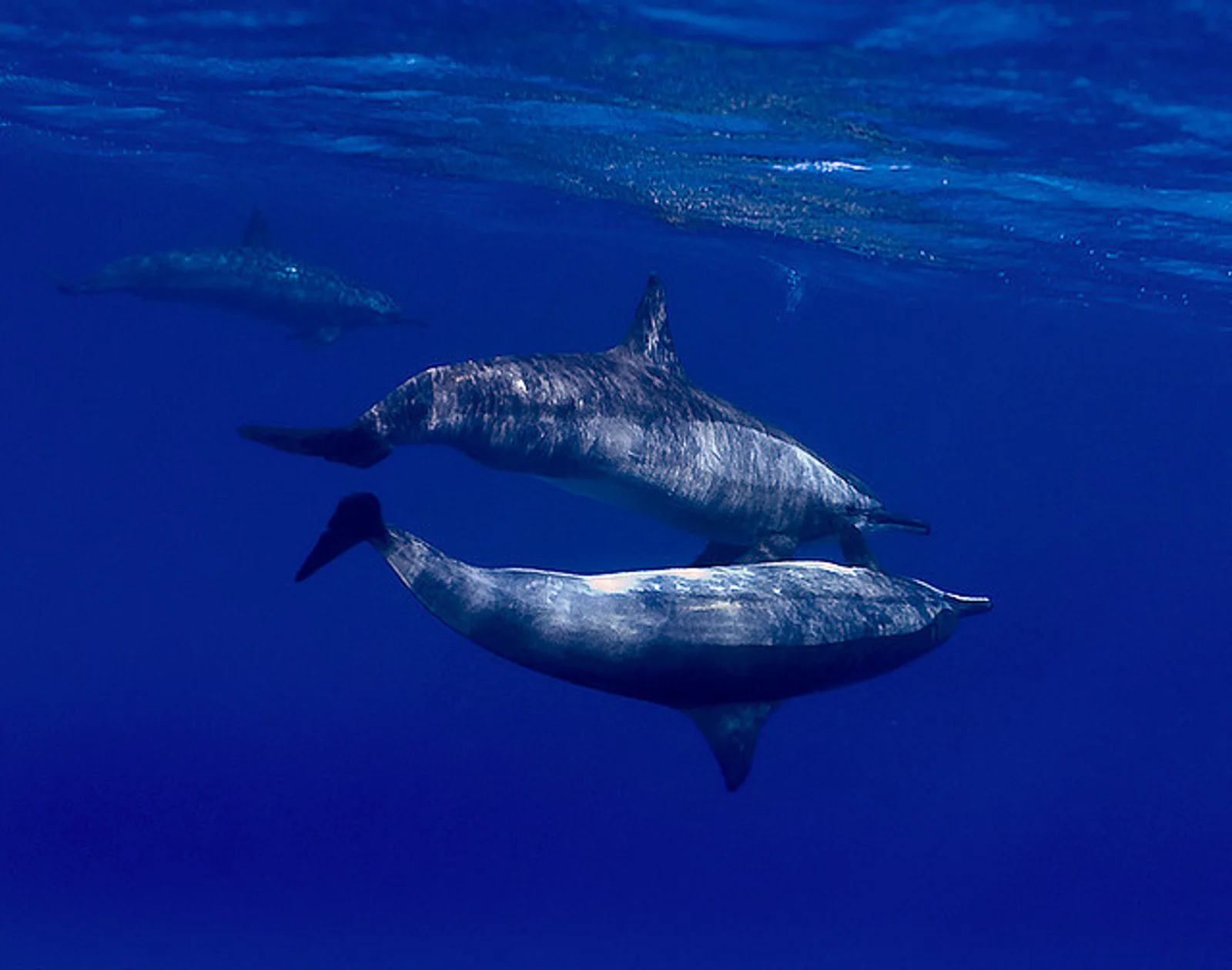
Stenella longirostris
Über Spinner Dolphin.
Der Spinnerdelfin (Stenella longirostris) ist ein faszinierendes Meeressäugetier aus der Familie der Delphinidae, das weltweit für seine spektakulären akrobatischen Darbietungen bekannt ist. Diese schlanken Delfine sind in tropischen und warm-gemäßigten Gewässern des Atlantiks, Indischen Ozeans und Pazifiks zu finden, typischerweise zwischen 40°N und 40°S Breite. Obwohl sie oft in pelagischen Offshore-Zonen leben, nutzen viele Populationen, insbesondere die um die hawaiianischen Inseln, flache, ruhige Küstenbuchten zum Ruhen und Sozialisieren während des Tages.
Der gebräuchliche Name „Spinnerdelfin“ leitet sich von ihrem charakteristischen Verhalten ab, hoch aus dem Wasser zu springen und sich entlang ihrer Längsachse zu drehen, manchmal bis zu sieben volle Drehungen in einem einzigen Sprung zu vollziehen, bevor sie wieder ins Wasser eintauchen. Der genaue Zweck dieser beeindruckenden Luftakrobatik ist nicht vollständig verstanden, aber Wissenschaftler vermuten, dass sie verschiedenen Funktionen dienen kann, einschließlich Kommunikation, Entfernung von Ektoparasiten wie Schiffshaltern oder einfach als eine Form des Spiels.
Spinnerdelfine zeigen einen konsistenten Tagesrhythmus. Sie sind nachtaktive Jäger, die nachts in tiefere Offshore-Gewässer reisen, um kleine mesopelagische Fische, Garnelen und Tintenfische zu jagen, die vertikal in der Wassersäule wandern und typischerweise in Tiefen von 200–300 m (650–1.000 Fuß) unter der Oberfläche gefunden werden. Tagsüber kehren sie in flachere, geschützte küstennahe Gebiete zurück, um sich auszuruhen, zu sozialisieren und sich um ihren Nachwuchs zu kümmern, oft in Gruppen, die von Dutzenden bis zu Tausenden von Individuen reichen können. Ihre Sozialstruktur wird oft als Fission-Fusion beschrieben, wobei große Futterverbände für Tagesaktivitäten in kleinere Einheiten zerfallen.
Global ist der Spinnerdelfin in Bezug auf seinen Erhaltungszustand als „nicht gefährdet“ eingestuft. Bestimmte Unterarten, wie der östliche Spinnerdelfin im östlichen tropischen Pazifik (ETP), sind jedoch aufgrund historischer Auswirkungen der Thunfischfangindustrie als gefährdet eingestuft, da Delfine oft in Ringwadennetzen gefangen wurden, die für Thunfisch ausgelegt waren. Weitere Bedrohungen sind die Verstrickung in Fischereigeräten, die direkte Jagd in einigen Regionen und Störungen durch den Delfinbeobachtungstourismus.
Identifikation
- Größe und Bau: Spinnerdelfine sind relativ klein und schlank, mit einem stromlinienförmigen, torpedoförmigen Körper, der für Geschwindigkeit und Agilität gebaut ist. Erwachsene messen typischerweise zwischen 1,29–2,35 m (4,25–7,7 ft) Länge und wiegen 23–91 kg (50–200 lbs).
- Schnauze: Ein wichtiges Erkennungsmerkmal ist ihre extrem lange, dünne Schnauze (Rostrum), die ihnen ihren wissenschaftlichen Artnamen longirostris gibt, was im Lateinischen „lange Schnauze“ bedeutet. Der Kopf ist auch an der Spitze der Melone schlank.
- Färbung: Die meisten Spinnerdelfine zeigen ein ausgeprägtes dreiteiliges (tripartites) Farbmuster mit Gegenschattierung.
Lebensraum.
- Umgebungen: Spinnerdelfine sind überwiegend in warmen Oberflächengewässern des offenen Ozeans (pelagische Zonen) zu finden. Viele Populationen, insbesondere solche, die mit Inseln assoziiert sind, nutzen jedoch küstennahe Gewässer, einschließlich Buchten, Lagunen und Korallenatolle, zum Ruhen und Sozialisieren während des Tages. Diese küstennahen Ruhegebiete sind typischerweise ruhig, klar und relativ flach. Im Gegensatz dazu können einige Populationen, wie die im östlichen tropischen Pazifik, weit entfernt von der Küste in ozeanischen Zonen leben.
- Tiefenbereiche: Während Spinnerdelfine im Allgemeinen nahe der Oberfläche bleiben, sind sie zu erheblichen Tauchgängen zur Nahrungssuche fähig. Sie tauchen typischerweise in Tiefen von 200–300 m, um sich von mesopelagischer Beute zu ernähren, die nachts vertikal in der Wassersäule wandert. Einige Individuen können sogar bis zu 400 m tief tauchen, um Nahrung zu suchen. Während der Ruhezeiten am Tag suchen sie oft flache Buchten auf, manchmal weniger als 50 m tief, mit sandigem Boden. Im Golf von Mexiko sind sie im Allgemeinen in Gewässern tiefer als 100 m zu finden.
- Ökosystem-Assoziationen: Spinnerdelfine sind integraler Bestandteil verschiedener mariner Ökosysteme. Sie sind nachtaktive Jäger, die kleine mesopelagische Fische (wie Laternenfische), Tintenfische und Krebstiere jagen, die nachts aus tieferen Gewässern an die Oberfläche steigen. Ihre Verbreitung korreliert oft mit der Topographie des Meeresbodens, wobei sie häufiger dort vorkommen, wo der Boden rau ist, anstatt flacher abyssaler Ebenen. Sie versammeln sich häufig in der Nähe von Divergenzzonen an Strömungsrändern und Rücken, wo Nahrungsorganismen konzentriert sind. Spinnerdelfine sind dafür bekannt, sich mit anderen Meeresarten zu assoziieren; im östlichen tropischen Pazifik bilden sie häufig Schulen mit Pantropischen Fleckendelfinen und Gelbflossen-Thunfischen. In hawaiianischen Gewässern spielen sie eine Rolle beim Nährstofftransfer, indem sie Stickstoff von Offshore-Futterplätzen zu küstennahen Korallenriff-Habitaten bringen, ein Prozess, der manchmal als „der Delfin-Hahn“ bezeichnet wird.
Verhalten.
Verhalten bei Unterwasserbegegnungen
Spinnerdelfine werden tagsüber typischerweise in Küstengewässern beobachtet, wo sie in ruhigen, flachen Buchten, oft mit sandigem Boden, ruhen und soziale Aktivitäten ausüben. Während dieser Perioden bewegen sie sich langsam als zusammenhängende Einheit, halten eine enge Formation, aber gerade außerhalb des physischen Kontakts miteinander. Während des Ruhens verlassen sie sich auf ihr Sehvermögen statt auf Echoortung, um ihre Umgebung nach Raubtieren abzusuchen. Begegnungen mit Spinnerdelfinen unter Wasser sind im Allgemeinen selten, da sie in Anwesenheit von Tauchern recht scheu sind, obwohl sie oft von Booten aus gesehen werden. Ihre spielerische Natur zeigt sich jedoch an der Oberfläche, wo sie häufig Bugwellenreiten, vor Booten schwimmen und ihre namensgebenden Luftdrehungen ausführen. Diese Drehungen, die mehrere Rotationen bis zu sieben Mal in einem einzigen Sprung umfassen können, dienen vermutlich verschiedenen Zwecken, einschließlich Kommunikation, Entfernung von Ektoparasiten wie Schiffshaltern, Balzverhalten oder einfach nur Spiel. Andere Luftverhaltensweisen umfassen Kopfschläge, Schwanzschläge und Saltos. Es ist wichtig für Taucher, diese Tiere respektvoll zu beobachten und direkte Interaktionen zu vermeiden, da häufige nahe Begegnungen ihre wesentlichen Ruhephasen und andere natürliche Verhaltensweisen stören können. In einigen Regionen verbieten Vorschriften das Schwimmen mit oder das enge Annähern an Spinnerdelfine, um sie vor Störungen zu schützen.Fressgewohnheiten
Spinnerdelfine sind nachtaktive Jäger, die nachts in tiefere Offshore-Gewässer vordringen, um zu jagen. Ihre Nahrung besteht hauptsächlich aus kleinen mesopelagischen Fischen, Garnelen und Tintenfischen. Diese Beutearten unterliegen einer täglichen vertikalen Wanderung, wobei sie tagsüber aus tiefen Gewässern (etwa 200–300 Meter) in flachere Tiefen und nachts näher an die Küste wandern. Spinnerdelfine nutzen diese Wanderung und verwenden Echoortung, um ihre Beute bei schlechten Sichtverhältnissen zu lokalisieren. Sie bilden oft große Gruppen für die koordinierte Jagd, was es ihnen ermöglicht, ihre Beute effektiver einzukreisen und zu fangen.Sozialstruktur
Spinnerdelfine sind hochsoziale Tiere, die in Gruppen leben, die als Schulen bekannt sind und deren Größe von Dutzenden bis zu Hunderten oder sogar Tausenden von Individuen reichen kann. Ihre Sozialstruktur kann je nach Population variieren; einige zeigen ein „Fission-Fusion“-Muster, bei dem sich große Gruppen für die nächtliche Nahrungssuche bilden und sich dann für die Ruhe- und Sozialisierungsaktivitäten am Tag in kleinere Einheiten aufteilen. Diese kleineren Tagesgruppen sind oft stabile soziale Einheiten mit langfristigen Beziehungen, die durch Vokalisationen, physischen Kontakt und gemeinsame Erfahrungen aufrechterhalten werden. Mütter und Kälber bilden starke soziale Bindungen, und auch männliche Koalitionen wurden beobachtet. Spinnerdelfine kommunizieren durch eine komplexe Reihe von Pfeifen, Klicks und Burst-Puls-Geräuschen sowie Körpersprache. Sie können sich auch mit anderen Delfinarten und sogar Buckelwalen assoziieren.Bemerkenswerte saisonale Muster, relevant für Taucher
Obwohl Spinnerdelfine das ganze Jahr über in tropischen und subtropischen Gewässern zu finden sind, können ihr Verhalten und ihre Häufigkeit an bestimmten Tauchplätzen saisonale Schwankungen aufweisen. Zum Beispiel kann in einigen Gebieten die Anzahl der in Buchten beobachteten Individuen während der Trockenzeit höher sein, und ihre Luft- und Fortpflanzungsaktivitäten können saisonale Rhythmen aufweisen. In Hawaii zum Beispiel werden Spinnerdelfine während der Sommermonate, wenn das Wetter ruhiger ist, oft näher an der Küste gesichtet, was eine ideale Zeit für Oberflächenbeobachtungen darstellt. Es gibt jedoch keine bekannte spezifische Paarungszeit für hawaiianische Spinnerdelfine, wobei die Weibchen alle zwei bis drei Jahre nach einer 11-monatigen Tragzeit kalben. Saisonale Umweltvariabilität und Fortpflanzungsbiologie sollen die Muster der Häufigkeit und vorübergehenden Emigration in bestimmten Populationen beeinflussen.Wo man es sehen kann.
Nachweise für philippines · Keine Tauchplätze
Das allgemeine Verbreitungsgebiet ist kein Nachweis für das Vorkommen an einem bestimmten Tauchplatz.
Noch keine dokumentierten Zuordnungen zu Tauchplätzen in diesem Reiseziel.
Galerie.