Striped Eel Catfish
Plotosus lineatus
About Striped Eel Catfish.
The Striped Eel Catfish, Plotosus lineatus, is a fascinating and distinctive member of the Plotosidae family, commonly known as eeltail catfishes. This species is widespread throughout the Indo-Pacific region, ranging from the Red Sea and East Africa eastward to Samoa, and as far north as Japan and south to Australia. It has also become an invasive species in the Mediterranean Sea, having migrated through the Suez Canal.
Typically found in coastal benthic environments, the Striped Eel Catfish inhabits a variety of marine habitats including coral reefs, estuaries, tide pools, and open coasts, and can occasionally be found in brackish or even freshwater systems in areas like East Africa and Madagascar. It holds a conservation status of Least Concern.
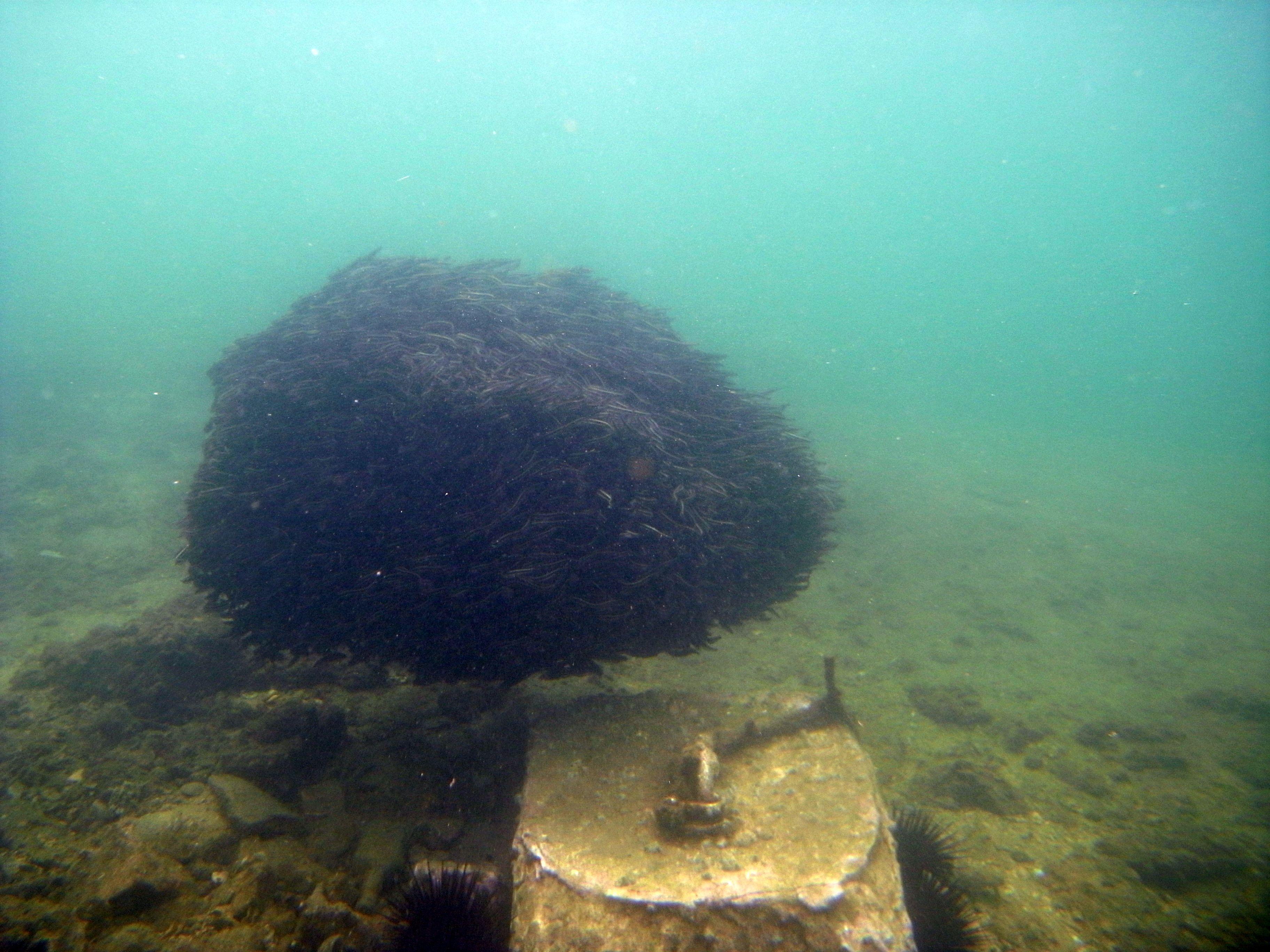
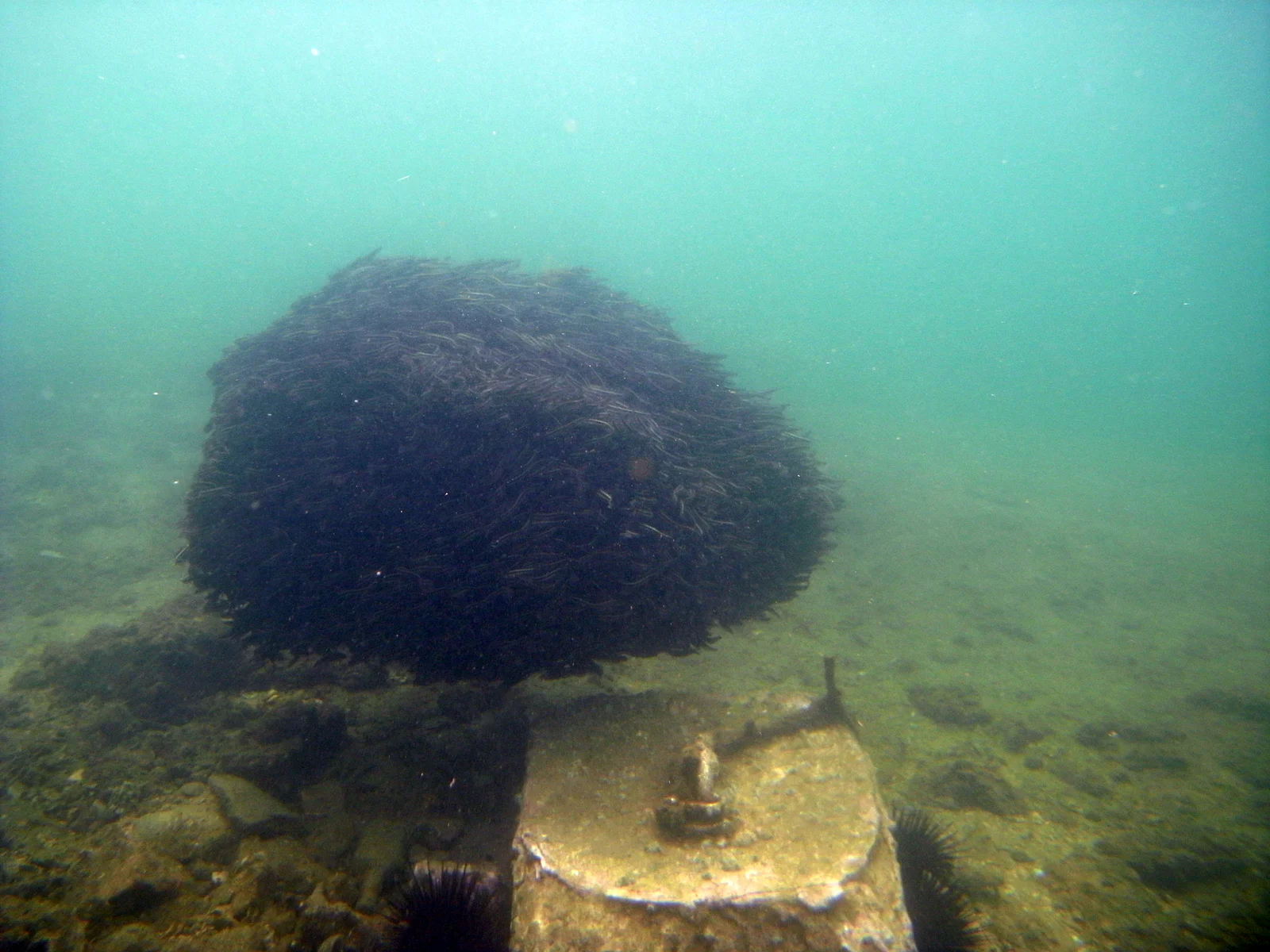
One of the most captivating aspects of this species is its behavior. Juveniles are renowned for forming incredibly dense, ball-shaped schools, often comprising hundreds to thousands of individuals, which move in a synchronized, writhing mass. This unique schooling behavior serves both as a defense mechanism against predators and a collective foraging strategy, with individuals taking turns probing the substrate for food. As they mature, Striped Eel Catfish transition to a more solitary existence or form smaller groups of around 20 individuals. Adults are primarily nocturnal, spending their days hidden under ledges, and emerge at night to forage for crustaceans, mollusks, worms, and small fish by stirring up sand and rubble.
Divers should exercise caution when observing this species, as it possesses highly venomous spines on its first dorsal fin and each pectoral fin. A sting can cause severe pain, swelling, and other symptoms, and in rare cases, has been reported to be fatal to humans.
Identification
The Striped Eel Catfish is easily identifiable by several key physical characteristics:
- Size and Shape: This species can reach a maximum length of 32 cm (12.5 inches), though some individuals may grow slightly larger. Its body is elongated and cylindrical, tapering to an eel-like tail.
- Fins: A distinctive feature is the fusion of its second dorsal, caudal (tail), and anal fins, creating a continuous, eel-like appearance. It also has a short first dorsal fin and pectoral fins, each equipped with a venomous spine.
- Coloration: The body is typically dark brown to black, often with two prominent cream-colored or white longitudinal stripes running along each side from head to tail. These stripes are particularly bright and striking in juveniles but may fade or become less distinct in older adults. The ventral (underside) surface is usually white.
- Barbels: Around its mouth, the Striped Eel Catfish has four pairs of barbels (whisker-like sensory organs) – one nasal, one maxillary, and two on the lower jaw. These barbels are crucial for locating food in murky waters or within the substrate.
- Skin: Unlike many fish, Plotosus lineatus has scaleless skin.
- Juvenile Schools: The sight of juveniles forming a tightly packed, writhing "catfish ball" is a strong identification cue for this species, particularly in areas like the Ligpo Island dive site where they are commonly observed.
Where it lives.
The Striped Eel Catfish (Plotosus lineatus) is a fascinating and widely distributed species, primarily found across the tropical Indo-Pacific region. Its native range extends from the Red Sea and East Africa, eastward to Samoa, north to southern Japan and Korea, and south to Australia and Lord Howe Island. This species has also become established in the eastern Mediterranean Sea, having migrated through the Suez Canal, and is now common in areas from Levantine waters to the Gulf of Gabes.
This adaptable fish inhabits a diverse array of coastal environments, showcasing its euryhaline nature, meaning it can tolerate a wide range of salinities. Divers can encounter Plotosus lineatus in:
- Coral Reefs: It is notably the only catfish species commonly found in coral reef ecosystems.
- Shallow Inshore Areas: Including lagoons, estuaries, and tide pools.
- Substrate Preferences: They prefer sandy, muddy, and silty bottoms, as well as areas with reef rubble and seagrass meadows. Adults are often observed stirring the sand in search of benthic invertebrates.
- Mangroves: Occasionally found in mangrove habitats.
- Freshwater: They are known to sometimes enter freshwater ecosystems in East Africa and Madagascar.
The Striped Eel Catfish typically occupies depths ranging from shallow waters of 1 m down to approximately 60 m. In some parts of its introduced range, such as the Mediterranean, it has been observed at depths of up to 80 m on sandy and muddy substrates. Water temperatures where this species thrives generally range from 15.8–30.6°C.
Juvenile Striped Eel Catfish are particularly striking, forming dense, ball-shaped schools of up to 100 or even hundreds of individuals, which move cohesively over the substrate. This schooling behavior is believed to be a defensive mechanism, making them appear as a larger, more formidable organism to potential predators. As they mature, adults tend to be more solitary or form smaller groups of around 20 individuals, often seeking shelter under ledges during the day.
How it behaves.
The Striped Eel Catfish (Plotosus lineatus) is a distinctive and engaging species for divers to observe across Indo-Pacific dive sites, such as Ligpo Island. Recognizable by its elongated, eel-like body and prominent black-and-white longitudinal stripes, this species exhibits fascinating social and feeding behaviors.
- Underwater Encounter Behavior:
Juvenile Striped Eel Catfish are a captivating sight, often encountered in dense, tightly packed, ball-shaped schools, sometimes numbering in the hundreds. These schools, known as "feeding-balls" or "gonzuidama" in Japanese, move in a highly coordinated, almost fluid manner across sandy seabeds and reef edges. This schooling behavior serves both as a defense mechanism against predators, making the group appear as a larger, more intimidating organism, and as an efficient foraging technique. Divers may observe these schools "rolling" over the substrate, with individuals taking turns probing the sand for food. While generally not aggressive, Striped Eel Catfish possess highly venomous spines on their first dorsal and pectoral fins. A sting can cause severe pain, dizziness, and swelling, and should be avoided by maintaining a respectful distance. Adults, which can reach a maximum size of 32 cm, are typically more solitary or found in smaller groups of around 10 to 20 individuals. They are often observed in coastal benthic habitats, including coral reefs, estuaries, tidal pools, and sandy or silty areas, at depths ranging from 1–60 m and in waters of 15.8–30.6°C.
- Feeding Habits:
Adult Striped Eel Catfish are primarily nocturnal foragers. They are benthic feeders, using the four pairs of sensitive barbels around their mouths to incessantly search and stir the sand for prey. Their diet consists mainly of benthic invertebrates such as crustaceans, mollusks, and worms, and they also consume algae. Larger adults may occasionally prey on small fish. The collective movement of juvenile schools also aids in foraging, as individuals at the front disturb the substrate, making food accessible to those behind.
- Social Structure:
The social structure of Plotosus lineatus changes significantly with age. Juveniles are highly social, forming dense, cohesive schools of up to several hundred individuals. This tight schooling provides collective protection from predators and enhances foraging efficiency. As they mature, Striped Eel Catfish become less gregarious. Adults are typically solitary or form much smaller, looser groups of up to 20 individuals. During the day, adults are known to hide under ledges or in crevices.
- Notable Seasonal Patterns:
Where to see it.
Evidence for philippines · 1 dive site
General range is not evidence of occurrence at a specific dive site.
Gallery.