Surgeonfish (assorted)
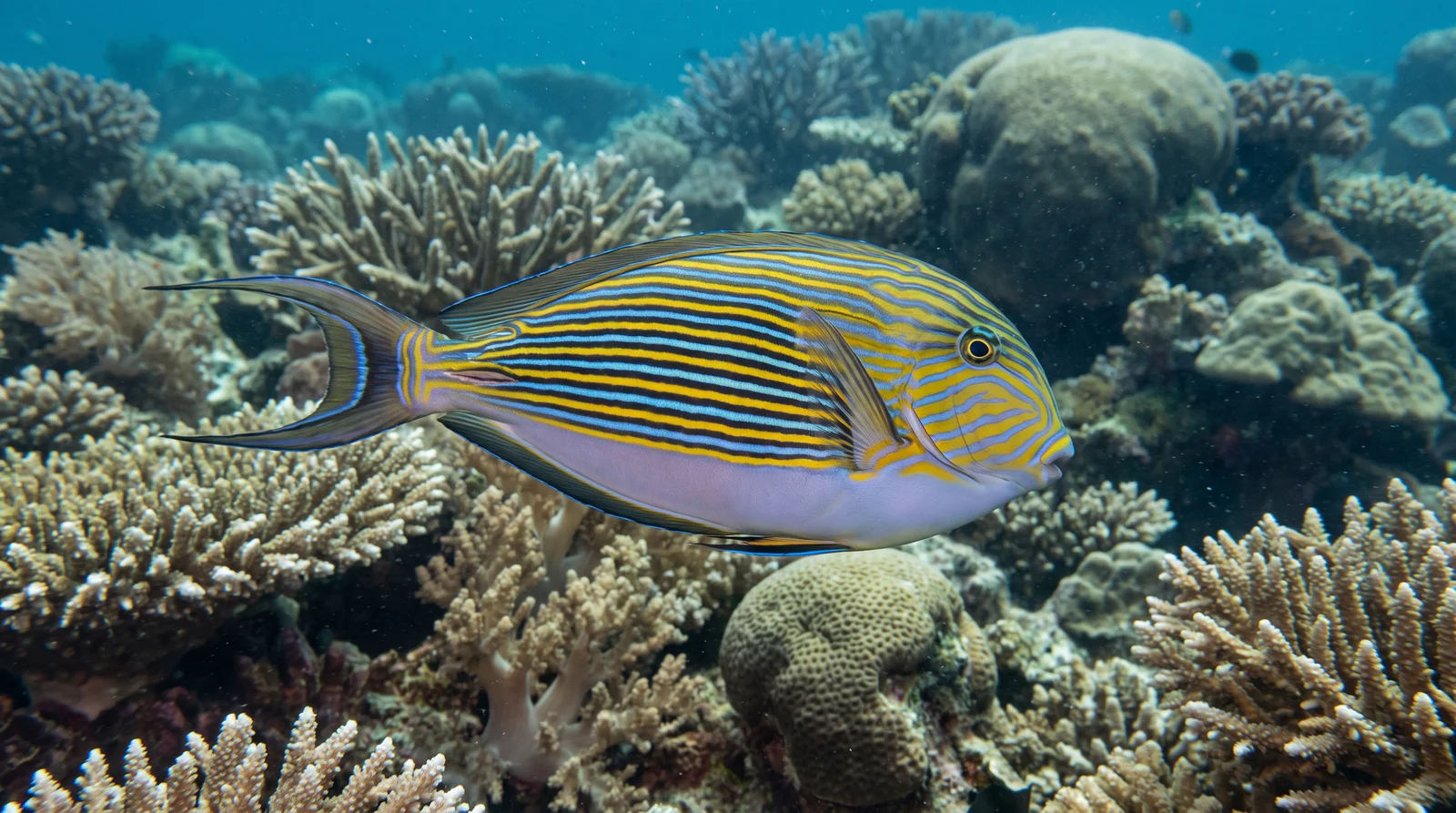 AI-generated
Image credit: AI-generated illustration · Generated for Diveity; no third-party rights · Higgsfield nano_banana_pro image generation
Acanthuridae spp.
About Surgeonfish (assorted).
Surgeonfishes, unicornfishes and tangs make up the family Acanthuridae. This group entry covers surgeonfish sightings where the species was not recorded. Diveity also has individual pages for the Palette Surgeonfish (Blue Tang) (Paracanthurus hepatus) and, in the western Atlantic, the Blue Tang (Acanthurus coeruleus), the Doctorfish (Acanthurus chirurgus) and the Ocean Surgeonfish (Acanthurus tractus). The Moorish Idol (Zanclus cornutus) also has its own page and is a separate family: the World Register of Marine Species (WoRMS) places it in Zanclidae, in the same order as Acanthuridae (Acanthuriformes).
WoRMS lists Acanthurus, Ctenochaetus, Naso, Paracanthurus and Zebrasoma among the accepted genera of Acanthuridae, and a separate WoRMS lookup returns Prionurus as an accepted genus of the family. Animal Diversity Web notes that sources give between 6 and 9 genera, so counts differ by author. The family is named for the "scalpel": Animal Diversity Web describes a distinctive spine or group of spines on each side of the tail base, formed from a modified scale, which makes a knife blade that is often covered with toxic slime. In Prionurus and Naso the blade is a set of fixed, laterally projecting plates; in other genera it is a spine that projects forward as the fish flexes its body. The same source gives a family size range of 20 to 200 cm.
Identification
- Tail spines: FishBase describes a lancet-like, venomous spine on each side of the tail base of Acanthurus lineatus, folding into a groove. It describes two large peduncular plates in Naso lituratus and Naso unicornis, and a bony horn on the forehead of adult N. unicornis but no horn in N. lituratus.
- Size: FishBase maximum lengths include 31 cm (TL) for P. hepatus, 38 cm (TL) for A. lineatus, 39 cm (TL) for A. coeruleus and A. chirurgus, 46 cm (SL) for N. lituratus, 60 cm (TL) for N. vlamingii, 70 cm (FL) for N. unicornis and 100 cm (TL) for N. annulatus.
- Colour examples: FishBase describes A. lineatus as striped with alternating black-edged blue and yellow bands, A. coeruleus as having a conspicuous yellow caudal spine, A. chirurgus as grey with about ten narrow darker bars, and N. vlamingii as having blue vertical lines and a broad blue band from the eye to the snout.
Conservation status varies by species. FishBase reports IUCN Red List assessments of Least Concern for all nine species cited here, assessed in 2010 except A. tractus (2014). Animal Diversity Web lists the family as not evaluated by the IUCN and states that no conservation threat is known for any member of the family.
Where it lives.
Acanthurids live on tropical and subtropical reefs. Animal Diversity Web says the family occurs in all tropical and subtropical seas but is absent from the Mediterranean. FishBase gives the Indo-Pacific range of A. lineatus as East Africa to the Hawaiian, Marquesas and Tuamotu islands, north to southern Japan and south to the Great Barrier Reef and New Caledonia, noting that the closely related Acanthurus sohal replaces it in the Red Sea.
Where Divers Find Them
- Depth: FishBase gives 0–15 m (usually 1–3 m) for A. lineatus, 2–40 m (usually 10–40 m) for P. hepatus, 0–90 m (usually 5–30 m) for N. lituratus, 1–50 m for N. vlamingii and 0–180 m for N. unicornis. For N. annulatus it gives 1–60 m (usually 25–60 m). In the western Atlantic it gives 2–50 m for A. coeruleus, 2–25 m for A. chirurgus and 11–45 m for A. tractus.
- Reef zones: FishBase describes A. lineatus as common in surge zones of exposed seaward reefs, and P. hepatus on clear, current-swept terraces of seaward reefs. N. unicornis is listed in channels, moats, and lagoon and seaward reefs with strong surge, and N. vlamingii in deep lagoon and seaward reefs along the upper parts of deep drop-offs.
- Substrate: FishBase lists N. lituratus over coral, rock or rubble on lagoon and seaward reefs. In the Atlantic, it lists A. coeruleus on coral reefs and inshore grassy or rocky areas, A. chirurgus on shallow reefs or rocky areas, and A. tractus over shallow coral or rocky bottoms and inshore rocky areas with patches of sand.
- Juveniles: FishBase places juvenile N. lituratus on shallow rocky reefs, juvenile N. unicornis in shallow protected bays and harbours, and juvenile N. annulatus in clear, shallow lagoon reefs as little as 1 m deep, while adults of that species are rarely seen above 25 m.
Because depth ranges overlap widely, depth and reef zone are only rough clues to which species is present. Where a fish cannot be identified, a photograph showing the tail base, the head profile and the colour pattern is the most useful record.
How it behaves.
Animal Diversity Web describes acanthurids as diurnal fishes that feed only in daylight and seek reef crevices at night. It says most are herbivorous, with Naso classed as the planktivorous genus. FishBase is more mixed for individual species: N. lituratus and N. unicornis feed mainly on leafy brown algae such as Sargassum, N. annulatus feeds on large zooplankton by day and also on benthic algae, and N. vlamingii is omnivorous and feeds on zooplankton in mid-water.
Underwater Encounter Behavior
Social behaviour varies. FishBase reports that adult A. lineatus usually form schools and are territorial, with a large male controlling a feeding territory and a harem of females, and that the species is almost continually in motion. Adult N. lituratus are usually in small groups and sometimes large aggregations, N. annulatus adults are met in small schools off outer reef drop-offs, and N. vlamingii forms mid-water aggregations off steep slopes by day but is usually alone or in pairs. FishBase describes P. hepatus in loose aggregations 1 or 2 m above the bottom, feeding on zooplankton and occasionally algae, with juveniles hiding tightly among coral branches when alarmed. At Fernando de Noronha, FishBase reports juvenile A. coeruleus and A. chirurgus picking skin and parasites from green turtles. Animal Diversity Web says the tail spine is the main defence: it slashes with powerful bursts of the tail and can inflict serious wounds.
Diver Tips
- Tail spines: FishBase calls the caudal spine of A. lineatus venomous and able to cause painful wounds, and says the spine on each side of the tail base of A. coeruleus, A. chirurgus and A. tractus may inflict painful wounds. Do not touch, grab or chase surgeonfishes, and keep hands and gear away from the tail.
- If cut: Seek medical care and follow your dive operator's protocol. The sources opened for this entry give no first-aid procedure.
- Crevices at night: Because acanthurids shelter in crevices after dark, avoid putting hands into cracks and holes in the reef.
- Eating reef fish: FishBase carries reports of ciguatera poisoning for N. unicornis and N. annulatus, and Animal Diversity Web notes reported cases in the family. Ask local advice before eating any reef fish.
Where to see it.
Evidence for philippines · 8 dive sites
General range is not evidence of occurrence at a specific dive site.
Camia II Wreck
Boracay
Documented site occurrence
Season not yet documented
Source reviewed on 2026-10-15 · Source: Eclipse Dive Center Boracay, "Dive Sites" page · Observation date not documented
Channel Drift
Boracay
Documented site occurrence
Season not yet documented
Source reviewed on 2026-10-15 · Source: DiveGurus Boracay · Observation date not documented
Diniwid
Boracay
Documented site occurrence
Season not yet documented
Source reviewed on 2026-10-15 · Source: New Wave Divers Boracay (article "Diniwid") · Observation date not documented
Friday's Rock
Boracay
Documented site occurrence
Season not yet documented
Source reviewed on 2026-10-15 · Source: Wicked Squid Divers Boracay (Wayback snapshot 2026-03-12 of /boracay-dive-sites/) · Observation date not documented
Hilutungan Island Sanctuary
Mactan
Documented site occurrence
Season not yet documented
Source reviewed on 2026-10-15 · Source: Kontiki Divers / Seven Seas Aquanauts, Mactan dive spots page · Observation date not documented
Pinnacle Point
Davao Gulf
Documented site occurrence
Season not yet documented
Source reviewed on 2026-10-15 · Source: Asia Dive Site, Samal Island page (undated; identical copy at islandsphilippines.com) · Observation date not documented
Punta Bunga
Boracay
Documented site occurrence
Season not yet documented
Source reviewed on 2026-10-15 · Source: DiveGurus Boracay · Observation date not documented
Toscana Reef
Sipalay
Documented site occurrence
Season not yet documented
Source reviewed on 2026-10-15 · Source: Manami Resort, "Dive Sites" page · Observation date not documented
Gallery.
 AI-generated
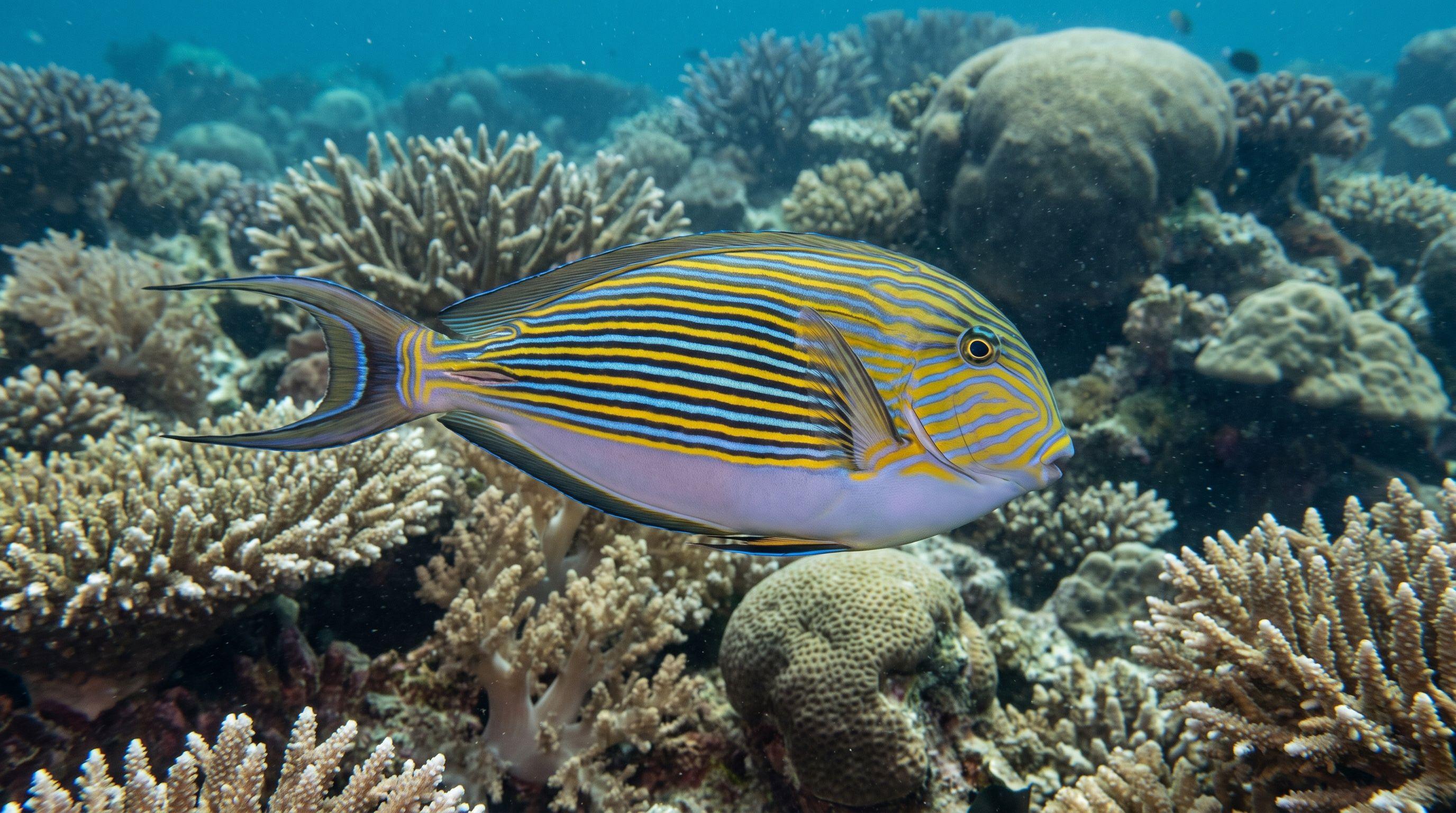
AI-generated illustration
Image credit: AI-generated illustration · Generated for Diveity; no third-party rights · Higgsfield nano_banana_pro image generation