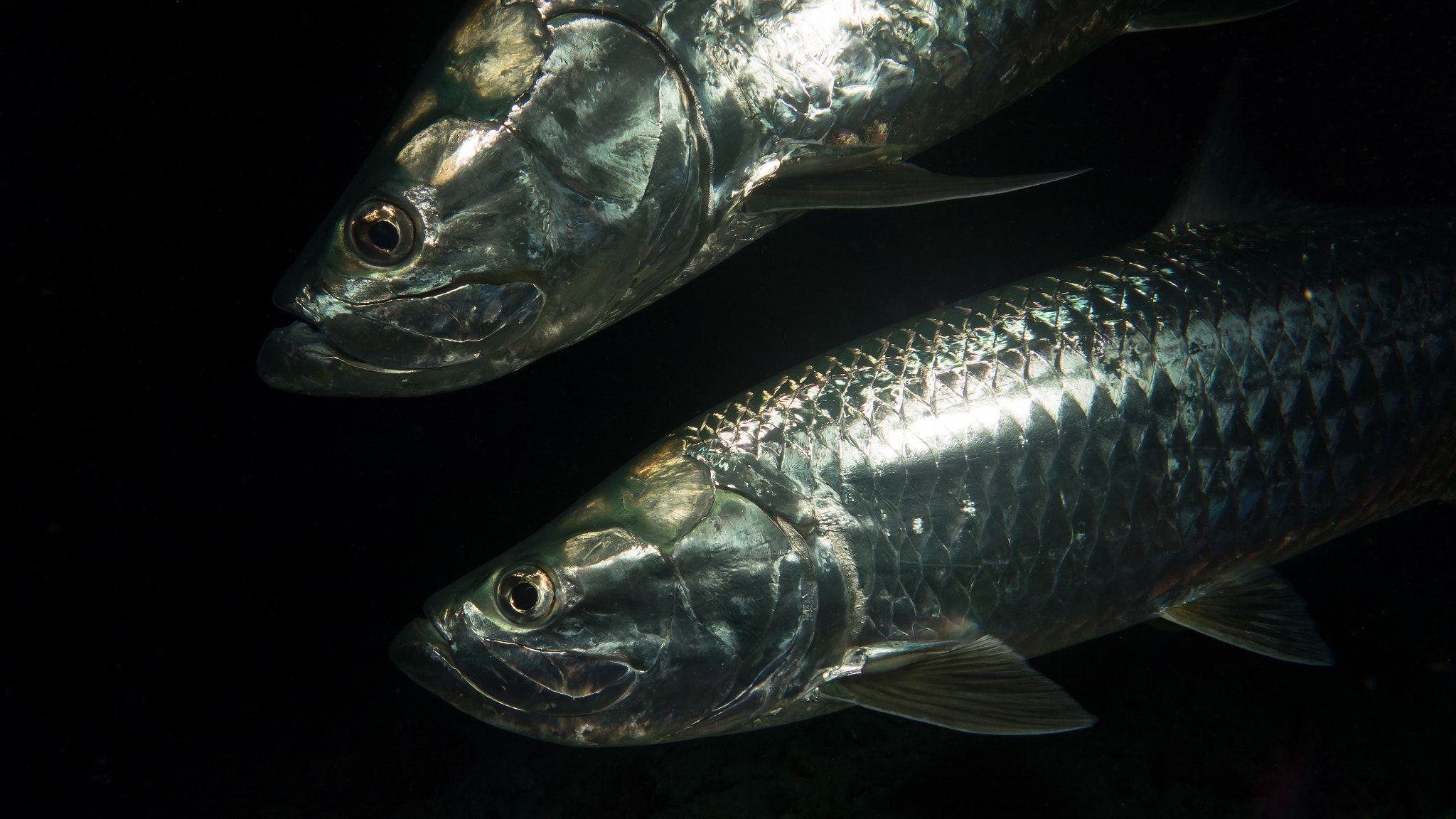
Atlantic Tarpon
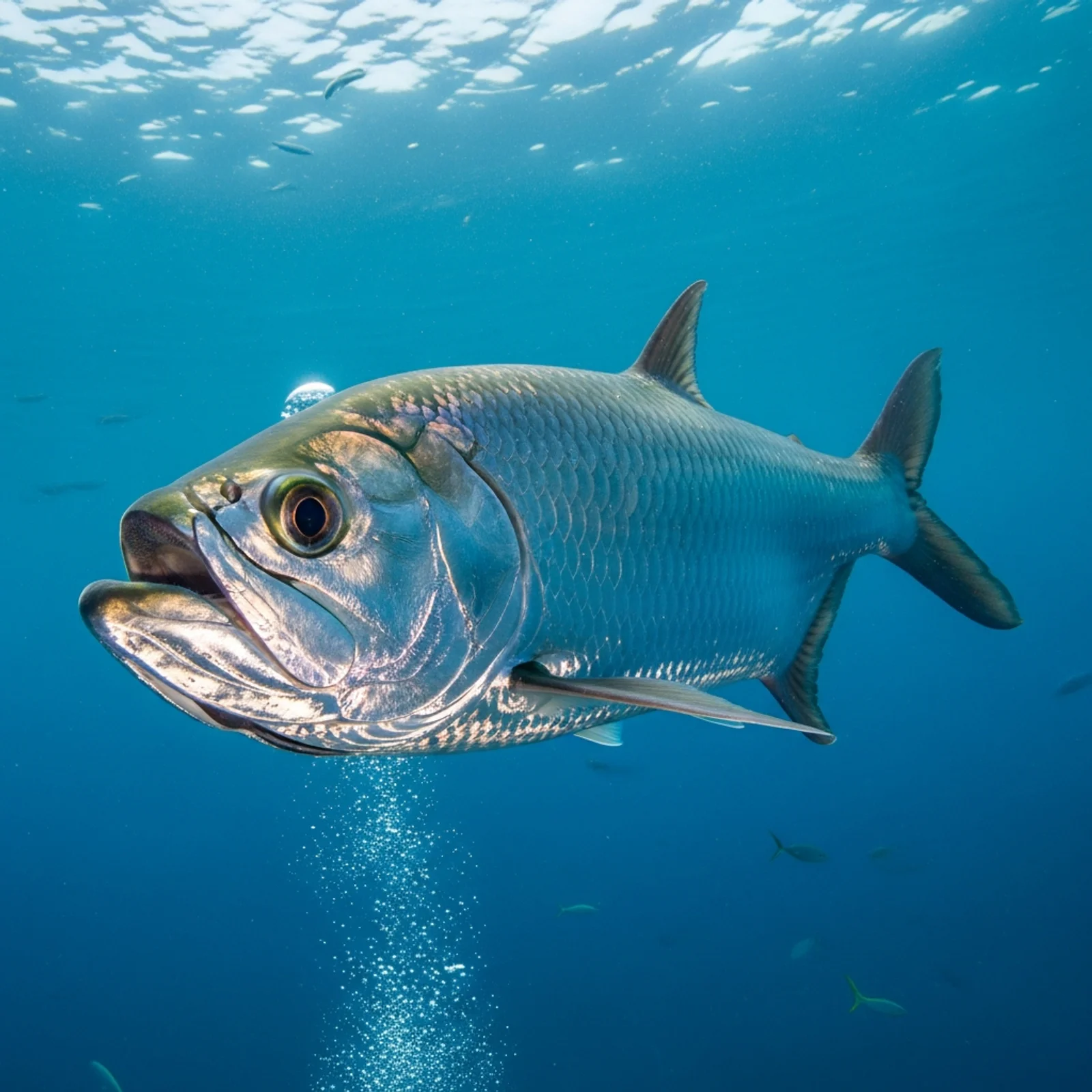
Megalops atlanticus
About Atlantic Tarpon.
The Atlantic Tarpon (Megalops atlanticus), often revered as the "Silver King," is a magnificent ray-finned fish belonging to the family Megalopidae. This iconic species is a highly sought-after game fish, celebrated for its impressive size, powerful leaps, and formidable presence in coastal waters. Its prehistoric lineage dates back approximately 18 million years, showcasing remarkable resilience and adaptability.
Currently, the Atlantic Tarpon is listed as Vulnerable on the IUCN Red List of Threatened Species. This status is largely due to factors such as habitat degradation, declining water quality, and angling-related mortality, despite being primarily a catch-and-release fishery in many regions.
Atlantic Tarpon inhabit a wide range of environments across the tropical and subtropical regions of the Atlantic Ocean. They are commonly found in warm, shallow coastal waters, estuaries, bays, mangrove-lined lagoons, and even venture into freshwater rivers. Their remarkable ability to gulp air at the surface, utilizing a modified swim bladder as a primitive lung, allows them to thrive in oxygen-poor waters where other fish cannot survive. While typically preferring waters of 22–28°C, they have been observed as far north as Nova Scotia and as far south as Argentina in the Western Atlantic, and from Senegal to the Congo in the Eastern Atlantic. They have even been documented crossing the Panama Canal into the Pacific Ocean.
These powerful predators typically form small schools, which can expand into larger aggregations during spawning season. Divers may encounter them cruising through channels and swim-throughs, such as those found at the renowned Mary's Place dive site. Adults primarily feed on fish and large crustaceans, swallowing their prey whole due to their small teeth. Atlantic Tarpon are known for their longevity, with individuals living up to 55 years in the wild and over 60 years in captivity.
Identification
Identifying the Atlantic Tarpon underwater is an unforgettable experience for any diver. Key features include:
- Size: These impressive fish can reach a maximum length of 2.5 m (8 ft) and weigh up to 161 kg (355 lbs), with females generally growing larger than males.
- Coloration: Their dorsal side typically ranges from dark blue to greenish-black, transitioning to a striking, bright silver on their flanks and belly, earning them the moniker "Silver King."
- Body Shape: The body is long, thick-bodied, and muscular, yet moderately compressed, giving them a sleek and powerful profile.
- Scales: One of their most distinctive features is their very large, cycloid, and highly reflective scales, which can measure over 7 cm (2.7 inches) in diameter and give them an armored appearance.
- Head and Mouth: They possess a large, upturned mouth with a prominent lower jaw and a distinctive bony gular plate visible ventrally between the jaw branches. Their eyes are also notably large.
- Fins: All fins are spineless. The dorsal fin is short-based but features a greatly elongated last ray that extends into a long, trailing filament, often reaching almost to the deeply forked caudal (tail) fin. The anal fin also has an elongated last ray in adults, though it is shorter than the dorsal filament. The pectoral fins are set low on the body, and the large pelvic fins are inserted in advance of the dorsal fin origin.
Where it lives.
The Atlantic Tarpon, Megalops atlanticus, thrives across a diverse range of aquatic environments, predominantly inhabiting warm, tropical, and subtropical regions of the Atlantic Ocean. Their geographical distribution is extensive, spanning the western Atlantic from Nova Scotia, south through Bermuda, Florida, the Gulf of Mexico, the Caribbean, and down to Brazil and Argentina. In the eastern Atlantic, their range extends along the coast of West Africa, from Mauritania to Angola, with occasional sightings further north around Portugal, the Azores, and the southern coast of France.
Although primarily a marine species, tarpon demonstrate remarkable adaptability, tolerating a wide spectrum of salinity levels, from fully saltwater to brackish and even freshwater environments. They are frequently found in coastal waters, bays, estuaries, mangrove-lined lagoons, and can readily enter river mouths and travel upstream into freshwater rivers and lakes. This adaptability extends to their tolerance of oxygen-poor waters, a capability facilitated by their unique air-breathing swim bladder. The normal habitat depth for Atlantic Tarpon typically extends to around 30 meters (98 feet), though they can be observed in shallower waters, sometimes as little as 1-2 meters (3-7 feet), and juveniles often utilize coastal ponds and mangrove swamps as nurseries. The primary environmental factor limiting their distribution and dictating their movements is water temperature, as they are thermophilic and sensitive to rapid drops in temperature, which can lead to large tarpon kills.
How it behaves.
Atlantic Tarpon exhibit a range of fascinating behaviors that highlight their adaptability and predatory prowess. As adults, they are primarily carnivorous, feeding opportunistically on a diet consisting mainly of various fish species such as mullet, pinfish, sardines, marine catfishes, and Atlantic needlefish, along with crustaceans like shrimp and crabs. Due to their minute teeth, tarpon typically swallow their prey whole. They are active feeders during both day and night, utilizing their large eyes to aid in hunting.
A distinctive behavior of the Atlantic Tarpon is their ability to gulp air from the surface, thanks to a modified swim bladder. This allows them to supplement their oxygen intake, enabling them to survive in oxygen-depleted waters where other fish might perish. This surface gulping is a common sight in their habitats. While juvenile tarpon are strongly gregarious and feed on zooplankton, small fish, and insects, adult tarpon often display more solitary tendencies. However, they do aggregate into larger schools seasonally, particularly during spawning migrations. Spawning usually occurs offshore in warm, isolated areas during late spring to early summer, often in association with full and new moons.
Tarpon are known for their migratory movements, with individuals tagged in Florida having been recaptured far from their initial location, demonstrating their extensive travels. They are also recognized for their spectacular acrobatic leaps when hooked by anglers, a behavior that, while thrilling for sport fishermen, often allows the fish to throw the hook and escape. This powerful fighting style and elusive nature contribute to their status as one of the world's most prized game fish. Tarpon can also produce thumping noises by vibrating their swim bladder, which is believed to be a form of communication or a defense mechanism against predators.
Where to see it.
Evidence for philippines · No dive sites
General range is not evidence of occurrence at a specific dive site.
No documented dive-site associations in this destination yet.
Gallery.