Triggerfish (assorted)
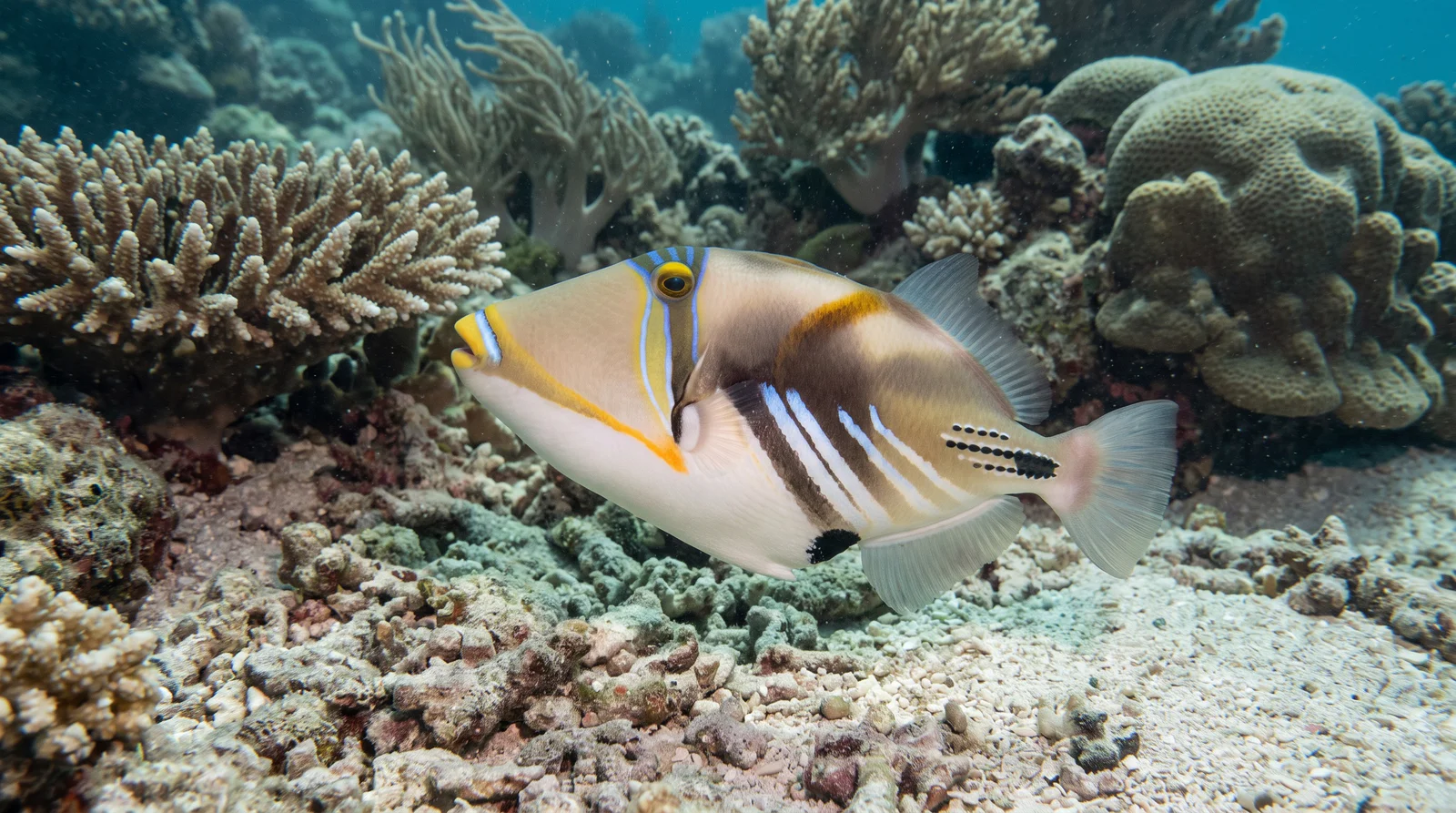 AI-generated
Image credit: AI-generated illustration · Generated for Diveity; no third-party rights · Higgsfield nano_banana_pro image generation
Balistidae spp.
About Triggerfish (assorted).
Triggerfishes are the reef fishes of the family Balistidae (order Tetraodontiformes): deep-bodied, laterally compressed fishes with a small mouth and strong teeth. FishBase notes that their bodies are encased in very thick, tough skin with large scales, and that the first dorsal-fin spine can be locked erect by the second spine, the feature that gives the group its name. This group entry covers triggerfish sightings where the species was not recorded. Diveity also has individual pages for the Clown Triggerfish (Balistoides conspicillum), Orange-lined Triggerfish (Balistapus undulatus), Redtoothed Triggerfish (Odonus niger) and Titan Triggerfish (Balistoides viridescens), and for two Atlantic species, the Queen Triggerfish (Balistes vetula) and the Ocean Triggerfish (Canthidermis sufflamen).
FishBase lists 12 genera and 42 species in Balistidae, and WoRMS lists 12 accepted genera: Abalistes, Balistapus, Balistes, Balistoides, Canthidermis, Melichthys, Odonus, Pseudobalistes, Rhinecanthus, Sufflamen, Xanthichthys and Xenobalistes. FishBase gives the family's distribution as the Atlantic, Indian and Pacific Oceans, while the Fishes of Australia account describes triggerfishes as widespread in shallow tropical and subtropical waters of the Indo-west Pacific and lists eleven genera, without Balistes.
Filefishes (family Monacanthidae) are a separate family in WoRMS and are not covered by this entry.
Identification
- Locking spine: The Australian Museum describes a ball-and-socket, trigger-like mechanism: the base of the second dorsal spine slots into a groove in the first spine, and the lock is released when the second spine is depressed. Fishes of Australia describes the first dorsal fin as having three visible spines.
- Body and fins: FishBase describes a deep, moderately compressed body, a small mouth and rudimentary pelvic fins, and says triggerfishes normally swim by undulating the second dorsal and anal fins, using the tail for rapid bursts.
- Colour: Patterns differ strongly between species. FishBase describes B. conspicillum with large white spots on the belly, black spots on a yellow back and a yellow snout, and B. undulatus with green to brown colouring, diagonally curved orange lines and a large black blotch over most of the caudal-fin base.
- Size: FishBase gives maximum total lengths of 30 cm for B. undulatus, 50 cm for B. conspicillum and O. niger, 60 cm for B. vetula, 65 cm for C. sufflamen and 75 cm for B. viridescens, which FishBase calls the largest triggerfish.
- Filefishes: The Australian Museum notes that triggerfishes and leatherjackets (filefishes, Monacanthidae) both have a lockable first dorsal-fin spine, so that feature alone does not identify a triggerfish.
Conservation status varies by species. FishBase reports IUCN Red List assessments of Least Concern for B. conspicillum, B. undulatus, O. niger and B. viridescens (all assessed in 2022) and for C. sufflamen (2011), and Near Threatened for B. vetula (2011). FishBase notes that B. conspicillum is among the most highly prized aquarium fishes and that several species are marketed fresh or dried-salted.
Where it lives.
FishBase describes triggerfishes as living in shallow waters, mainly on coral reefs around the world, usually from just below the surface to 50 m, although individual species are recorded deeper. FishBase gives the Indo-Pacific species B. viridescens, B. conspicillum, B. undulatus and O. niger as occurring from the Red Sea or East Africa eastward into the Pacific and north to southern Japan, while B. vetula and C. sufflamen occur in the Atlantic. Juveniles of several species are tied to shelter: FishBase reports juvenile B. viridescens with isolated patches of branching coral or rubble in shallow sandy protected areas, juvenile O. niger with rubble patches or crevices of suitable size, and juvenile B. conspicillum hiding in small caves with rich invertebrate growth.
Where Divers Find Them
- Depth: FishBase gives depth ranges of 0–60 m for B. viridescens and B. undulatus, 1–75 m for B. conspicillum, 5–110 m for O. niger, 5–60 m (usually 5–30 m) for C. sufflamen and 2–275 m (usually 3–30 m) for B. vetula.
- Slopes and lagoons: FishBase records B. viridescens in lagoons, on seaward reefs and on sheltered inner reef slopes, with adults singly or in pairs on the slopes of deep lagoons or seaward reefs. It describes B. undulatus as territorial in coral-rich areas of deep lagoons and seaward reefs, from the lower surge zone to at least 50 m.
- Drop-offs: FishBase describes B. conspicillum in clear seaward reefs next to steep drop-offs, uncommon to rare through most of its range; adults swim about openly and may retreat to caves when approached.
- Current-swept reef: FishBase places O. niger in reef channels and on slopes with strong currents, where it forms large schools to feed on zooplankton.
- Atlantic reefs: FishBase describes B. vetula over rocky or coral areas, sometimes in schools and sometimes solitary over sand and grassy areas. It describes C. sufflamen near drop-offs of seaward reefs, solitary or in small groups in open water, often with Sargassum.
- Silty reefs: FishBase lists Pseudobalistes flavimarginatus on coastal to inner reefs and in estuaries, often in silty habitats, at 2–80 m.
Triggerfish habitat ranges from shallow sandy lagoons to deep current-swept slopes, so notes on depth, current and bottom type help identify an unnamed sighting later.
How it behaves.
FishBase describes most triggerfishes as solitary, diurnal carnivores that feed on a wide variety of invertebrates, including hard-shelled molluscs and echinoderms; some also feed on algae or zooplankton. Diets differ by species: FishBase lists sea urchins, coral, crabs, other crustaceans, molluscs and tube worms for B. viridescens, a varied diet including algae, echinoderms, fishes, molluscs, tunicates, sponges and hydrozoans for B. undulatus, and zooplankton and sponges for O. niger, while C. sufflamen feeds mainly on large zooplankton.
Underwater Encounter Behavior
The Florida Museum reports that the Queen Triggerfish darts into crevices when threatened and locks its dorsal fin in place so predators cannot pull it out, and that it can produce an audible warning from special membranes. The Australian Museum adds that young triggerfishes and leatherjackets wedge into crevices with the locked spine and a lowered pelvic bone, and that locking the spine and lowering the pelvic bone makes an adult look larger. FishBase says B. vetula preys on sea urchins by blowing water to overturn them and attacking where the spines are short. FishBase says triggerfishes lay demersal eggs in a nest that is aggressively guarded by the female, less often by the male; it reports that B. undulatus lays eggs in one cluster in a shallow excavation on sand or rubble, that in O. niger only females tend the eggs while both parents keep guard, and that male P. flavimarginatus congregate on sand flats next to reefs when nesting. Nest defence is the main concern for divers. FishBase describes B. viridescens as often hostile towards divers and able to attack unprovoked when caring for eggs, reports that females have attacked divers while guarding their nest, and says nest-guarding P. flavimarginatus females are aggressive. The Florida Museum likewise warns that B. vetula is aggressively defensive of its territory during the breeding season and can inflict a strong bite.
Diver Tips
- Nesting season: Give any triggerfish that is guarding a nest a wide berth, and do not approach the sand or rubble area it is defending. The sources above describe titan and queen triggerfish defending nests or territories and biting.
- If one approaches: As general practice, stay calm, back away and swim out of the area the fish is defending rather than facing it down, and follow your dive guide's briefing.
- Do not touch or feed: A triggerfish wedged in a crevice with its spine locked cannot easily be removed, so leave it alone rather than trying to dislodge it.
- Eating reef fish: FishBase lists reports of ciguatera poisoning for B. conspicillum and B. viridescens, says P. flavimarginatus is ciguatoxic in certain areas, and lists B. vetula as poisonous to eat. Ask local advice before eating any reef fish, and seek medical care if you become ill after a meal.
- Recording sightings: From a distance, note the body pattern, tail marking and depth so a sighting can later be named to species.
Where to see it.
Evidence for philippines · 10 dive sites
General range is not evidence of occurrence at a specific dive site.
Agus Bay
Mactan
Documented site occurrence
Season not yet documented
Source reviewed on 2026-10-15 · Source: Lakwatsero blog, trip report (2011) · Observation date not documented
Balinghai Wall
Boracay
Documented site occurrence
Season not yet documented
Source reviewed on 2026-10-15 · Source: WaterColors Boracay Dive Resort, Dive Sites & Map page · Observation date not documented
DA-West
Sipalay
Documented site occurrence
Season not yet documented
Source reviewed on 2026-10-15 · Source: Artistic Diving & Beach Resort, dive-sites page (Wayback snapshot 2019-10-21) · Observation date not documented
Diniwid
Boracay
Documented site occurrence
Season not yet documented
Source reviewed on 2026-10-15 · Source: WaterColors Boracay Dive Resort, Dive Sites & Map page · Observation date not documented
Eva's Point
Sipalay
Documented site occurrence
Season not yet documented
Source reviewed on 2026-10-15 · Source: cbartazo.com "Seeking Sipalay" trip report (2017-10-28, single diver, Artistic Diving guest) · Observation date not documented
Friday's Rock
Boracay
Documented site occurrence
Season not yet documented
Source reviewed on 2026-10-15 · Source: New Wave Divers Boracay (dive-site page) · Observation date not documented
Hilutungan Island Sanctuary
Mactan
Documented site occurrence
Season not yet documented
Source reviewed on 2026-10-15 · Source: Green Sea Divers, Hilutungan Marine Sanctuary page (2011) · Observation date not documented
Nalusuan Island Sanctuary
Mactan
Documented site occurrence
Season not yet documented
Source reviewed on 2026-10-15 · Source: Scotty's Dive Center (live page retrieved 2026-10-07) · Observation date not documented
Punta Bunga
Boracay
Documented site occurrence
Season not yet documented
Source reviewed on 2026-10-15 · Source: New Wave Divers Boracay (dive-site page) · Observation date not documented
Yapak
Boracay
Documented site occurrence
Season not yet documented
Source reviewed on 2026-10-15 · Source: New Wave Divers Boracay (dive-site page) · Observation date not documented
Gallery.
 AI-generated
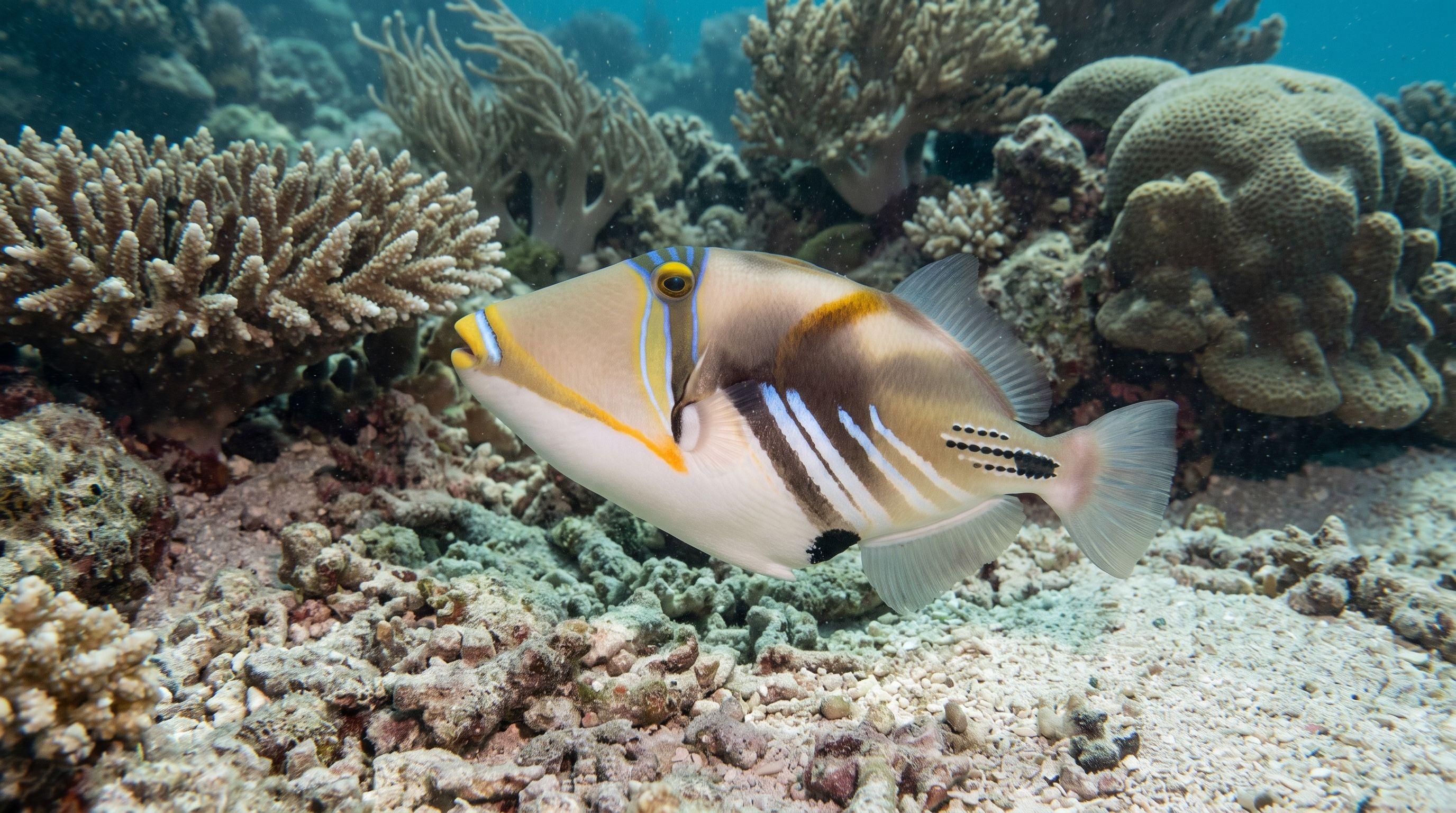
AI-generated illustration
Image credit: AI-generated illustration · Generated for Diveity; no third-party rights · Higgsfield nano_banana_pro image generation