Upside-down Jellyfish (assorted)
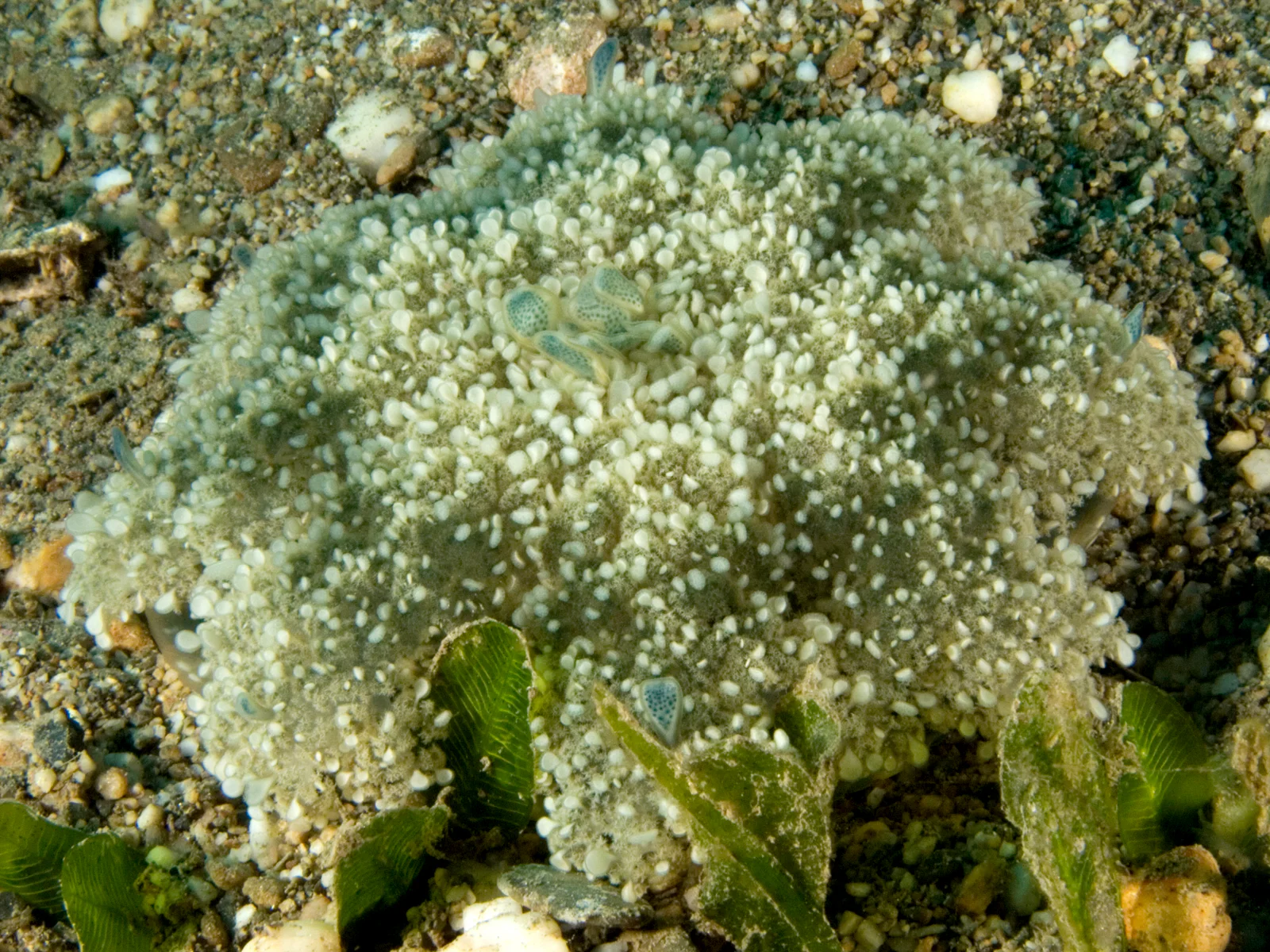
Image credit: Nick Hobgood · CC BY-SA 3.0 · Wikimedia Commons, cropped by this page
Cassiopea spp.
About Upside-down Jellyfish (assorted).
Upside-down jellyfish are jellyfish of the genus Cassiopea that lie bell-down on the seabed in shallow, sunlit water. This group entry covers sightings where the species was not recorded. The World Register of Marine Species (WoRMS) lists Cassiopea Péron & Lesueur, 1810 as an accepted genus in the family Cassiopeidae, and Wikipedia says WoRMS counts 11 species in it.
Wikipedia says that, unlike most jellyfish, they swim infrequently and spend most of their lives with the bell on the ground and the underside pointing upward. Their short, frilly oral arms hold symbiotic algae and can sting and capture prey, and individuals in one place can vary in shades of white, blue, green and brown.
A conservation status is not given here, because this entry covers a whole group.
Where it lives.
Wikipedia says Cassiopea live in warmer coastal regions around the world, in shallow mangrove swamps, mudflats, canals, shallow lagoons and bays and turtle grass flats, and that they must lie where there is enough light for the photosynthetic algae in their tissue. It names Cassiopea andromeda as an Indo-Pacific species that has been introduced to the Mediterranean.
Where Divers Find Them
At the Pemuteran Jetty, the bay's muck dive on sand and debris, Abyss Ocean World lists upside down jellyfish among what can be found on the site. It does not say which species, how often or in which months.
How it behaves.
Wikipedia says upside-down jellyfish get about 90% of their nutritional needs from the algae (Symbiodiniaceae) in their tissue and about 10% by predation: pulsing the bell moves water over the oral surfaces, and stinging cells stun crustaceans, nematodes and eggs. Some species have been observed in a sleep state, the first animals without a central nervous system seen to sleep.
Underwater Encounter Behavior
Wikipedia says that when provoked they release mucus containing toxic proteins, that at least one species releases stinging cells in its mucus, and that their sting can cause mild to moderate pain and dermatitis in humans. The sources cited here do not describe how they react to divers.
Where to see it.
Evidence from all destinations · 1 dive site
General range is not evidence of occurrence at a specific dive site.
Gallery.
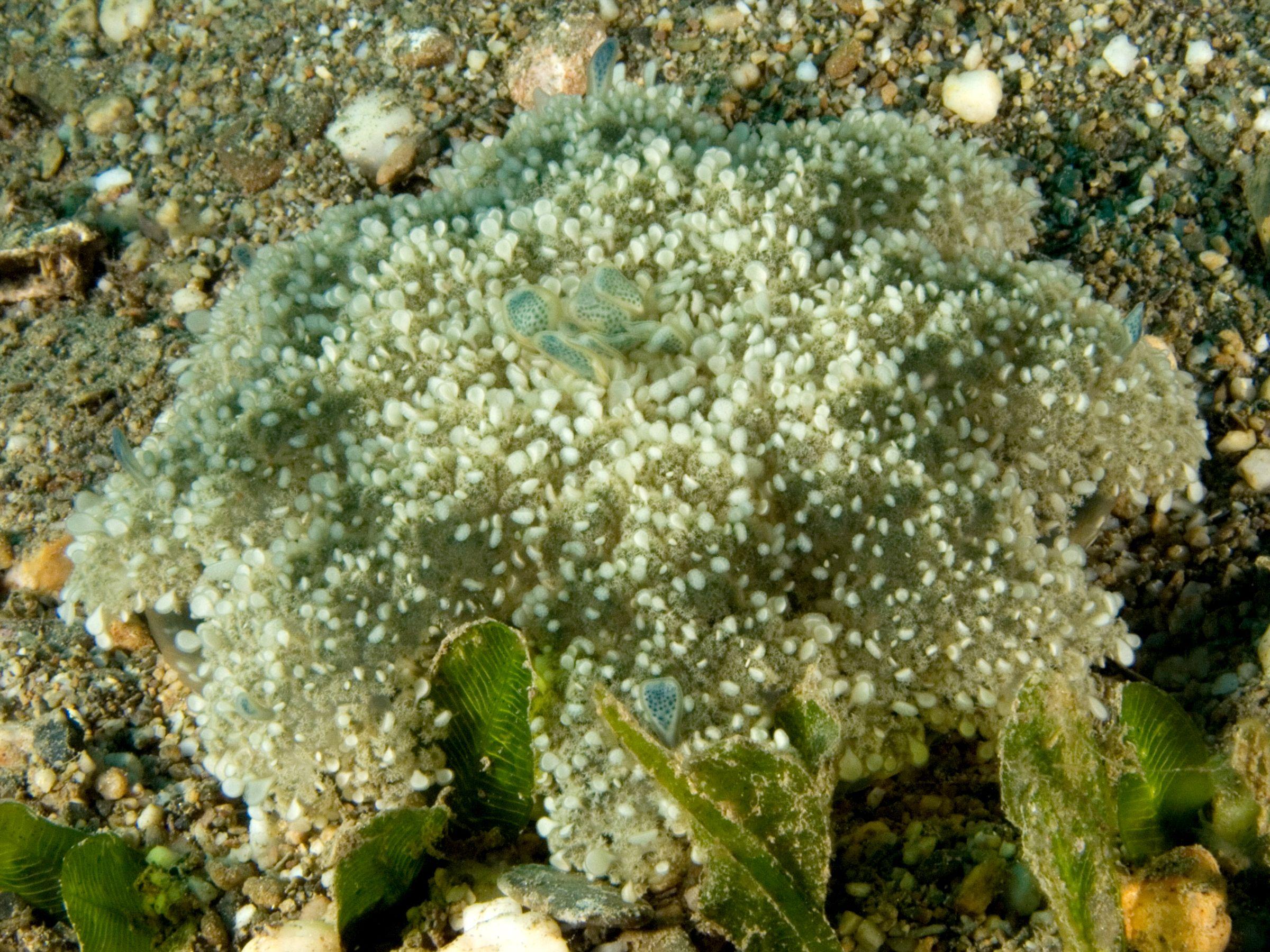
An upside-down jellyfish, Cassiopea andromeda, one species of the genus Cassiopea, resting on sand at Tasitolu, East Timor, photographed on 2006-10-21 and named by the photographer on its Commons page. This photograph is not from Pemuteran, and the source for Pemuteran's sighting names the jellyfish only as an upside-down jellyfish, without a species. This page's frame crops the photograph.
Image credit: Nick Hobgood · CC BY-SA 3.0 · Wikimedia Commons, cropped by this page