Skip to main contentSkip to navigation
diveity

Weedy Scorpionfish

Weedy Scorpionfish

Rhinopias frondosa

Scorpaenidaefish23cm / 9inLeast Concern

About Weedy Scorpionfish.

The Weedy Scorpionfish, Rhinopias frondosa, is a highly sought-after species among the global diving community, renowned for its extraordinary camouflage and striking appearance. Belonging to the family Scorpaenidae, these fascinating fish are masters of disguise, making them a thrilling find for any diver. Despite their rarity in many areas, their conservation status is currently listed as Least Concern.

Found across the Indo-West Pacific, their distribution spans from East Africa to the Caroline Islands, extending north to Japan and south to Australia. They inhabit warm waters, typically found along coral reefs, as well as in sandy and muddy areas rich with filamentous algae, rubble slopes, and even sponges. Divers may encounter them at depths ranging from 3 to 90 m, though observations can extend to 300 m.

These cryptic ambush predators are primarily nocturnal hunters, patiently waiting for unsuspecting prey to come within striking distance. Rather than swimming, they "crutch" or "hop" along the seabed using their pectoral and pelvic fins. A remarkable behavior involves swaying back and forth, mimicking drifting algae or debris in the current, further enhancing their already incredible camouflage. They are known to remain in the same spot for weeks or even months. For protection, like other scorpionfish, they possess venomous spines. Uniquely, Rhinopias frondosa regularly sheds its entire outer skin layer, or cuticle, a process believed to help rid them of accumulating algae and parasites.

Identification

  • Size: The Weedy Scorpionfish can reach a maximum length of 23 cm (9 inches).
  • Body and Head: They possess a deep, laterally compressed body with a distinctive head shape and high-set eyes. Their mouth is notably upturned.
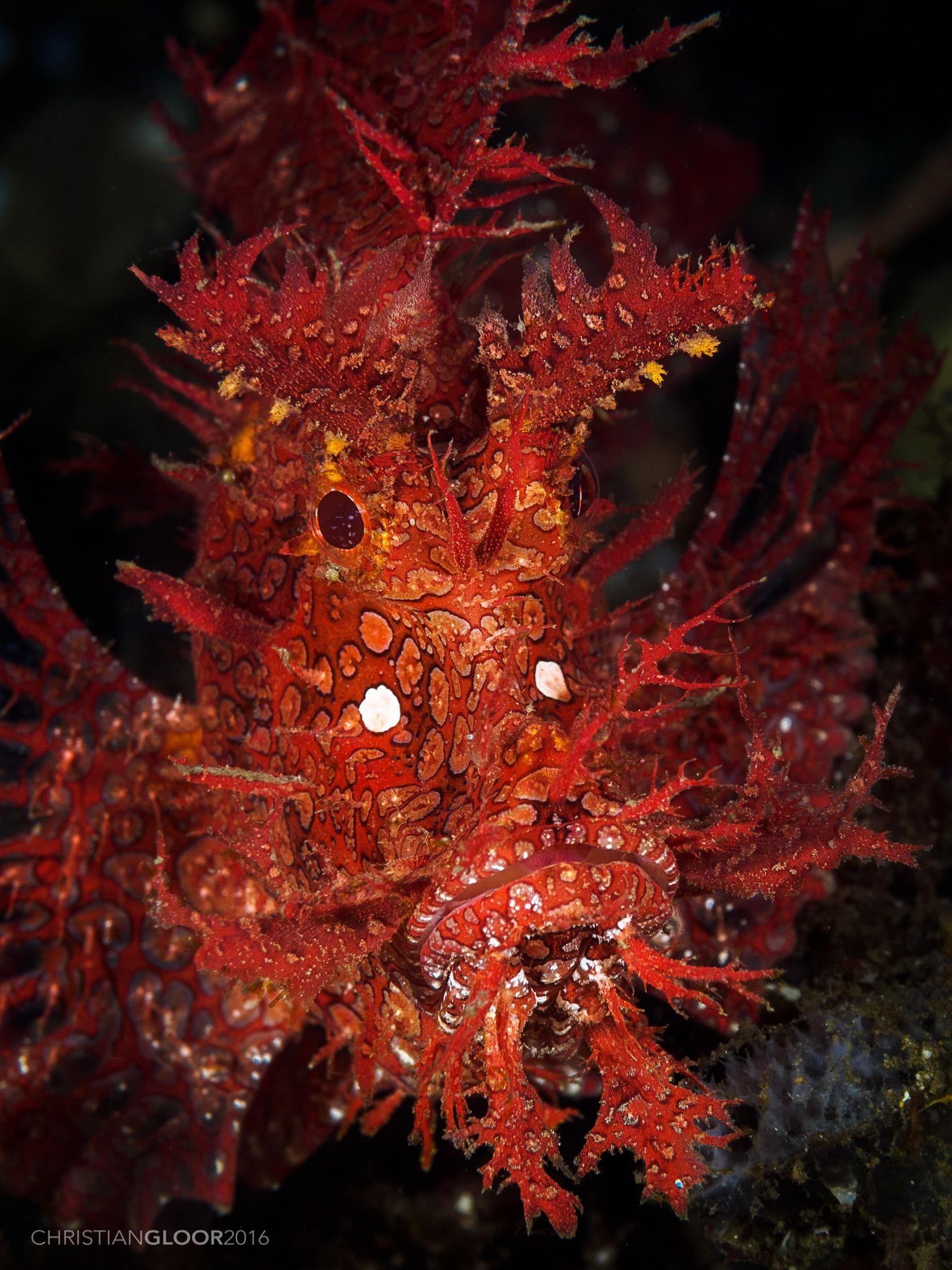
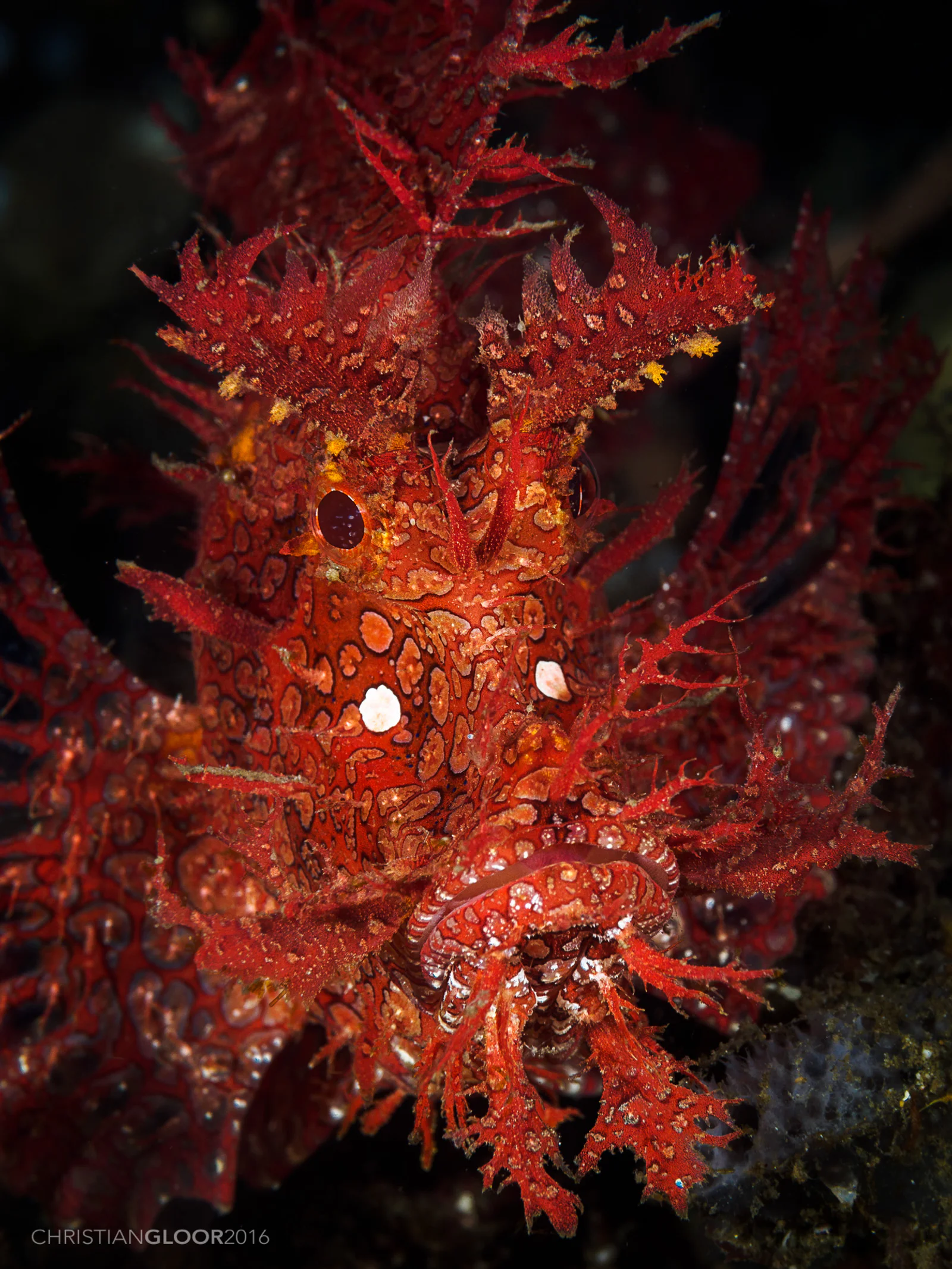
  • Appendages: The most striking identification feature is their elaborate covering of numerous, branched, weed-like skin flaps or tentacles, arranged in a maze-like pattern across their body. The snout and lower jaw are also adorned with tentacles, and fleshy tentacles are present on the supraocular and posterior lacrimal spines.
  • Coloration: Their coloration is highly variable, allowing them to blend seamlessly with their environment. They can be found in a stunning array of hues including yellow, brown, green, black, pink, red, and purple. A key identification mark is the presence of distinctive circular, dark-margined spots, where the central spot matches the background color of the fish. They also possess the ability to alter their coloration to match their immediate surroundings.
  • Fins: The dorsal fin typically has 12 spines and 9 soft rays, while the anal fin has 3 spines and 5 soft rays. The soft-rayed portion of the dorsal fin may feature two small black spots. The fin membranes on the spiny part of the dorsal fin have clear incisions, and the distal margins of the soft-rayed dorsal, pelvic, anal, and caudal fins may have weak or no notches. The tip of each caudal fin ray is divided into four branches.

Where it lives.

The Rhinopias frondosa, commonly known as the Weedy Scorpionfish, is a master of camouflage, perfectly adapted to blend into its diverse Indo-West Pacific habitats. This fascinating fish is typically encountered by divers in warm, tropical waters, where it prefers a variety of complex benthic environments.

Its preferred habitats are characterized by a rich mix of substrates and marine growth, allowing its elaborate, weed-like appendages to provide exceptional concealment. Divers can often spot Weedy Scorpionfish in:

  • Rubble and Algae-Covered Slopes: These areas provide ample hiding spots and mimic the fish's intricate body structure.
  • Coral Reefs: They are found along coral reefs, often perching on top of corals or among rocky and coralline areas.
  • Soft-Bottom Habitats: This includes sandy and muddy areas, particularly in current-prone channels, where they can mimic debris or seaweed swaying with the water.
  • Sponge and Soft Coral Patches: Weedy Scorpionfish are also associated with areas rich in sponges and soft corals, further enhancing their cryptic appearance.
  • Volcanic Black Sand and Sheltered Inlets: Specific locations like Indonesia's Lembeh Strait are renowned for sightings, where the volcanic black sand and nutrient-rich waters create ideal conditions.

The typical depth range for observing Weedy Scorpionfish during a dive is between 6 and 90 meters. While they are frequently found in shallower recreational diving depths, some sources indicate their presence extends much deeper, occasionally down to 297 or even 300 meters, particularly for spawning migrations.

Geographically, *Rhinopias frondosa* boasts a wide distribution across the Indo-West Pacific. Its range extends from East and South Africa, eastward through Sri Lanka, to the Caroline Islands, north to southern Japan, and south to Australia, including regions like Indonesia (Lembeh Strait, Ambon, Bali), the Philippines, and Papua New Guinea. These fish thrive in warm waters, typically within a temperature range of 24–28°C.

Their sedentary nature means they often remain in the same spot for extended periods, patiently waiting to ambush unsuspecting prey. This behavior, combined with their extraordinary camouflage, makes them a highly sought-after and rewarding find for divers at any dive site.

How it behaves.

The Weedy Scorpionfish, *Rhinopias frondosa*, is a master of camouflage, making it a prized and challenging find for divers. This fascinating species is renowned for its cryptic behavior and unique adaptations to its environment.

Underwater Encounter Behavior

The Weedy Scorpionfish is primarily a sedentary, ambush predator, often remaining in the same location for weeks or even months at a time. Divers will rarely observe this fish swimming; instead, it "walks" or "hops" awkwardly along the seabed using its pectoral and pelvic fins. Its elaborate, weed-like appendages and highly variable coloration (ranging from red, yellow, green, pink, purple, to brown) allow it to blend seamlessly with its surroundings, mimicking algae, coral rubble, or debris. This incredible camouflage makes it exceptionally difficult to spot, even when divers are looking directly at it. When disturbed or feeling threatened, it may sway back and forth to further impersonate floating debris or seaweed moved by currents. While generally not aggressive, Weedy Scorpionfish possess venomous spines for defense, so divers should maintain a respectful distance and avoid touching them.

Feeding Habits

As a carnivorous ambush hunter, the Weedy Scorpionfish primarily feeds at night. It waits motionless for unsuspecting prey to come within striking distance. With an upturned mouth and a remarkably fast strike, it lunges forward and rapidly sucks in its victim. Its diet consists mainly of small fish and crustaceans, including ghost shrimp, mollies, guppies, and small octopuses. Due to their large mouths, they can ingest surprisingly large prey relative to their body size.

Social Structure

The Weedy Scorpionfish is largely a solitary species. While they are not considered territorial, they may occasionally exhibit aggression towards other species. Divers may sometimes encounter them in pairs, particularly during mating periods.

Notable Seasonal Patterns

Reproduction in Weedy Scorpionfish involves separate sexes. From June to August, these fish are known to migrate into deeper waters, typically between 33 to 90 meters (110 to 300 feet), to broadcast spawn. After spawning, they return to their shallower reef habitats. This seasonal migration to deeper waters means that sightings in shallower dive sites might be less frequent during these months. They inhabit warm waters, generally found in temperatures of 22–28°C. They are typically encountered at depths between 6–25 m, though they can be found much deeper, down to 300 m.

Where to see it.