Yellow Sea Cucumber
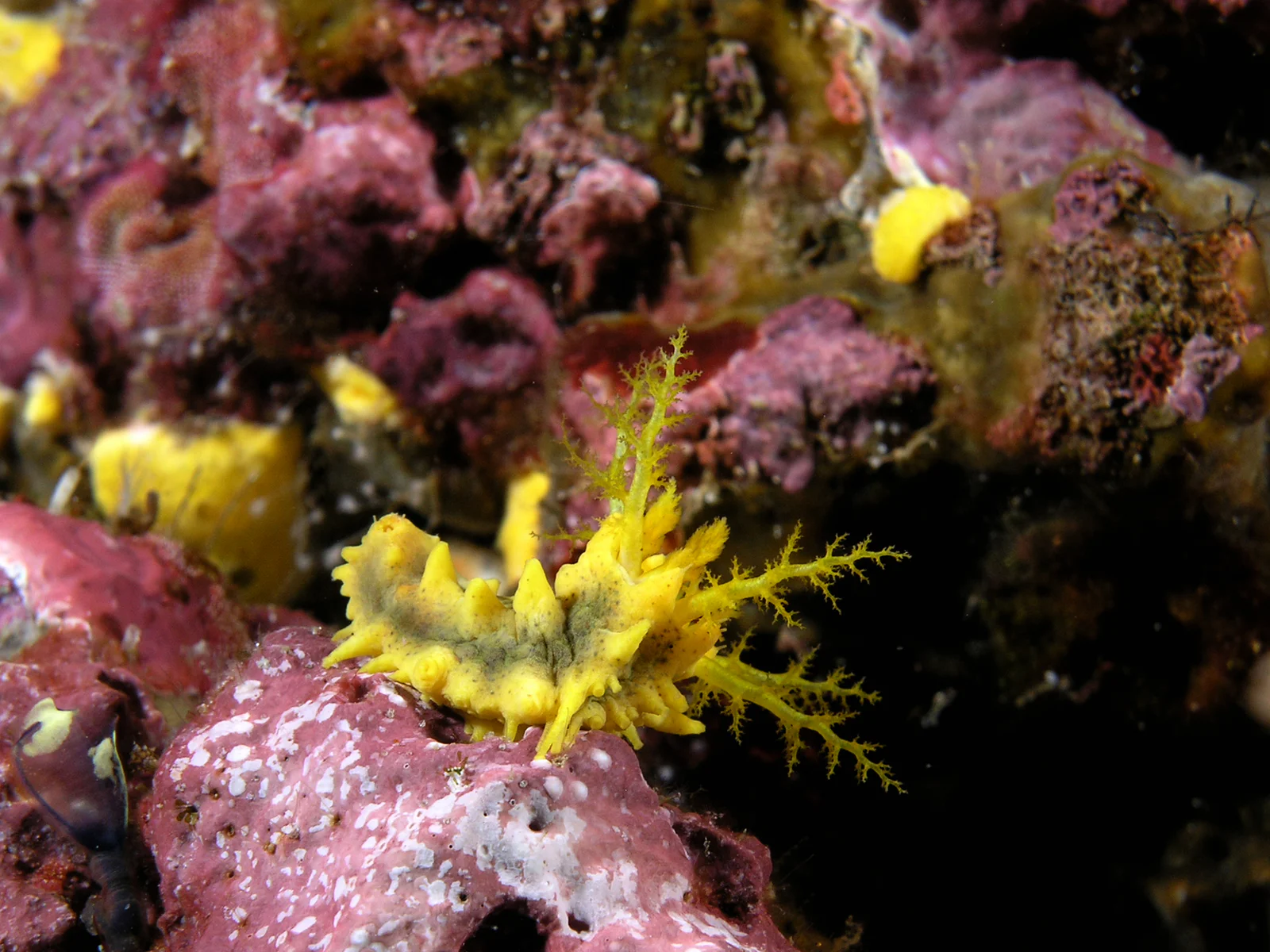
Image credit: Source unspecified · License unspecified
Colochirus robustus
About Yellow Sea Cucumber.
The Yellow Sea Cucumber, Colochirus robustus, is a striking macro invertebrate belonging to the family Cucumariidae. This small, vibrant echinoderm is a common sight for divers in its preferred habitats, often forming noticeable clusters on current-swept rock faces and reefs. Known for its distinctive appearance and filter-feeding lifestyle, it plays a role in the marine ecosystem by consuming organic particles from the water column. Its conservation status is currently listed as Data Deficient, highlighting the need for further research into its populations and ecological impact.
Found predominantly in the tropical waters of the central Indo-Pacific region, including the Philippines, Indonesia, and Australia, the Yellow Sea Cucumber thrives in environments with moderate to rapid water flow. Divers frequently encounter this species at depths down to about 25 meters, in waters typically ranging from 22–28°C. It has been observed in abundance at dive sites such as Pillarsteen and Kirby's Rock, where conditions are ideal for its suspension-feeding habits.
Identification
- Size: The Yellow Sea Cucumber typically reaches a maximum size of 6 cm (2.4 in), though some individuals have been reported to grow up to 7 cm (2.8 in) or even 10 cm (4 in).
- Coloration: Its most prominent feature is its vivid, bright yellow body. While predominantly solid yellow, some specimens may exhibit greenish-grey coloration between their distinctive ridges.
- Body Shape and Texture: The body is roughly cylindrical but has an angular appearance, characterized by five shallow longitudinal ribs. These ribs are adorned with numerous finger-like or thorn-like protuberances, giving it a knobby or spiky texture.
- Feeding Tentacles: At its anterior (mouth) end, the Yellow Sea Cucumber possesses a ring of approximately eight large, feathery, branched feeding tentacles. These are actively extended into the current to capture passing plankton and organic detritus.
- Locomotion and Attachment: On its underside, it has three rows of tube feet, which it uses to cling securely to rocks, corals, and other hard substrates. Unlike some other sea cucumber species, it remains stationary, relying on water currents to bring food to its tentacles.
- Aggregation: This species is often observed clustering in groups, particularly in areas with strong currents, where they can efficiently filter feed.
Where it lives.
The vibrant Colochirus robustus, commonly known as the Yellow Sea Cucumber, is a captivating inhabitant of the tropical Indo-Pacific's shallow marine environments. This striking echinoderm is widely distributed across the central Indo-Pacific region, with observations reported from the Philippines, Indonesia, Australia, Japan, and Palau, extending into the Indian Ocean and the Red Sea.
Divers are most likely to encounter the Yellow Sea Cucumber at depths typically ranging from the shallows down to approximately 25 meters. While some records suggest occurrences at greater depths, its preferred habitat is generally within the recreational diving limits.
This species exhibits a strong preference for areas with significant water movement, often clinging to current-exposed rock and rubble. It thrives on rocky seabeds, reef walls, and within the intricate structures of coral reefs, where it can firmly attach itself using its tube feet. These locations, characterized by moderate to rapid water flow, are crucial for its feeding strategy as a filter feeder. The Yellow Sea Cucumber extends its feathery tentacles to capture zooplankton and other organic particles drifting in the water column, playing an important ecological role in nutrient cycling within its ecosystem.
Ideal water temperatures for the Yellow Sea Cucumber range from 22–28°C. Its presence is a testament to healthy, dynamic reef and rocky environments, making it a delightful find for divers exploring these bustling underwater worlds.
How it behaves.
The Yellow Sea Cucumber, Colochirus robustus, is a small but striking inhabitant of Indo-Pacific dive sites, known for its vibrant coloration and unique feeding behavior.
- Underwater Encounter Behavior
Divers can readily identify the Yellow Sea Cucumber by its vivid yellow body, which is typically cylindrical with distinct thorn-like or finger-like projections along its five shallow longitudinal ribs. It reaches a maximum size of approximately 6-7 cm (2.4-2.8 in). This species is generally sessile, attaching itself to rocks and reefs using its tube feet. While it can move, it often remains in a chosen location for extended periods, preferring areas with moderate to strong water currents that provide a steady supply of food. Yellow Sea Cucumbers are commonly encountered at depths down to about 25 meters (82 ft) in tropical waters, including coral reefs and rocky seabeds. When undisturbed, they are peaceful creatures. However, like some other sea cucumbers, they possess a defense mechanism to release mild toxins if severely stressed or injured. While rare in their natural habitat, divers should always observe marine life without touching or harassing them to prevent such occurrences. - Feeding Habits
Colochirus robustus is a specialized sessile filter feeder, also known as a suspension feeder. It actively filters the water column for sustenance. The sea cucumber extends a ring of about eight large, feathery, branched tentacles into the current to capture microscopic organisms such as zooplankton, phytoplankton, fine organic particles, and suspended detritus. Once a tentacle is laden with food, it is retracted towards the mouth, where the captured particles are scraped off and ingested. This continuous filtering activity makes them important contributors to the biological balance of their reef ecosystems. - Social Structure
Yellow Sea Cucumbers are often observed aggregating in colonies, a behavior noted at dive sites like Pillarsteen and Kirby's Rock where they are abundant. This tendency to gather in groups can make them easier for divers to spot. They are considered peaceful invertebrates that coexist well with other non-aggressive marine life. - Notable Seasonal Patterns Relevant to Divers
The Yellow Sea Cucumber can reproduce both sexually and asexually. Sexual reproduction involves broadcast spawning, where eggs and sperm are released into the water column for external fertilization. Asexual reproduction can occur through fission, where an individual splits into two. While fission has been observed in aquarium settings, sometimes in response to stress or as a sign of good health, evidence for its prevalence in wild populations is limited unless environmental conditions are particularly stressful. Specific seasonal spawning patterns for wild populations of Colochirus robustus are not well-documented. However, general sea cucumber reproduction often correlates with warmer water temperatures and increased food availability, which can lead to aggregations during spawning periods in some species. Divers may observe these animals year-round in suitable habitats, with potential increases in activity or density during reproductive cycles, though precise timing for this species is not definitively established.
Where to see it.
Evidence for philippines · 1 dive site
General range is not evidence of occurrence at a specific dive site.
Gallery.
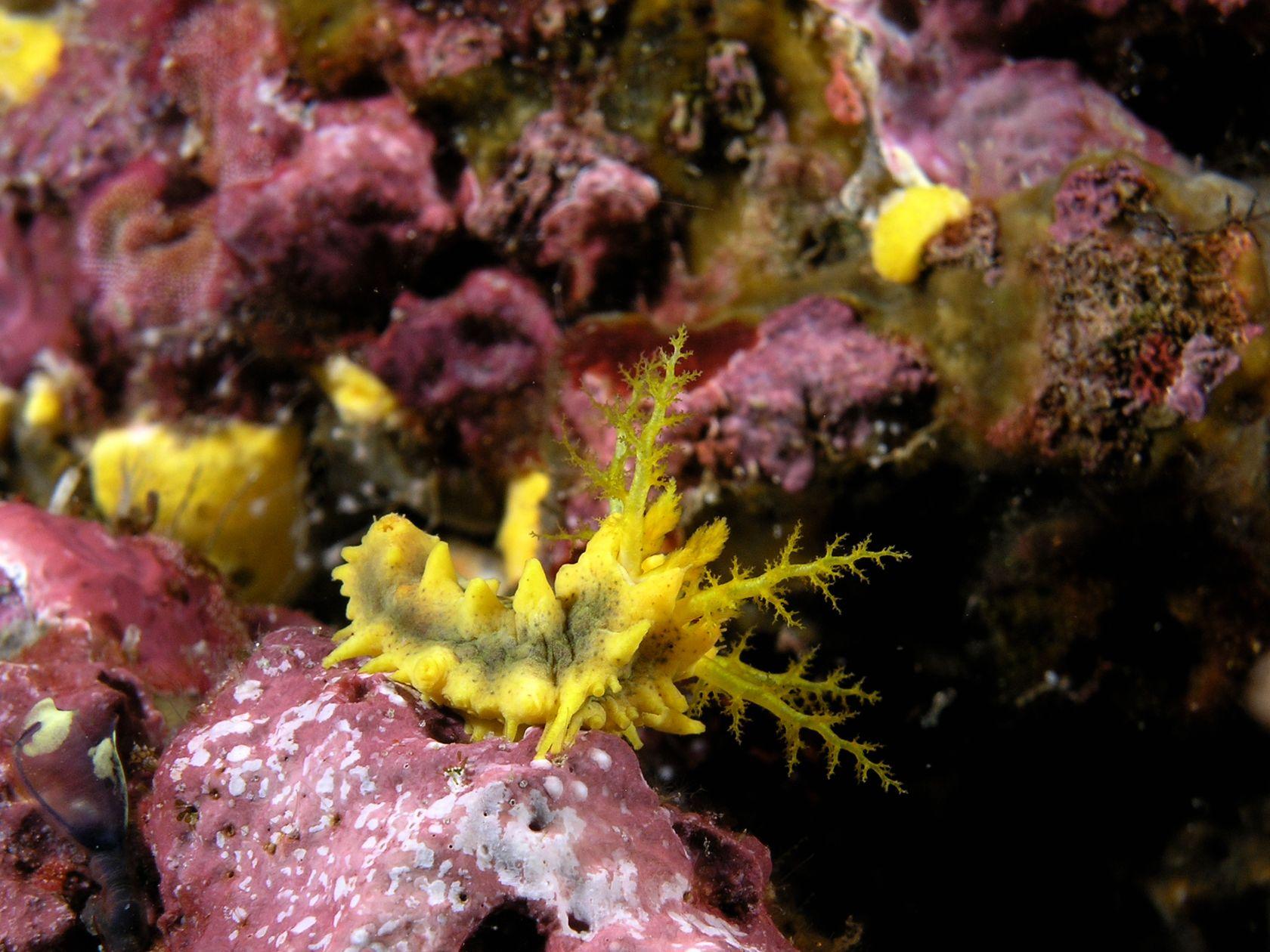
Photo: Nhobgood Nick Hobgood / CC BY-SA 3.0 via Wikimedia Commons
Image credit: Source unspecified · License unspecified