Kona's manta ray night dive works because of light, not luck, though the mantas themselves still decide whether to show up.
How does the Kona manta ray night dive actually work?
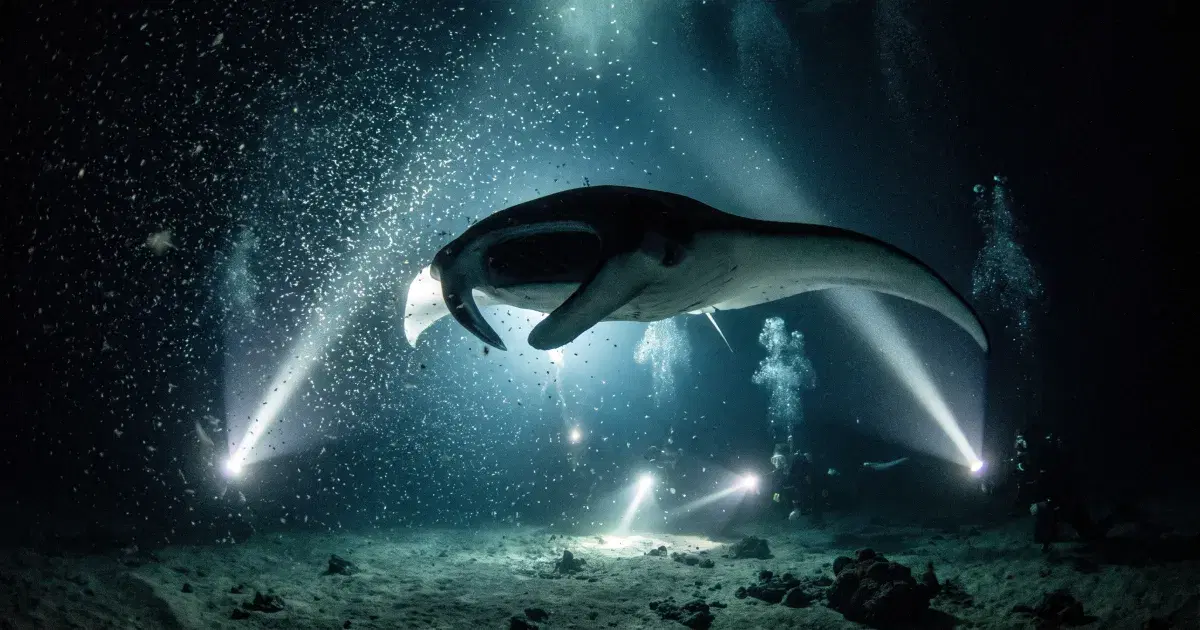
Boats anchor at Keauhou Bay around dusk, and divers descend to a sandy area roughly 10 meters (about 33 feet) deep, where they kneel or sit in a loose circle and point dive lights upward. The lights attract plankton, and the plankton attracts reef manta rays, which glide and loop through the beams to feed, often passing within a meter or two of the divers below. Snorkelers watch the same show from the surface, holding onto floats rigged with their own lights.
How do I book a Kona manta ray night dive?
Several Kona-based dive operators run the manta night dive as its own dedicated trip, separate from a standard daytime two-tank dive, typically departing in the late afternoon to be in position by dusk. Booking ahead is worth it, especially in peak travel season, since boats have limited spots and the trip is popular with both certified divers and snorkelers.
Is the manta ray night dive suitable for beginners?
Yes, generally. The dive itself is shallow and doesn't require strong navigation or advanced skills, since divers stay in one spot on the sandy bottom rather than swimming a route, which makes it accessible to newly certified Open Water divers. The main added factor compared to a daytime dive is simply diving after dark, so first-time night divers should feel comfortable with reduced visibility and rely on the guide's briefing.
What's the best time of year for manta ray sightings in Kona?
Manta encounters happen at Keauhou Bay throughout the year, though sighting numbers can shift with plankton levels and manta feeding patterns, which vary night to night regardless of season. There's no single guaranteed best month; operators generally describe sightings as consistent but not certain on any given night.
How many manta rays typically show up?
It varies widely, from a handful on a quieter night to a dozen or more when conditions and feeding activity line up. No operator can guarantee a specific number, or guarantee a sighting at all, since it depends on the mantas' own feeding behavior that particular evening.
Do I need a special certification for night diving?
No specific night-diving certification is required for this dive, since it's fully guided and takes place at a shallow, controlled site. A night-diving specialty course can build broader comfort and skills for night dives in general, but it isn't a prerequisite for the Kona manta dive specifically.
What should I bring for a Kona night dive?
Most operators provide the dive lights used to attract plankton, but it's worth confirming that in advance. A wetsuit is recommended even in Hawaii's warm water, since divers stay mostly still on the bottom rather than swimming, which cools the body faster than an active daytime dive. Reef-safe practices matter too: skip sunscreen or lotion before this dive, since chemical residue can affect the mantas, and never reach out to touch them.
FAQ
Is the Kona manta ray night dive guaranteed to have manta sightings? No dive operator can guarantee it, since the mantas choose whether to feed at the lights on any given night, though operators generally describe sightings as frequent.
Can non-divers experience the Kona manta ray night dive? Yes, snorkeling the same dive is a common option, watching the mantas from the surface with a light-rigged float rather than descending with the divers.
Where exactly does the Kona manta ray night dive take place? The dive runs at Keauhou Bay, on Kona's coast, which has become the established site for this experience due to a long-running history of manta activity there.