Thor Shrimp (assorted)
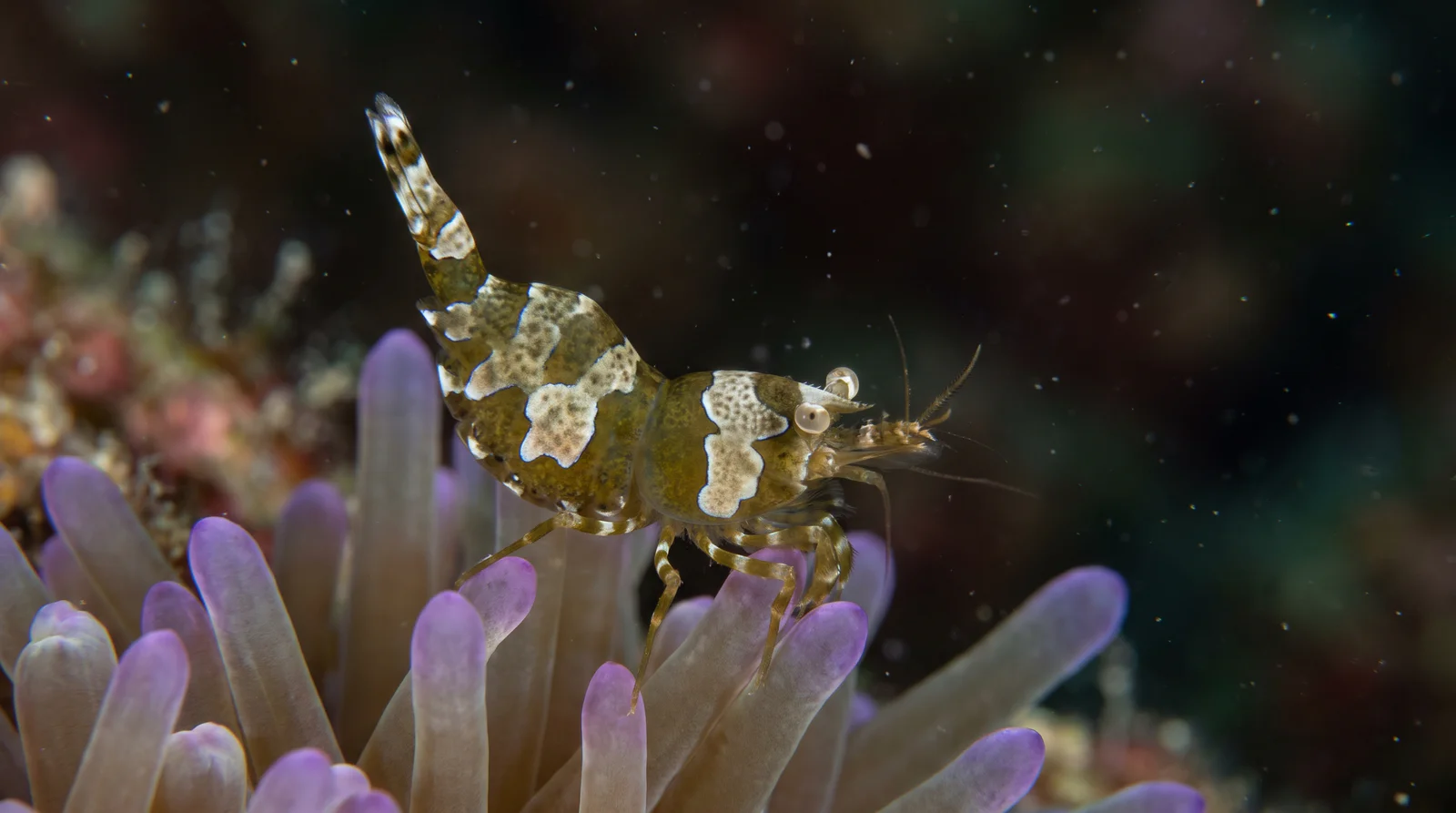 KI-generiert
Bildnachweis: AI-generated illustration · Generated for Diveity; no third-party rights · Higgsfield nano_banana_pro image generation
Thor spp.
Über Thor Shrimp (assorted).
Thor is a genus of small shrimps in the family Thoridae, not a single species. The World Register of Marine Species (WoRMS) lists the genus as accepted, and Wikipedia lists twelve species in it. This group entry covers sightings recorded as "Thor shrimps", a name this entry reads as the genus because the sources give no species.
The genus's best-described member in the sources read is Thor amboinensis, the squat anemone shrimp or sexy shrimp. Wikipedia says it grows to about 13 mm, is olive brown with white patches edged in thin blue lines, and carries its abdomen curved upwards with the tail fan above its head. No size was read for the other species.
A conservation status is not given here, because this entry covers a whole group.
Lebensraum.
Wikipedia says Thor amboinensis is found across the Indo-West Pacific and in parts of the Atlantic, living on corals, sea anemones and other invertebrates in shallow reef communities.
Where Divers Find Them
At Nusa Penida, Bali, Dune Penida Dive Center names Thor shrimps at Toyapakeh, Buyuk and Crystal Bay. It does not say which species.
Verhalten.
Wikipedia says Thor amboinensis lives in a commensal relationship with another invertebrate, usually a shallow-water sea anemone or mushroom coral, with one or several shrimps among the host's tentacles, feeding on tentacle tissue and on planktonic particles trapped in its mucus.
Underwater Encounter Behavior
Dune Penida Dive Center treats them as a subject for patient macro hunting at Buyuk. The sources cited here do not describe how these shrimps react to divers.
Wo man es sehen kann.
Nachweise für indonesia · 3 Tauchplätze
Das allgemeine Verbreitungsgebiet ist kein Nachweis für das Vorkommen an einem bestimmten Tauchplatz.
Buyuk
Nusa Penida
Dokumentiertes Vorkommen am Tauchplatz
Saison noch nicht dokumentiert
Quelle geprüft am 2026-11-07 · Quelle: Dune Penida Dive Center (nusapenida.org) · Beobachtungsdatum nicht dokumentiert
Crystal Bay
Nusa Penida
Dokumentiertes Vorkommen am Tauchplatz
Saison noch nicht dokumentiert
Quelle geprüft am 2026-11-07 · Quelle: Dune Penida Dive Center (nusapenida.org) · Beobachtungsdatum nicht dokumentiert
Toyapakeh
Nusa Penida
Dokumentiertes Vorkommen am Tauchplatz
Saison noch nicht dokumentiert
Quelle geprüft am 2026-11-07 · Quelle: Dune Penida Dive Center (nusapenida.org) · Beobachtungsdatum nicht dokumentiert
Galerie.
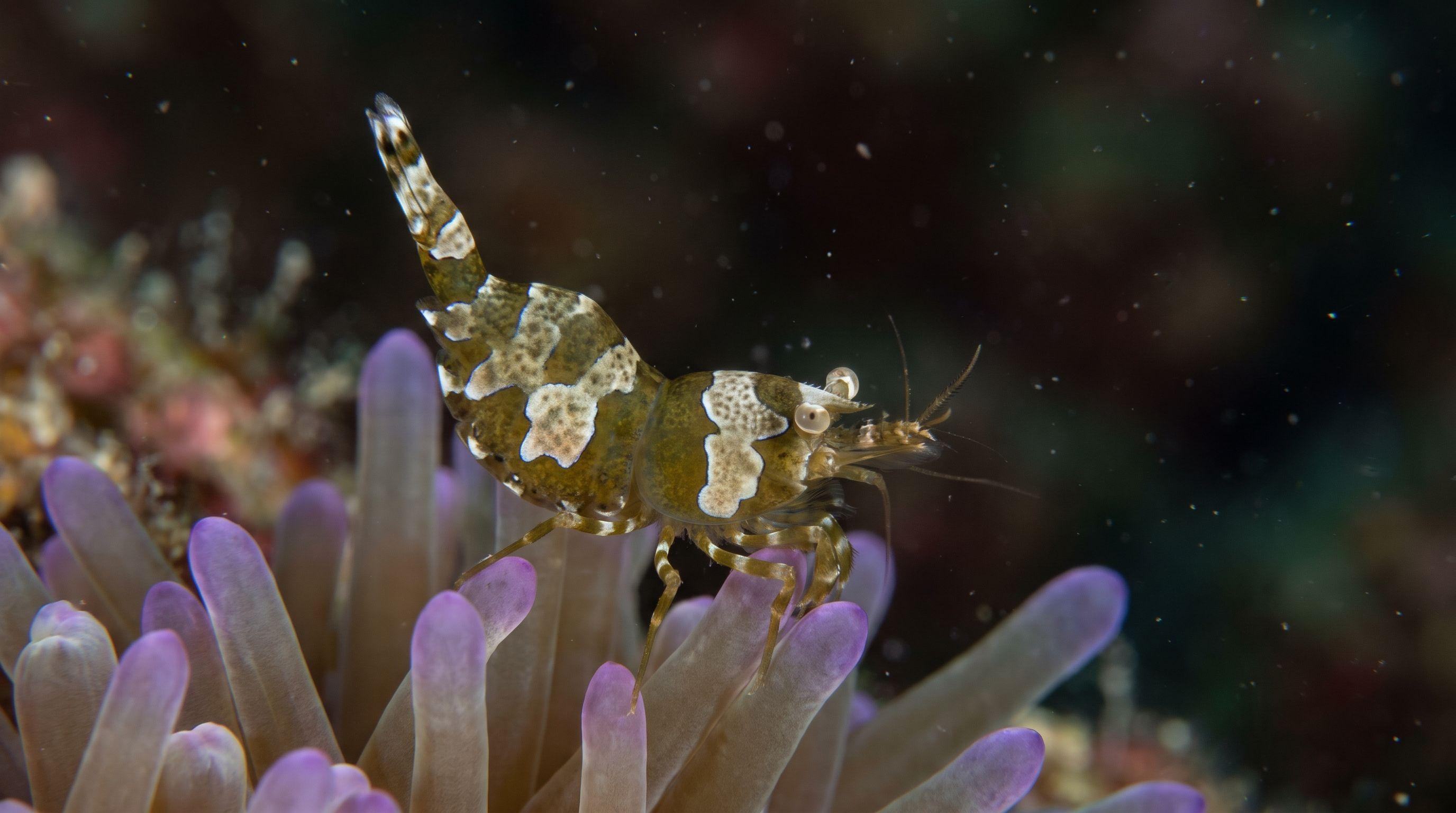 KI-generiert
Bildnachweis: AI-generated illustration · Generated for Diveity; no third-party rights · Higgsfield nano_banana_pro image generation