Banana Reef, in the Maldives' North Malé Atoll, is a bending reef with caves and overhangs and a maximum depth of 30 m. Its current can turn strong, and sources disagree on the experience it calls for.
What does Diveity document about North Malé Atoll?
Diveity holds no sourced description of North Malé Atoll as a whole, and none of South Malé Atoll, so how the two atolls compare in current, sightings or reef character is not documented here. The sourced detail on this page concerns Banana Reef alone.
What is Banana Reef's history?
In 1989, according to Resortlife, a Maldives travel company, Banana Reef became the first protected marine area in the Maldives; Liveaboard.com likewise lists it as a designated protected marine area. Dive The World, a dive travel agency, ties its early discovery to its location: lying close to the airport and to the resort islands of southern North Malé Atoll, it was among the country's first dive sites to be discovered.
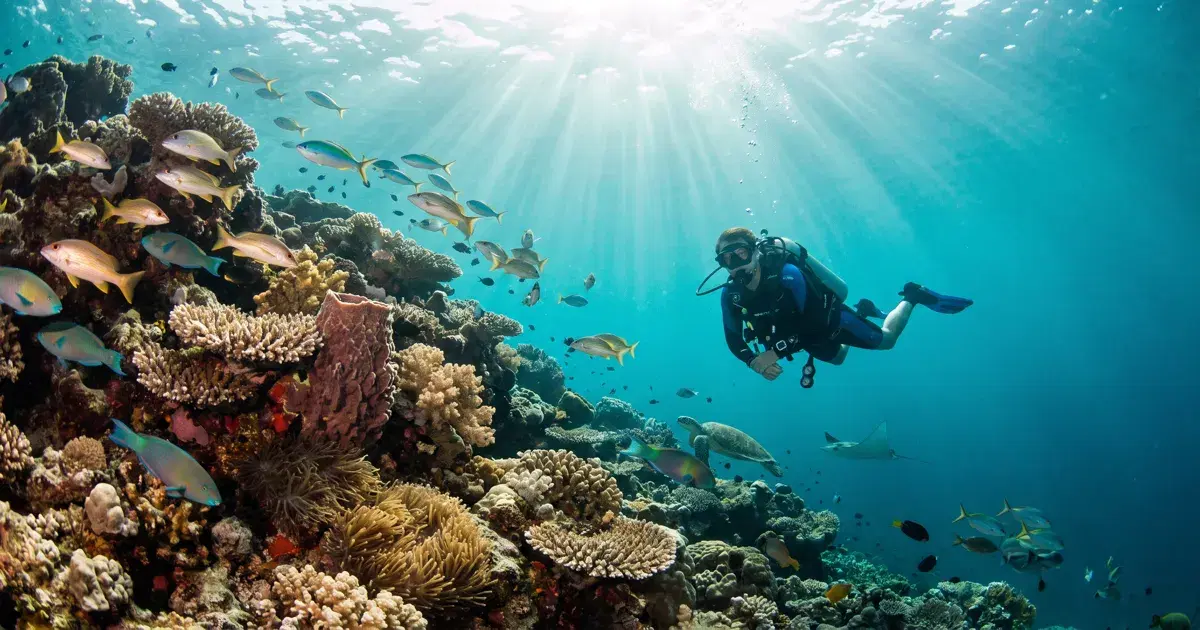
Dive The World praises the coral, noting wide stretches of acropora along the slope. Liveaboard.com describes the reef as a wall that falls from 10 ft to 98 ft (3 to 30 m) under a marked overhang. How the reef has changed over years of diving is not documented in Diveity's Banana Reef record.
How demanding is Banana Reef?
Resortlife describes the current as variable and able to reach moderate to strong. Maldives Tour Guide, a Maldives travel directory, finds it usually gentle to moderate, but notes that it can become strong and that the water around the overhangs is sometimes turbulent. On the eastern side, Dive The World warns that the current can be really strong and urges care in the part of the reef often known as the Washing Machine.
Four of the sources, Resortlife, Dive The World, Divebooker and Liveaboard.com, mention caves, caverns or overhangs. Liveaboard.com gives the depth as 10 ft to 98 ft (3 to 30 m), Maldives Tour Guide as 3 to 30 m and Resortlife as 5 to 30 m. The sources also disagree on the level: intermediate for Resortlife, advanced for Divebooker, a liveaboard booking site, and all levels for Maldives Tour Guide. The certification required is not documented in Diveity's Banana Reef record.
Is North Malé Atoll good for a short stopover dive trip?
Dive The World places Banana Reef near the airport and the resort islands. Diveity holds no dive shop, resort or guesthouse record for North Malé Atoll, so day-boat access, transfers, gear rental and prices are not documented here, and neither is how well the atoll suits a layover.
What's the best time to dive Banana Reef?
Months | Conditions at Banana Reef |
|---|---|
December to April | Best visibility, according to Resortlife |
December to May | The season, according to Divebooker; the calmest conditions, according to Resortlife |
Resortlife also gives Banana Reef's best season as year-round, so the end of the season is disputed. Diveity's Banana Reef record does not describe conditions from June to November or relate the current to a monsoon. Resortlife calls its depth, current and sightings figures typical and says conditions vary.
What marine life is seen at Banana Reef?
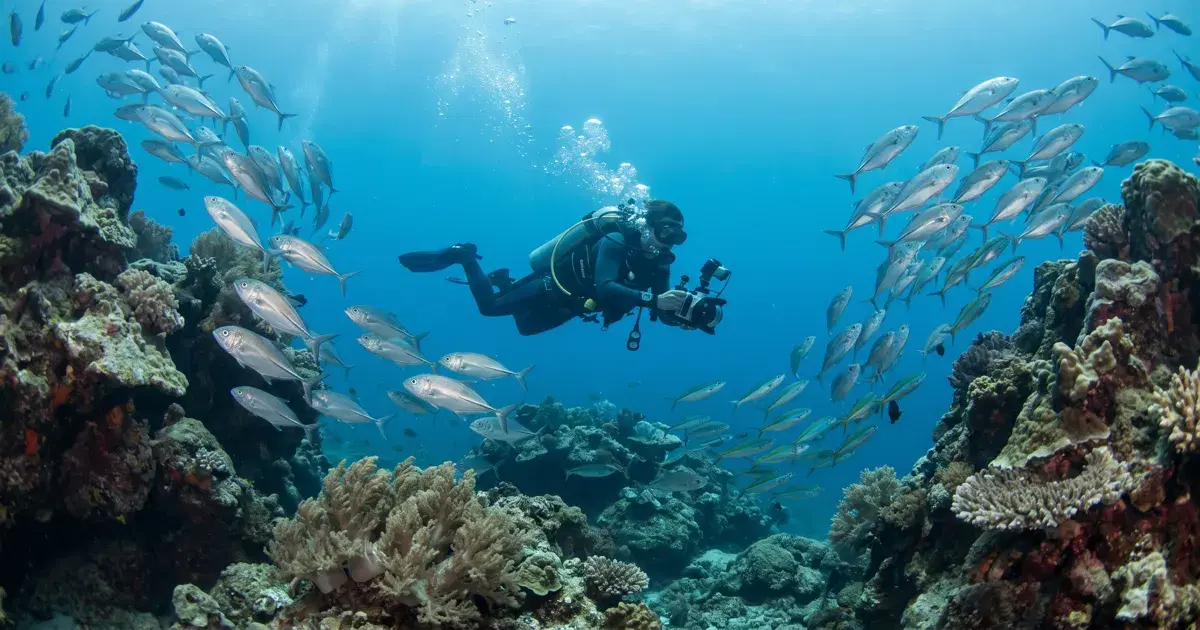
Around the caves, Dive The World reports giant groupers, angelfish, blue-lined snappers, morays and lobsters, with a big school of bannerfish living at the eastern end. Under the overhang, Liveaboard.com mentions schooling snapper, fusiliers and grey reef sharks. Resortlife's list of possible sightings includes bluestripe snapper, oriental sweetlips, Napoleon (humphead) wrasse, grey reef shark, great barracuda, giant trevally and hawksbill turtle. According to Maldives Tour Guide, turtles turn up occasionally. How often grey reef sharks are seen is not documented with a source in Diveity's Banana Reef record.
FAQ
What's the best month for visibility? Resortlife gives December to April for the best visibility at Banana Reef.
Banana Reef on Diveity
Banana Reef's page in the dive site atlas lists its sources, depths, current, hazards and the disputed level. Browse the dive site atlas before you go.