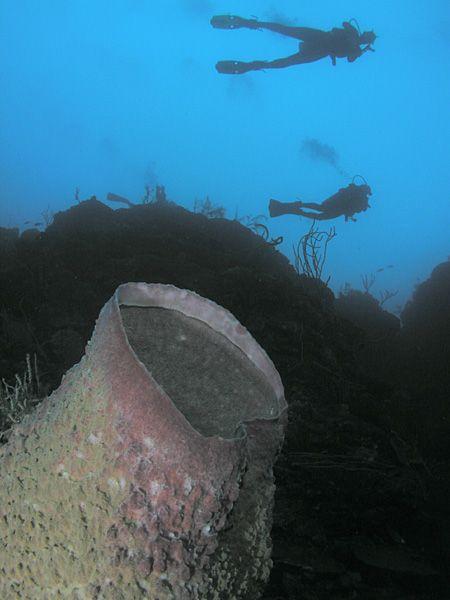
Barrel Sponge
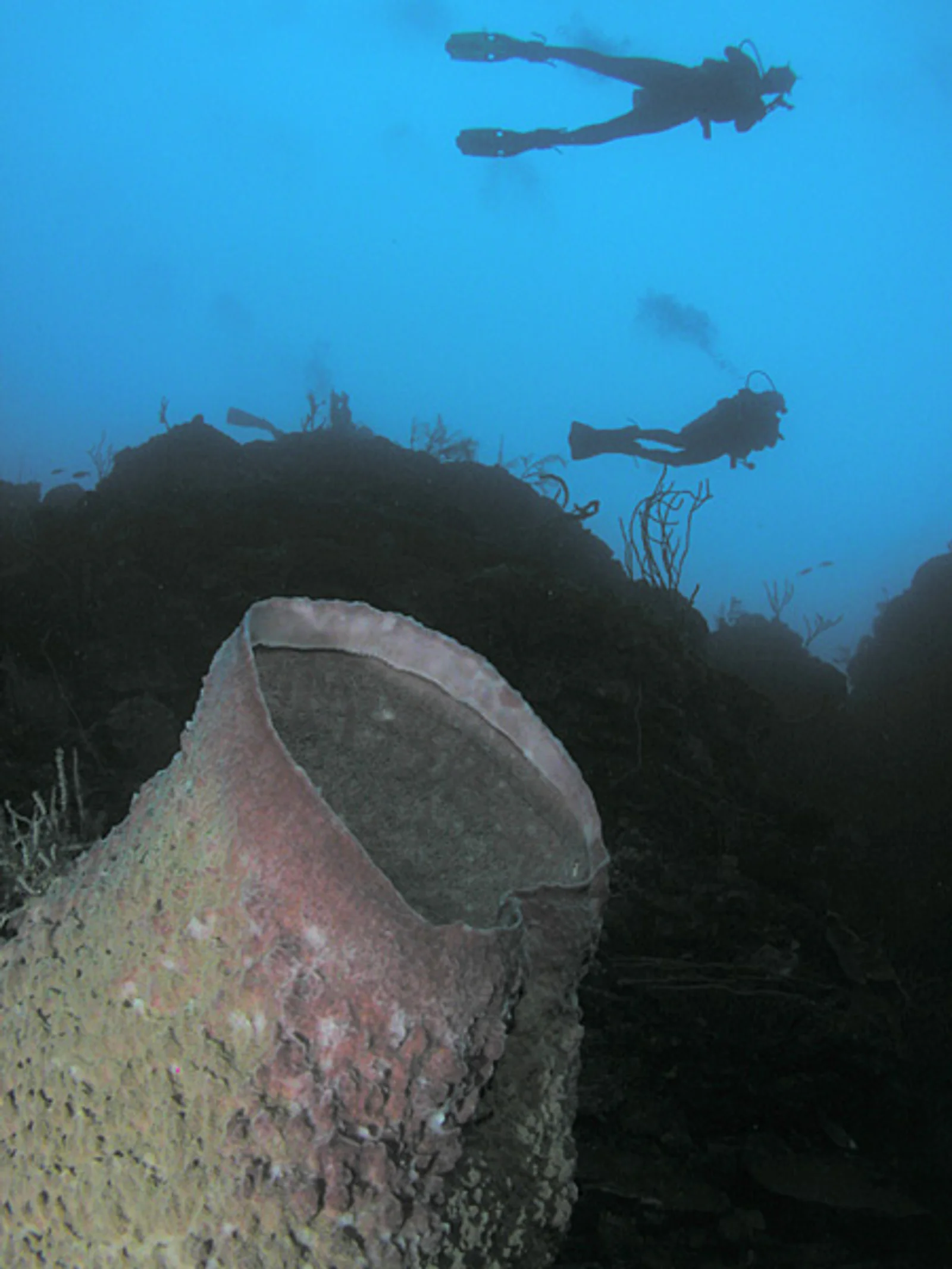
Xestospongia testudinaria
About Barrel Sponge.
The Barrel Sponge, scientifically known as Xestospongia testudinaria, is a prominent and iconic macro-invertebrate found across Indo-Pacific coral reefs. Belonging to the family Petrosiidae, this species is a vital component of its ecosystem, often referred to as a "redwood of the reef" due to its impressive size and remarkable longevity, with some individuals estimated to live for hundreds to over a thousand years.
These majestic sponges play a crucial ecological role as sessile filter feeders, processing vast quantities of seawater daily. This filtration helps to maintain water clarity, control algal populations, and remove excess nutrients and sediment, thereby influencing the overall health of coral reef ecosystems. Beyond their filtering capabilities, Barrel Sponges also serve as important habitats, providing shelter and micro-environments for a diverse array of marine life, including various invertebrates, benthic fish, microorganisms, and even other coral species.
While currently listed as "Least Concern" in terms of conservation status, these sponges face potential threats from diseases such as Sponge Orange Band (SOB), environmental changes, and cyclical bleaching, often linked to rising water temperatures.
Identification
Xestospongia testudinaria is easily recognizable by its distinctive form and substantial size, making it a favorite sighting at many dive sites, including Sepok Wall, Doljo Point, and Cervera Shoal.
- Shape and Size: True to its common name, the Barrel Sponge typically exhibits a large, erect, barrel-shaped or vase-like appearance. While specimens in intertidal zones may be smaller (10–20 cm in diameter and height), those in deeper waters can grow to impressive dimensions, reaching up to 2 meters in diameter and 2–3 meters in height, although such colossal individuals are rare. Younger sponges may appear as tall, hollow tubes. It is common to observe several 'vases' of varying sizes emerging from a single, shared base.
- Coloration: The coloration of the Barrel Sponge typically ranges from maroon to pink, or brownish-red to brownish-gray.
- Osculum: A defining feature is the large, often pale white, opening at the top, known as the osculum. This opening can vary in width and may sometimes be surrounded by finger-like protuberances.
- Texture and Surface: The external surface of the sponge can vary, appearing smooth, bumpy, or adorned with regular fingers, ridges, or 'wings'. The walls are often carved with prominent ridges and cracks, giving it a hard or stony texture. Internally, the cavity of the sponge has an uneven and rough texture.
- Habitat and Depth: This species thrives in tropical waters of the Indo-Pacific, inhabiting coral reefs and rocky areas with hard substrates. Divers commonly encounter Xestospongia testudinaria at depths of 10–30 m, though its full range extends from 5 to 40 m, and occasionally even 2–55 m. They are typically found in waters with temperatures around 24–28°C.
- Associated Species: The large osculum and internal cavity of the Barrel Sponge frequently host a variety of commensal organisms, including hairy squat lobsters, shrimps, gobies, and sea cucumbers.
Where it lives.
The Barrel Sponge, Xestospongia testudinaria, is a prominent and ecologically significant inhabitant of tropical Indo-Pacific waters. This impressive macro-sponge is widely distributed across a vast area, encompassing the Philippines, Australia, the western and central Indian Ocean, Indonesia, Malaya, New Caledonia, the Red Sea, Singapore, the Solomon Islands, Sulawesi, and the Seychelles.
Divers commonly encounter the Barrel Sponge thriving in diverse reef environments, including coral reefs and rocky areas with hard bottoms. It prefers locations with moderate currents, such as reef slopes and walls, where optimal light and water circulation are present. This species is typically found attached to various benthic substrates, including sand, rocks, and corals. While smaller specimens can be observed in intertidal zones, larger individuals are predominantly found at depths ranging from 5 to 40 meters, with the most common observations occurring between 10 and 30 meters. Some records indicate its presence down to 55 meters. These sponges flourish in warm tropical waters, with temperatures often ranging from 24–27°C.
As a sessile filter feeder, the Barrel Sponge plays a crucial role in its ecosystem. It filters vast amounts of water, contributing significantly to water clarity, controlling algal populations, and influencing coral health. Beyond its filtering capabilities, Xestospongia testudinaria provides vital habitat and shelter for a multitude of other marine organisms. Its large, barrel-shaped structure offers refuge for various invertebrates, benthic fish, bacteria, and cyanobacteria. Furthermore, these giant sponges can even provide a micro-environment for multi-species coral colonies, a phenomenon considered a form of ecological facultative commensalism where corals may benefit from the shelter provided.
Notable dive sites where this species is frequently observed include Sepok Wall, Doljo Point, Cervera Shoal, Gorgonian Wall, Pink Wall, Batangas Channel, Giant Clams, and East Tangat Gunboat, highlighting its prevalence in popular diving destinations.
How it behaves.
The Barrel Sponge (Xestospongia testudinaria) is a prominent and ecologically vital inhabitant of Indo-Pacific coral reefs, often referred to as the "redwood of the reef" due to its impressive size and longevity, potentially living for hundreds to thousands of years.
Underwater Encounter Behavior
As a sessile organism, the Barrel Sponge remains fixed to the substrate throughout its adult life, typically found in waters encountered at 5–20 m, though it can extend to greater depths. Divers will observe these sponges as large, often solitary or sometimes clustered, barrel- or vase-shaped structures that can reach up to 2 meters in diameter. Their colors range from brown, reddish, or purple, with a paler interior. While they do not exhibit active behaviors like swimming or hunting, their sheer size and presence are significant. Divers should maintain a respectful distance and avoid touching these organisms, as their tissues are fragile and susceptible to injury. The sponge's surface may also host other small invertebrates like spionid sponge worms or synaptid sea cucumbers. Barrel sponges also provide shelter and micro-environments for a variety of reef creatures, including shrimp, crabs, small fish, and even juvenile lobsters, with some fish, like gobies, being obligate sponge dwellers.
Feeding Habits
The Barrel Sponge is a highly efficient filter feeder, playing a crucial role in maintaining reef health. It continuously pumps vast quantities of water through its porous body, filtering out microscopic food particles such as bacteria, plankton, dissolved organic carbon (DOC), and detritus. Water enters through tiny pores (ostia) on its sides, flows through internal chambers lined with specialized choanocyte cells that trap food, and then exits through the large opening (osculum) at the top. This filtration process can clean thousands of liters of water daily, contributing to increased water clarity and balanced nutrient levels in the reef ecosystem. Interestingly, sponges have been observed to "sneeze" every few hours, contracting their surface tissues to release mucus-like waste, which then becomes a food source for other small critters in the ecosystem.
Social Structure
Sponges, being primitive multicellular animals, do not exhibit a complex social structure in the traditional sense. However, divers may observe multiple Barrel Sponges growing in close proximity, sometimes appearing to emerge from a common base, particularly in areas like Sepok Wall or Cervera Shoal. This clustering can create a more substantial habitat for associated marine life. They are an integral part of the reef community, often growing alongside corals and soft corals, and are considered ecosystem engineers due to their impact on habitat complexity and local biodiversity.
Notable Seasonal Patterns
Reproduction in Barrel Sponges occurs sexually, with individuals typically being either male or female (gonochoric), rather than hermaphroditic. They are broadcast spawners, releasing sperm and eggs directly into the water column for external fertilization. While spawning can occur throughout the year, studies on related species like Xestospongia muta in the Caribbean suggest concentrated spawning periods, often around the first quarter moon, with some observations indicating activity in spring and late summer. In the Indo-Pacific, specific spawning events for X. testudinaria have been noted in October, November, and January. Growth rates for Barrel Sponges are generally very slow, averaging about 1.5 cm per year, though they can be variable depending on environmental factors. Lower growth rates may occur in winter as energy is diverted towards gamete production. Divers may also occasionally observe cyclical bleaching, where sponges temporarily lose their color due to the loss of symbiotic cyanobacteria, but unlike corals, they typically recover without mortality. These resilient organisms are a testament to the enduring life of the reef.
Where to see it.
Evidence for philippines · 13 dive sites
General range is not evidence of occurrence at a specific dive site.
Batangas Channel
Puerto Galera
Site occurrence not yet documented
Season not yet documented
No dated observations available.
Cervera Shoal
Panglao
Site occurrence not yet documented
Season not yet documented
No dated observations available.
Coral Garden
Puerto Galera
Site occurrence not yet documented
Season not yet documented
No dated observations available.
Doljo Point
Panglao
Site occurrence not yet documented
Season not yet documented
No dated observations available.
East Tangat Gunboat
Coron
Site occurrence not yet documented
Documented site seasonality: Apr, May
No dated observations available.
Giant Clams
Puerto Galera
Site occurrence not yet documented
Season not yet documented
No dated observations available.
Gorgonian Wall
Cabilao Island
Site occurrence not yet documented
Documented site seasonality: Jan, Feb, Mar, Apr, May, Jun, Jul, Aug, Sep, Oct, Nov, Dec
No dated observations available.
North Rock
El Nido
Site occurrence not yet documented
Season not yet documented
No dated observations available.
Odie's Wall
Puerto Galera
Site occurrence not yet documented
Season not yet documented
No dated observations available.
Pink Wall
Puerto Galera
Site occurrence not yet documented
Season not yet documented
No dated observations available.
Sepok Wall
Anilao
Site occurrence not yet documented
Season not yet documented
No dated observations available.
South Miniloc
El Nido
Site occurrence not yet documented
Season not yet documented
No dated observations available.
The Atoll
Puerto Galera
Site occurrence not yet documented
Season not yet documented
No dated observations available.
Gallery.