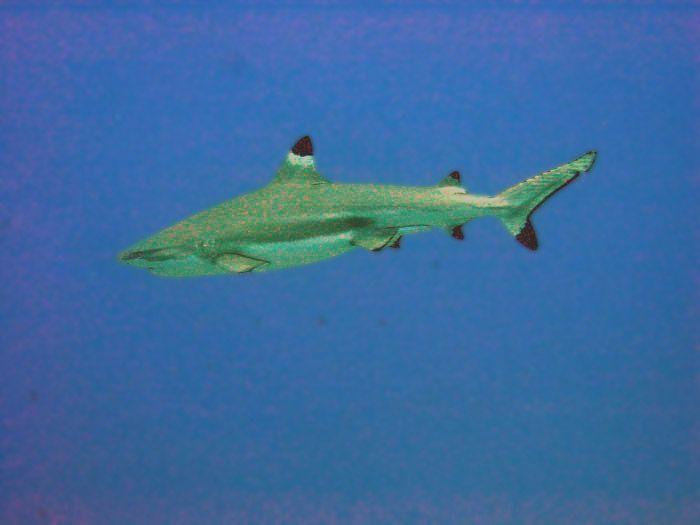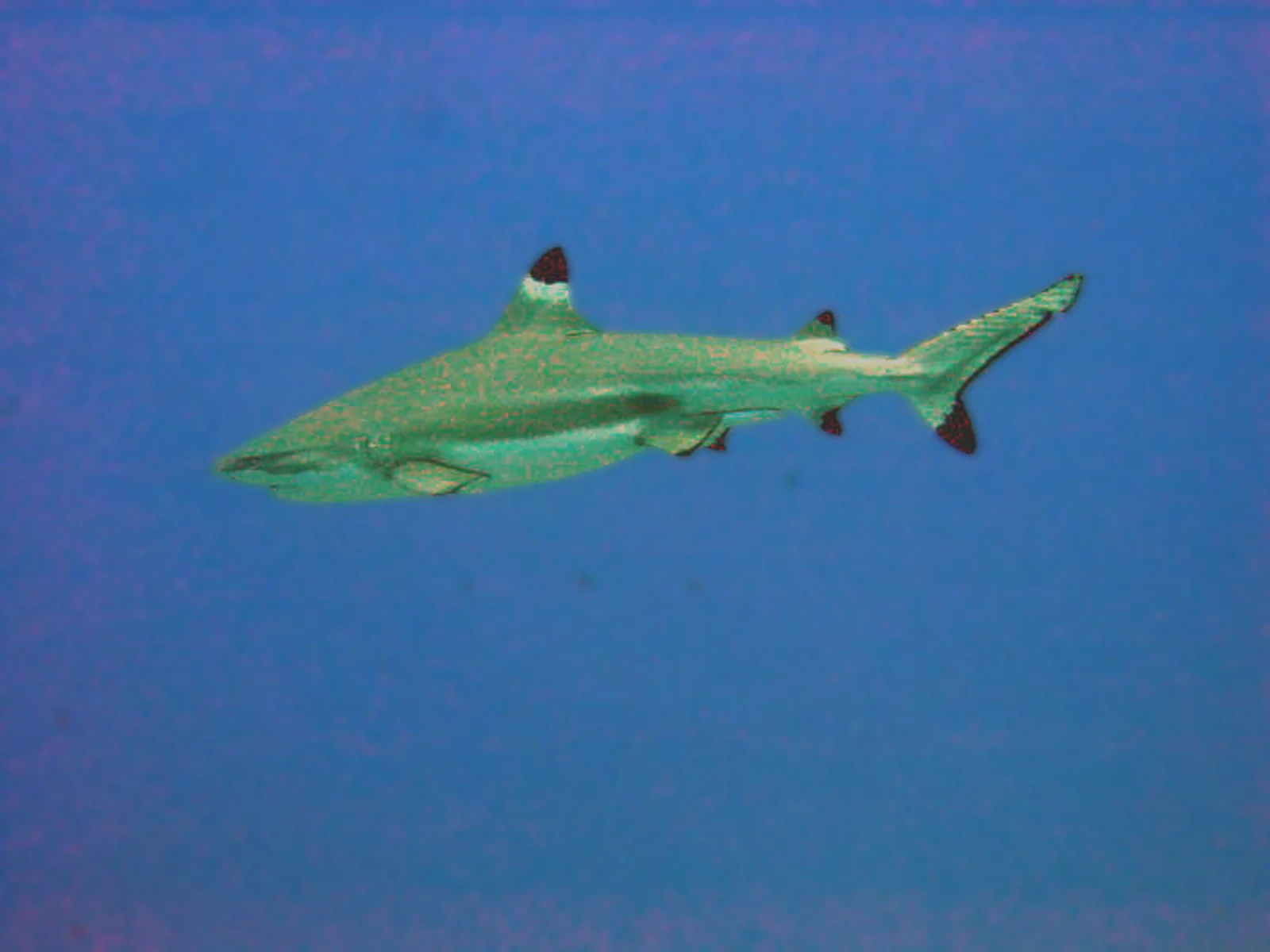
Blacktip Reef Shark

Carcharhinus melanopterus
About Blacktip Reef Shark.
Blacktip Reef Shark (Carcharhinus melanopterus)
The Blacktip Reef Shark, scientifically known as Carcharhinus melanopterus, is an iconic and easily recognizable member of the Carcharhinidae family. This medium-sized requiem shark is a common sight across the tropical Indo-Pacific, from the Red Sea and East Africa to the Hawaiian Islands and French Polynesia, and has even been observed in the Mediterranean Sea, having traversed the Suez Canal.
Primarily inhabiting shallow, inshore waters, the Blacktip Reef Shark thrives in coral reefs, lagoons, reef flats, and near reef drop-offs. While typically found at depths of only a few meters, they have been recorded as deep as 75 m. Juveniles often utilize very shallow sandy flats and mangrove systems as nursery areas, moving in with the tides to forage and find refuge.
An active and fast-swimming predator, Blacktip Reef Sharks play a crucial role as a keystone species in maintaining the delicate balance of reef ecosystems. They help control populations of smaller fish, preventing overgrazing by herbivores and ensuring the health and resilience of the coral environment. Their diet primarily consists of small reef fish, cephalopods like squid and octopus, and crustaceans such as crabs and shrimp. They are known to hunt cooperatively, sometimes herding schools of fish towards the shoreline. While generally timid and not aggressive towards humans, they may become inquisitive or aggressive around speared fish or bait.
Globally, the Blacktip Reef Shark is currently assessed as Vulnerable by the IUCN, with populations experiencing declines due to overfishing and habitat degradation. Their relatively small litter size and long gestation period limit their capacity for recovery. Despite this, they are a popular species for dive tourism and are frequently displayed in aquaria. Divers often encounter these sharks at renowned dive sites such as Tubbataha South Atoll & Jessie Beazley, Melissa's Garden, Cape Kri, and Shark Ridge (Apo Reef).
Identification
The Blacktip Reef Shark is easily identifiable by several distinctive physical characteristics:
- Size and Build: It is a medium-sized, robustly built shark with a streamlined body, typically reaching a maximum length of 2 m (6.5 ft), though most adults are around 1.6 m (5.2 ft).
- Snout and Head: Features a short, wide, and bluntly rounded snout with moderately large, oval eyes.
- Coloration: The body is generally pale grayish-brown to brown-tan on the dorsal surface, with a stark white underside, providing effective countershading. A conspicuous white band often runs along the flanks, extending forward from above the anal fin.
- Fin Markings: The most striking and definitive identification feature is the presence of prominent, well-defined black tips on all fins, which are often highlighted by lighter (white) borders. These markings are particularly noticeable on the first dorsal fin and the lower lobe of the caudal (tail) fin.
- Dorsal Fins: The first dorsal fin is tall and originates over the free tips of the pectoral fins. Unlike some other shark species, it lacks an interdorsal ridge. The second dorsal fin is relatively large with a short rear tip.
- Other Fins: Pectoral fins are narrow and sickle-shaped with pointed tips.
Where it lives.
- Reef Flats and Lagoons: Often seen swimming in water just a few meters deep, sometimes with their dorsal fins exposed. Juveniles, in particular, favor extremely shallow, sandy flats within lagoons and mangrove swamps, often forming large groups in these nursery areas.
- Reef Ledges and Drop-offs: Older sharks are more commonly found patrolling reef ledges and can also be observed near reef drop-offs.
- Mangrove Environments: They are known to move into mangrove areas with the tides, and have even been reported in brackish estuaries and freshwater environments, though their tolerance for low salinity is limited.
- Sandy Flats: Blacktip Reef Sharks frequently cruise over sandy substrates adjacent to reefs.
How it behaves.
Underwater Encounter Behavior
Blacktip Reef Sharks are generally considered shy and timid, often fleeing if approached too closely by divers. However, they are also described as curious and may approach divers and snorkelers, especially in areas where they are accustomed to human presence. While typically not aggressive, it is crucial to maintain a respectful distance and avoid sudden, erratic movements that could startle them. In rare instances, if provoked or in situations involving food, they may exhibit "slamming" behavior where they accelerate and bump a target. Juveniles, in particular, may display a startle reaction, arching their backs and accelerating away with rapid jerks. They are often seen cruising in small groups, sometimes in very shallow, knee-deep water, with their dorsal fins exposed.
These sharks typically inhabit waters ranging from a few meters to about 30 meters, though they can occasionally be found at depths of up to 75 meters. They exhibit strong site fidelity, often remaining within the same local area for several years.
Feeding Habits
Blacktip Reef Sharks are active, carnivorous predators, primarily feeding on small reef fishes, cephalopods (such as squid and octopuses), and crustaceans. Their diet can also include sea snakes and occasionally seabirds. They are opportunistic feeders and may scavenge on carcasses. Equipped with long, thin, serrated teeth, they are well-adapted for their diet of reef fish.
A notable feeding strategy is their cooperative hunting behavior. Blacktips are known to congregate in groups to herd schools of fish, driving them into shallow water or against the shoreline for easier capture. This coordinated effort highlights their intelligence and adaptability. While they can hunt alone, they often engage in this social hunting, especially during periods of mass spawning by prey species.
Social Structure
Blacktip Reef Sharks are considered social creatures and are often observed in small groups or aggregations, which is less common among many other shark species. Research suggests they have a complex social life, forming social networks and even exhibiting social learning, where younger sharks observe and mimic the hunting techniques and behaviors of older, more experienced individuals. Within these hunting groups, a hierarchy based on size and dominance may exist, with larger individuals sometimes leading the effort to drive prey. They communicate through body language, with specific movements like rapid tail flicking signaling agitation or alertness, and body arching indicating dominance.
While adults are found around reef ledges and drop-offs, juvenile Blacktip Reef Sharks prefer extremely shallow, sandy flats and mangrove areas, often forming large groups in these nursery habitats.
Notable Seasonal Patterns Relevant to Divers
Blacktip Reef Sharks do not typically undertake long-distance migrations, generally remaining within a small home range. However, some localized movements between reef systems may occur in search of food or suitable breeding grounds.
Reproduction is viviparous, meaning females give birth to live young after a gestation period that can vary from 7 to 16 months depending on the geographic location. Females typically give birth to 2 to 5 pups. Mating behavior, which involves males following and biting females, has been observed in shallow waters near reefs. Parturition (birth) often occurs from September to November, with females utilizing shallow nursery areas inside the reef for the safety of their pups.
Divers may observe mating aggregations in shallow waters, particularly in regions like the Maldives, where groups of up to 32 individuals have been seen exhibiting active courtship behaviors. While Blacktip Reef Sharks are generally present year-round in their tropical Indo-Pacific habitats, local conditions and reproductive cycles might influence their visibility and behavior at specific dive sites.
Best time to see it.
Best months to see Blacktip Reef Shark · 3 months highlighted
Where to see it.
Alimatha Jetty
Felidhoo (Vaavu East)
Boo Windows
Misool
Cape Kri
Dampier Strait
Crystal Rock
Komodo National Park
Golden Passage
Komodo National Park
Karang Makassar (Manta Point)
Komodo National Park
Kyokuzan Maru
Coron
Ligpo Island
Anilao
Maamigili Beyru (Whale Shark Point)
South Ari
Manta Alley
Komodo National Park
Gallery.