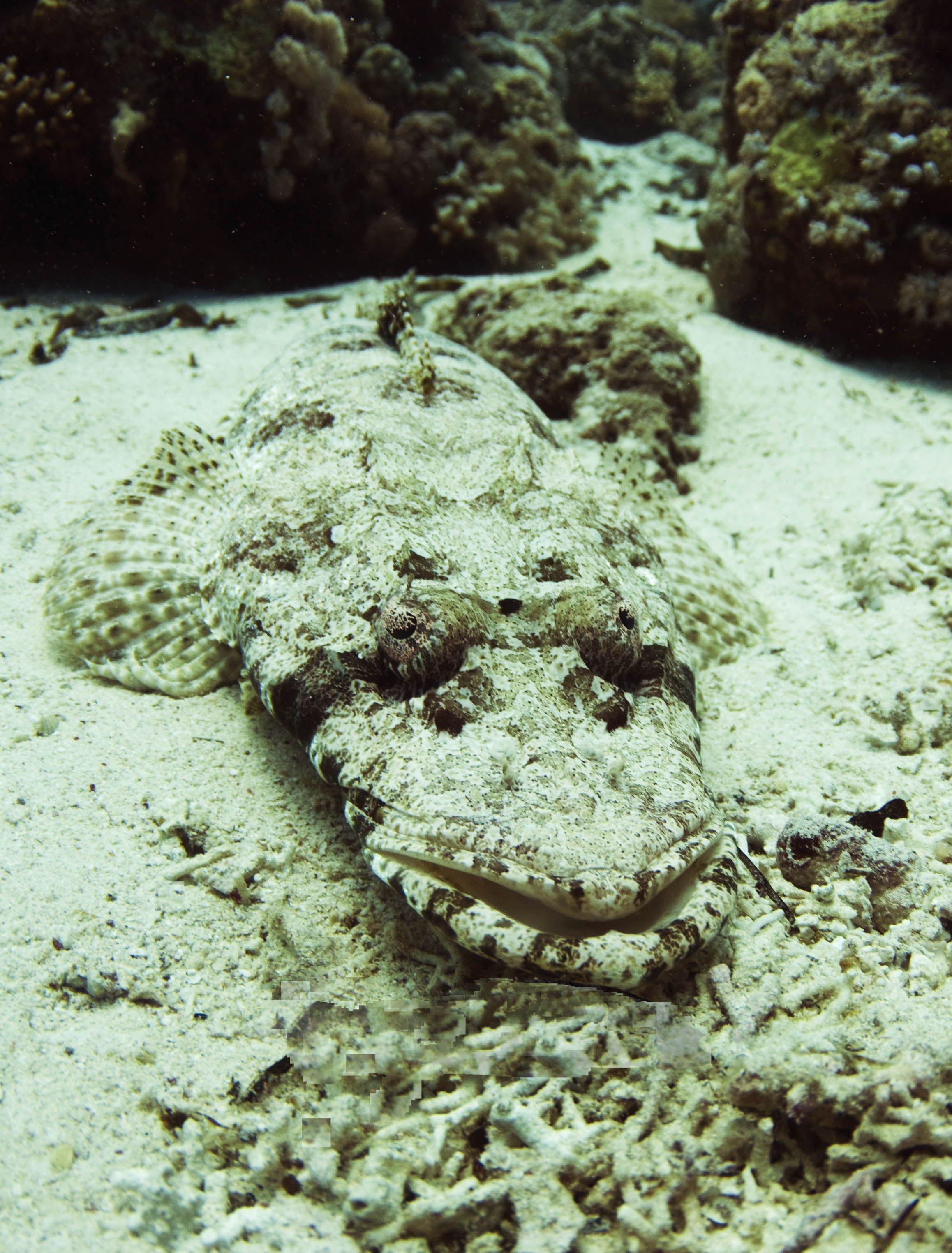
Crocodilefish
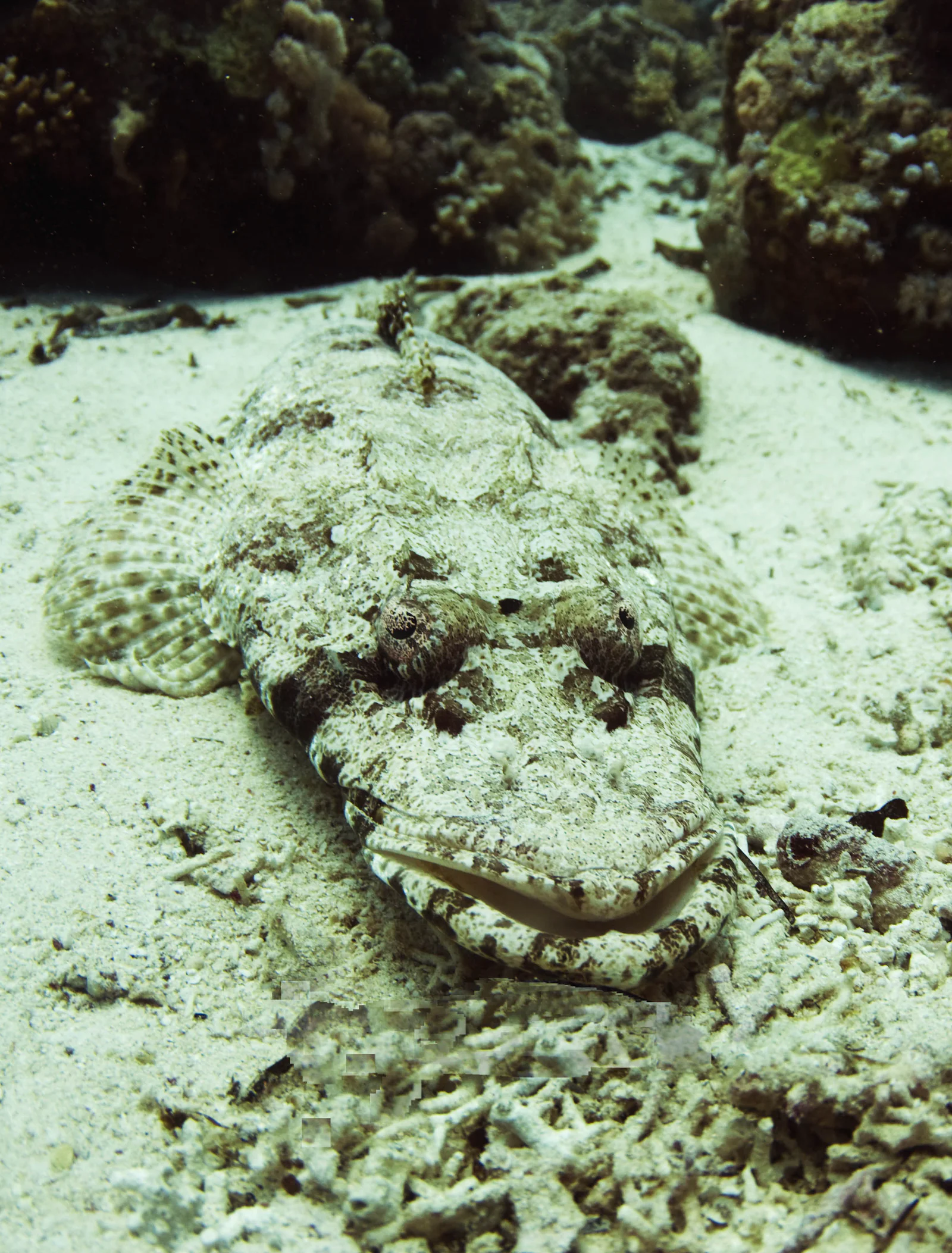
Cymbacephalus beauforti
Acerca de Crocodilefish.
El pez cocodrilo, Cymbacephalus beauforti, es un maestro del disfraz, perfectamente adaptado a su existencia bentónica. Perteneciente a la familia Platycephalidae, comúnmente conocidos como peces planos, esta fascinante especie es una de las favoritas entre los buceadores por su increíble camuflaje y apariencia única. A pesar de su intimidante nombre común, derivado de su cabeza aplanada y similar a la de un cocodrilo, este pez es generalmente tímido y depende de su coloración críptica para evitar ser detectado.
Encontrado en todo el Pacífico Occidental, incluyendo regiones como Filipinas, Borneo, Papúa Nueva Guinea y Nueva Caledonia, el pez cocodrilo habita en sustratos arenosos o de escombros, a menudo cerca de manglares, lechos de pastos marinos o arrecifes de coral. Se observa típicamente a profundidades que van de 1 a al menos 30 m, aunque se encuentra comúnmente entre 1 y 12 m, en aguas de 21.9–31 °C. Como depredador de emboscada, permanece inmóvil, esperando pacientemente a que presas desprevenidas, como peces más pequeños y crustáceos, pasen antes de atacar con una velocidad notable, creando un vórtice de succión para engullir su comida. El pez cocodrilo es un cazador solitario y a menudo nocturno, volviéndose más activo por la noche. Su estado de conservación está actualmente catalogado como Preocupación Menor.
Esta especie ha sido observada comúnmente en sitios de buceo como Kogyo Maru y Twin Peaks Reef, y ocasionalmente en Pink Beach.
Identificación
- Tamaño y forma: El pez cocodrilo posee un cuerpo alargado y aplanado con una cabeza notablemente ancha y plana que se asemeja a un pico de pato. Los adultos pueden alcanzar una longitud máxima de hasta 50 cm (20 pulgadas).
- Coloración y patrón: Su característica más llamativa es su excelente camuflaje. El cuerpo es típicamente de un gris parduzco moteado, adornado con intrincados patrones de manchas de beige a marrón, a menudo intercaladas con marcas verdes fluorescentes o líneas azules. Este patrón similar a un mosaico le permite mezclarse perfectamente con fondos marinos arenosos, rocosos o ricos en corales. Los juveniles son completamente negros, desarrollando gradualmente el patrón manchado de los adultos a medida que maduran.
- Características distintivas de la cabeza: La cabeza grande presenta ojos prominentes que están equipados con únicos lóbulos iridianos (borlas) con volantes. Estas proyecciones en forma de encaje rompen eficazmente el contorno de la pupila negra, mejorando aún más su camuflaje. También hay una fosa distintiva inmediatamente detrás del ojo superior.
- Comportamiento: Los buceadores suelen ver al pez cocodrilo inmóvil sobre el sustrato, confiando completamente en su camuflaje. Su quietud es un indicador clave de su presencia, ya que solo se moverá para emboscar a una presa o si es molestado.
- Precaución: Al igual que muchos miembros del orden de los peces escorpión, los peces cocodrilo poseen espinas venenosas en sus aletas dorsales. Los buceadores con la certificación adecuada deben tener precaución y evitar el contacto directo.
Dónde vive.
El pez cocodrilo (Cymbacephalus beauforti) es un maestro del camuflaje, perfectamente adaptado para mimetizarse sin problemas con sus diversos hábitats bentónicos en todo el Indo-Pacífico Occidental. Esta fascinante especie de pez plano es una vista común para los buceadores que exploran las aguas tropicales de su área de distribución, que se extiende desde Filipinas y Borneo hacia el sur hasta Palaos y Nueva Caledonia, y hacia el oeste hasta las Islas Mentawai en Indonesia.
Típicamente encontrado como un depredador de emboscada solitario y de fondo, el pez cocodrilo habita en una variedad de entornos, desde lagunas protegidas hasta áreas de arrecifes más expuestas. Sus hábitats preferidos se caracterizan por sustratos que permiten que su coloración gris parduzca moteada proporcione un excelente ocultamiento. Los buceadores encontrarán con mayor frecuencia esta especie en:
- Zonas de arena y escombros: Estas áreas, a menudo adyacentes a los arrecifes, proporcionan un camuflaje ideal para el pez cocodrilo, permitiéndole acechar a presas desprevenidas.
- Márgenes de arrecifes y arrecifes de coral: Aunque no se encuentran típicamente directamente dentro de densas formaciones de coral, los peces cocodrilo se asocian comúnmente con los bordes arenosos y rocosos de los arrecifes de coral, utilizando las diversas texturas para ocultarse.
- Lechos de pastos marinos: Los patrones de su piel también le permiten desaparecer eficazmente dentro de los prados de pastos marinos, donde puede emboscar a pequeños peces y crustáceos.
- Áreas de manglares y estuarios: En algunas partes de su área de distribución, también se puede encontrar en los sustratos fangosos o detríticos de manglares y estuarios.
El pez cocodrilo se observa generalmente a profundidades que van desde aguas muy poco profundas, alrededor de 1 metro, hasta al menos 30 metros. Si bien algunas fuentes indican que se encuentra con mayor frecuencia entre 1 y 12 metros, ciertamente puede estar presente en áreas más profundas, hasta 30 metros o incluso 40 pies (aproximadamente 12 metros) en ambientes estuarinos fangosos. Su capacidad para mimetizarse con su entorno lo convierte en un sujeto cautivador para los fotógrafos submarinos en muchos sitios de buceo, incluidos aquellos donde se observa comúnmente como Kogyo Maru y Twin Peaks Reef.
Cómo se comporta.
Comportamiento de encuentro submarino
El pez cocodrilo es un maestro del disfraz, reconocido por su estrategia de depredador de emboscada inmóvil. Su coloración gris parduzca moteada, a menudo con marcas verdes fluorescentes, le permite mezclarse perfectamente con sustratos arenosos o de escombros, así como con arrecifes de coral, lechos de pastos marinos y áreas de manglares. Los buceadores a menudo pasan por alto a estos peces, incluso cuando los miran directamente, ya que sus patrones crípticos imitan perfectamente su entorno.
Una característica clave que mejora su camuflaje es la presencia de lóbulos iridianos con volantes alrededor de sus ojos. Estas proyecciones carnosas rompen el contorno de la pupila oscura, haciendo que los ojos sean increíblemente difíciles de discernir del entorno circundante. Cuando se acercan los buceadores, el pez cocodrilo suele permanecer muy quieto, confiando en su camuflaje para evitar ser detectado. Sin embargo, a pesar de su nombre y apariencia intimidantes, generalmente se considera tímido y puede huir si un humano se acerca demasiado. Se aconseja a los buceadores que tengan precaución y eviten el contacto directo, ya que, al igual que otros miembros de la familia de los peces escorpión, los peces cocodrilo poseen espinas venenosas en sus aletas dorsales, que pueden causar dolor y malestar si un buceador es picado.
Hábitos alimenticios
Como depredador de emboscada bentónico y de fondo, el pez cocodrilo se alimenta principalmente de peces más pequeños y crustáceos. Su estrategia de caza implica esperar pacientemente, a menudo parcialmente enterrado en la arena o los escombros, a que presas desprevenidas se acerquen a distancia de ataque. Cuando se detecta una presa, el pez cocodrilo abre rápida y enérgicamente sus grandes mandíbulas en forma de pico de pato, creando un vórtice de succión que arrastra a la presa a su boca. Este enfoque de "sentarse y esperar" significa que el movimiento comprometería su disfraz, destacando la importancia de su quietud. Aunque es predominantemente un cazador nocturno, volviéndose más activo por la noche, permanece oculto durante el día.
Estructura social
El pez cocodrilo se considera generalmente una especie solitaria. No hay información extensa que sugiera estructuras sociales complejas, formación de cardúmenes o comportamientos de emparejamiento. Los individuos se encuentran típicamente solos, manteniendo sus posiciones camufladas en el fondo marino.
Patrones estacionales notables
Se sabe poco sobre los hábitos de reproducción específicos o los patrones estacionales de *Cymbacephalus beauforti*. Se consideran no migratorios. El tiempo mínimo de duplicación de la población se estima entre 4.5 y 14 años. Los juveniles son completamente negros, desarrollando gradualmente la coloración moteada de los adultos a medida que maduran. Si bien algunas especies de peces planos pueden migrar para aparearse, la investigación actual no indica esto para el pez cocodrilo. Por lo tanto, es probable que los buceadores encuentren esta especie durante todo el año en hábitats adecuados dentro de su área de distribución, que abarca el Océano Pacífico Occidental, incluyendo áreas como Filipinas, Borneo, Papúa Nueva Guinea e Indonesia, a profundidades típicamente de 1 a 30 m.
Dónde verlo.
Evidencia para philippines · 2 sitios de buceo
La distribución general no demuestra la presencia en un sitio de buceo concreto.
Kogyo Maru
Coron
Presencia en el sitio aún no documentada
Temporada aún no documentada
No hay observaciones con fecha disponibles.
Twin Peaks Reef
Coron
Presencia en el sitio aún no documentada
Estacionalidad documentada en el sitio: Nov, Dec, Jan, Feb, Mar, Apr, May
No hay observaciones con fecha disponibles.
Galería.