Cuttlefish (assorted)
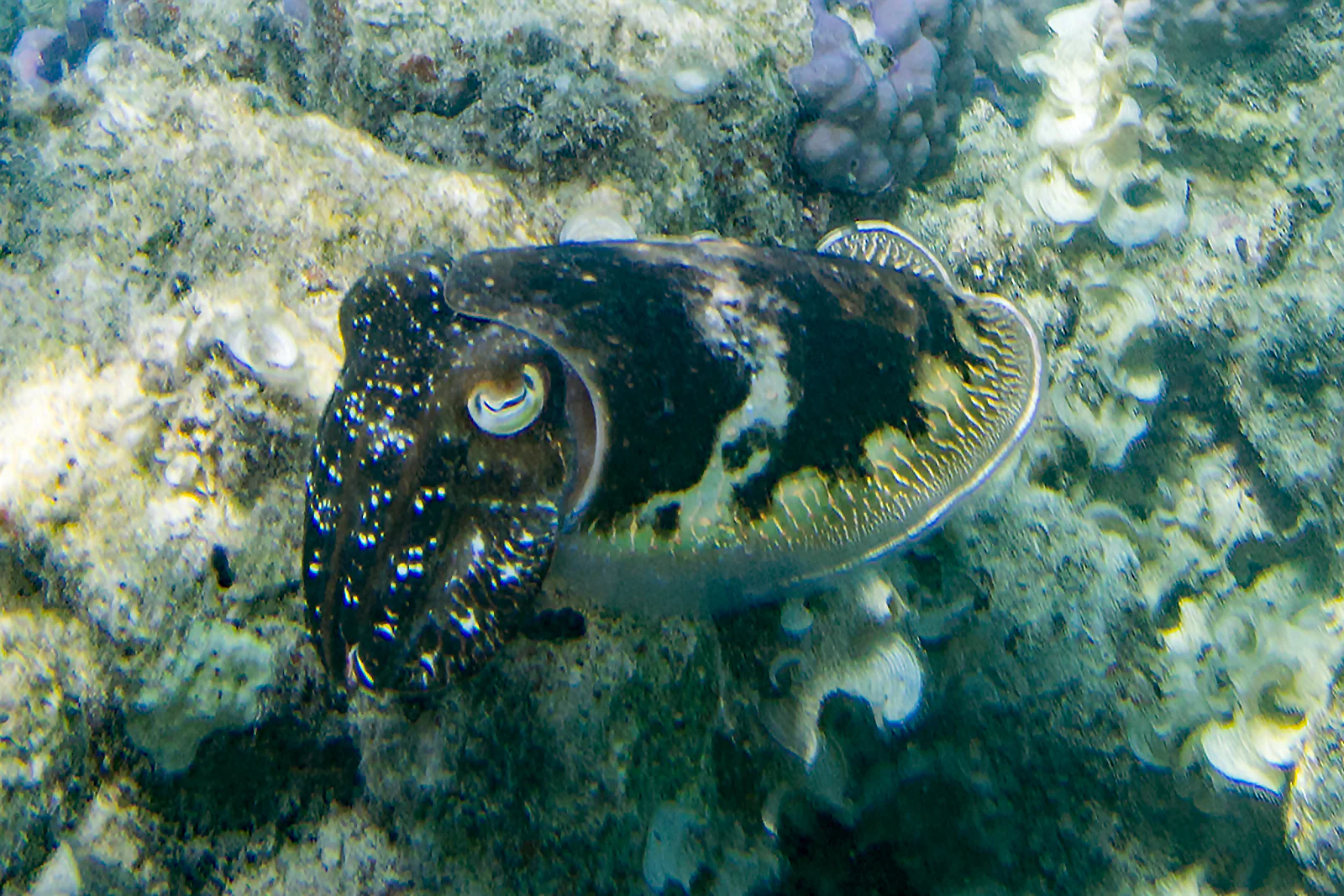
Image credit: Paul Asman and Jill Lenoble · CC BY 2.0 · Wikimedia Commons (from Flickr)
Sepiidae spp.
About Cuttlefish (assorted).
Cuttlefish are marine molluscs of the family Sepiidae, in the class Cephalopoda. This group entry covers sightings where the species was not recorded. The World Register of Marine Species (WoRMS) lists Sepiidae as an accepted family in the order Sepiida.
Wikipedia says cuttlefish have an internal shell, the cuttlebone, used to control buoyancy, along with large W-shaped pupils, eight arms and two tentacles with denticulated suckers. It says they generally range from 15 to 25 cm, and that the largest species, the giant cuttlefish (Sepia apama), reaches 50 cm in mantle length.
A conservation status is not given here, because this entry covers a whole family.
Where it lives.
Wikipedia says cuttlefish live in tropical and temperate ocean waters. They are mostly shallow-water animals, although they are known to reach depths of about 600 m. It lists them along the coasts of East and South Asia, Western Europe and the Mediterranean, and all coasts of Africa and Australia, and says they are absent from the Americas.
Where Divers Find Them
In Tulamben, Bali, bali.com lists cuttlefish at Batu Kelebit, without saying which species. Neptune Scuba Diving names giant cuttlefish at the USAT Liberty Wreck, also without giving a species, so this entry does not assume the Sepia apama named above.
How it behaves.
Wikipedia says cuttlefish eat small molluscs, crabs, shrimp, fish, octopuses and other cuttlefish, and that their typical life expectancy is about one to two years. They can rapidly change the colour of their skin to match their surroundings, and can also change its texture. Like other marine molluscs they hold ink, used for deterrence, distraction and evasion when attacked.
Underwater Encounter Behavior
Neptune Scuba Diving describes giant cuttlefish in courtship displays at the USAT Liberty Wreck. Wikipedia says that when approached by a predator a cuttlefish can draw water into its mantle cavity and spread its arms to appear larger. The sources cited here do not describe how cuttlefish react to divers.
Where to see it.
Evidence from all destinations · 5 dive sites
General range is not evidence of occurrence at a specific dive site.
Batu Kelebit (Tulamben)
Tulamben
Documented site occurrence
Season not yet documented
Source reviewed on 2026-11-06 · Source: bali.com · Observation date not documented
Gili Selang
Amed
Documented site occurrence
Season not yet documented
Source reviewed on 2026-11-07 · Source: PADI · Observation date not documented
Jemeluk Bay
Amed
Documented site occurrence
Season not yet documented
Source reviewed on 2026-11-07 · Source: Amed Jepun Divers · Observation date not documented
Pyramids
Amed
Documented site occurrence
Season not yet documented
Source reviewed on 2026-11-07 · Source: Evolution Diver · Observation date not documented
USAT Liberty Wreck
Tulamben
Documented site occurrence
Season not yet documented
Source reviewed on 2026-11-06 · Source: Neptune Scuba Diving · Observation date not documented
Gallery.
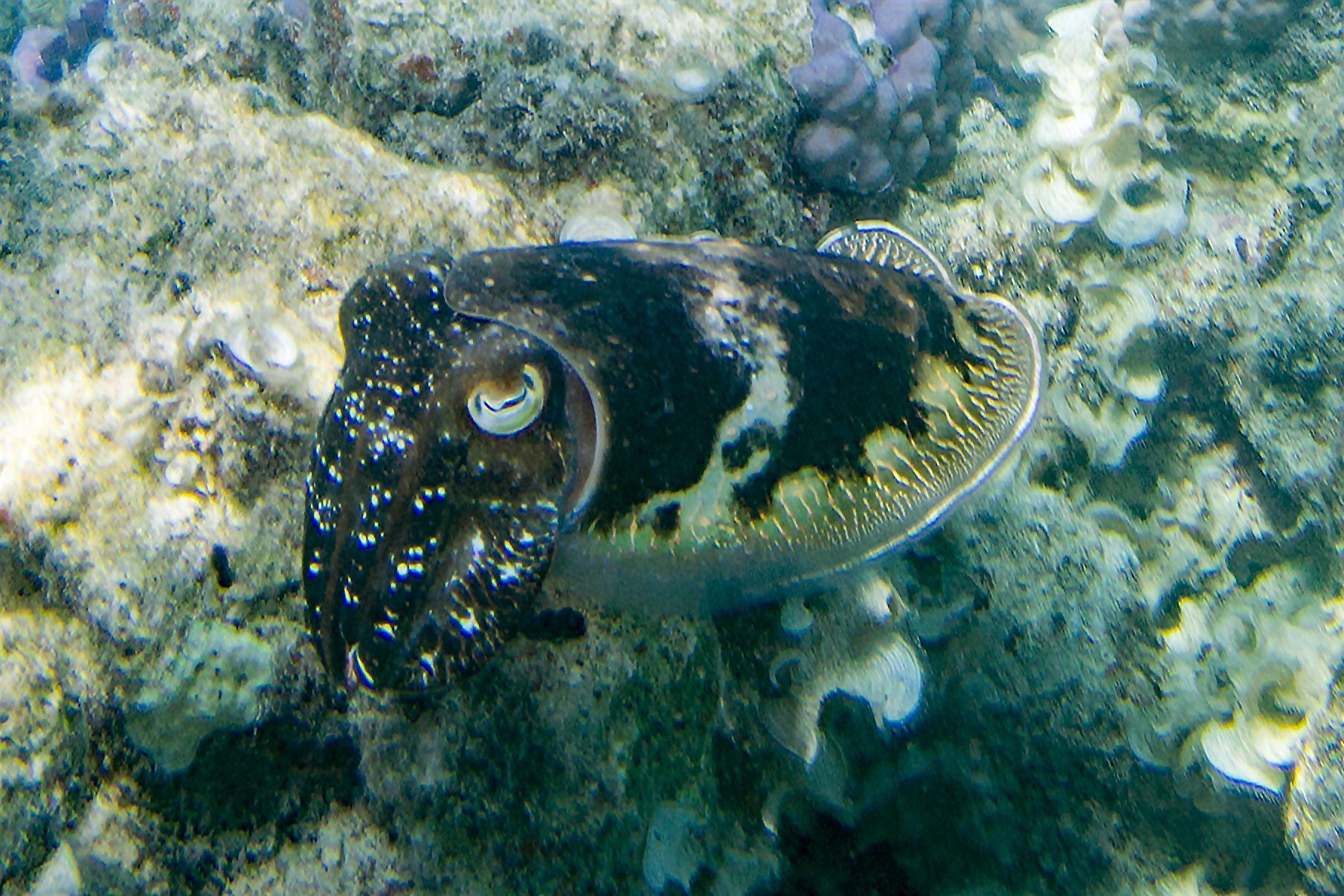
Broadclub cuttlefish (Ascarosepion latimanus), identified by its photographers, at Anchor Bay, Queensland, Australia, shown to illustrate the cuttlefish family. This photograph is not from Tulamben.
Image credit: Paul Asman and Jill Lenoble · CC BY 2.0 · Wikimedia Commons (from Flickr)