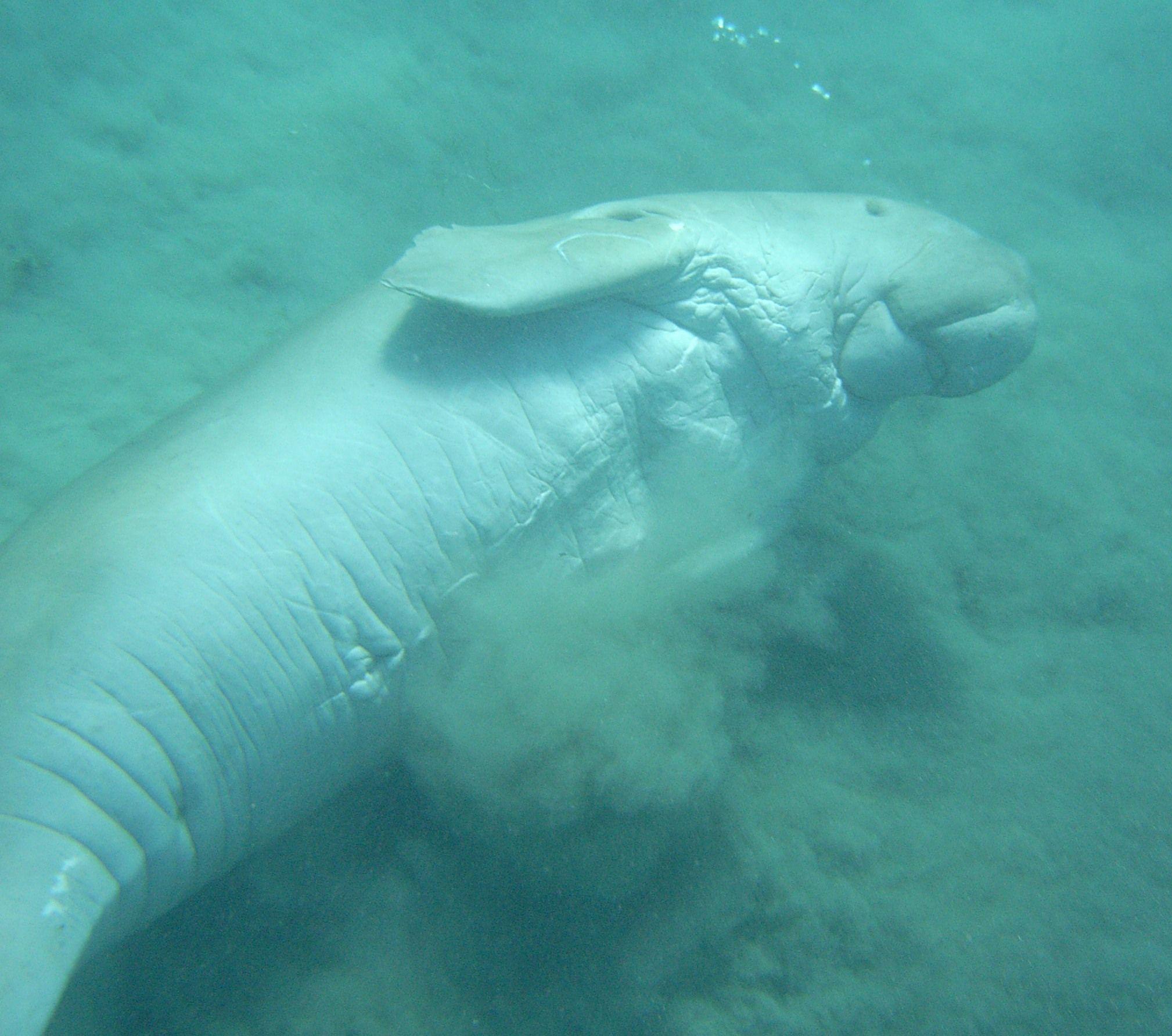
Dugong
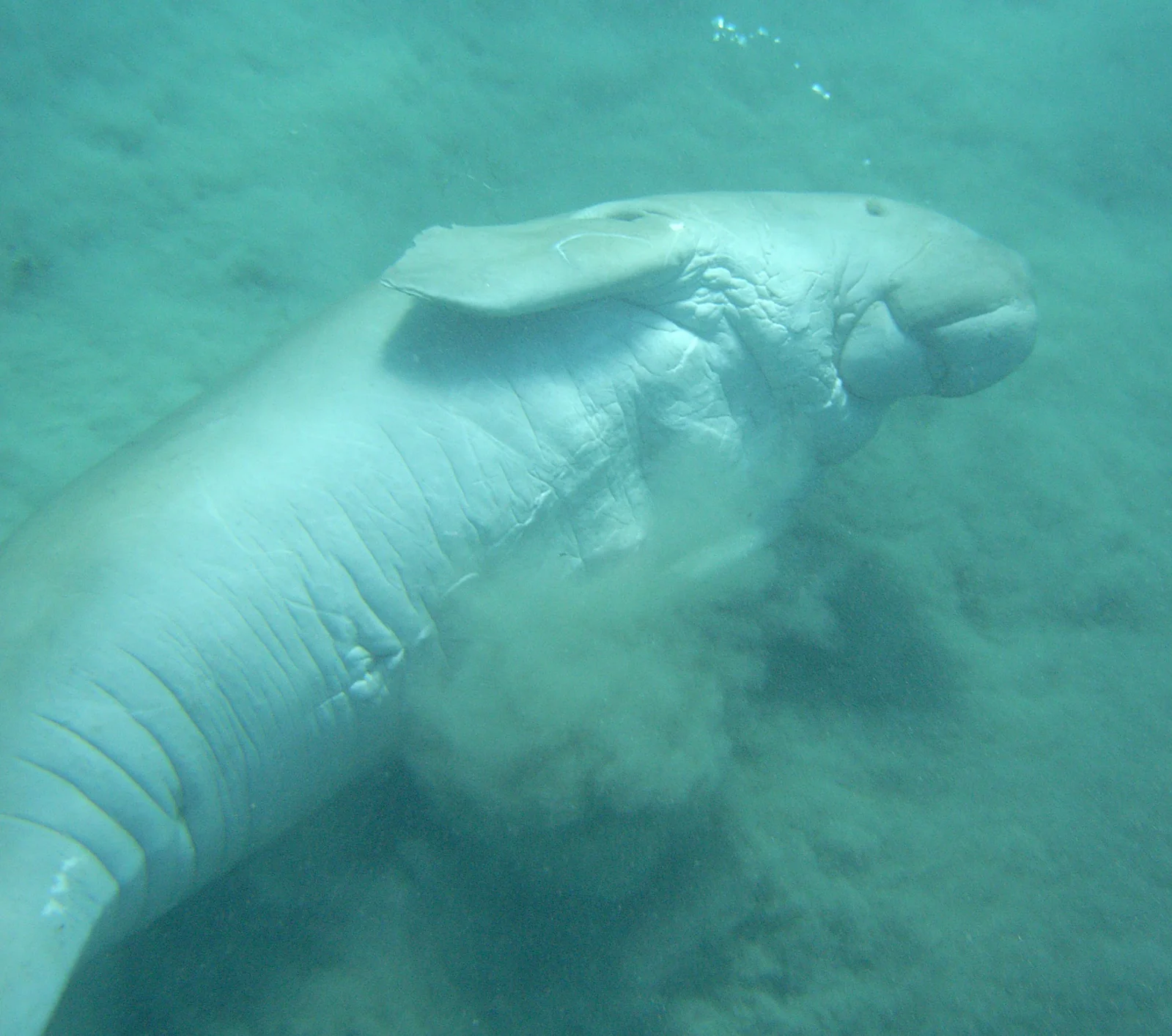
Dugong dugon
About Dugong.
The Dugong dugon, commonly known as the Dugong or "sea cow," is a fascinating marine mammal belonging to the family Dugongidae. As the only strictly herbivorous marine mammal, it plays a crucial role in maintaining the health of seagrass meadows, its primary food source. These gentle giants are renowned for their shy nature and slow, graceful movements through tropical and subtropical coastal waters across the Indo-Pacific region, from East Africa to Australia.
Dugongs are currently classified as Vulnerable by the IUCN Red List, facing significant threats primarily from human activities such as habitat degradation, incidental capture in fishing gear, and boat strikes. While typically solitary or found in pairs, mother-calf pairs are common, and occasionally, large herds of up to 200 individuals may gather, though this is rare due to seagrass availability. Divers may have rare encounters with these elusive creatures at dive sites such as Tatawa Kecil and Siaba Besar in Komodo, and occasionally at Marsa Abu Dabbab.
Identification
- Size and Shape: Dugongs possess a large, cylindrical body that tapers at both ends, reaching a maximum length of 3 meters (10 ft) and weighing over 400 kg.
- Coloration: Their thick, smooth skin is typically brownish-grey, though the color can vary due to the growth of algae on their bodies. Calves are born a pale cream color and darken with age.
- Tail: A key distinguishing feature from manatees is their tail, which is fluke-shaped like a dolphin's or whale's, rather than paddle-shaped. They propel themselves by moving their tail up and down.
- Flippers: They have short, paddle-like front flippers, which aid in turning and slowing. Unlike manatees, dugongs lack nails on their flippers.
- Snout and Mouth: The snout is broad, sharply downturned, and ends in a muscular, cleft upper lip. This specialized mouth, covered with coarse, sensitive bristles (vibrissae), is perfectly adapted for rooting out and grasping seagrass from the seabed.
- Eyes and Ears: Dugongs have small eyes and lack external ear flaps, but possess a keen sense of hearing to compensate for their poor eyesight.
- Nostrils: Paired nostrils are located on top of the head, allowing them to breathe when only their snout is above water. These nostrils have valves that close during dives.
- Tusks: While present in all dugongs, tusks (incisor teeth) are usually only visible protruding from the mouth in mature males and sometimes in older females.
- Habitat Preference: Dugongs are typically found in shallow coastal waters, generally at depths of around 10 m, though they can dive to 39 m to feed. They prefer warm waters abundant with seagrass beds.
- Lifespan: typically up to 70 years in the wild.
Where it lives.
The dugong (Dugong dugon), often referred to as a "sea cow" due to its grazing habits, is the only strictly marine herbivorous mammal, making its habitat intrinsically linked to the presence of seagrass meadows.
Dugongs primarily inhabit warm, shallow coastal waters across the Indo-West Pacific region, spanning over 40 countries from East Africa to Vanuatu. Their distribution generally lies between 26° and 27° north and south of the equator, corresponding closely with the historical range of seagrasses. Australia is home to the largest remaining dugong populations, particularly in its northern waters between Shark Bay and Moreton Bay.
These gentle giants are typically found in calm, protected environments, including:
- Shallow Seagrass Beds: This is their essential feeding ground, where they graze on a variety of seagrass species, preferring those low in fiber and high in nitrogen, such as Halophila and Halodule. They often root into the sandy or muddy substrate to consume the entire plant, including rhizomes, leaving distinctive feeding trails.
- Sheltered Bays and Lagoons: These areas offer protection from strong currents and waves, providing ideal conditions for seagrass growth.
- Wide Mangrove Channels: Dugongs can tolerate brackish waters found in coastal wetlands and are often observed in shallow mangrove channels.
- Leeward Sides of Large Inshore Islands and Inter-reefal Waters: These locations also provide the necessary shelter and seagrass resources.
While dugongs generally prefer shallow waters, typically feeding at depths of 1–10 m, they are known to dive deeper. In areas where the continental shelf remains shallow, they may travel more than 10 km from shore and descend to depths of up to 37–39 m to access deepwater seagrasses. Different habitats may be utilized for specific activities, such as very shallow tidal sandbanks and estuaries for calving.
Dive sites such as Tatawa Kecil, Siaba Besar, and Marsa Abu Dabbab offer occasional opportunities for divers to observe these unique marine mammals in their natural seagrass habitats.
How it behaves.
The Dugong (Dugong dugon), often affectionately referred to as the "sea cow" due to its herbivorous grazing habits, is a fascinating marine mammal that divers may encounter in warm, shallow coastal waters across the Indo-Pacific. Listed as Vulnerable, these gentle giants are a special sight for any diver.
Underwater Encounter Behavior
Dugongs are generally shy creatures, preferring to avoid disturbance. However, when approached patiently and cautiously, they can exhibit a degree of inquisitiveness. They typically inhabit shallow waters, often encountered at depths of around 1–10 meters, though they can dive to 39 meters to feed. During a dive, you might observe a dugong slowly moving along the seafloor, using its sensitive, downturned snout and bristly lips to forage for seagrass. This feeding activity often creates distinctive "trails" or furrows in the seagrass beds.
Dugongs have relatively poor eyesight and rely more on their acute hearing and tactile senses for navigating their environment and communicating. They communicate using a variety of sounds, including chirps, whistles, and barks, similar to dolphins. When observing dugongs, it is crucial to maintain a respectful distance, avoid sudden movements, and refrain from touching them to prevent stress or disruption of their natural behavior. They can hold their breath for up to 12 minutes but frequently surface to breathe.
Feeding Habits
Dugongs are the only strictly herbivorous marine mammals, with their diet consisting almost entirely of seagrass. They are selective grazers, preferring seagrass species that are low in fiber, high in nitrogen, and easily digestible. An adult dugong can consume a significant amount, approximately 28 to 40 kilograms of wet seagrass per day, often uprooting the entire plant, including the roots. This intensive grazing plays a vital role in the health and resilience of seagrass ecosystems. While seagrass is their primary food source, they may occasionally supplement their diet with marine algae or small invertebrates like polychaete worms, shellfish, and sea squirts, especially when seagrass is scarce. Feeding activity is often influenced by tidal cycles rather than daylight.
Social Structure
While often observed alone or in pairs, particularly a mother and calf, dugongs are considered social animals and can form larger aggregations ranging from 2 to 200 individuals. However, large herds are uncommon as seagrass beds typically cannot sustain them for extended periods. The strongest social bonds are found between a mother and her calf, which can last for several years. Calves nurse for 18 months or longer, often riding on their mother's back, and remain close until they reach sexual maturity between 6 and 9 years of age. Mothers invest considerable time and energy in raising their young, teaching them how to forage for seagrass.
Notable Seasonal Patterns Relevant to Divers
Dugong mating is not strictly seasonal and can occur year-round. During breeding, males may engage in competitive displays, sometimes forming "mating trains" where multiple males follow a single female, leading to splashing, tail thrashing, and body lunges. Females have a low reproductive rate, typically giving birth to a single calf every 2.5 to 7 years after a gestation period of 13 to 14 months.
Dugongs are semi-nomadic, with their movements largely driven by the availability and quality of seagrass beds. While some populations may reside in a single area for most of their lives, others undertake long-distance migrations in search of food. In some northern latitudes, dugongs may migrate seasonally to warmer waters during winter months, returning to their original bays in warmer seasons. Divers visiting dive sites known for dugong sightings, such as Marsa Abu Dabbab, may experience higher chances of encounters during specific periods, for example, October to May in the Red Sea, or November to May in areas like Coron, Philippines, when waters are calm and visibility is excellent.
Where to see it.
Evidence for philippines · 2 dive sites
General range is not evidence of occurrence at a specific dive site.
Gallery.