Frogfish
Antennariidae spp.
About Frogfish.
Frogfish, belonging to the family Antennariidae, are fascinating macro marine species renowned for their extraordinary camouflage and unique hunting strategies. Often considered a highlight for divers, these ambush predators are masters of disguise, blending seamlessly into their surroundings to surprise unsuspecting prey.
Found in almost all tropical and subtropical oceans worldwide, with the highest diversity in the Indo-Pacific region, frogfish typically inhabit shallow reef environments, including coral and rocky reefs, as well as muck dive sites. They are commonly observed at depths up to 100 meters, in waters generally above 20°C. While they are not found in the Mediterranean Sea, their presence is noted in areas like the Red Sea, the Atlantic and Pacific Oceans, and around Indonesia, which boasts a high concentration of species, with at least nine different species documented in the Lembeh Strait alone.
Despite their often-unusual appearance, frogfish are currently listed as 'Least Concern' in terms of conservation status, though local populations can be susceptible to threats from climate change.
Identification
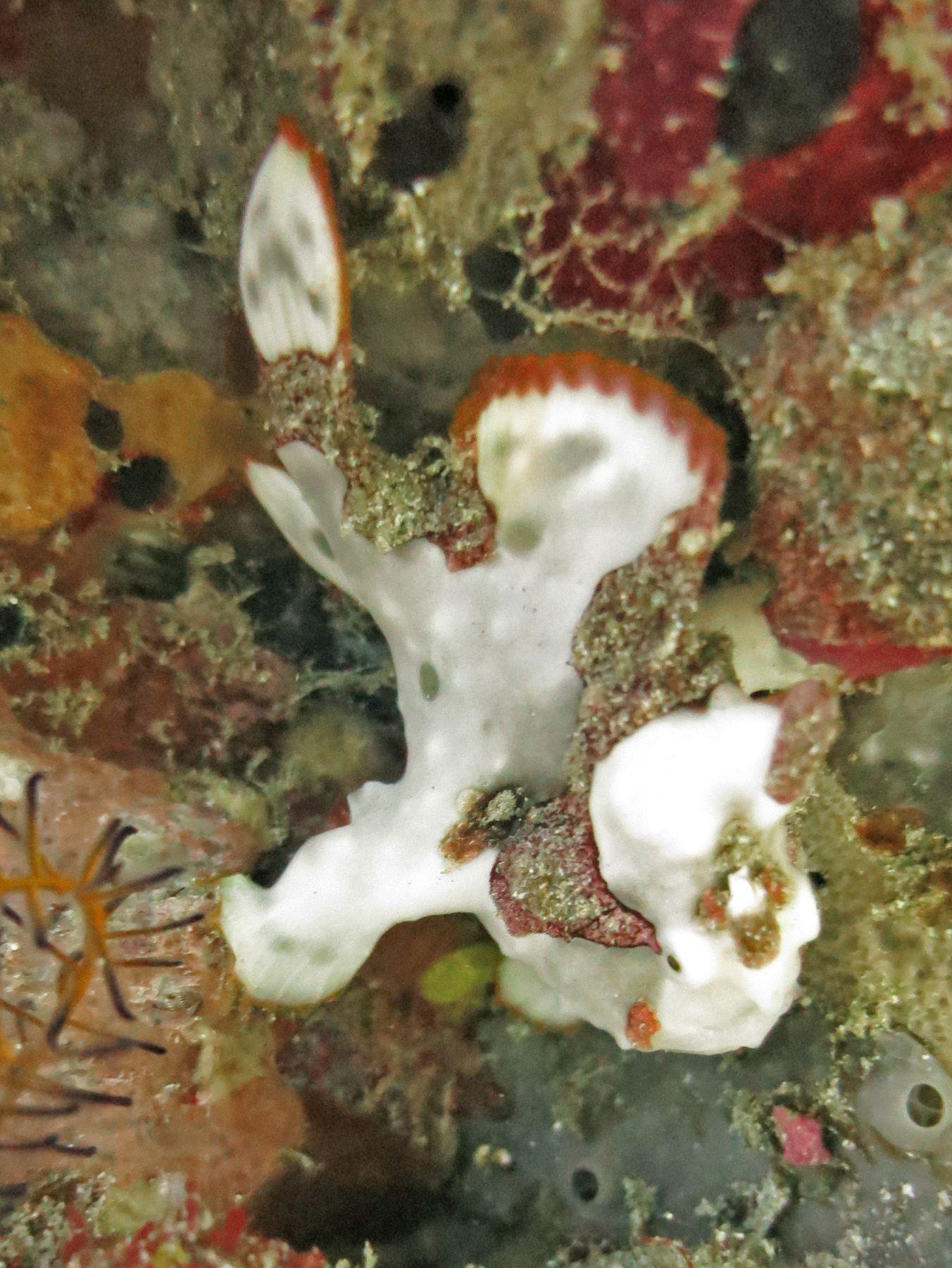
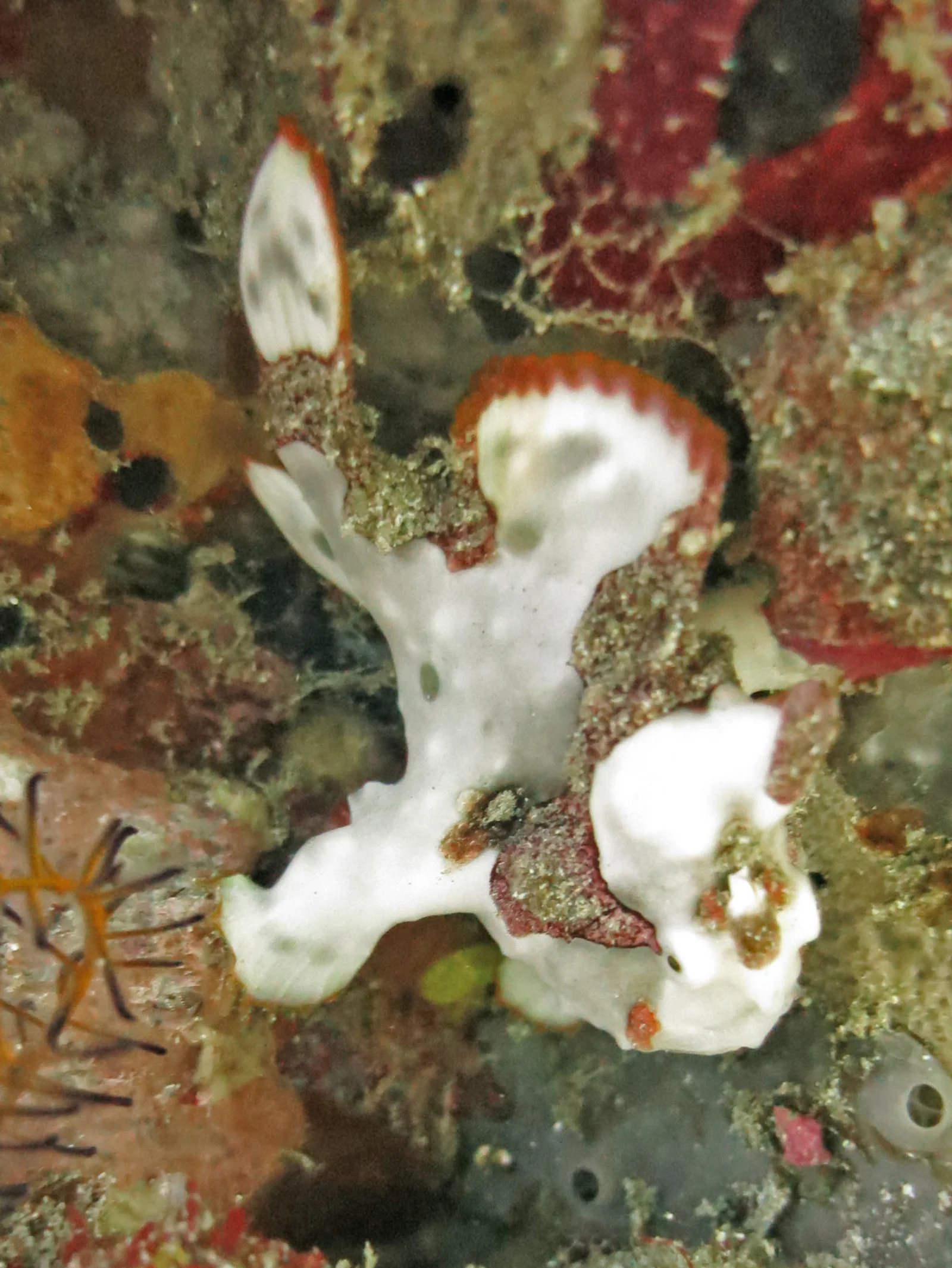
- Body Shape and Texture: Frogfish have a distinctive stocky, globular, and high-backed appearance, atypical of most fish. Their bodies are scaleless and covered in loose, often prickly skin, which can feature warty bumps, spinules, or fleshy appendages that resemble algae, hydrozoa, or sponges. This allows them to mimic their environment with remarkable precision, making them incredibly difficult to spot.
- Size: Their size varies significantly between species, ranging from tiny individuals of 2.5 cm (1 inch) up to a maximum of 40 cm (16 inches).
- Coloration: Frogfish exhibit an incredible range of colors, including white, yellow, red, green, brown, or black, often with spots or blotches. Many species possess the remarkable ability to change their color and even skin texture over several weeks to match their immediate surroundings, further enhancing their camouflage.
- The Lure (Illicium and Esca): A key identifying feature is their modified first dorsal fin spine, called the illicium, which acts as a "fishing rod." At the end of this rod is a fleshy appendage known as the esca, which serves as a lure. The esca's shape is unique to each species, mimicking potential prey such as worms, shrimp, or small fish, which the frogfish wiggles to attract its meal. This lure can be regenerated if lost.
- Mouth and Eyes: They possess a large, upward-pointed mouth with palatal teeth, capable of expanding rapidly to swallow prey up to twice their own size in as little as six milliseconds. Their eyes are typically located laterally on their head.
- Movement: Unlike most fish, frogfish are poor swimmers and rarely move quickly. Instead, they use their modified pectoral and pelvic fins, which resemble limbs, to "walk" or "hop" along the seafloor. They can also use a form of jet propulsion by expelling water through small gill openings located behind their pectoral fins.
Dive sites where this species has been observed: Sabang Wrecks (common), Twin Rocks (occasional), Sardine Run Moalboal (occasional), Maaya Thila (occasional), Arthur's Rock (occasional), Sogod Bay (Pintuyan / Padre Burgos) (common), Cars Wreck (Dauin) (common), Pescador Island (The Cathedral) (occasional), Tatawa Besar (rare), Batangas Channel (common).
Where it lives.
Frogfish (family Antennariidae) are masters of camouflage, inhabiting a diverse range of tropical and subtropical marine environments across the globe, with the highest species diversity found in the Indo-Pacific region, particularly around Indonesia.
These fascinating ambush predators are primarily benthic, meaning they live on the ocean floor, and are typically found in waters with surface temperatures of 20°C or more. While generally associated with shallow waters, their depth range is quite broad, from intertidal zones down to hundreds of meters, with some species observed as deep as 300 m. For instance, the Warty Frogfish (Antennarius maculatus) is commonly found in depths of 1–20 m. The Island Frogfish (Antennatus bermudensis) typically resides in coral reefs at depths of 4–30 m.
Frogfish exhibit a strong preference for habitats that offer ample opportunities for their cryptic camouflage. Common ecosystems and substrates include:
- Coral and Rocky Reefs: Providing intricate structures for blending in, many species mimic sponges or corals.
- Rubble and Sandy Bottoms: Areas with broken coral, rocks, and sand are frequently utilized, allowing them to blend seamlessly with the detritus.
- Sponge-encrusted Ledges: As noted in observations from various dive sites, sponges are a favored hiding spot, with some frogfish species evolving to perfectly imitate their texture and color.
- Seagrass and Algal Beds: These vegetated areas offer another excellent backdrop for their disguise.
- Wrecks and Artificial Reefs: Dive sites like Sabang Wrecks and Cars Wreck (Dauin) highlight their adaptability to man-made structures that provide complex hiding places.
- Floating Sargassum: Uniquely, the Sargassum fish (Histrio histrio) is a pelagic species that lives its entire life cycle among floating mats of Sargassum seaweed, perfectly matching its coloration.
Their ability to change color and texture over days or weeks allows them to adapt to their immediate surroundings, whether it's mimicking sponges, algae, or even sea urchins. This remarkable adaptation, combined with their "walking" locomotion using modified pectoral and pelvic fins, enables them to remain largely undetected while waiting to ambush prey.
How it behaves.
Frogfish (family Antennariidae) are masters of disguise, renowned for their incredible camouflage and unique hunting strategies, making them a captivating find for divers. These benthic ambush predators are found in almost all tropical and subtropical oceans, typically in shallower areas like coral reefs, rocky habitats, rubble, and sandy bottoms, at depths ranging from 1 to 219 m, though more commonly found to 40 m.
Underwater Encounter Behavior
Spotting a frogfish is often considered a special treat due to their elusive nature. They are highly sedentary creatures, spending most of their time perfectly camouflaged against their surroundings, mimicking sponges, rocks, algae, or corals. Their skin can be warty, shaggy, or covered in spinules and other appendages, further enhancing their ability to blend in. Many species possess the remarkable ability to change their color and pattern to match their environment, a process that can take days to weeks.
Divers often need a keen eye or the assistance of an experienced guide to locate these hidden gems. When found, frogfish typically remain very still, making them excellent subjects for underwater photography. While they are not strong swimmers and lack a swim bladder, they can move by "walking" or "hopping" along the seafloor using their modified pectoral and pelvic fins, which resemble legs. They can also use a form of jet propulsion by expelling water through their gill openings for short bursts of movement, often used by younger frogfish or when escaping danger or mating.
Feeding Habits
Frogfish are carnivorous ambush predators with a specialized and highly effective hunting technique. Their most distinctive feature is the illicium, a modified first dorsal fin spine that acts as a "fishing rod," topped with a fleshy lure called the esca. The esca varies in appearance among species, mimicking small fish, worms, shrimp, or even squids, to attract unsuspecting prey.
When prey is detected, the frogfish follows its movement with its eyes, twitching its lure to mimic natural prey motions. Once the prey is within striking distance (typically less than one body length), the frogfish executes one of the fastest feeding strikes in the animal kingdom. In as little as six milliseconds, it rapidly opens its large, upturned mouth, expanding its oral cavity up to 12 times its resting size to create a powerful suction that engulfs the prey whole. Their diet primarily consists of fish and crustaceans, and they are capable of swallowing prey nearly twice their own size due to their expandable stomachs. Frogfish are indiscriminate feeders and have even been observed consuming other frogfish.
Social Structure
Frogfish are generally solitary and secretive creatures. They are not considered social animals, although individuals may sometimes be found living near one another. Their reliance on camouflage and ambush predation means they do not typically interact in groups for hunting or defense. While they usually tolerate harmless neighbors, they can be aggressive hunters and opportunistic cannibalism can occur, particularly between a male and a larger female after spawning.
Notable Seasonal Patterns
The reproductive behavior of frogfish is still not fully understood, with observations primarily from aquaria and limited wild encounters. Reproduction is sexual, with varying strategies depending on the species and location. Many species are free-spawning, where the female releases eggs and the male fertilizes them. Prior to spawning, the female's abdomen can swell significantly with eggs, sometimes doubling her normal size. The male will approach the female, often nudging her vent.
During spawning, the pair may "walk" across the bottom before dashing towards the surface, where the female expels a ribbon-like, buoyant mass of mucus encapsulating thousands of eggs, known as an "egg raft." This egg raft drifts for several days, potentially over large geographical distances, before the embryos hatch and enter a planktonic stage that can last one to two months. Some species, however, exhibit parental care, with males carrying egg clusters on their bodies until they hatch, or parents guarding their eggs. Spawning events have been observed across various months, including March, April, May, June, July, August, and September, suggesting that specific seasonal patterns can be species-dependent and may occur multiple times within a few weeks for some individuals.
Where to see it.
Evidence for philippines · 13 dive sites
General range is not evidence of occurrence at a specific dive site.
Arthur's Rock
Anilao
Site occurrence not yet documented
Season not yet documented
No dated observations available.
Batangas Channel
Puerto Galera
Site occurrence not yet documented
Season not yet documented
No dated observations available.
Cars Wreck (Dauin)
Dauin
Site occurrence not yet documented
Season not yet documented
No dated observations available.
Dilumacad Island (Helicopter Island)
El Nido
Site occurrence not yet documented
Season not yet documented
No dated observations available.
Mainit Bubbles
Anilao
Site occurrence not yet documented
Season not yet documented
No dated observations available.
Masaplod North
Dauin
Site occurrence not yet documented
Season not yet documented
No dated observations available.
Pescador Island (The Cathedral)
Moalboal
Site occurrence not yet documented
Season not yet documented
No dated observations available.
Sabang Wrecks
Puerto Galera
Site occurrence not yet documented
Season not yet documented
No dated observations available.
San Miguel
Dauin
Site occurrence not yet documented
Season not yet documented
No dated observations available.
Sardine Run
Moalboal
Site occurrence not yet documented
Season not yet documented
No dated observations available.
Sogod Bay (Pintuyan / Padre Burgos)
Southern Leyte
Site occurrence not yet documented
Season not yet documented
No dated observations available.
Twin Peaks Reef
Coron
Site occurrence not yet documented
Documented site seasonality: Nov, Dec, Jan, Feb, Mar, Apr, May
No dated observations available.
Twin Rocks
Anilao
Site occurrence not yet documented
Season not yet documented
No dated observations available.
Gallery.