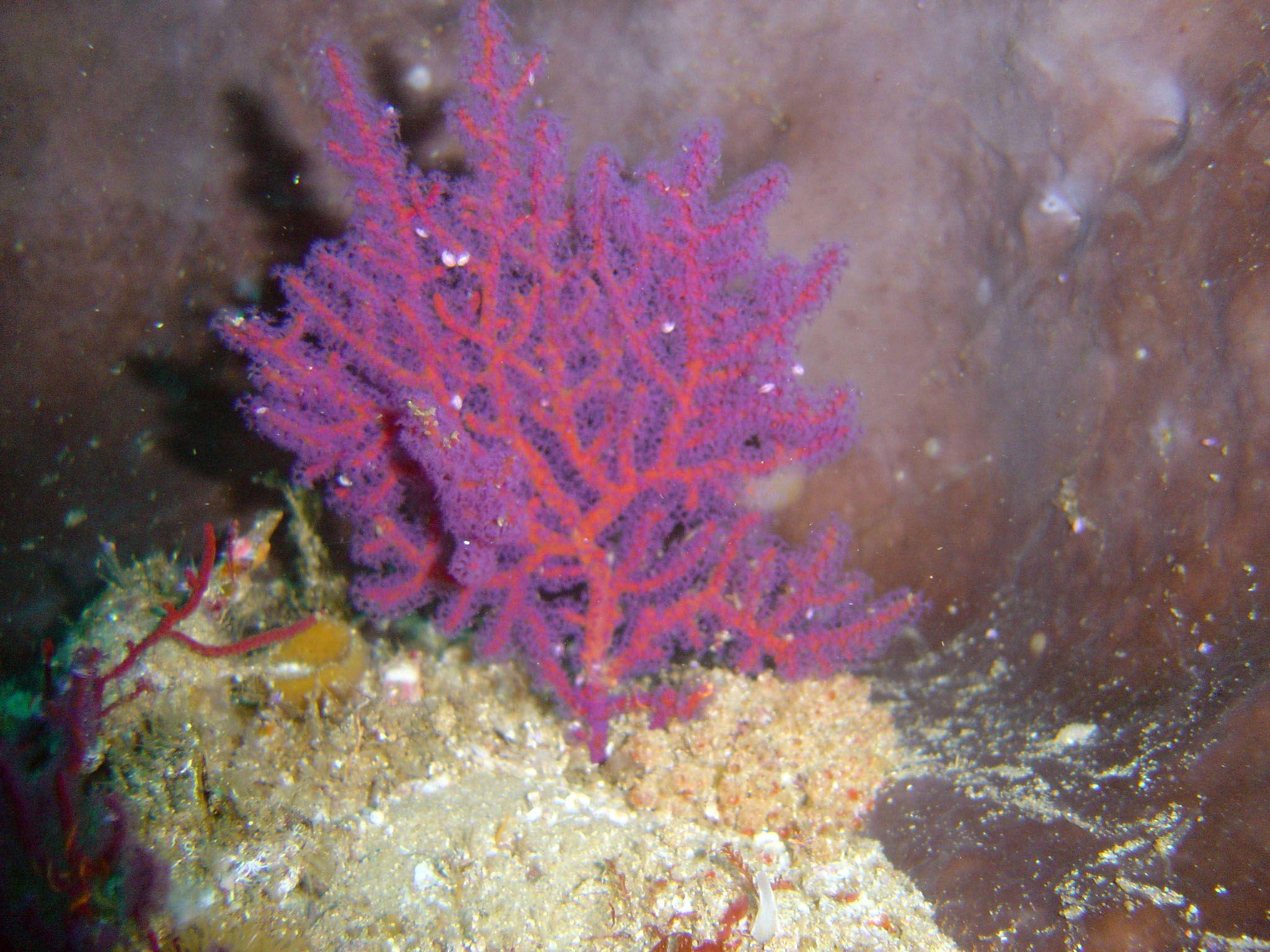
Gorgonian Sea Fan
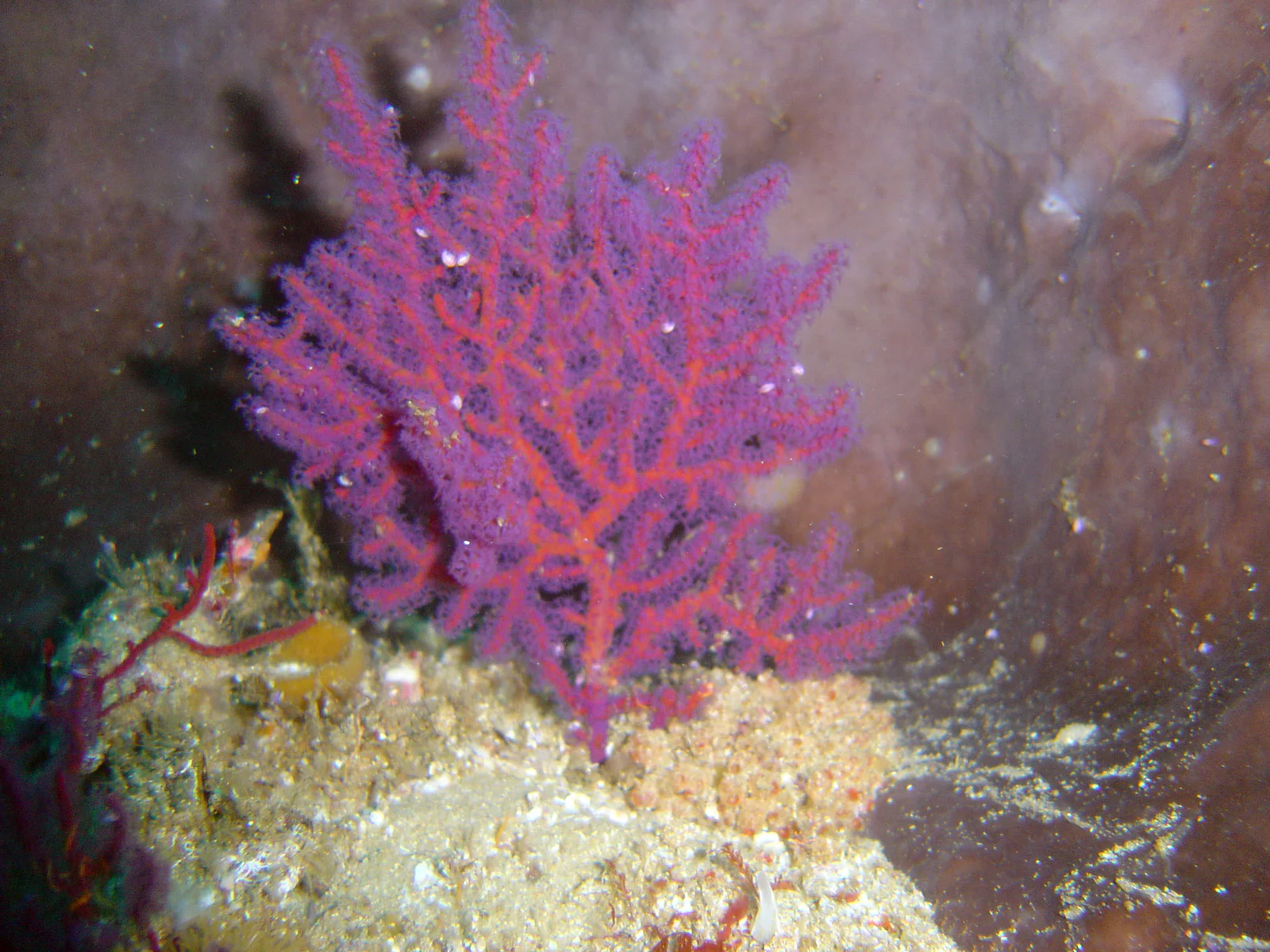
Annella mollis
About Gorgonian Sea Fan.
The Gorgonian Sea Fan, scientifically known as Annella mollis, is a captivating and prominent species within the Subergorgiidae family of soft corals. Categorized as a macro species, it is a significant feature of many Indo-Pacific dive sites, recognized for its impressive size and intricate structure.
This species plays a crucial ecological role, acting as an "ecosystem engineer" by providing essential three-dimensional habitat and shelter for a diverse array of marine life. Divers often observe pygmy seahorses (such as Hippocampus denise), gobies, and various shrimps camouflaged amongst its branches. It also serves as a perch for other filter feeders like crinoids. The Annella mollis is currently listed as Least Concern regarding its conservation status, though like many corals, it faces threats from climate change, ocean acidification, overfishing, and habitat destruction.
Observed abundantly at dive sites such as Sepok Wall, Doljo Point, and False Entrance, and commonly found at Blue Wonder, Sabang Point, Pamilacan Sanctuary, Turtle Point, Gorgonian Wall, and Snappers, this sea fan is a highlight for divers across its range.
Identification
- Size and Structure: The Gorgonian Sea Fan is one of the largest sea fan species, forming broad, flat, fan-shaped colonies that can reach an impressive diameter of up to 2 meters (6.5 ft). Its structure consists of a tough, flexible central stalk from which numerous fine branches radiate outwards, creating a delicate, intricate, and lacy pattern. This fractal-like branching increases its surface area, optimizing its ability to capture food particles.
- Coloration: While often displaying vibrant hues, the coloration of Annella mollis can vary, ranging from orange and yellow to shades of violet and brown. It can also be observed in beige, red, or pink tones. The entire fan is covered with tiny polyps, which contribute to its textured appearance and are responsible for feeding.
- Habitat and Orientation: This species thrives in nutrient-rich waters with strong currents, typically found on steep reef slopes, walls, and drop-offs. It is commonly observed at depths ranging from 10–40 meters, though it can extend down to at least 50 meters. The fan consistently orients itself perpendicular to the prevailing current, a strategic positioning that maximizes its exposure to the water flow, allowing its polyps to efficiently filter zooplankton and microplankton for food.
- Distribution: The Annella mollis has a wide distribution across the Indo-Pacific region, including the Red Sea. It prefers tropical waters, where optimal coral growth occurs in temperatures of 23–25°C, though it can tolerate a broader range of 16–35°C.
Where it lives.
The Gorgonian Sea Fan (Annella mollis) is a striking inhabitant of the Indo-West Pacific and Red Sea, where it thrives in diverse reef environments.
Divers can typically encounter this magnificent sea fan in:
- Environments: Annella mollis favors areas with strong currents, which are essential for its filter-feeding lifestyle. It is commonly found on lower reef slopes, steep reef walls, and drop-offs. It can also be observed on lagoon, pinnacle, and seaward reefs.
- Depth Range: This species is typically found at depths ranging from 10 to 40 meters, though it can extend shallower to 12 meters and deeper to at least 50 meters. Larger fans are often observed at greater depths, around 40 meters and beyond, particularly on seaward and pinnacle reefs.
- Substrate Preference: The Gorgonian Sea Fan anchors itself to hard substrates, including rocks and consolidated reef structures. Its larvae often settle in small cracks or on the undersides of ledges, providing protection.
- Ecosystem Associations: Beyond its aesthetic appeal, Annella mollis plays a crucial ecological role by providing habitat and shelter for a variety of marine organisms, such as fish, crustaceans, and other invertebrates, thereby contributing to the structural complexity and biodiversity of coral reefs.
How it behaves.
The Gorgonian Sea Fan (Annella mollis) is a captivating and prominent inhabitant of many Indo-Pacific dive sites, easily recognized by its impressive size and delicate, fan-like structure. As a sessile colonial animal, it remains attached to the reef, offering divers a unique opportunity to observe its intricate behaviors.
- Underwater Encounter Behavior: When encountering Annella mollis, divers will observe large, flat, fan-shaped colonies that can reach up to 2 meters (6.5 ft) in diameter. These magnificent structures are typically found growing perpendicular to the prevailing currents, a strategic orientation that maximizes their exposure to nutrient-rich water flow. Their delicate branches are covered with countless tiny polyps, which, when extended, give the fan a soft, fuzzy appearance. Colors can vary, often displaying vibrant hues of orange, yellow, violet, or brown, adding to the visual spectacle of the reef. Divers commonly find these sea fans on steep reef slopes, walls, and drop-offs, thriving in areas with strong currents. They are typically encountered at depths ranging from 10 to 40 meters, though larger specimens may be found deeper. These large fans also serve as important microhabitats, providing shelter and perching spots for a variety of marine life, including small fish, crustaceans, brittle stars, feather stars, and even pygmy seahorses.
- Feeding Habits: Annella mollis is a passive filter feeder, relying on water currents to bring food directly to its polyps. Each individual polyp possesses eight tiny tentacles that extend into the water column to capture microscopic plankton and suspended organic particles. While they primarily feed on zooplankton, often more actively at night, many gorgonian species, including Annella mollis, also host symbiotic zooxanthellae within their tissues. These photosynthetic algae produce nutrients from sunlight, supplementing the coral's diet, especially in clear, sunlit waters. This dual feeding strategy makes them mixotrophic, utilizing both captured prey and photosynthetic byproducts.
- Social Structure: As a colonial organism, Annella mollis does not exhibit a "social structure" in the conventional sense. Instead, each sea fan is a single, integrated colony composed of hundreds to thousands of genetically identical polyps. These individual polyps are interconnected by living tissue and collectively secrete a tough yet flexible internal skeleton made of a protein called gorgonin. This flexible skeleton allows the entire colony to sway gracefully with strong currents without breaking, maintaining its optimal feeding position.
- Notable Seasonal Patterns: Gorgonian sea fans reproduce both sexually and asexually. Sexual reproduction typically involves broadcast spawning, where colonies release eggs and sperm into the water column for external fertilization. This reproductive activity often occurs during warmer months, potentially coinciding with specific lunar cycles and seasonal temperature shifts, with tropical regions sometimes experiencing multiple spawning events per year. Asexual reproduction can occur through fragmentation, where broken-off pieces can reattach and grow into new colonies, aiding in population spread. Divers should be aware that these corals are very slow-growing, with undisturbed colonies potentially living for hundreds of years. While specific seasonal growth patterns for Annella mollis are not extensively documented for divers, general gorgonian growth can be influenced by seasonal variations in water temperature and food availability.
Where to see it.
Evidence for philippines · 10 dive sites
General range is not evidence of occurrence at a specific dive site.
Doljo Point
Panglao
Site occurrence not yet documented
Season not yet documented
No dated observations available.
Gorgonian Wall
Cabilao Island
Site occurrence not yet documented
Documented site seasonality: Jan, Feb, Mar, Apr, May, Jun, Jul, Aug, Sep, Oct, Nov, Dec
No dated observations available.
Odie's Wall
Puerto Galera
Site occurrence not yet documented
Season not yet documented
No dated observations available.
Pamilacan Sanctuary
Pamilacan Island
Site occurrence not yet documented
Documented site seasonality: Jan, Feb, Mar, Apr, May, Jun, Jul, Aug, Sep, Oct, Nov, Dec
No dated observations available.
Sabang Point
Puerto Galera
Site occurrence not yet documented
Season not yet documented
No dated observations available.
Sepok Wall
Anilao
Site occurrence not yet documented
Season not yet documented
No dated observations available.
Snappers
Anda
Site occurrence not yet documented
Documented site seasonality: Jan, Feb, Mar, Apr, May, Jun, Jul, Aug, Sep, Oct, Nov, Dec
No dated observations available.
The Atoll
Puerto Galera
Site occurrence not yet documented
Season not yet documented
No dated observations available.
Turtle Point
Anda
Site occurrence not yet documented
Documented site seasonality: Jan, Feb, Mar, Apr, May, Jun, Jul, Aug, Sep, Oct, Nov, Dec
No dated observations available.
Turtle Rock
Puerto Galera
Site occurrence not yet documented
Season not yet documented
No dated observations available.
Gallery.