Ribboned Sweetlips
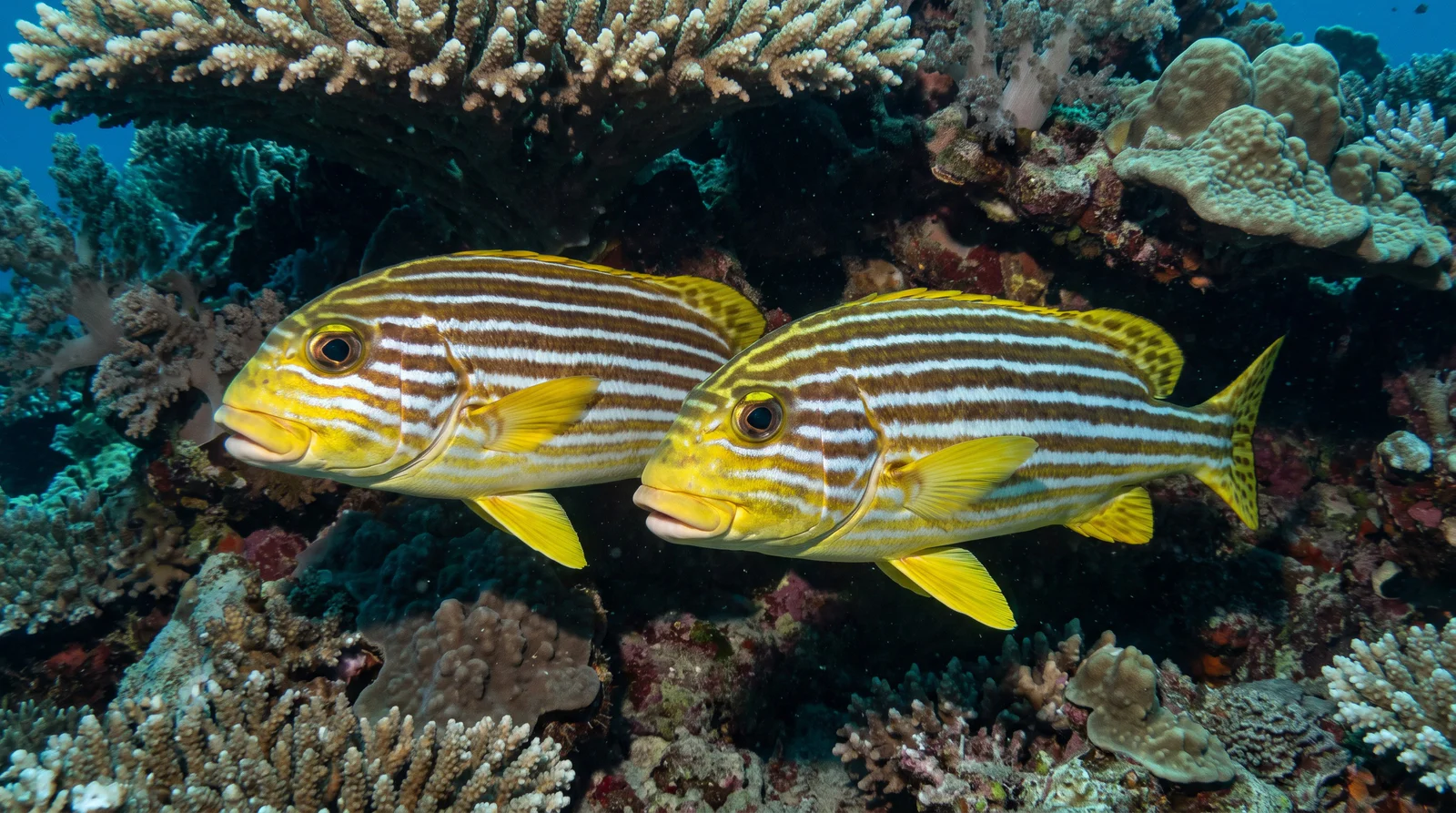 AI-generated
Image credit: AI-generated illustration · License unspecified · Source unspecified
Plectorhinchus polytaenia
About Ribboned Sweetlips.
The Ribboned Sweetlips, scientifically known as Plectorhinchus polytaenia, is an engaging member of the Haemulidae family, commonly referred to as grunts, and belongs to the sweetlips subfamily Plectorhinchinae. This captivating fish is a popular sight for divers across its extensive Indo-Pacific range, which stretches from the west coast of India through the Malay Archipelago, the Philippines, New Guinea, and as far east as the Solomon Islands, extending south to northern Australia.
Typically found on coastal and seaward reefs, the Ribboned Sweetlips inhabits depths of 5–40 m. Adults often prefer deep slopes exposed to currents, where a rich growth of benthic invertebrates provides ample food. Juveniles, however, tend to frequent more sheltered reef areas. While often observed singly, these fish are known to form small to large aggregations during the day, resting near ledges and within cave mouths at various dive sites. At night, they disperse to forage for small invertebrates such as crustaceans, gastropods, annelids, and even smaller fish. With a maximum size reaching up to 50 cm (20 in) in total length, the Ribboned Sweetlips is a medium-sized reef inhabitant. Its conservation status is currently listed as Least Concern by the IUCN, as assessed on June 28, 2018.
Identification
- Size and Shape: Adults can grow up to 50 cm (20 in) and possess a robust, compressed body with fleshy lips that become noticeably swollen with age.
- Coloration and Pattern: The body typically displays a brown to yellowish-grey background, adorned with 5 to 9 distinct, narrow horizontal stripes. These stripes are generally grey or white, outlined with dark brown, and extend from the snout along the entire body. Some individuals may exhibit a brighter yellow base color, with the stripes appearing yellow and white with thin black edges, or even black-edged gold. The specific name polytaenia, meaning "many banded," aptly describes this characteristic patterning.
- Fins: The fins are predominantly yellow. The soft-rayed portions of the dorsal, caudal, and pectoral fins may feature darker stripes, which tend to fade as the fish matures.
- Head Features: The eyes and lips are often yellowish. A distinctive feature is the bright red or scarlet interior of the mouth. The chin is white and has six pores, lacking a median pit.
- Juveniles: Younger Ribboned Sweetlips present a different appearance, typically having fewer stripes on an orange-brown body, often with a prominent central black band. As they mature, the black coloration narrows to an outline, and the stripes become more numerous and yellow. Juveniles are often found solitary in shallower reef sections.
- Distinguishing from Similar Species: Divers should note the specific stripe pattern to differentiate the Ribboned Sweetlips from other sweetlips species. For instance, the Goldlined Sweetlips (Plectorhinchus chrysotaenia) typically has bluish-grey bodies with bright-yellow stripes that lack black edges. The Oriental Sweetlips (Plectorhinchus vittatus) features pronounced black and white stripes and often spotted fins, while the Oblique-banded Sweetlips (Plectorhinchus lineatus) is characterized by diagonal stripes.
Where it lives.
The Ribboned Sweetlips (Plectorhinchus polytaenia) is a striking reef fish commonly encountered by divers across its Indo-Pacific range.
Habitat and Distribution
This species is native to the tropical and subtropical waters of the Indo-West Pacific, extending from the west coast of India eastward through the Malay Archipelago, the Philippines, New Guinea, and as far east as the Solomon Islands, reaching south to northwestern Australia.
Ribboned Sweetlips are primarily associated with coastal and seaward coral reefs. They are typically found at depths ranging from 5 to 40 m. While adults prefer deep slopes exposed to currents with abundant benthic invertebrate growth, juveniles tend to inhabit more sheltered reef areas close to the adult habitats.
Ecosystem and Behavior
Divers often spot Ribboned Sweetlips around:
- Reef ledges and caves: Providing shelter during the day.
- Drop-offs and deep slopes: Especially areas with strong currents that support a rich invertebrate community.
- Coral reefs: Where their distinctive patterns can help them blend in.
While often observed singly, these sweetlips may gather in small or large aggregations to rest during daylight hours. At night, they disperse across the reef to forage for small invertebrates such as crustaceans, gastropods, annelids, and smaller fish.
The preferred water temperature for Ribboned Sweetlips ranges from approximately 27–29.3°C.
How it behaves.
The Ribboned Sweetlips (Plectorhinchus polytaenia) is a captivating reef fish commonly encountered by divers across its Indo-Pacific range, from the west coast of India to the Solomon Islands and northern Australia. With a maximum size typically around 40 cm (16 in), though some individuals can reach up to 50 cm (20 in), this species is easily recognized by its distinctive appearance and behavior.
Underwater Encounter Behavior
- Habitat: Divers can typically find Ribboned Sweetlips on coastal and seaward reefs, at depths ranging from 5 to 40 meters. Adults often prefer deep slopes exposed to currents, where there is a rich growth of benthic invertebrates. Juveniles, however, tend to inhabit more sheltered reef areas closer to the adult habitats.
- Daytime Activity: During the day, Ribboned Sweetlips are often observed resting. While they can be solitary, it is common to encounter them in small to large aggregations, often sheltering under ledges or within reef structures at a dive site. These groups are primarily for resting and offer a fantastic opportunity for divers to observe their striking patterns.
- Diver Interaction: Generally considered shy and docile, Ribboned Sweetlips are not typically aggressive and will usually maintain a respectful distance from divers. Their calm demeanor allows for peaceful observation, making them a favorite subject for underwater photography. They may also be seen swimming alongside or feeding with other species of sweetlips or other reef fish.
Feeding Habits
- Nocturnal Foragers: True to their family, Ribboned Sweetlips are nocturnal feeders. The large aggregations observed during the day disperse over the reef at night as individuals begin their search for food.
- Diet: Their diet primarily consists of small benthic invertebrates. They actively forage for crustaceans, gastropods (sea snails), annelids (worms), and even smaller fishes. When searching for food, they may sift through sand, which can occasionally stir up sediment.
Social Structure
- Resting Aggregations: The most notable social behavior relevant to divers is their tendency to form resting aggregations during daylight hours. While individuals may be solitary, these groups provide a visual spectacle on the reef.
- Reproduction: Ribboned Sweetlips are an oviparous species, meaning they lay eggs. Reproduction involves distinct pairing during breeding, though specific details on courtship or nesting sites are not widely documented for divers.
Seasonal Patterns
There are no widely documented notable seasonal patterns, such as migrations or specific breeding seasons, that are particularly relevant to divers encountering Ribboned Sweetlips. They are generally present in their preferred reef habitats year-round, offering consistent viewing opportunities at suitable dive sites.
Where to see it.
Evidence for philippines · 3 dive sites
General range is not evidence of occurrence at a specific dive site.
Ernie's Point
Puerto Galera
Site occurrence not yet documented
Season not yet documented
No dated observations available.
Hilutungan Island Sanctuary
Mactan
Documented site occurrence
Season not yet documented
Source reviewed on 2026-10-14 · Source: Scotty's Dive Center (Wayback snapshot 2023-12-07) · Observation date not documented
Japanese Wreck
Puerto Galera
Site occurrence not yet documented
Season not yet documented
No dated observations available.
Gallery.
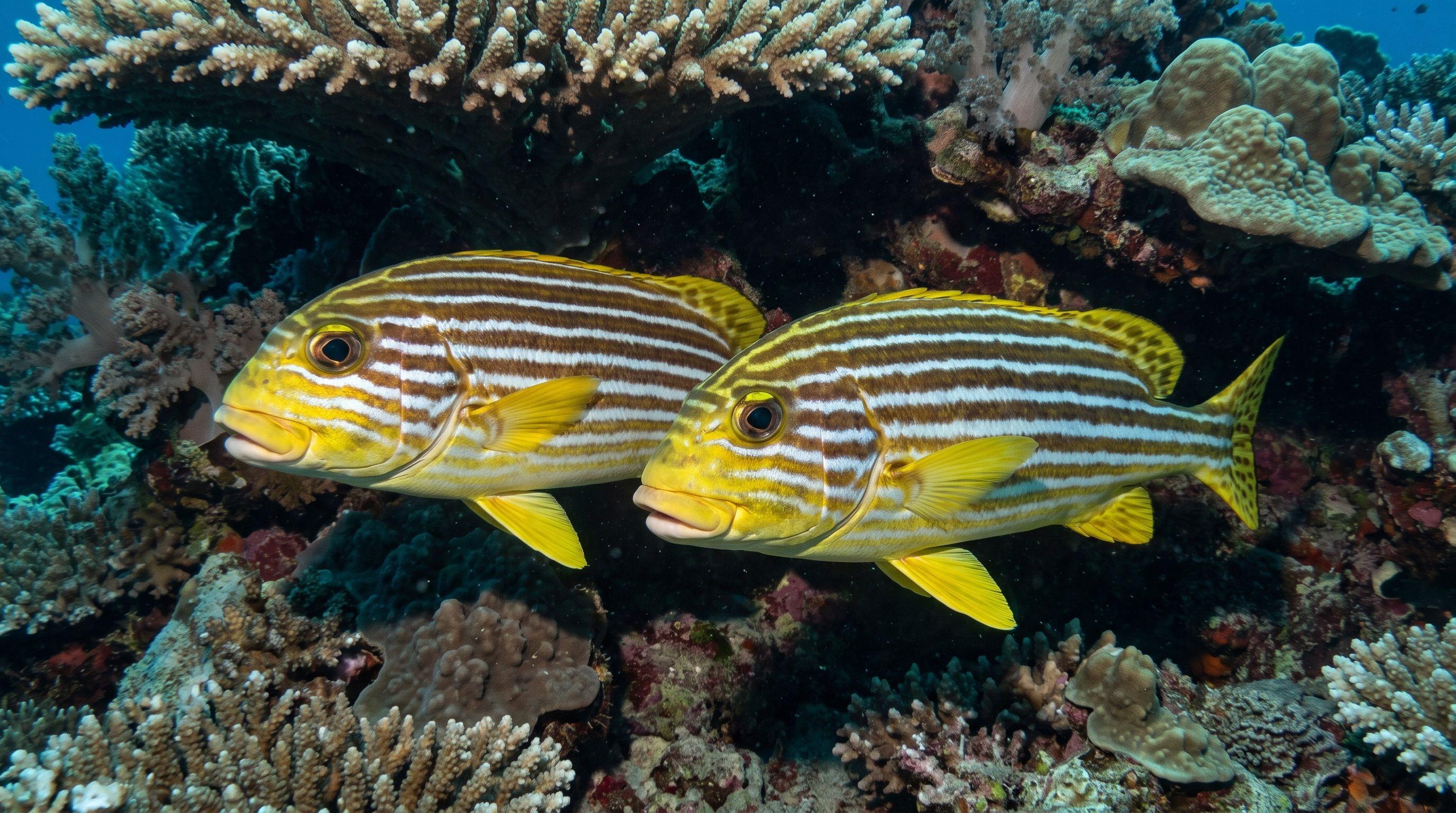 AI-generated
AI-generated illustration
Image credit: AI-generated illustration · License unspecified · Source unspecified