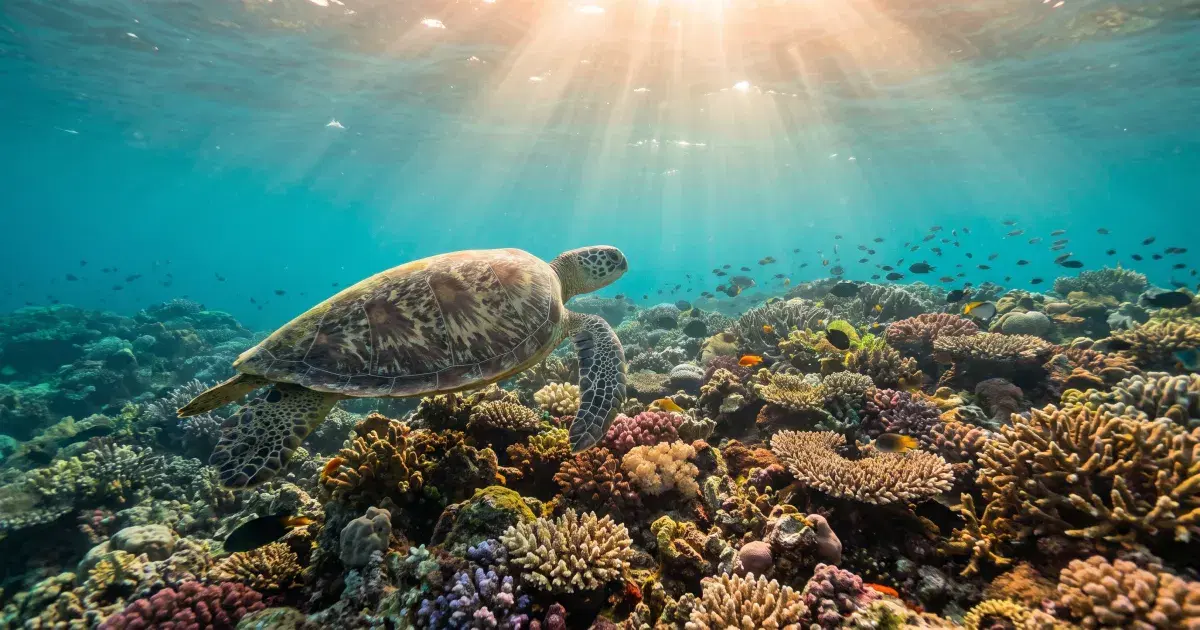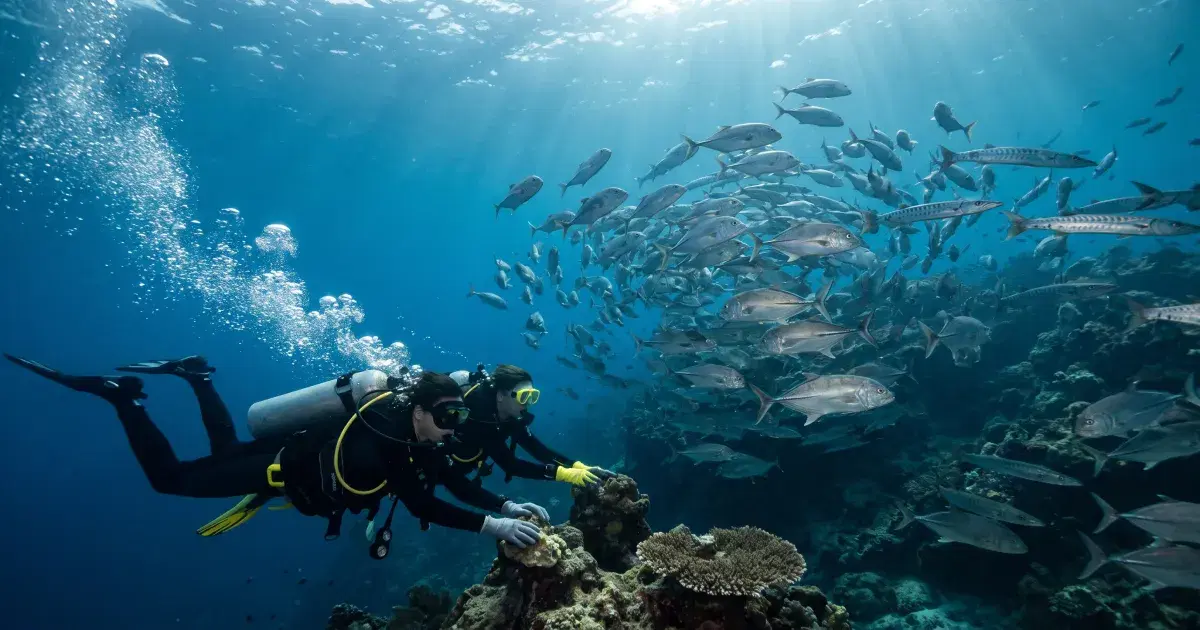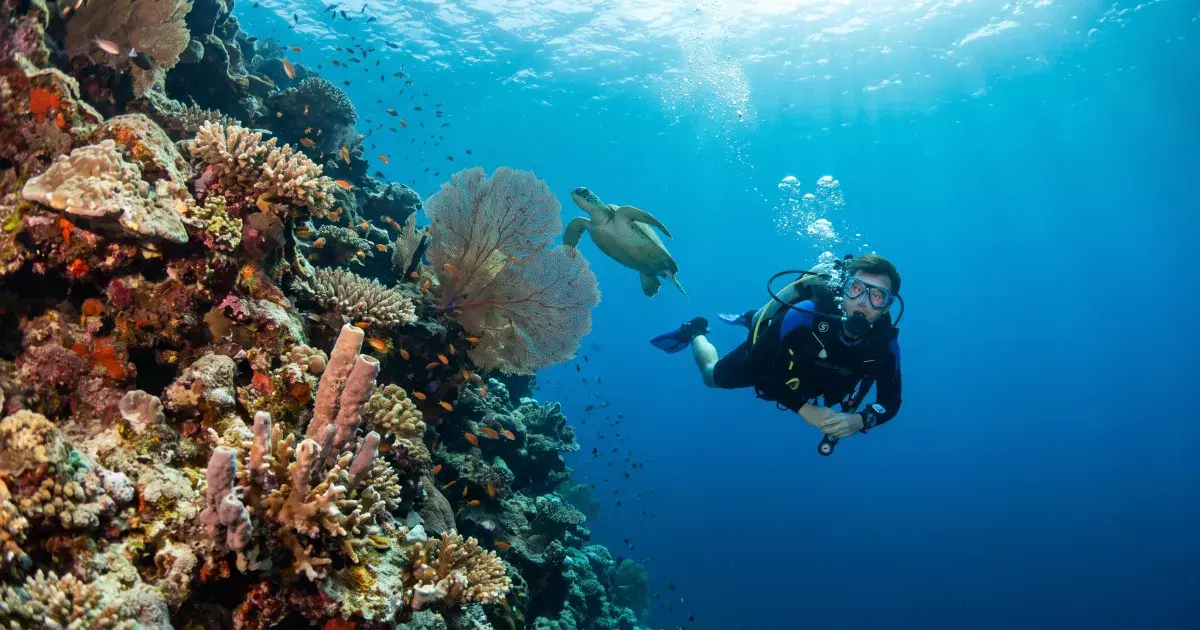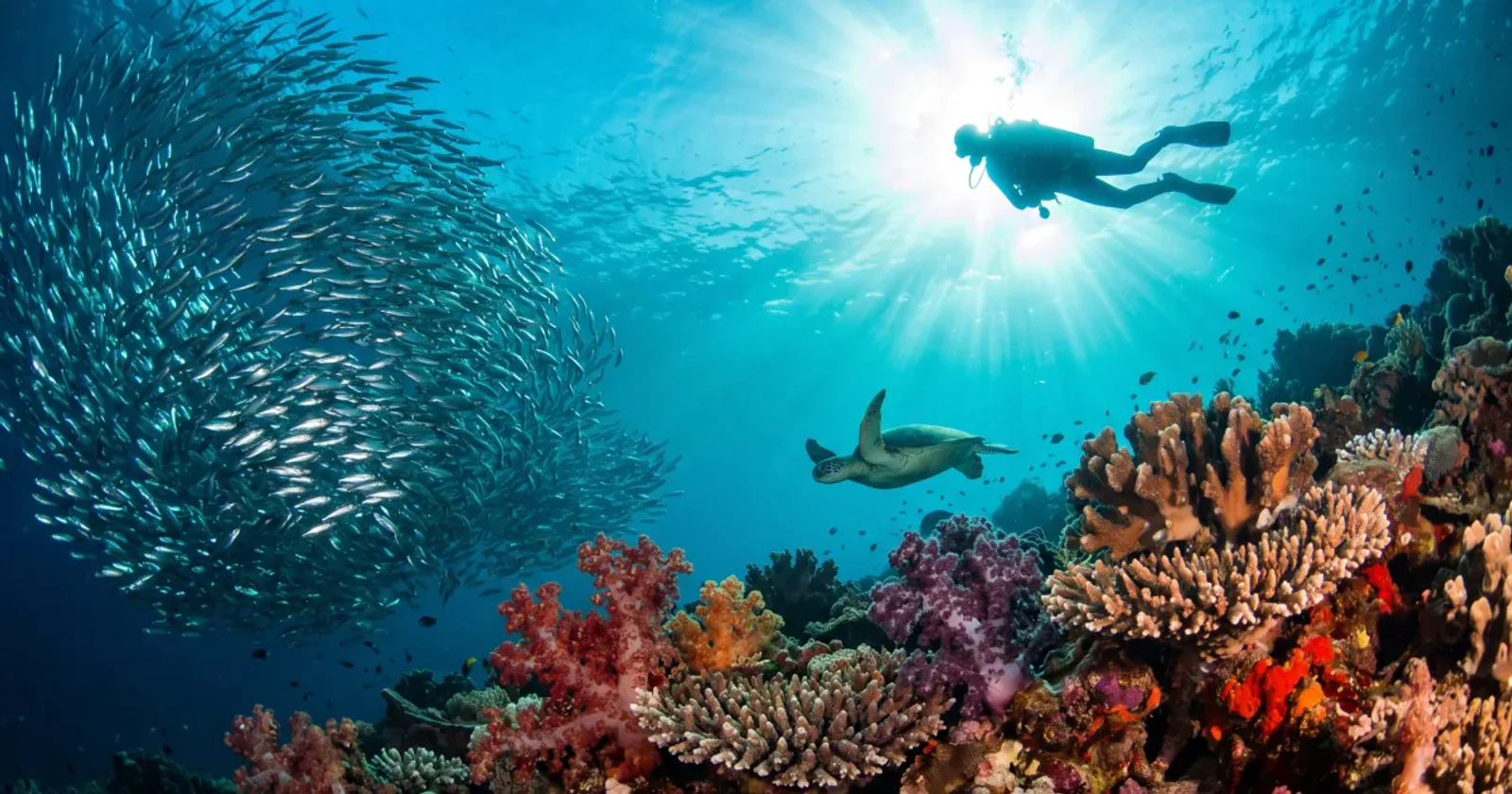
The best diving in the Philippines depends on what you want to see. Tubbataha has the wildest reefs but opens only mid-March to mid-June, by liveaboard. Malapascua gets dawn thresher sharks; Coron holds a fleet of 1944 shipwrecks; Anilao crawls with the critters macro photographers chase. Most areas dive best November through May, and fun dives run around $30–50.
How do the top dive areas compare?
Area | Best for | Season | Level | Access |
|---|---|---|---|---|
Tubbataha | Sharks, walls, wilderness | Mid-Mar to mid-Jun | Experienced | Liveaboard only |
Malapascua | Thresher sharks at dawn | Year-round; calmest Nov–May | Advanced for the shoals | Resort |
Anilao | Macro and muck | Year-round; best Nov–May | All levels | Resort, near Manila |
Coron | Wreck diving | Year-round; best Nov–May | All levels; penetration needs training | Resort |
Moalboal | Sardine run from shore | Year-round | All levels | Resort |
Apo Island | Turtles, healthy reef | Nov–May | All levels | Day trips from Dauin |
Puerto Galera | Variety, drift dives | Year-round; best Nov–May | All levels | Resort, near Manila |
Sogod Bay | Whale sharks, wild | Nov–May for whale sharks | All levels | Resort, remote |
Apo Reef | Remote atoll, pelagics | Nov–May | Experienced | Liveaboard or Sablayan |
Balicasag | Walls and turtles | Year-round; best Nov–May | All levels | Day trips from Panglao |
The 10 best dive areas in the Philippines
The Philippines sits at the apex of the Coral Triangle, a region WWF credits with more than 500 coral species and around 2,500 reef fish species. Each area below earned its place for something no other area in the country does as well.
1. Tubbataha Reefs Natural Park
Tubbataha is the trip to plan a year ahead. The park sits about 150 km out in the Sulu Sea, has been a UNESCO World Heritage Site since 1993, and is reachable only by liveaboard from Puerto Princesa during the roughly mid-March to mid-June weather window. Expect reef sharks on almost every dive and walls dropping well past 40 m. Full logistics, budgets and booking lead times are in our Tubbataha diving guide.
2. Malapascua, Cebu
No other destination in the world offers near-daily pelagic thresher shark encounters. The classic site was Monad Shoal at dawn. Since around 2022 most sightings have moved to nearby Kimud Shoal, and the window has stretched toward mid-morning; ZuBlu's Malapascua guide traces the shift, which local guides attribute to tiger and bull sharks turning up at Monad. The shoals sit at 15–30 m, so an advanced certification helps. Sightings are likely, never guaranteed.
3. Anilao, Batangas
Macro photographers treat Anilao as home turf, three hours south of Manila. In a 2005 study, researchers Kent Carpenter and Victor Springer named the surrounding Verde Island Passage the "center of the center of marine shorefish biodiversity", and Anilao's dark-sand slopes back that up with nudibranchs, frogfish and blue-ringed octopus. Most resorts run dedicated camera rooms and rent macro setups.
4. Coron, Palawan
Coron Bay holds a Japanese supply fleet sunk by US carrier aircraft on 24 September 1944; DIVE Magazine puts the regularly dived count at about ten. Several sit shallow enough for Open Water divers to explore the outside, while swim-throughs and engine rooms need wreck training. Visibility is modest, but the scale of the ships makes up for it.
5. Moalboal, Cebu
A resident bait ball of millions of sardines lives about 20 m off Panagsama Beach, year-round, in water shallow enough to snorkel. You swim out from shore. That makes the Moalboal sardine run the cheapest big-animal spectacle in the country, and turtles graze the same reef edge. Pescador Island, a short banca ride away, adds walls and the occasional passing pelagic.
6. Apo Island, Negros Oriental
Set up in 1982 with Silliman University's marine lab, Apo Island's community-managed sanctuary predates most marine protection in the country. Four decades on, the hard-coral cover is dense and the green sea turtles barely bother moving for divers. Most people stay in Dauin and combine Apo trips with Dauin's own muck sites.
7. Puerto Galera, Oriental Mindoro
Thirty-plus sites sit within a short banca ride of Puerto Galera, from beginner bays to The Canyons, a current-swept advanced drift dive. Like Anilao it faces the Verde Island Passage, and the area has held UNESCO Man and the Biosphere status since 1973. Ferries run from Batangas pier, so it's a realistic weekend trip from Manila.
8. Sogod Bay, Southern Leyte
Juvenile whale sharks cruise Sogod Bay around November to May with no feeding involved, and the reefs are in excellent shape, Napantao sanctuary above all. The catch is access: a flight to Tacloban plus a few hours by road. That same friction keeps the bay quiet while Oslob, a short hop away on paper, absorbs the bus tours.
9. Apo Reef, Occidental Mindoro
Apo Reef, not to be confused with Apo Island, is often described as the world's second-largest contiguous coral reef system and sits on UNESCO's tentative list. Access is by liveaboard or by boat from Sablayan town. Expect sharks, rays and open-ocean visibility, with far fewer boats than Tubbataha.
10. Balicasag Island, Bohol
Balicasag, a marine sanctuary since the mid-1980s, is Bohol's signature dive: steep walls, big schools of jacks and reliable turtles. It works as an easy day trip from Panglao's resorts, and Napaling Point on Panglao itself has a sardine school to rival Moalboal's.
When is the best time to dive the Philippines?
November through May is the reliable window for most of the country. Those are the drier months under the amihan (northeast monsoon); the habagat (southwest monsoon) brings rain and rougher seas from roughly June to October, which is also when typhoons peak. Two exceptions matter for planning. Tubbataha runs mid-March to mid-June only, and Sogod Bay's whale shark season tracks November to May. April overlaps almost everything.
Is the Philippines good for new divers?
Yes, and it's one of the cheaper places to learn. An Open Water course typically runs about $250–400 depending on the operator and island, per Scooba Dive Guide's 2026 cost survey. Panglao, Moalboal and Puerto Galera's sheltered bays are ideal first-dive territory. Save Tubbataha, Apo Reef and the thresher shoals for later; operators generally want logged experience and comfort at depth before taking you there.
Should you dive with the whale sharks at Oslob?
Our take: skip Oslob. Its whale sharks are hand-fed to keep them around, and a LAMAVE study published in Royal Society Open Science found provisioned sharks stayed a mean of ~45 days at the site versus ~22 days for non-provisioned visitors, with behavior conditioned to the morning feed. Whatever you think of the economics, the encounter isn't natural. Donsol (November to May, peaking February to April) and Sogod Bay both have wild whale shark encounters in season, and lucky divers sometimes meet them at Tubbataha too.
How much does a Philippines dive trip cost?
Budget around $30–50 per guided fun dive with gear, based on Live Life the Philippines' price survey; multi-dive packages bring that down. Resort-based trips are cheap by global standards because food and lodging are inexpensive outside the luxury tier. Liveaboards are the exception: a six-night Tubbataha itinerary generally runs ~$1,700–3,000+ per person, per Diverbliss's liveaboard roundup, plus a park conservation fee (check the current rate with your operator).
Plan your Philippines dive trip on Diveity
Diveity maps Philippine dive sites with depth, level, seasons and the marine life you can expect, connected to the resorts and shops that dive them. Browse the dive site atlas, shortlist dive resorts, or find a dive buddy for the trip. Diver accounts are free, and the logbook is waiting when you get back.
FAQ
What is the single best dive area in the Philippines? Tubbataha, if your schedule and budget allow a mid-March to mid-June liveaboard; its remoteness keeps the reefs in a state the rest of the country can't match. For land-based trips, Malapascua and Anilao are the strongest specialty picks.
What's the best month to dive the Philippines? April. The seas are still in their dry-season calm, Tubbataha's short window is open and the Donsol and Sogod Bay whale shark seasons are running, so nearly every itinerary works that month.
Can you dive the Philippines during the rainy season? Yes. From June to October you pick sheltered coasts and accept the typhoon risk; operators reschedule around storms, and sites like Moalboal's sardine run and Puerto Galera's inner bays still dive well on most days.
How many logged dives do you need for Tubbataha? There's no legal minimum, but liveaboard operators typically ask for advanced certification and roughly 20–50 logged dives because of currents and blue-water descents. Details are in our Tubbataha guide.
Where can you see whale sharks in the Philippines without feeding? Donsol and Sogod Bay, both roughly November to May, plus occasional wild encounters at Tubbataha in season. All three rely on natural aggregations rather than provisioning.