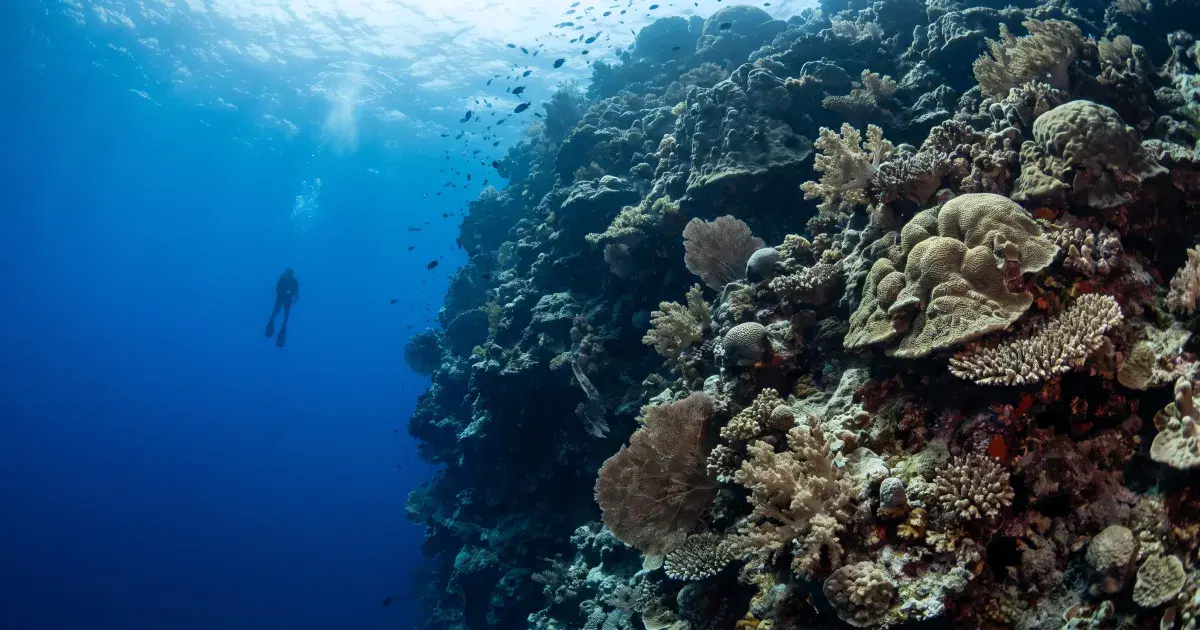
Osprey Reef sits about 350 km northeast of Cairns, out past the edge of the continental shelf, and you only reach it on a multi-day Coral Sea liveaboard. There's no day boat that makes that crossing. What you get for the trip is a ring-shaped atoll with walls that drop straight past 1,000 m, water that runs noticeably clearer than the inshore Great Barrier Reef, and one of the most reliable shark encounters in Australian diving at a site called the North Horn.
What makes Osprey Reef different from the Great Barrier Reef?
Depth and isolation. The Great Barrier Reef is a shallow, fringing system close to shore, where visibility depends on runoff, tides and boat traffic. Osprey Reef is an oceanic atoll far offshore, so its water column isn't dragging sediment off a continent. Divers who've done both usually describe the GBR as varied and accessible, and Osprey as a smaller number of dramatic, wall-heavy sites where you spend more of the dive looking into blue water than at the reef itself.
That isolation cuts both ways. You won't find the site variety or the easy day-trip logistics of Cairns' inner reef. You'll find near-vertical drop-offs, strong pelagic traffic, and crowds that are effectively zero compared to the GBR's busiest pontoons.
Is Coral Sea diving liveaboard-only?
Yes. Osprey Reef and the rest of the Coral Sea sites are roughly a full day's steam from Cairns, well outside range for any day operator. Every trip out here runs as a multi-day liveaboard, typically combining Osprey with a handful of other Coral Sea sites over the same charter.
When is the best time to dive the Coral Sea?
The main season runs roughly September through January, when conditions are calmest for the crossing and visibility tends to be at its best. Outside that window, sea states can make the open-water transit uncomfortable, and some operators scale back or pause Coral Sea itineraries entirely. Confirm the current season with your operator before booking. Weather windows shift year to year.
What can I expect from shark diving at Osprey Reef?
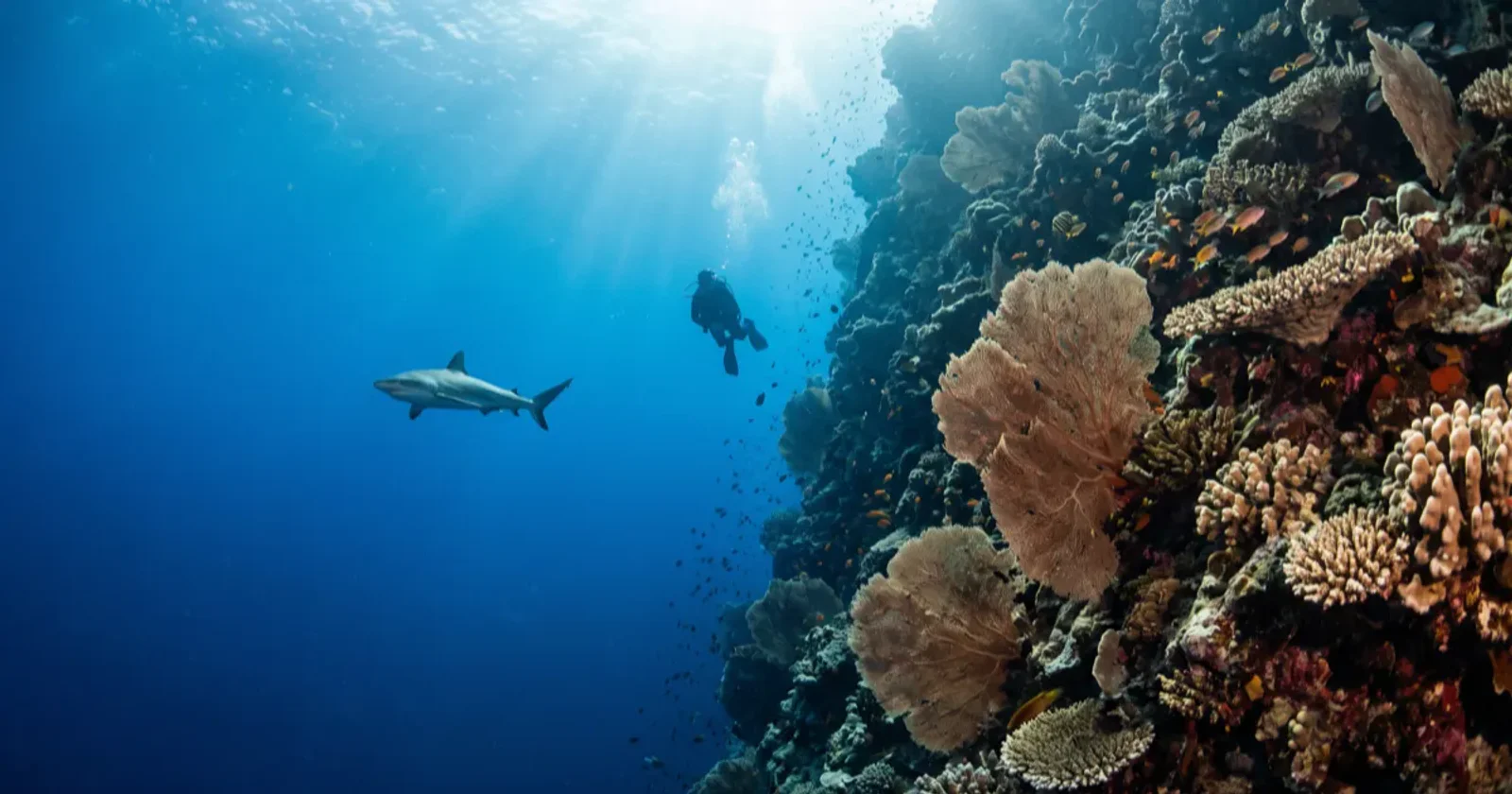
Grey reef sharks are close to a guaranteed sighting along the walls, often in numbers, and silvertip sharks show up regularly at deeper sections and bait-drop sites. Encounters vary with conditions and time of year, so treat any specific species as likely rather than certain. The signature site here is North Horn, where operators have run a shark feed for decades, drawing in grey reefs and the occasional bigger visitor.
Current can run strong along the outer wall, and visibility often exceeds 30 m on a good day, which makes the sharks visible well before they're close.
How experienced do I need to be for Coral Sea diving?
Most operators want an Advanced Open Water certification or equivalent, plus recent open-water experience, before they'll take you to Osprey Reef. The combination of depth, current and open-ocean exposure isn't forgiving of shaky buoyancy or a diver who's rusty. If your last dive was two years ago, do a check-out dive somewhere calmer first.
Is the North Horn shark feed still running?
Shark feeds at North Horn have run in various forms since the 1980s and remain part of most Coral Sea liveaboard itineraries as of this writing, though the exact format and frequency depend on the operator and can change with local marine park rules. Confirm directly with your chosen operator before the trip if a feed dive is the reason you're booking — this is the kind of detail that shifts with regulation, and no article should be your only source for it.
FAQ
How much does a Coral Sea liveaboard cost? Expect a wide range depending on boat, cabin type and trip length; multi-day Coral Sea charters generally sit above standard GBR liveaboards because of the extra fuel and crossing time. Get a current quote from the operator rather than relying on a stale number here.
Where do Coral Sea liveaboards depart from? Cairns is the standard departure port for Osprey Reef and the wider Coral Sea program.
What gear do I need for the depth and current? A dive computer, a surface marker buoy you know how to deploy, and exposure protection suited to open-ocean conditions. Reef hooks are useful at a handful of current-swept sites, used on dead substrate only.
Is there a day-trip alternative to Osprey Reef? No. The distance from Cairns rules it out entirely; a liveaboard is the only way in.
What pairs well with an Osprey Reef trip? Most Coral Sea liveaboard itineraries bundle Osprey with several other Coral Sea sites over the same multi-day charter, so you're rarely diving just the one reef.
Plan your Coral Sea trip on Diveity
Diveity tracks the Coral Sea area's dive sites, depth ranges and conditions in one place. Browse the dive site atlas to see what's logged for the region, and keep your own dive log running once you're back from the trip. Diver accounts are free.