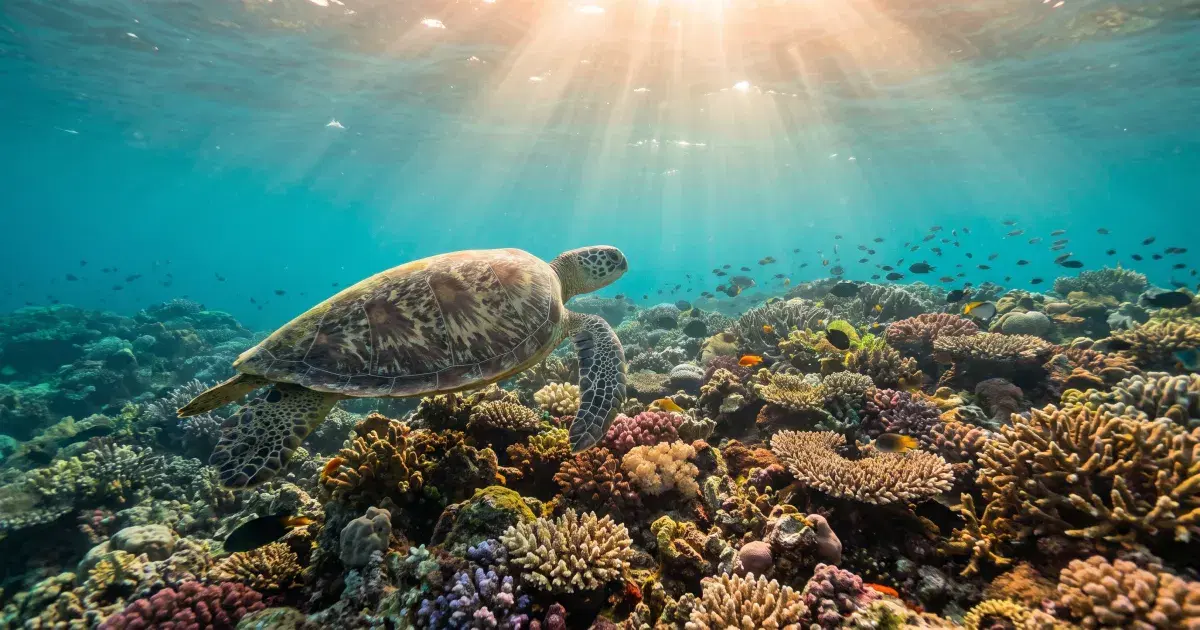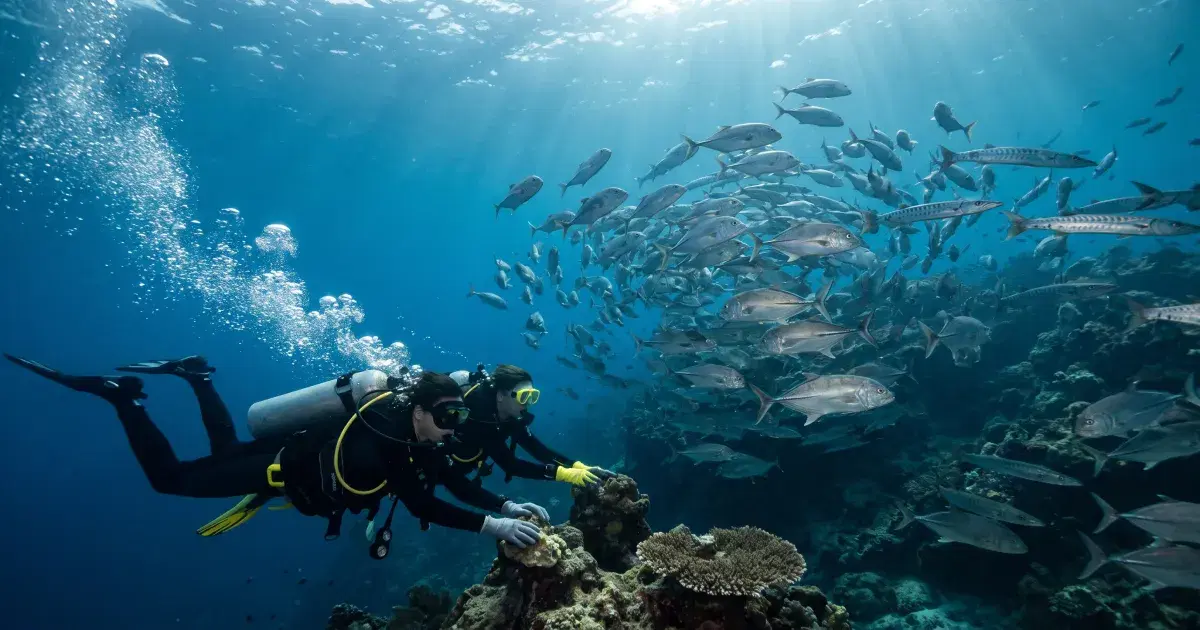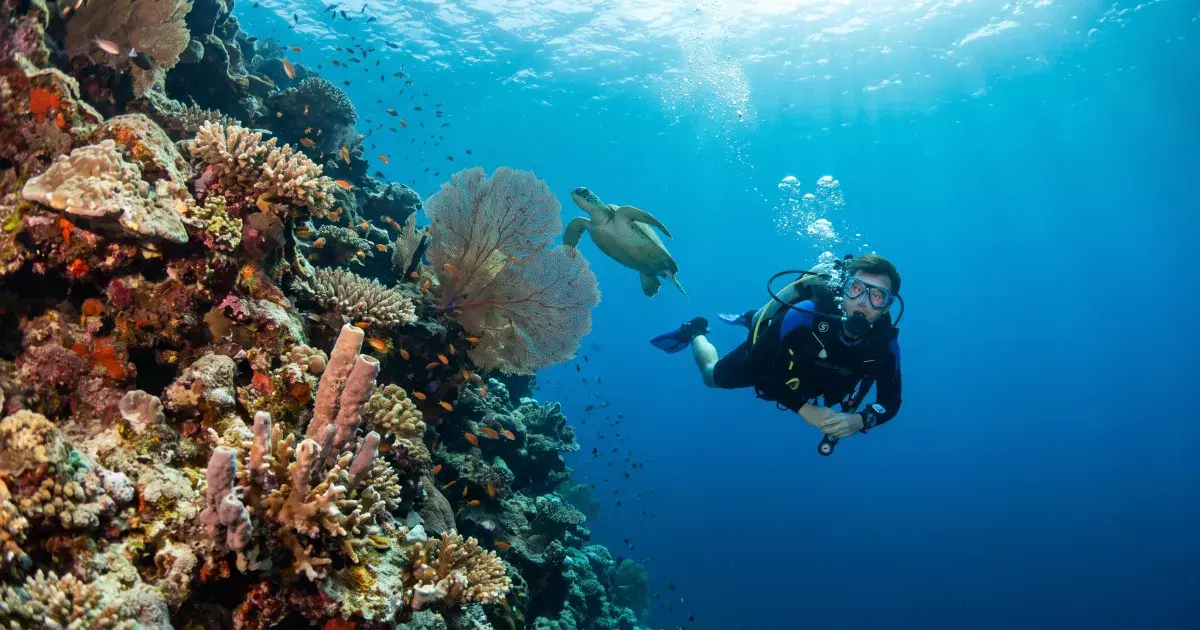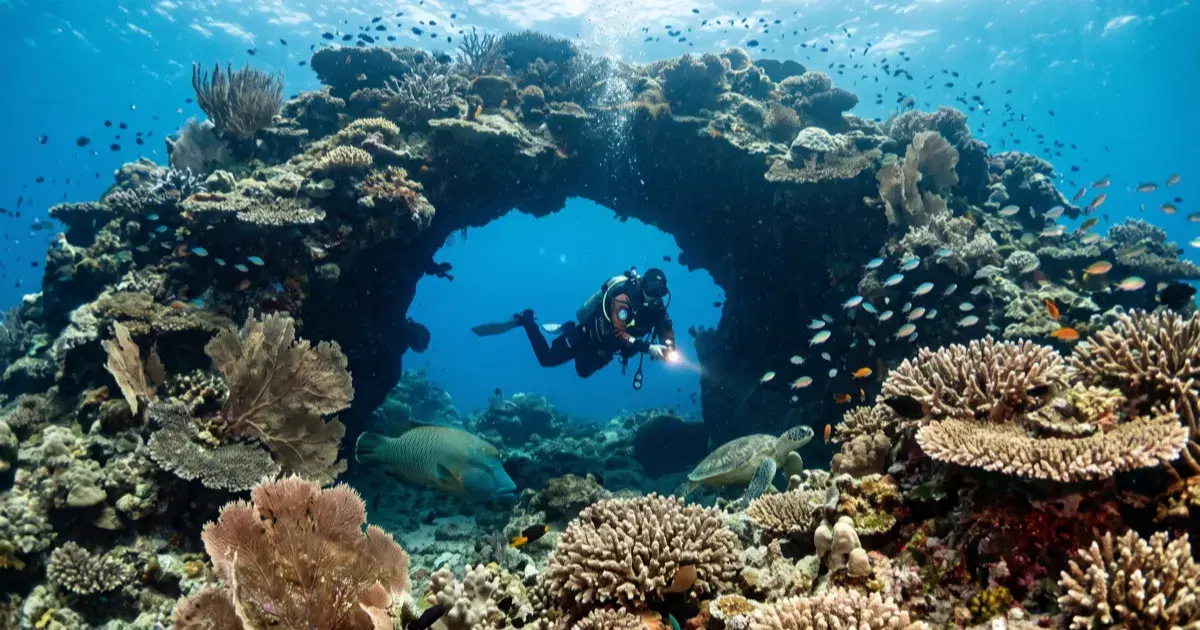
Okinawa is Japan's subtropical outlier for diving: warm water, coral reef, limestone caves, and WWII-era wrecks in one region. That's a genuinely different profile from mainland Japan's cooler, macro-and-kelp-focused sites, and most of it is accessible to intermediate divers without a technical background.
What's the best time of year to dive Okinawa?
Months | Conditions |
|---|---|
May to October | Warmest water, peak diving season |
November to April | Cooler water, fewer crowds, still diveable with a thicker wetsuit |
Treat this as a standing reference rather than a booking countdown, check current typhoon advisories with your operator regardless of season.
What makes Okinawa diving different from mainland Japan?
Water temperature and coral cover are the split. Okinawa sits in subtropical water with real reef-building coral, while mainland Japan's dive sites run cooler and lean toward macro life and kelp rather than coral reef structure. If you've dived mainland Japan and want a warmer, reef-first trip without leaving the country, Okinawa is the answer.
Is Okinawa good for beginner divers?
Mostly yes. The reef sites are shallow and calm enough for newly certified divers. The cave systems and wreck penetration dives are advanced-only, so a beginner trip here means sticking to the reef program and treating the caves and wrecks as a reason to come back once you've logged more dives.
Are there caves to dive in Okinawa?
Yes, limestone cave systems formed from the region's coral-reef geology over a long span of time. Cave and cavern diving here requires specialty certification; check specific site requirements and visibility conditions with a local operator before booking, since gating and access vary by site.
What wrecks can you dive in Okinawa?
WWII-era wrecks sit off several parts of the island chain, remnants of the Battle of Okinawa's naval losses. Depth and structural condition vary by wreck, some are shallow enough for open-water divers, others sit deep enough to need advanced certification. Confirm depth and penetration rules with the operator running the trip.
What marine life will you see in Okinawa?
Hard corals, reef fish, and occasional pelagic sightings are typical; nothing here is guaranteed on a given dive. The reef structure itself, dense and shallow, is often the bigger draw than any single species encounter.
How does Okinawa compare to the Philippines for diving?
The Philippines wins on raw biodiversity and cost. Okinawa's advantage is convenience if you're already planning a Japan trip and want reef diving without a separate international flight, plus a coral-and-cave-and-wreck mix the Philippines doesn't combine in quite the same way.
FAQ
Is there a language barrier booking dive shops in Okinawa? Some shops cater specifically to international divers with English-speaking staff; confirm before booking if this matters to your trip.
How do you get to Okinawa from mainland Japan? Direct flights run from Tokyo, Osaka, or other major mainland airports, roughly a two-and-a-half to three-hour flight from Tokyo.
Is gear rental widely available? Yes, most dive operators catering to visiting divers rent full gear sets.
What's the typhoon-season risk window? Roughly June through October overlaps with peak typhoon activity in the region; build flexibility into a diving-focused trip during these months.
Track your Okinawa dives on Diveity
Explore the Okinawa dive site listings and keep a digital dive log once you're diving. Diver accounts are free.