Barracuda (assorted)
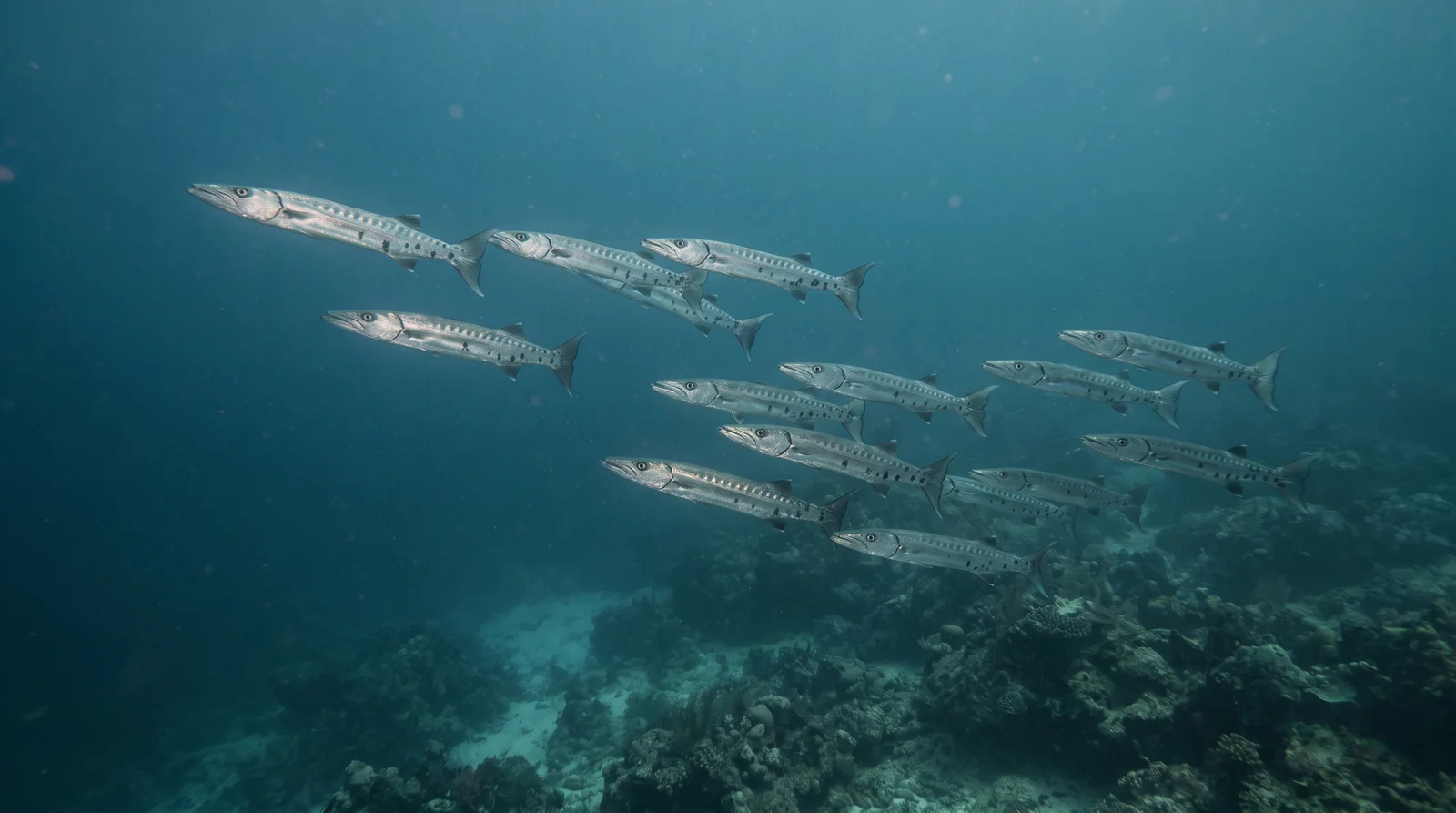 AI-generated
Image credit: AI-generated illustration · License unspecified · Source unspecified
Sphyraena spp.
About Barracuda (assorted).
"Barracuda (assorted)" covers barracuda sightings where the species was not identified. All barracudas belong to a single genus, Sphyraena, in the family Sphyraenidae, and FishBase currently lists 29 species. They live in tropical and subtropical waters of the Atlantic, Indian and Pacific Oceans. When the species can be identified, use a dedicated entry such as Great, Bigeye, Chevron or Yellowtail Barracuda.
Barracudas are predators of other fishes. Sightings range from a single large barracuda hovering near the reef to big daytime schools of smaller species. Several similar species overlap in range and are often confused with each other, so "barracuda" is a common and honest log entry.
Identification
- Body: Long, slender body with a large mouth.
- Jaws and teeth: The lower jaw projects forward and carries strong, fang-like teeth.
- Fins: Two widely separated dorsal fins; the first has five spines.
- Lateral line: Well developed along the flank.
- Size: Varies by species. Members of the family usually reach up to about 1.8 m. The great barracuda can grow to over 1.5 m and 45 kg, while the blackfin barracuda reaches about 170 cm but is commonly around 80 cm.
Telling Species Apart
Species are separated by details such as fin colour, body markings and whether they are usually seen alone or in schools. The blackfin barracuda, for example, is usually seen in large schools during the day, while the great barracuda is mostly solitary. These cues help, but FishBase notes that the exact range of the blackfin barracuda is uncertain because it is often confused with similar species, so a general entry is often the safer choice.
People and Barracudas
Barracudas are food and game fishes, but large specimens may carry ciguatera toxins. Attacks on divers are rare and are usually linked to spearfishing or shiny objects.
Conservation status varies by species. For example, the blackfin barracuda (Sphyraena qenie) is listed as Least Concern (assessed 2023), and the great barracuda is not listed by the IUCN as endangered or vulnerable.
Where it lives.
Barracudas are marine fishes of tropical and subtropical seas around the world, and some species also enter brackish water. Within that range, different species and life stages use quite different parts of the coastal and reef environment.
Typical Habitats
- Coral reefs: Adults are commonly seen on and around reefs. The blackfin barracuda is associated with current-swept lagoons and seaward reefs.
- Seagrass and mangroves: Adult great barracuda also use seagrass beds and mangroves close to shore.
- Open water: Great barracuda also occur in open water, usually near the surface.
- Nursery areas: Young great barracuda settle in shallow, vegetated estuaries and spend their first year among mangroves and seagrass, moving to deeper reefs in their second year.
Depth and Distribution
Barracudas are mostly seen in shallow to moderate depths. The great barracuda has been recorded as deep as about 100 m, and the blackfin barracuda has a listed depth range of 0-100 m. The great barracuda ranges roughly between 30°N and 30°S in the western and eastern Atlantic, the Caribbean, the Indo-Pacific and the Red Sea, but it is rare or absent in much of the eastern Pacific. The blackfin barracuda occurs across the Indo-Pacific, from East Africa and the Red Sea to French Polynesia, and in the eastern Pacific off Mexico and Panama.
Site Fidelity
Daytime schools of the blackfin barracuda often stay at the same site for months or years, which is why divers can find them at predictable places along a reef. Barracudas in general gather in large numbers during the spawning season and migrate to specific spawning areas.
How it behaves.
Barracudas are fast, visual predators. Schools of some species hold almost stationary in the water during the day, while solitary hunters wait and then accelerate in short bursts; the great barracuda has been reported to reach about 56 km/h in such bursts. Their long, slender body and projecting lower jaw with fang-like teeth suit this style of hunting.
Feeding
Barracudas are voracious predators of other fishes. The great barracuda is a daytime ambush hunter that relies mainly on sight. Its prey includes jacks, grunts, groupers, snappers, small tunas, mullets, herrings and anchovies, and its large mouth and sharp teeth let it take big prey, sometimes cutting larger fish in half. The blackfin barracuda probably disperses at night to feed.
Schooling and Spawning
Social behaviour varies by species. The great barracuda is mostly solitary, though it sometimes gathers in small groups over reefs and sandy bottoms. The blackfin barracuda is usually seen in large, semi-stationary schools during the day. Barracudas spawn in open water in schools, and many gather in large numbers during the spawning season.
Underwater Encounter Behavior
Great barracuda are curious and often follow snorkelers and divers, which can be unsettling but is not usually a threat. Attacks on humans are rare. When they happen, they usually involve a barracuda trying to take a fish from a spearfisher, or mistaking a shiny object, such as a dive knife, for a fish. Such attacks are typically a single fast strike that can cause a cut.
Diver Tips
- Keep shiny items stowed: Avoid flashing reflective objects close to a barracuda.
- Spearfishing caution: Do not keep speared fish close to your body where barracudas are present.
- Approach schools slowly: Move calmly and from the side to avoid breaking up a school.
- Food safety: Large barracudas may be ciguatoxic, which matters if fish are caught for food.
Where to see it.
Evidence for mactan · 4 dive sites
General range is not evidence of occurrence at a specific dive site.
Hilutungan Island Sanctuary
Mactan
Documented site occurrence
Season not yet documented
Source reviewed on 2026-10-14 · Source: Green Sea Divers, Hilutungan Marine Sanctuary page (2011) · Observation date not documented
Kontiki Reef
Mactan
Documented site occurrence
Season not yet documented
Source reviewed on 2026-10-14 · Source: Aquamania Cebu blog, Kontiki wall (2014-09-30) · Observation date not documented
Nalusuan Island Sanctuary
Mactan
Documented site occurrence
Season not yet documented
Source reviewed on 2026-10-14 · Source: Scotty's Dive Center (live page retrieved 2026-10-07) · Observation date not documented
Shangri-La Marine Sanctuary
Mactan
Documented site occurrence
Season not yet documented
Source reviewed on 2026-10-14 · Source: Kontiki Divers / Seven Seas Aquanauts, Mactan dive spots page · Observation date not documented
Gallery.
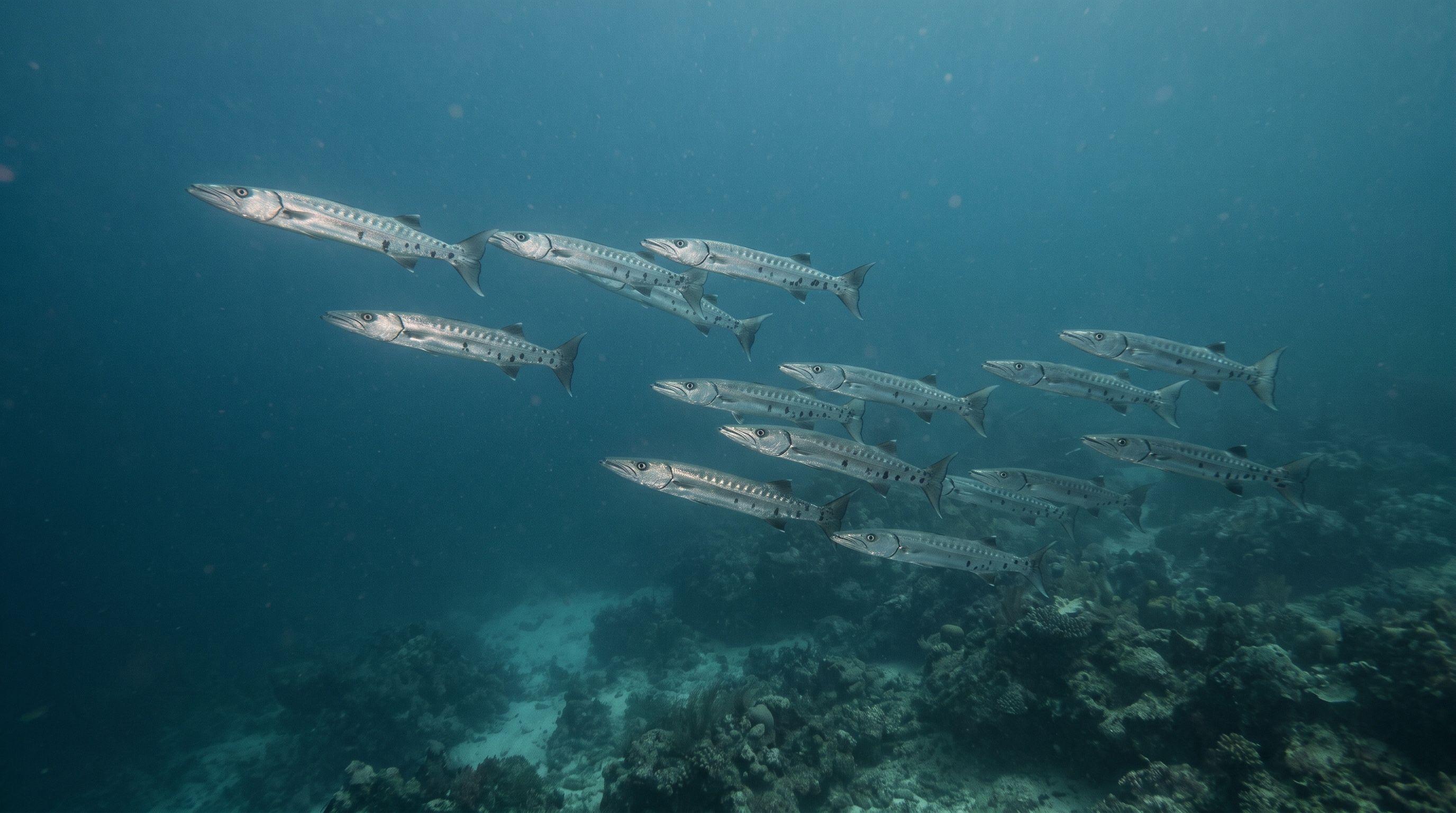 AI-generated
AI-generated illustration
Image credit: AI-generated illustration · License unspecified · Source unspecified