Sardine (schooling)
 AI-generated
Sardinella spp.
About Sardine (schooling).
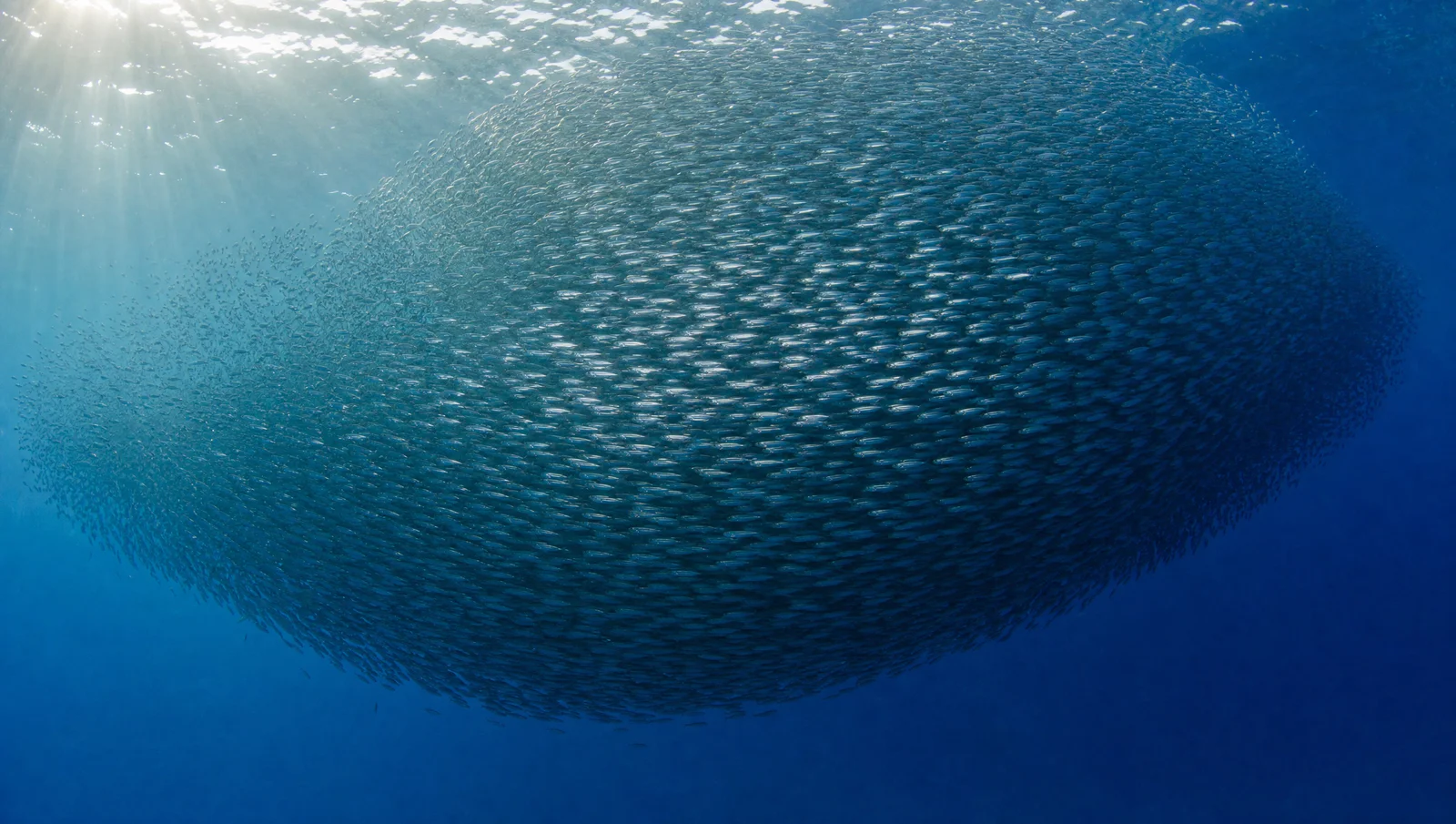
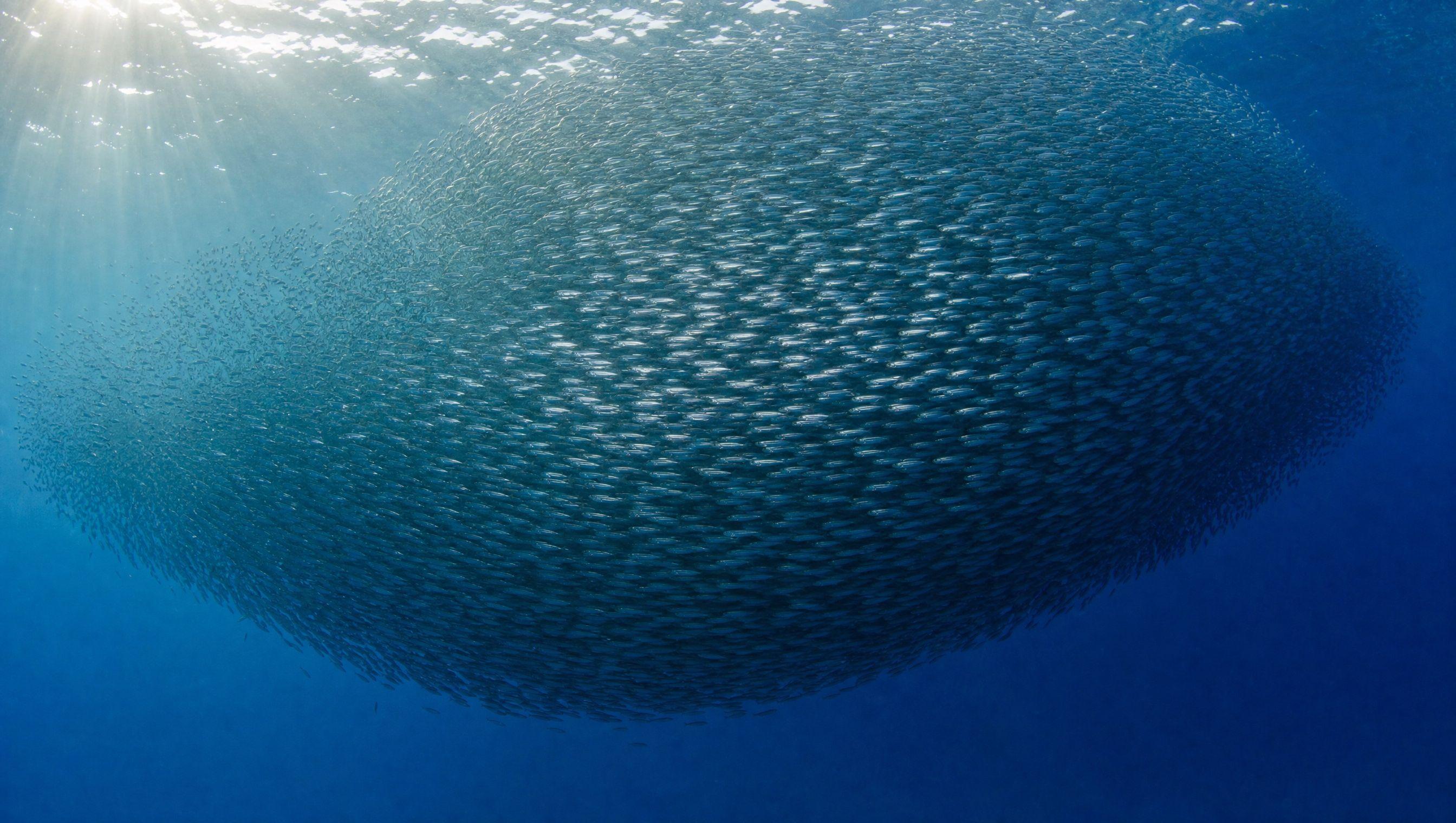
The schooling sardine, belonging to the genus Sardinella within the family Clupeidae, is a small pelagic fish renowned for its immense aggregations in tropical and subtropical oceans worldwide. These species are ecologically vital, forming a crucial link in marine food webs by preying on planktonic organisms and serving as a primary food source for larger pelagic fish, marine mammals, and seabirds. Their collective behavior, often forming "bait balls" of millions of individuals, is a key defense mechanism against predators. Sardinella species are generally found in coastal, pelagic waters, with some juveniles also inhabiting lagoons and estuaries. They are currently listed as 'Least Concern' in terms of conservation status.
Identification
- Size: Sardinella species typically reach a maximum size of 20 cm (8 in), though some species, like Sardinella aurita, can grow up to 28 cm (11 in) or even 41 cm (16 in) in certain regions.
- Body Shape: These fish possess an elongated, slender, and sub-cylindrical body that is somewhat flattened sideways, with a rounded belly.
- Coloration: Their backs are typically dark blue or blue-green, transitioning abruptly to a reflective silver or brassy color on their flanks. Fins are generally hyaline (clear), though some species may have dusky or black tips on their dorsal and caudal fins.
- Distinctive Features:
- Many Sardinella species exhibit a faint golden mid-lateral line along their sides and a distinct black spot on the hind border of the gill cover.
- The top of the head may feature 7 to 14 striped markings.
- They have fine and numerous gill rakers, which increase in number with the size of the fish.
- The last two anal fin rays are often enlarged, appearing almost like a small finlet.
- Their scales are large, reflective, silver, and easily lost (deciduous).
- Behavior: Sardinella species are strongly schooling and migratory, often found in vast aggregations that can be millions strong. They typically swim near the surface during the day, dispersing at night, and are often observed in clear saline waters. They prefer waters with temperatures generally below 24°C, though some species can tolerate 18-28°C. They are found at depths ranging from the surface down to 50 m, and sometimes deeper, even to 350 m or more, especially when retreating below the thermocline in warmer seasons.
Observed at Dive Sites:
- Sardine Run Moalboal: Abundant, forming year-round resident millions-strong bait balls visible from the shore drop-off down the wall.
- Pescador Island (The Cathedral): Occasional sightings.
- Napaling Reef: Common sightings.
Where it lives.
Sardines (genus Sardinella spp.) are a widespread and ecologically vital group of schooling fish, primarily inhabiting the coastal pelagic zones of tropical and subtropical oceans across the Atlantic, Indian, and Pacific basins.
These highly migratory species are typically found in clear, saline waters, though juveniles may venture into lagoons and estuaries. Their distribution is broad, with species like the round sardinella (Sardinella aurita) common in the eastern and western Atlantic, including the Mediterranean Sea, and the white sardinella (Sardinella albella) prevalent throughout the Indo-West Pacific, from the Red Sea to Indonesia.
Habitat characteristics include:
- Depth Range: Sardines are generally found in coastal waters, typically at depths of 0–50 m. However, some species, such as the Spanish sardine (Sardinella aurita), can exhibit seasonal depth migrations, moving from nearshore waters at 40 m in summer to 40–80 m in spring and fall, and even down to 200 m in winter in areas like the Gulf of Mexico. Oil sardines (Sardinella longiceps) are most commonly observed up to 30 m, though they can be found down to 50–100 m. They often swim near the surface but may also stay closer to the seafloor or continental shelf as a defense mechanism.
- Temperature and Salinity: Sardinella species thrive in warmer waters. While some populations of Sardinella aurita prefer temperatures below 24°C, others in regions like the northern Aegean Sea are found in waters of 20–24°C. The Indian oil sardine fishery, for instance, sees optimal catches in waters of 27–28°C. They generally prefer clear, saline water, with high survival rates observed at salinities around 35 ppt, although some species can tolerate lower salinities down to 14 ppt.
- Ecosystem Associations: Sardines are renowned for forming massive, dense schools, often comprising individuals of similar age and size. This schooling behavior serves as a crucial defense against predators. They are integral to pelagic food webs, primarily feeding on phytoplankton and zooplankton. Their abundance is often linked to eutrophic regions, coastal zones, and areas with upwelling systems or riverine inputs, which enhance primary productivity and provide rich feeding grounds. Dive sites like Sardine Run Moalboal exemplify the spectacular aggregations these fish form, highlighting their role in vibrant marine ecosystems.
How it behaves.
Underwater Encounter Behavior
Divers encountering sardines will most often observe them in vast, synchronized schools, frequently forming what are known as "baitballs." These dense aggregations, sometimes numbering in the millions, are a primary defense mechanism against predators. When threatened by larger fish such as tuna, jacks, or even thresher sharks, the baitball can rapidly change shape, creating mesmerizing, fluid patterns that can confuse attackers. While generally sensitive to predator pressure, sardines in areas with frequent diver presence, like Moalboal, may exhibit a degree of habituation, allowing divers to approach the edges of the school without causing a complete dispersal. However, sudden movements or loud noises from divers can still cause the school to react. The Moalboal sardine run, for instance, is a year-round phenomenon where millions of sardines congregate just off Panagsama Beach, often at depths of 2–15 meters, making them highly accessible to both snorkelers and certified divers.
Feeding Habits
Sardines are primarily filter feeders, consuming plankton from the water column. Their diet consists mainly of phytoplankton and zooplankton. This includes various diatoms, dinoflagellates, copepods, and fish eggs. They employ a filter-feeding mechanism, straining water through their gills to capture these microscopic organisms. Feeding patterns can depend on the season and the availability of their food supply. Immature sardines tend to be more selective, consuming smaller amounts of food, primarily small prey, while mature individuals engage in high-intensity feeding.
Social Structure
The social structure of Sardinella spp. is characterized by their strong schooling behavior. They live in large groups, often composed of fish of similar age and length. This schooling provides safety in numbers, reducing the individual risk of predation. The coordinated movements within these schools are a remarkable display of collective intelligence, allowing them to move as a single, cohesive unit. This tight schooling is a constant feature, particularly in nutrient-rich coastal waters where food is abundant and predator presence is high.
Notable Seasonal Patterns Relevant to Divers
While many sardine populations globally exhibit seasonal migrations tied to spawning or feeding, the famous sardine run in Moalboal, Philippines, is a notable exception, occurring year-round. This constant presence is attributed to nutrient-rich upwellings from the Tañon Strait, which provide a continuous food source for the sardines close to shore. Therefore, divers visiting dive sites like Sardine Run Moalboal can expect to witness this spectacle at any time of the year. However, visibility for diving and snorkeling can be optimal during the dry season (November to May), with water temperatures typically ranging from 26-30°C and visibility often exceeding 20-30 meters. During the wet season (June to October), runoff from rain might reduce visibility to 10-20 meters, though the sardines remain present and easily visible on most days.
Where to see it.
Evidence for philippines · 3 dive sites
General range is not evidence of occurrence at a specific dive site.
Napaling Reef
Panglao
Site occurrence not yet documented
Season not yet documented
No dated observations available.
Pescador Island (The Cathedral)
Moalboal
Site occurrence not yet documented
Season not yet documented
No dated observations available.
Sardine Run
Moalboal
Site occurrence not yet documented
Season not yet documented
No dated observations available.
Gallery.
 AI-generated