Trevally / Jack (assorted)
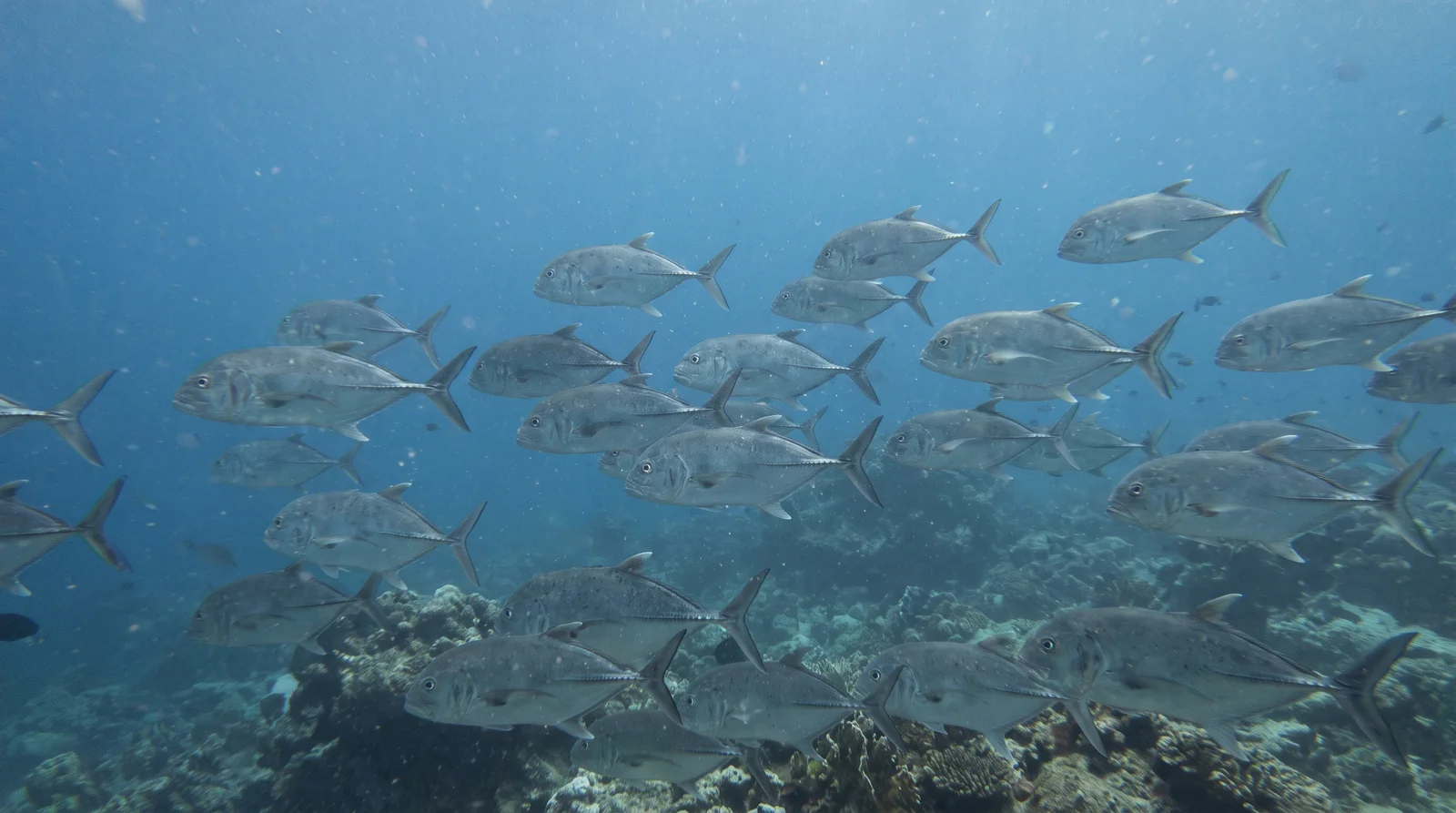 AI-generated
Image credit: AI-generated illustration · License unspecified · Source unspecified
Carangidae spp.
About Trevally / Jack (assorted).
Trevallies and jacks belong to the family Carangidae, which FishBase lists as 147 species in 39 genera across the Atlantic, Indian and Pacific Oceans. Both "trevally" and "jack" are broad common names used across the family; neither refers to a single species. This group entry is for carangids that cannot be confirmed to species from a sighting or photo. Separate entries exist for Giant, Bigeye and Bluefin Trevally, Bar Jack, Horse-eye Jack and Rainbow Runner.
FishBase describes carangids as fast-swimming predators of the water above reefs and of the open sea, and counts the family among the most important tropical marine fishes for commercial and recreational fishing. For divers they are among the most visible predators on many reefs, either as single hunters or as schools.
Identification
- Body shape: Generally compressed but very variable, from very deep-bodied to torpedo-shaped (fusiform).
- Tail: A widely forked tail fin on a slender caudal peduncle, the narrow base of the tail.
- Scutes: Scales along the lateral line are often modified into spiny scutes.
- Fins: Large juveniles and adults have two dorsal fins, and some species have up to nine small detached finlets behind the dorsal and anal fins.
- Scales: Most species have only small cycloid (smooth-edged) scales.
- Size: Varies widely. Bigeye Trevally reach about 1.2 m and Giant Trevally about 1.7 m in total length; FishBase gives a maximum published weight of 80 kg for the Giant Trevally.
- Fin spines: The first dorsal fin has 3-9 spines, and the second has one spine followed by usually 18-37 soft rays.
Conservation status varies by species. Giant Trevally (Caranx ignobilis) and Bigeye Trevally (C. sexfasciatus) are both assessed as Least Concern on the IUCN Red List. FishBase also notes that ciguatera poisoning has been reported from Giant Trevally and that large individuals may be ciguatoxic.
Where it lives.
Carangids are chiefly marine fishes of the Atlantic, Indian and Pacific Oceans, with rare records from brackish water. Their habitats range from estuaries used by juveniles to reef edges, lagoons and the open sea.
- Reef and open water: Many species hunt in the water column above reefs or in open water. Adult Giant Trevally range over sand and rock and inhabit clear lagoons and seaward reefs, while adult Bigeye Trevally occur in coastal and oceanic reef waters.
- Depth: Recorded depth ranges are broad: 10-188 m for Giant Trevally and 0-146 m for Bigeye Trevally, whose adults are mostly reported at about 1-96 m. Recreational divers meet them in the shallow part of these ranges.
- Reef passes: Schools of Bigeye Trevally are often seen during the day in reef passes or just outside the reef.
- Nursery areas: Juveniles of both Giant and Bigeye Trevally are found in estuaries, and young Bigeye Trevally sometimes travel well inland up rivers.
- Temperature: FishBase lists both species as tropical, with a temperature range of about 26-29 °C.
- Range examples: Giant Trevally range across the Indo-Pacific from the Red Sea and East Africa to Hawaii and the Marquesas; Bigeye Trevally also reach the eastern Pacific, from the Gulf of California to Ecuador and the Galápagos.
Other members of the family live in the Atlantic, so the exact habitat depends on the species; see the individual entries for details. Because the family includes both deep-bodied reef species and streamlined open-water hunters, and some species root in sand for food, carangids can turn up over sand flats, along reef walls and in blue water.
How it behaves.
Trevallies and jacks are active, fast-swimming predators. FishBase describes the family as hunting in the water above reefs and in the open sea, while some species root in sand for invertebrates and fishes.
In the referenced species, diets centre on fishes and crustaceans. Giant Trevally feed at night on crustaceans such as crabs and spiny lobsters and on other fishes, and Bigeye Trevally eat mainly fishes, squids and crustaceans.
Underwater Encounter Behavior
- Schools: Some species gather in large groups. Adult Bigeye Trevally are often seen in large daytime schools that mill in stationary groups or move slowly in reef passes.
- Solitary hunters: Other species or behaviours are solitary. Adult Giant Trevally usually live alone, and Bigeye Trevally become solitary when feeding at night.
- Speed: Carangids are fast swimmers, so a sighting in open water can be brief.
- Spawning: Members of the family do not guard their eggs; Giant Trevally spawn on shallow seaward reefs and offshore banks.
- Night activity: Several referenced species feed at night, so carangids can be active around reefs after dark as well as by day.
- Hybrids: FishBase notes that in Hawaii the Giant Trevally hybridises with the Bluefin Trevally (Caranx melampygus), which can make some individuals harder to identify.
Diver Tips
- Watch the blue: Look out into open water along reef edges and passes, where hunting and schooling carangids often appear.
- Let schools come to you: Chasing a school usually pushes it away; holding position and breathing steadily gives better views.
- Identification photos: Note body depth, fin colour, any spots or bars and the scute row; these details help narrow a carangid to species.
- Night dives: Because some species feed at night, look for hunting carangids around the reef on night dives, and avoid shining lights directly at them.
Where to see it.
Evidence for philippines · 15 dive sites
General range is not evidence of occurrence at a specific dive site.
Camia II Wreck
Boracay
Documented site occurrence
Season not yet documented
Source reviewed on 2026-10-14 · Source: New Wave Divers Boracay (dive-site page) · Observation date not documented
Channel Drift
Boracay
Documented site occurrence
Season not yet documented
Source reviewed on 2026-10-14 · Source: New Wave Divers Boracay (dive-site page) · Observation date not documented
DA-West
Sipalay
Documented site occurrence
Season not yet documented
Source reviewed on 2026-10-14 · Source: Diving Squad, "Sipalay Diving" guide (single-author first-person review) · Observation date not documented
Diniwid
Boracay
Documented site occurrence
Season not yet documented
Source reviewed on 2026-10-14 · Source: New Wave Divers Boracay (article "Diniwid") · Observation date not documented
Hilutungan Island Sanctuary
Mactan
Documented site occurrence
Season not yet documented
Source reviewed on 2026-10-14 · Source: Green Sea Divers, Hilutungan Marine Sanctuary page (2011) · Observation date not documented
Mansud Wall
Davao Gulf
Documented site occurrence
Season not yet documented
Source reviewed on 2026-10-14 · Source: ScubaBoard trip report "Talicud Island (Davao, PI)" (single diver) · Observation date not documented
Nalusuan Island Sanctuary
Mactan
Documented site occurrence
Season not yet documented
Source reviewed on 2026-10-14 · Source: Scotty's Dive Center (live page retrieved 2026-10-07) · Observation date not documented
Pinnacle Point
Davao Gulf
Documented site occurrence
Season not yet documented
Source reviewed on 2026-10-14 · Source: Asia Dive Site, Samal Island page (undated; identical copy at islandsphilippines.com) · Observation date not documented
Santa Rosa
Mactan
Documented site occurrence
Season not yet documented
Source reviewed on 2026-10-14 · Source: Asia Dive Site, Olango Island page · Observation date not documented
Shangri-La Marine Sanctuary
Mactan
Documented site occurrence
Season not yet documented
Source reviewed on 2026-10-14 · Source: Kontiki Divers / Seven Seas Aquanauts, Mactan dive spots page · Observation date not documented
Talima Marine Sanctuary
Mactan
Documented site occurrence
Season not yet documented
Source reviewed on 2026-10-14 · Source: Bohol-Philippines.com, Olango Island dive sites (Polaris Dive Center text; Wayback snapshot 2024-11-08) · Observation date not documented
Tingo Point
Mactan
Documented site occurrence
Season not yet documented
Source reviewed on 2026-10-14 · Source: Scotty's Dive Center (Wayback snapshot 2024-04-24) · Observation date not documented
Toscana Reef
Sipalay
Documented site occurrence
Season not yet documented
Source reviewed on 2026-10-14 · Source: Diving Squad, "Sipalay Diving" guide (single-author first-person review) · Observation date not documented
Tribird
Boracay
Documented site occurrence
Season not yet documented
Source reviewed on 2026-10-14 · Source: New Wave Divers Boracay (dive-site page) · Observation date not documented
Yapak
Boracay
Documented site occurrence
Season not yet documented
Source reviewed on 2026-10-14 · Source: New Wave Divers Boracay (dive-site page) · Observation date not documented
Gallery.
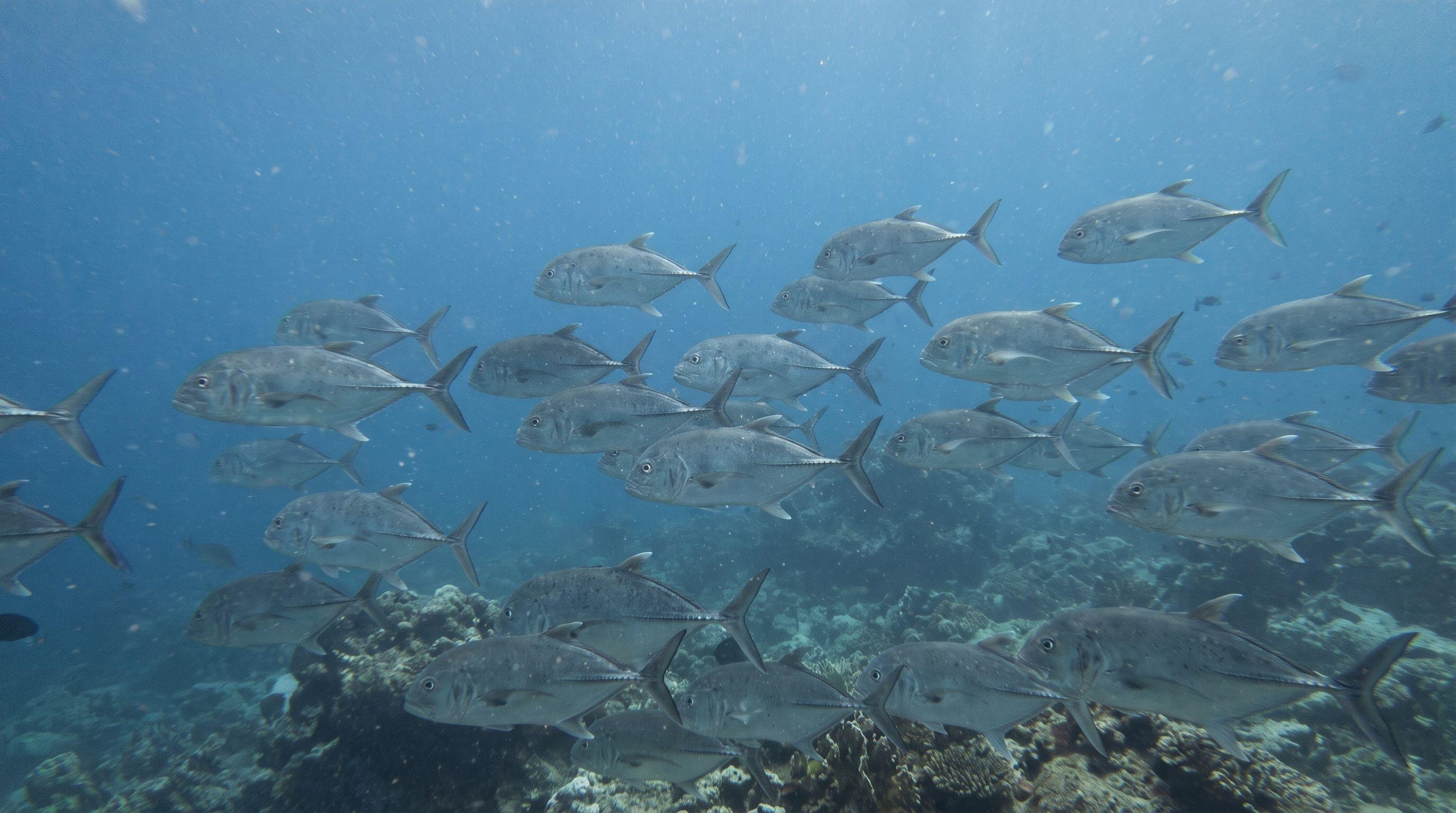 AI-generated
AI-generated illustration
Image credit: AI-generated illustration · License unspecified · Source unspecified