Red Lionfish
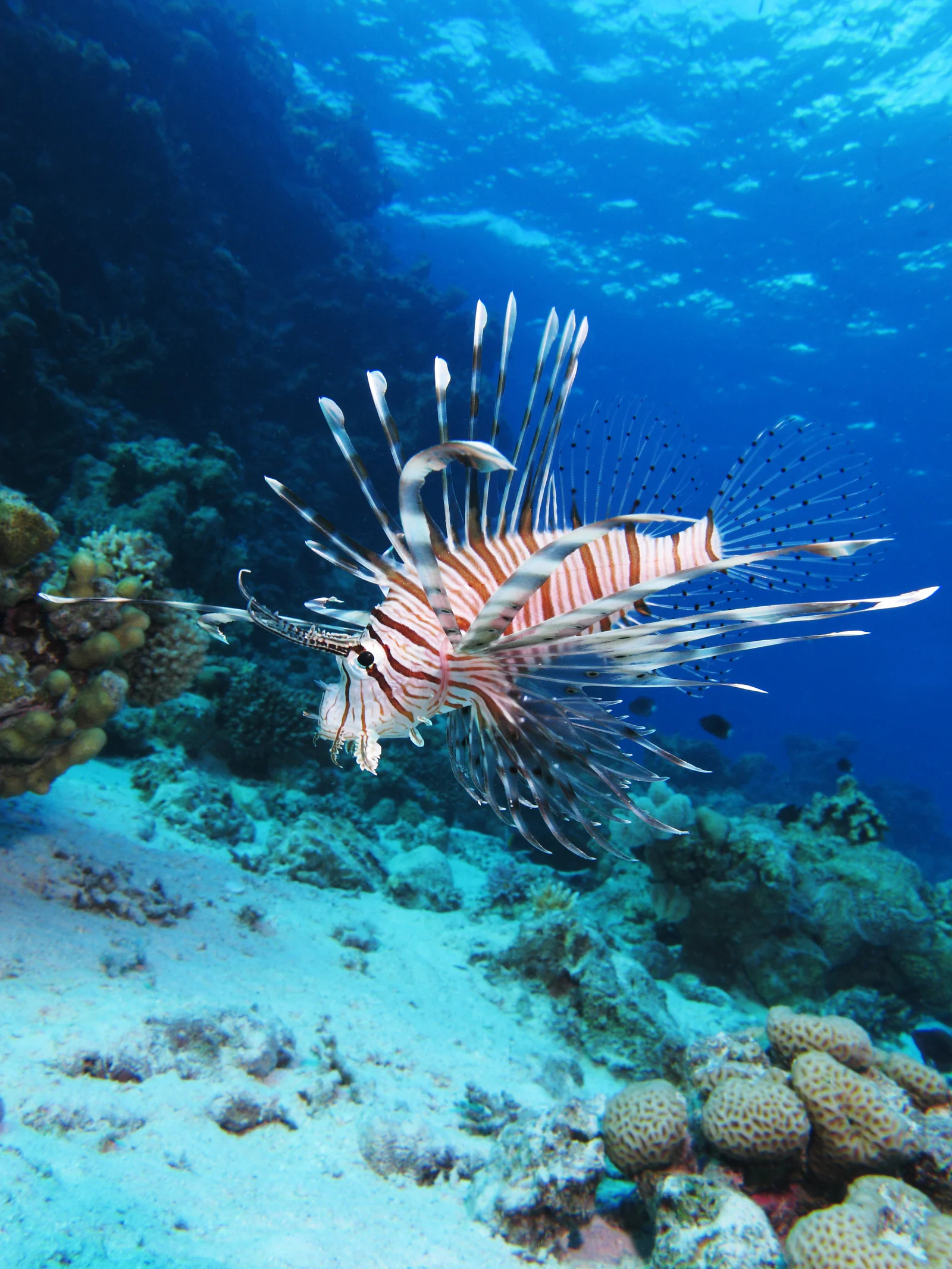
Image credit: Source unspecified · License unspecified
Pterois volitans
About Red Lionfish.
The Red Lionfish (Pterois volitans) is a captivating and easily recognizable member of the family Scorpaenidae, commonly known as scorpionfishes. Native to the vast Indo-Pacific region, this species is a striking presence on coral reefs and rocky outcrops, where it is often observed by divers. While admired for its beauty, the Red Lionfish is also known for its venomous spines, which serve as a potent defense mechanism against predators. Despite its formidable defenses, the species is currently listed as Least Concern regarding its conservation status.
These fish typically inhabit lagoon and seaward reefs, found at depths ranging from 2 to 175 m, though most commonly observed between 10 and 55 m. They thrive in tropical waters with temperatures generally between 22–28°C. Red Lionfish are primarily solitary as adults, often seeking refuge in crevices and ledges during the day, sometimes appearing almost immobile with their heads pointed downwards. While considered nocturnal hunters, they can also be active during daylight hours, particularly in their invasive ranges. Their diet consists mainly of small fish, shrimp, and crabs, which they expertly corner using their expansive pectoral fins before swallowing them whole with a swift gulping motion.
This species is a common sight at many popular dive sites, including Sinandigan Wall, Morazan Maru, Hole in the Wall, Okikawa Maru, Kogyo Maru, Monkey Beach, Batu Bolong, Kirby's Rock, Cathedral, and Arco Point.
Identification
The Red Lionfish is unmistakable due to its flamboyant appearance and distinctive markings:
- Size: Adults can reach a maximum length of 38 cm (15 in).
- Coloration: The body is adorned with striking vertical stripes or bands, alternating between shades of red, maroon, or brown and white or cream. The intensity of these colors can vary, with coastal populations sometimes appearing darker.
- Fins:
- Pectoral Fins: Perhaps their most iconic feature, the pectoral fins are greatly elongated and fan-like, often spread wide, giving the fish a majestic, almost feather-like appearance. These are used both for graceful movement and to herd prey.
- Dorsal Spines: A prominent row of 13 long, separated dorsal spines runs along the back.
- Anal and Pelvic Spines: They also possess 3 venomous anal spines and 2 venomous pelvic spines.
- Soft Rays: The dorsal fin typically has 10-11 soft rays, and the anal fin has 6-7 soft rays. The membranes of all fins are often spotted.
- Head Features: Look for fleshy tentacles located above their eyes and below the mouth, along with a bony ridge across the cheek.
- Venomous Nature: All 13 dorsal, 3 anal, and 2 pelvic spines contain potent venom. While primarily a defensive tool, a sting can cause severe pain, swelling, numbness, and other systemic symptoms in humans, requiring immediate medical attention. Divers should maintain a respectful distance and avoid contact.
Where it lives.
The Red Lionfish (Pterois volitans) is a striking and adaptable marine species native to the vast Indo-Pacific region. Its natural distribution spans from the Cocos-Keeling Islands and Western Australia in the eastern Indian Ocean, across the Pacific to the Marquesas and Oeno (Pitcairn group), extending north to southern Japan and southern Korea, and south to Lord Howe Island, northern New Zealand, and the Austral Islands.
This species is a habitat generalist, thriving in a variety of tropical marine environments. Divers commonly encounter Red Lionfish in association with:
- Coral Reefs: Both seaward and lagoon reefs provide complex structures for shelter and hunting.
- Rocky Substrates and Ledges: These areas offer numerous crevices and overhangs where lionfish can hide during the day.
- Wrecks and Artificial Reefs: Man-made structures also serve as ideal habitats, providing shelter and hunting grounds.
- Other Ecosystems: They are also found in turbid inshore areas, mangrove forests, seagrass beds, and over sandy bottoms, demonstrating a high degree of adaptability.
Red Lionfish are typically found at depths ranging from shallow waters down to 50–55 m. However, they have been observed at significantly greater depths, with records extending to 100 m, 175 m, and even past 300 m in certain locations. They prefer warm, tropical waters, naturally inhabiting temperatures between 22–28°C.
During the day, Red Lionfish are often solitary and relatively inactive, typically seeking refuge in unexposed places such as caves and crevices, sometimes resting head down and almost immobile. They are primarily nocturnal hunters, utilizing their distinctive fins to corner prey before a swift strike. While native to the Indo-Pacific, the Red Lionfish has also become a significant invasive species in the Western Atlantic, Caribbean Sea, and Gulf of Mexico.
How it behaves.
Underwater Encounter Behavior
The Red Lionfish is typically a slow-cruising fish, often observed hovering motionless or moving deliberately among corals and rocky outcrops. During the day, they are relatively inactive, preferring to shelter in crevices, under ledges, or within the intricate structures of the reef. When approached by divers, they generally exhibit a calm demeanor, often relying on their cryptic coloration to blend into the background. However, if they perceive a threat or feel their territory is invaded, they may display aggressive behavior, rushing forward with their venomous dorsal spines pointed towards the perceived intruder. Divers should maintain a respectful distance to avoid accidental contact with their highly venomous dorsal, anal, and pelvic spines, which can cause painful injuries.
Feeding Habits
The Red Lionfish is a nocturnal and crepuscular ambush predator, becoming most active and foraging during low-light periods at dawn and dusk. Their hunting strategy involves slow stalking, often using their large, fan-like pectoral fins to herd and corner unsuspecting prey. They can also employ a "sit-and-wait" ambush technique. A unique hunting behavior observed in lionfish is the ability to blow jets of water at prey, disorienting them or causing them to turn towards the lionfish before a rapid strike. They consume prey with a lightning-quick gulping motion, sucking the victim into their mouth. Their diet is broad, consisting primarily of small fishes and crustaceans, including shrimps, crabs, and other invertebrates. They are opportunistic feeders and can adapt quickly to new prey items, which contributes to their success in various habitats. Lionfish stomachs can expand significantly, allowing them to consume large meals and endure periods of fasting when food is scarce.
Social Structure
For the majority of their adult lives, Red Lionfish are largely solitary and can be territorial, especially male individuals. They will fiercely defend their home range against other lionfish and even other species using their venomous spines. While adults are typically solitary, juveniles may be observed in small groups. Aggregations are primarily observed during courtship and mating, where one male may gather with several females to form groups of 3-8 fish.
Notable Seasonal Patterns
Red Lionfish are known for their prolific reproductive capabilities, spawning year-round in suitable warm waters. Females can spawn frequently, sometimes as often as every 3-4 days, releasing up to 2 million eggs annually. Courtship typically begins just before dark, with males initiating the process. During reproduction, males may become darker and more uniformly colored, while females with ripening eggs become paler. Spawning events often occur near the surface, with eggs hatching within 36 hours and larvae dispersing widely via currents. While reproduction can occur throughout the year, elevated gonadosomatic index values (indicating reproductive activity) have been observed to peak during warmer months, such as May-October in some regions. Divers may observe these courtship behaviors or increased numbers of juveniles at various dive sites during these periods. Red Lionfish thrive in tropical marine waters, typically encountered in temperatures between 22°C and 28°C, and at depths ranging from 2 to 175 meters, though they are commonly found at 10-55 meters.
Where to see it.
Evidence for philippines · 18 dive sites
General range is not evidence of occurrence at a specific dive site.
Arco Point
Panglao
Site occurrence not yet documented
Season not yet documented
No dated observations available.
Balicasag Sanctuary (Rico's Wall)
Panglao
Site occurrence not yet documented
Season not yet documented
No dated observations available.
Cathedral
Anilao
Site occurrence not yet documented
Season not yet documented
No dated observations available.
Dilumacad Island (Helicopter Island)
El Nido
Site occurrence not yet documented
Season not yet documented
No dated observations available.
Dry Dock
Puerto Galera
Site occurrence not yet documented
Season not yet documented
No dated observations available.
Hole in the Wall
Puerto Galera
Site occurrence not yet documented
Season not yet documented
No dated observations available.
Kirby's Rock
Anilao
Site occurrence not yet documented
Season not yet documented
No dated observations available.
Kogyo Maru
Coron
Site occurrence not yet documented
Season not yet documented
No dated observations available.
La Laguna Point
Puerto Galera
Site occurrence not yet documented
Season not yet documented
No dated observations available.
Monkey Beach
Puerto Galera
Site occurrence not yet documented
Season not yet documented
No dated observations available.
Morazan Maru
Coron
Site occurrence not yet documented
Season not yet documented
No dated observations available.
Nanshin Maru (Black Island Wreck)
Coron
Site occurrence not yet documented
Season not yet documented
No dated observations available.
Okikawa Maru
Coron
Site occurrence not yet documented
Season not yet documented
No dated observations available.
Sinandigan Wall
Puerto Galera
Site occurrence not yet documented
Season not yet documented
No dated observations available.
Skeleton Wreck
Coron
Site occurrence not yet documented
Season not yet documented
No dated observations available.
The Atoll
Puerto Galera
Site occurrence not yet documented
Season not yet documented
No dated observations available.
Twin Peaks Reef
Coron
Site occurrence not yet documented
Season not yet documented
No dated observations available.
Wreck Point
Puerto Galera
Site occurrence not yet documented
Season not yet documented
No dated observations available.
Gallery.
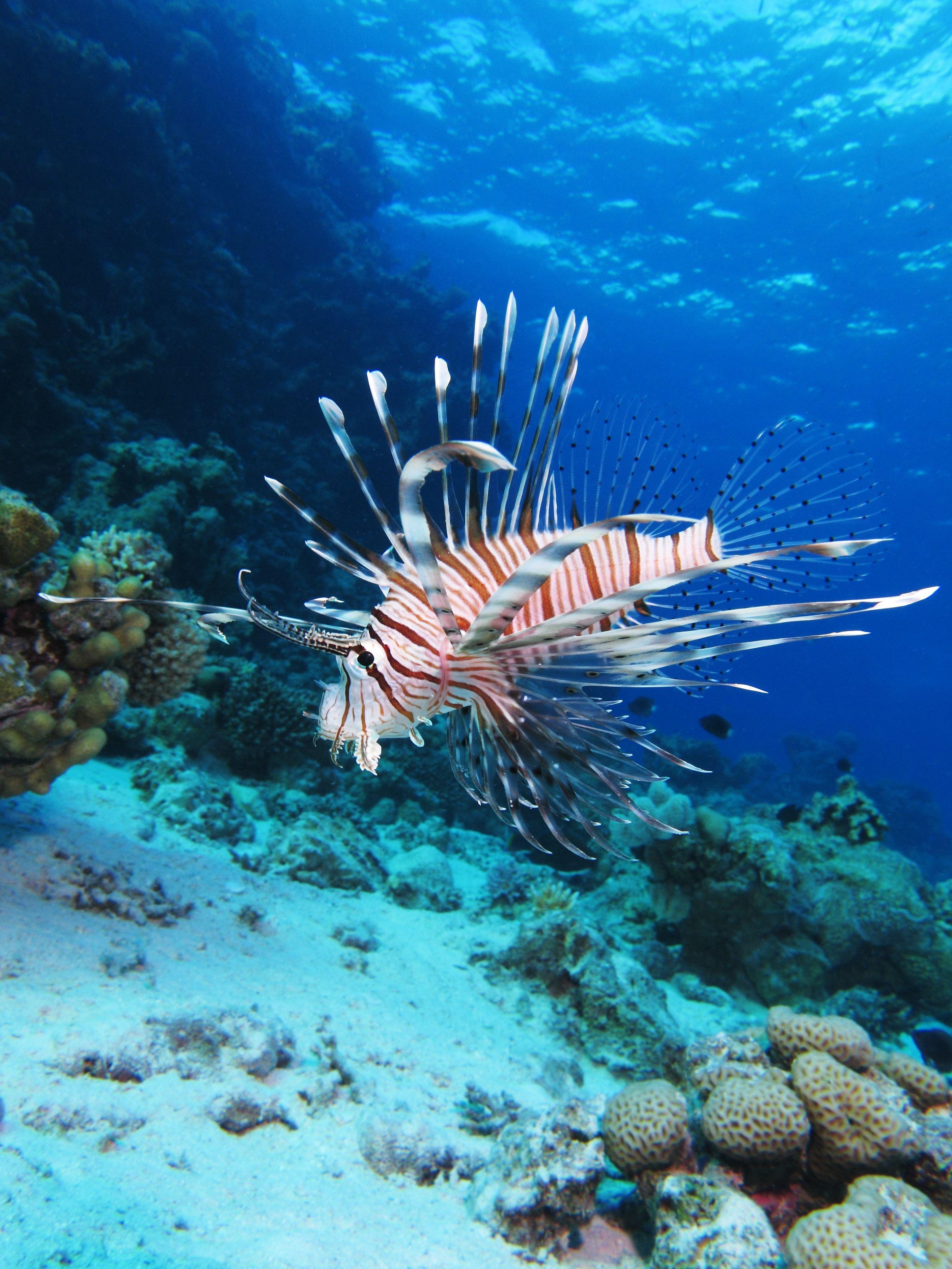
Photo: Alexander Vasenin / CC BY-SA 3.0 via Wikimedia Commons
Image credit: Source unspecified · License unspecified