Great Barracuda
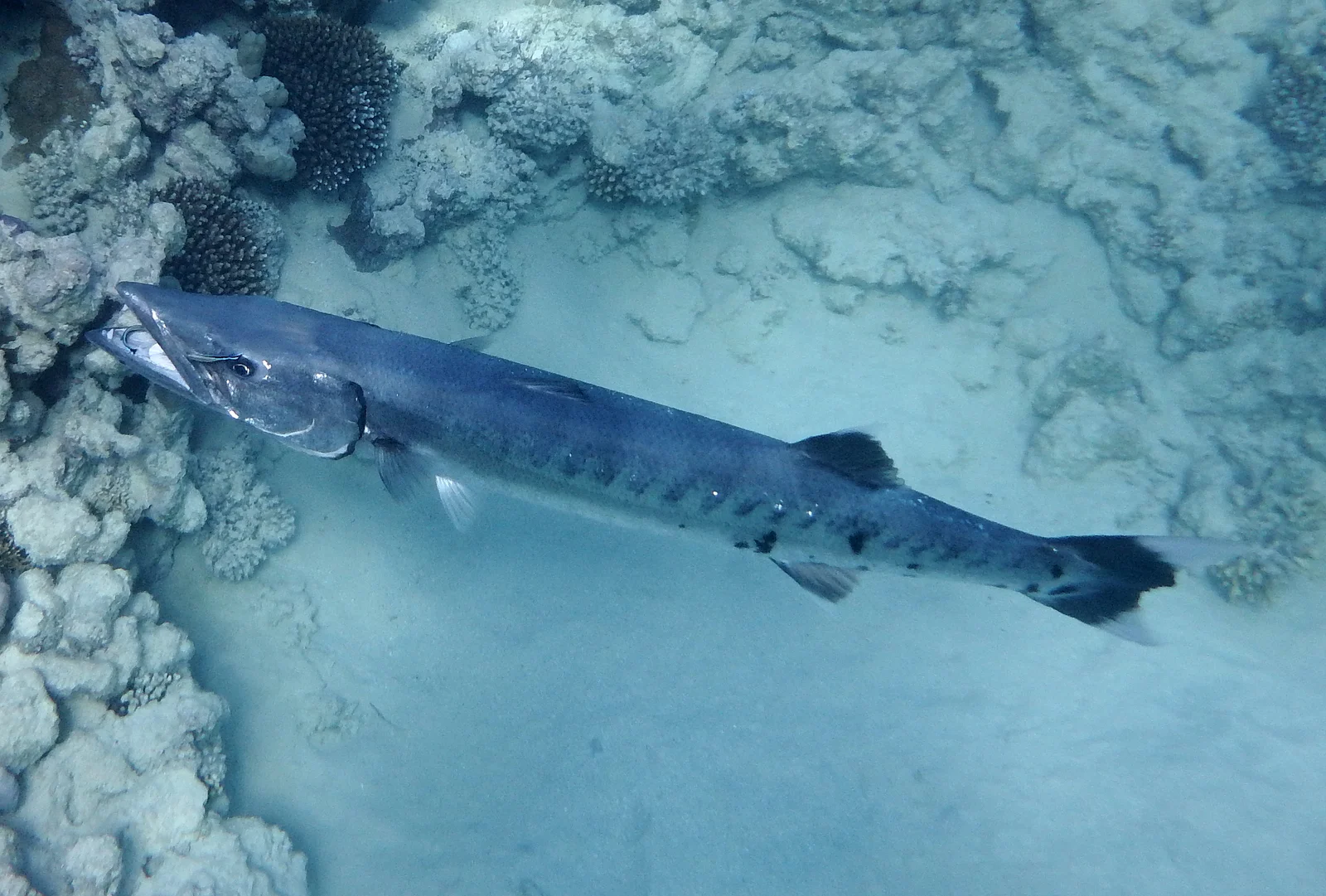
Image credit: Source unspecified · License unspecified
Sphyraena barracuda
About Great Barracuda.
The Great Barracuda (Sphyraena barracuda) is a formidable and iconic marine fish belonging to the family Sphyraenidae. Known for its sleek, torpedo-shaped body and impressive dentition, this species is a top-tier predator in tropical and subtropical marine environments worldwide. Its conservation status is currently listed as Least Concern, indicating a stable global population.
As adults, Great Barracudas are typically solitary, often observed hanging motionless in the water column or slowly cruising over reefs, waiting for an opportune moment to strike. They are diurnal hunters, relying heavily on their keen eyesight to locate prey. When a target is identified, they launch into a lightning-fast ambush, capable of bursts of speed up to 58 kilometers per hour (36 mph). Their diet is opportunistic and varied, consisting primarily of other fish such as jacks, grunts, groupers, snappers, small tunas, mullets, herrings, and anchovies, but they will also consume cephalopods and sometimes shrimp.
Great Barracudas inhabit a wide range of marine environments, from murky inner harbors to clear open seas. They are found globally in nearshore tropical and subtropical waters, generally between 30°N and 30°S latitude, including the Western Atlantic Ocean (from Massachusetts to Brazil), the Gulf of Mexico, the Caribbean Sea, the Eastern Atlantic Ocean, the Indo-Pacific, and the Red Sea. Juveniles typically mature among mangroves and seagrass beds, which provide crucial cover from predators, before moving to deeper reef habitats as they grow. Adults are commonly found around coral reefs, seagrass beds, and mangroves, but also reside in the open ocean, predominantly at or near the surface, though they can be found at depths of up to 100 meters (325 feet). They prefer water temperatures between 22–28°C (72–82°F), though they can tolerate a broader range from 17.8°C to 31.3°C. Divers often encounter these curious creatures, which may approach due to their attraction to shiny objects.
This species has been observed at numerous dive sites, including:
- Pink Beach (occasional)
- Manta Alley (occasional)
- Three Sisters (common)
- Mainit Point (common)
- Bahura (occasional)
- Diver's Heaven (common)
- Cathedral (common)
- Rudy's Rock (common)
- Napaling Reef (occasional)
- Kalipayan (occasional)
Identification
The Great Barracuda is easily recognizable by several key physical features:
- Size: It is one of the largest barracuda species, reaching a maximum recorded length of 1.8 meters (6 feet). Some sources indicate they can grow even larger, up to 2 meters (6.5 feet) or occasionally up to 3 meters (10 feet).
- Body Shape: It possesses a long, slender, and streamlined body that is round in the mid-section, tapering towards a pointed snout and a powerful tail.
- Head and Mouth: A distinctive feature is its large, pointed head with a prominent, underslung lower jaw that protrudes beyond the upper jaw. The mouth is armed with two rows of razor-sharp teeth: an outer row of smaller, tearing teeth and an inner row of larger, dagger-like teeth used for grasping prey. These long teeth fit into specific holes in the opposing jaw, allowing the barracuda to close its mouth completely.
- Coloration: The body coloration is typically brownish or bluish-gray on the dorsal (upper) side, transitioning to silvery on the flanks and a white belly. Adults often display 18-23 faint, dark oblique bars on their upper sides, which are more noticeable when the fish is at rest or over a variegated substrate. A crucial identification mark distinguishing the Great Barracuda from other species are the scattered, irregular black spots or blotches present on its lower sides. Juveniles may exhibit pale reticulations on the dorsum and a dark stripe that breaks into spots as they mature.
- Fins: It has two widely separated dorsal fins; the first is spiny, and the second is soft-rayed. The pectoral fin tips extend to the origin of the pelvic fins. The anal and second dorsal fins are positioned far back on the body, close to the tail, contributing to its explosive speed. The caudal (tail) fin of adults is large, black, and double emarginate (scalloped) with whitish tips on each lobe, while juveniles typically have a forked caudal fin.
Where it lives.
The Great Barracuda (Sphyraena barracuda) is a formidable apex predator found in the warm, clear tropical and subtropical waters across the globe, including the Atlantic, Indian, and Pacific Oceans, with the exception of the Eastern Pacific.
Its habitat is diverse, reflecting an "ontogenetic shift" as the fish matures, meaning its preferred environment changes with age.
- Juvenile Habitat: Young barracudas typically inhabit shallow, protected coastal areas. These include mangrove estuaries and seagrass beds, which offer crucial cover from predators during their early life stages.
- Adult Habitat: As they mature, Great Barracudas transition to deeper reef environments and open ocean waters. Adults are commonly found around coral reefs, along reef edges, in channels, and near drop-offs where prey is abundant. They also frequent artificial structures like wrecks and rock outcroppings, utilizing these for refuge and ambush points.
- Depth Range: While often observed near the surface, Great Barracudas can be found at considerable depths. They typically range from the surface down to approximately 100 meters, though some sources indicate sightings up to 110 meters.
- Temperature Preference: This species thrives in warm waters, generally preferring temperatures between 22–28°C (72–82°F).
- Social Behavior: While juveniles may form small aggregations, adult Great Barracudas are largely solitary hunters, though they can occasionally be seen in small groups, particularly over reefs and sandy bottoms.
Divers frequently encounter Great Barracudas at dive sites characterized by vibrant coral reefs and strong currents, such as Three Sisters, Mainit Point, Diver's Heaven, Cathedral, and Rudy's Rock, where they are often seen cruising or lurking, ready to strike their prey. Their presence is a key indicator of a healthy, biodiverse tropical marine ecosystem.
How it behaves.
Underwater Encounter Behavior
Great Barracudas are often described as curious and bold, frequently approaching divers. They possess an unnerving habit of following divers, which, coupled with their size and visible teeth, can be unsettling for some. However, this behavior is generally driven by inquisitiveness rather than aggression. Barracudas are primarily visual hunters and are attracted to shiny objects, such as jewelry, watches, or camera equipment, which they may mistake for the glint of fish scales. Divers are advised to remove such items to avoid attracting undue attention. Unprovoked attacks on humans are rare, and when they do occur, they are often attributed to mistaken identity or provocation, particularly in murky water or during spearfishing activities where struggling fish are present.
Feeding Habits
The Great Barracuda is a diurnal, opportunistic ambush predator, relying on surprise and bursts of speed to capture its prey. It is one of the fastest fish in the ocean, capable of speeds up to 58 km/h (36 mph). Their large mouth is equipped with two rows of razor-sharp teeth: an outer row of small, sharp teeth for tearing, and an inner set of larger, dagger-like teeth for piercing. This dentition allows them to either swallow smaller prey whole or cut larger prey into pieces. Their diet consists almost entirely of fish, including jacks, grunts, groupers, snappers, small tunas, mullets, herrings, and anchovies, as well as cephalopods and occasionally shrimp. Juveniles primarily feed on killifish and penaeid shrimp in their shallow habitats.
Social Structure
Adult Great Barracudas are typically solitary, often seen drifting slowly through the water, observing their environment. However, they can occasionally be found in small aggregations over reefs and sandy bottoms. Young and half-grown barracudas are more frequently observed congregating in schools. While generally solitary hunters, they have been observed schooling in larger groups to herd and trap schools of smaller fish, facilitating a more effective attack.
Notable Seasonal Patterns Relevant to Divers
Great Barracudas inhabit a wide range of habitats, from murky inner harbors to open seas, and are commonly found around coral reefs, seagrass beds, and mangroves. They are typically encountered at depths ranging from the surface down to 100 meters, though they can dive to over 175 meters. They can tolerate water temperatures between approximately 17.8°C and 31.7°C. Juveniles spend their first two years in sheltered mangrove and seagrass habitats before moving to deeper reef areas as adults. Spawning is believed to be seasonal, with evidence suggesting breeding occurs in the spring in areas like the Florida Keys, and a broader season from April to October in other regions. During spawning, eggs are released and fertilized in open waters, then dispersed by currents. Adult barracudas can be transient, with some individuals moving hundreds of kilometers and disappearing from certain areas for months, particularly in summer when they may move to deeper shelf habitats, returning at other times of the year.
Where to see it.
Evidence for philippines · 23 dive sites
General range is not evidence of occurrence at a specific dive site.
Bahura
Anilao
Site occurrence not yet documented
Season not yet documented
No dated observations available.
Barracuda Lake (Luluyuan Lake)
Coron
Site occurrence not yet documented
Season not yet documented
No dated observations available.
Cathedral
Panglao
Site occurrence not yet documented
Season not yet documented
No dated observations available.
Cervera Shoal
Panglao
Site occurrence not yet documented
Season not yet documented
No dated observations available.
Diver's Heaven
Panglao
Site occurrence not yet documented
Season not yet documented
No dated observations available.
Fish Bowl
Puerto Galera
Site occurrence not yet documented
Season not yet documented
No dated observations available.
Japanese Wreck
Puerto Galera
Site occurrence not yet documented
Season not yet documented
No dated observations available.
Kalipayan
Panglao
Site occurrence not yet documented
Season not yet documented
No dated observations available.
Kyokuzan Maru
Coron
Site occurrence not yet documented
Season not yet documented
No dated observations available.
Lusong Gunboat
Coron
Site occurrence not yet documented
Season not yet documented
No dated observations available.
Mainit
Dauin
Site occurrence not yet documented
Season not yet documented
No dated observations available.
Mainit Point
Anilao
Site occurrence not yet documented
Season not yet documented
No dated observations available.
Morazan Maru
Coron
Site occurrence not yet documented
Season not yet documented
No dated observations available.
Napaling Reef
Panglao
Site occurrence not yet documented
Season not yet documented
No dated observations available.
North Rock
El Nido
Site occurrence not yet documented
Season not yet documented
No dated observations available.
Okikawa Maru
Coron
Site occurrence not yet documented
Season not yet documented
No dated observations available.
Pamilacan Sanctuary
Pamilacan Island
Site occurrence not yet documented
Unverified: Nov, Dec, Jan, Feb, Mar, Apr, May
No dated observations available.
Rudy's Rock
Panglao
Site occurrence not yet documented
Season not yet documented
No dated observations available.
Shangri-La Marine Sanctuary
Mactan
Documented site occurrence
Season not yet documented
Source reviewed on 2026-10-14 · Source: Divernet, "Don't Miss Mactan" by Henley Spiers (2018-11-18) · Observation date not documented
Siete Pecados
Coron
Site occurrence not yet documented
Season not yet documented
No dated observations available.
Gallery.
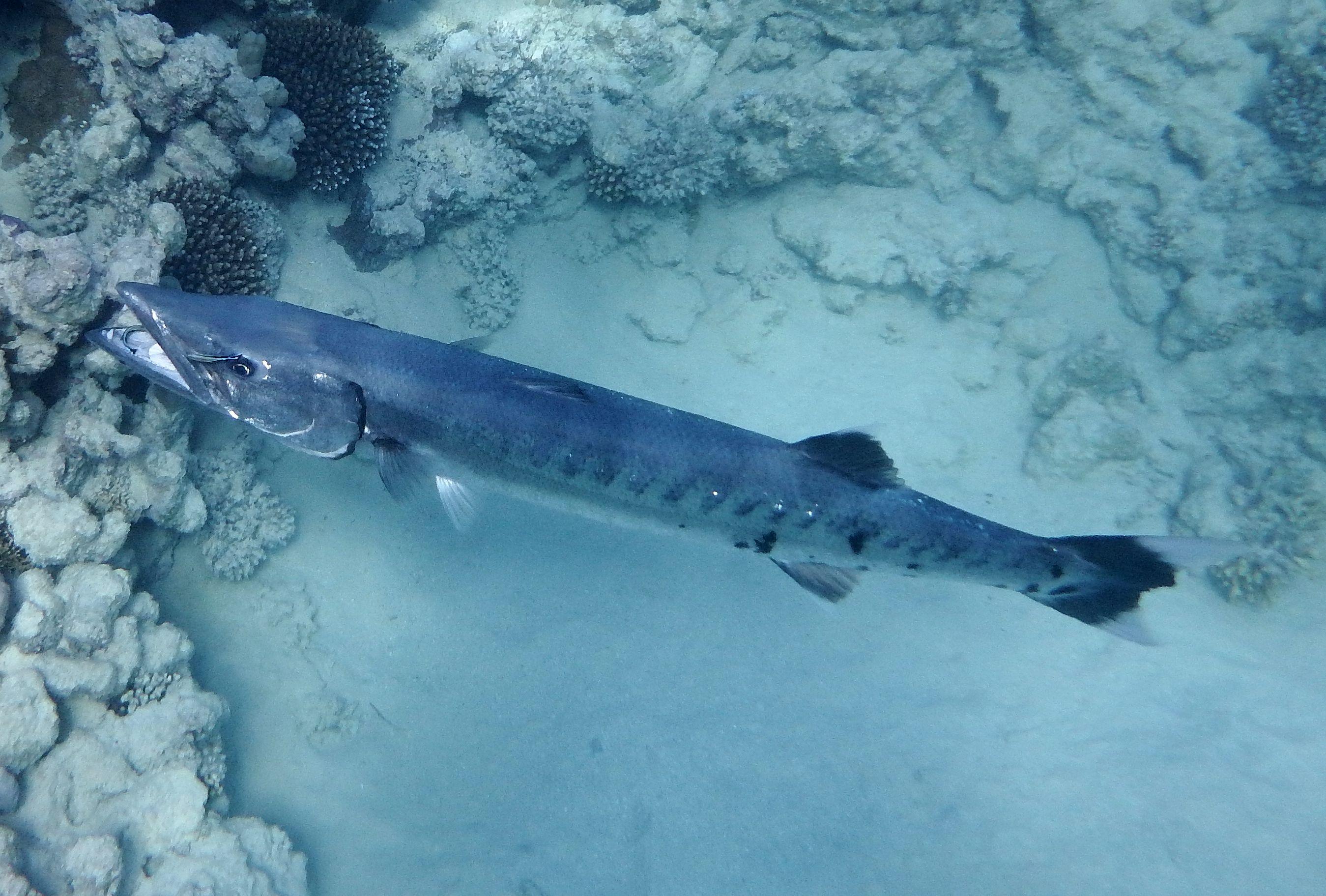
Photo: Kora27 / CC BY-SA 4.0 via Wikimedia Commons
Image credit: Source unspecified · License unspecified